I pretended to lose everything I had spent 40 years building, and I knocked on three doors in one night. Two of them slammed in my face. The third one opened before I could even finish knocking.
My name is Ellsworth Kaine. To the people who matter along Houston’s oil corridor, that name means something.
It means a man who started with a rusted pickup truck and a $12,000 loan from his mother and built Kain Industrial into a construction and infrastructure company worth north of $400 million.
It means a man who has shaken hands with senators, broken ground on hospitals, and signed checks that most people will never see in a lifetime.
But for one cold November night, I was just a dirty old man in a thrift store coat, standing at the end of a long driveway with nothing in my pocket but a lie.
I had been planning the test for 3 months.
The idea came to me after a routine physical, not because the doctor found anything wrong, but because sitting in that paper gown at 68 years old, I felt the weight of a question I had been avoiding for years.
Who loves me?
Not the company, not the name on the building.
Who loves Ellsworth Kain the man when there is nothing to be gained by loving him?
I spent four days not shaving. I bought clothes from a Goodwill in a part of town where nobody knew my face: a stained canvas coat, work pants worn through at the knees, a pair of boots I had cut a hole into near the toe.
I rubbed grime into the creases of my hands and left my paddic Philippe in the hotel safe.
I tucked my real phone into a hidden seam I had sewn into the coat lining and carried a prepaid flip phone bought with cash.
I looked like a man the world had chewed up and spit out.
The performance was convincing because I had lived the real version of it once 40 years ago, before anyone knew my name.
The first door belonged to my eldest son.
He lives in River Oaks, the kind of Houston neighborhood where the gates open automatically and the residents don’t smile at people who arrive on foot.
The house is 6,000 square ft. I know because I wrote the check for it 8 years ago when he told me the interest rate on a jumbo mortgage would be financially irresponsible.
I remember thinking he was shrewd.
I remember being proud of him.
I rang the video doorbell.
I stood in the rain and let myself be seen.
His wife answered.
She opened the door wearing silk pajamas and an expression she reserves for people trying to sell her something.
She looked at me for three full seconds before her face shifted into something between recognition and revulsion.
She called for my son without stepping back from the threshold.
He appeared behind her, still in his dress shirt from work, loosening his cufflinks.
He looked at me the way a man looks at a car wreck, unable to help, unable to stop staring.
“What happened?” he said.
Not “Dad.”
Not “Come inside.”
“What happened?”
I told him the story I had prepared.
A federal audit, frozen accounts, the company’s assets under review for alleged tax irregularities connected to a former financial officer I had let go.
I told him I had been locked out of my own office that afternoon.
I told him I had nowhere to go.
His wife crossed her arms.
Her body language said the rest.
He pulled me to the side of the porch and lowered his voice like he was ashamed of the conversation itself.
“Dad, listen. This is really bad timing. We have people coming for dinner tomorrow.”
And honestly, if there’s a federal investigation tied to your name right now, I need to speak to my own attorney before I get anywhere near that situation for our protection.
I told him I was cold.
I told him I was 68 years old and I had been walking in the rain for an hour.
He was already reaching for his wallet.
He handed me two 20s without counting them.
“There’s a Marriott on Westimer,” he said. “Get a room, get cleaned up, and call me when you know more about the legal situation. I can’t have you here right now.”
He paused.
“I’m sorry.”
Then he closed the door.
I stood on that porch with $40 in my hand.
$40 from a man whose mortgage I had retired in a single wire transfer.
And I listened to the rain hit the limestone steps.
Then I turned and walked back down the driveway.
My daughter’s world is a different kind of closed.
She owns a luxury home-staging and interior design firm in the Galleria area and has built a brand around the idea of curated abundance.
She posts about her life on social media the way some people breathe, constantly, instinctively, without thinking about what it costs.
She had posted about a client event at her showroom earlier that week.
I found her there.
The receptionist tried to stop me at the door.
I said my daughter’s name loud enough that she came out herself to see what the disruption was.
The moment she saw me, she went rigid.
Then she looked past my shoulder at the client’s visible through the showroom glass, grabbed my arm, and walked me fast down a back hallway where the beautiful facade gave way to bare walls and storage shelving.
“What are you doing?”
Her voice was barely above a whisper, but it was sharp, like something she had been pressing behind her teeth.
I told her the story.
The audit, the frozen accounts, the borrowed coat.
She stared at me for a long moment.
Then she looked at my shoes.
“Dad.”
Her voice had gone quiet in a way that had nothing to do with tenderness.
“I have a brand. I have spent 10 years building something that depends entirely on how people perceive me. If word gets out that my father is walking around in those clothes, connected in any way to scandal, I can’t absorb this. I literally cannot absorb this right now.”
I asked if I could sleep on her couch just one night, just out of the rain.
She was already shaking her head before I finished the sentence.
“My house is staged for a magazine shoot Thursday morning,” she said. “Everything is set. I can’t have…”
She gestured at me.
At all of me.
“I can’t have this disrupting that.”
She opened her purse and pressed three bills into my palm without looking at the amount.
“Take a car service somewhere. I’ll send you the app.”
She was already turning back toward the showroom.
“Call me when this is sorted.”
$60 combined with my eldest son’s 40.
I had $100 to show for four decades of building something for people who could not look at me when it became inconvenient.
I stood alone in that back hallway.
Then I walked out into the rain.
I had one child left.
My youngest son lives on the east side of Houston in a neighborhood where the city has been promising to fix the same potholes for 6 years.
He is a paramedic.
He works 48-hour shifts at a fire station serving one of the poorest zip codes in the city.
He makes around 42,000 a year before taxes.
He drives a 2014 pickup he bought used.
He and his wife rent a two-bedroom house with a chainlink fence and a backyard that floods when it rains hard.
He is also the son I had the hardest time understanding for most of his adult life.
I offered him a position at Canain Industrial when he was 24.
He turned it down.
He said he wanted to do work that mattered in a way he could see directly, that he wanted to help people on the worst days of their lives.
I told him he was throwing away his potential for a salary that would never keep pace with inflation.
We didn’t speak for nearly 2 years.
Then we came back together slowly, the way people do when they love each other but don’t always know what to say.
I hadn’t told him I was testing anyone.
I hadn’t told him anything.
It was close to 11 when I turned onto his street.
The porch light was on.
The chainlink gate was unlocked.
I walked up the front steps and knocked.
I heard movement inside.
The deadbolt turned.
My youngest son opened the door.
He was wearing sweatpants and a faded station house T-shirt.
He had come off a 48-hour shift the day before and was due back in 12 hours.
His eyes were the eyes of someone who had seen enough hard things that he no longer flinched at them.
But they weren’t cold.
They have never gone cold.
He looked at me.
He took in the coat, the boots, the grime, the rain running off the brim of my hat.
He didn’t ask what happened.
He didn’t say it was a bad time.
He said, “Dad, get inside.”
He stepped back and held the door wide.
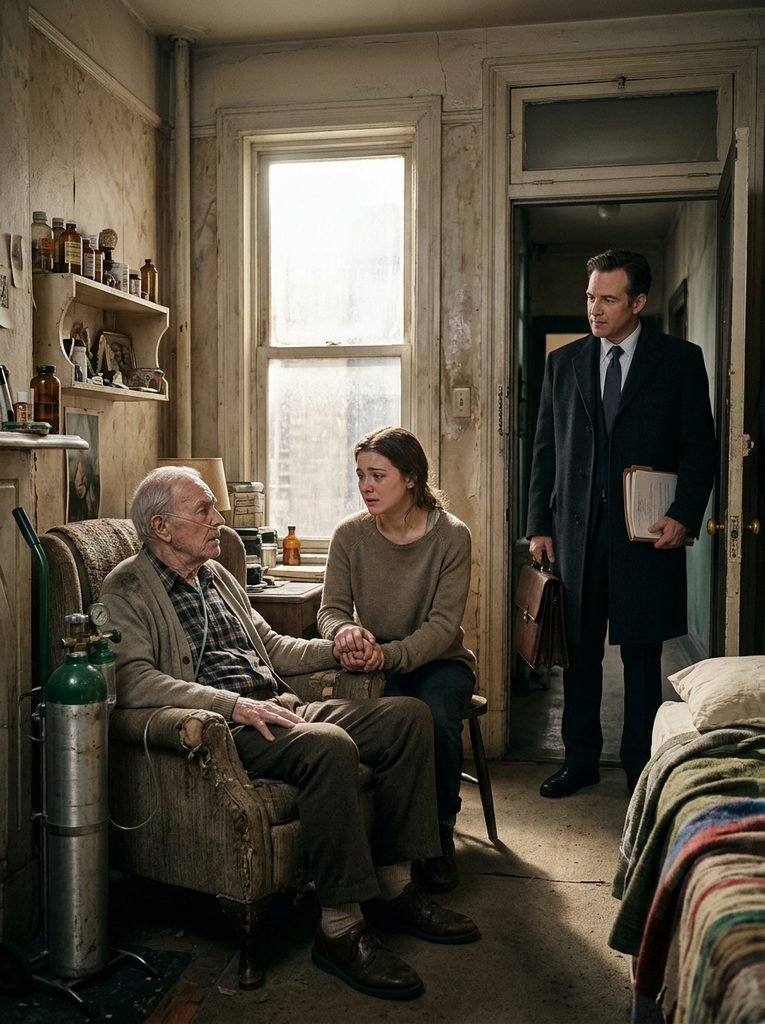
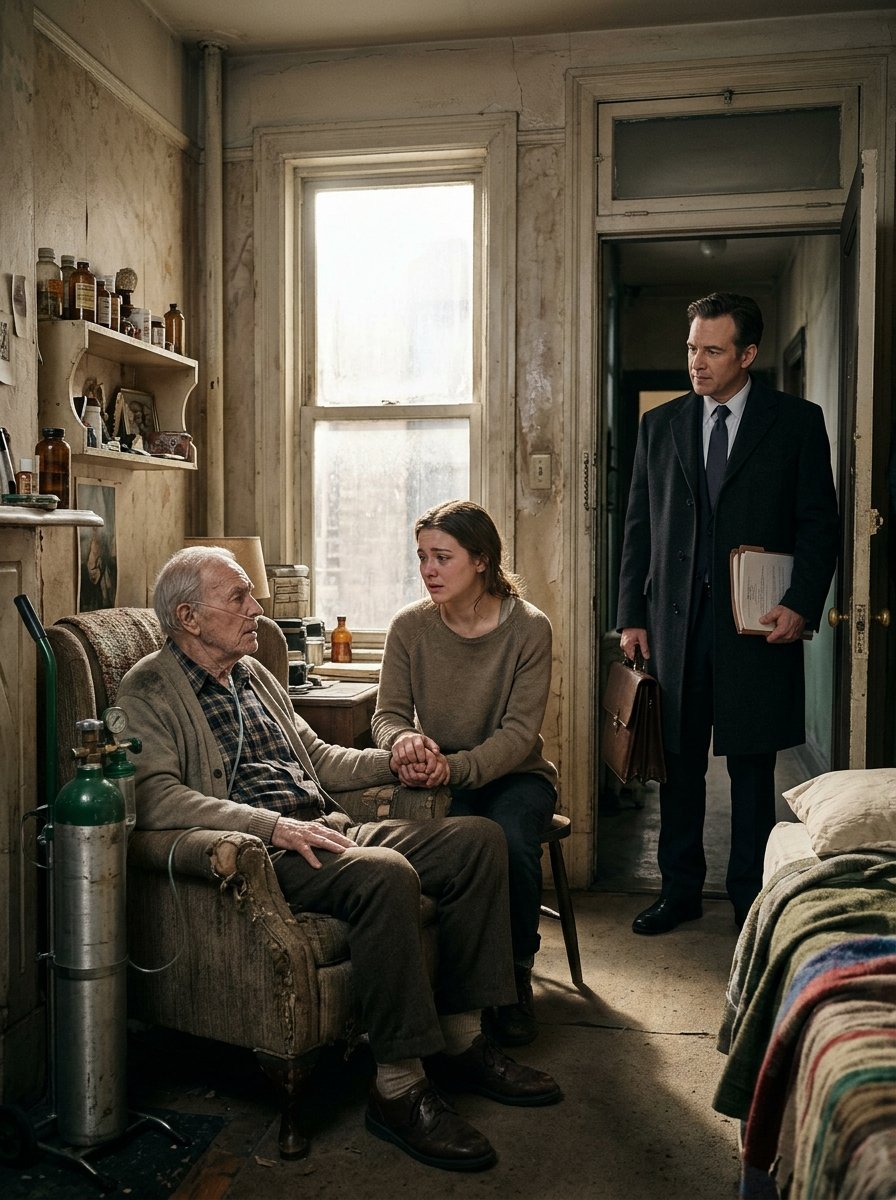
The house was small and warm.
There were nursing textbooks on the coffee table.
His wife is working toward her RN degree on top of her job at the school cafeteria.
There were papers and a coffee mug and the faint smell of something good that had been cooked for dinner.
Not a rich smell.
An honest one.
His wife appeared from the hallway.
She was 8 months pregnant, moving carefully, her hand resting against her side.
She saw me, and her face did the thing that genuine concern does.
It didn’t perform.
It just responded.
“Oh, sweetie,” she said. “You’re soaking. Sit down. I’ll get a towel.”
They sat me in the only armchair in the room.
My youngest son knelt on the floor and took off my wet boots himself.
He didn’t flinch at the state of them.
He dried my feet with a towel and rubbed them until warmth came back.
His wife came out with a blanket that smelled like fabric softener and draped it over my shoulders without being asked.
“Tell me what’s going on,” my youngest son said.
He pulled a chair close and sat facing me, forearms on his knees, giving me the kind of attention that people who work in emergencies learn to give.
Complete, unhurried, present.
I told him the whole story.
The audit, the frozen accounts, his brother’s $40, his sister’s 60.
He was quiet for a moment.
Then he nodded once.
“You’re staying here,” he said.
It was not a question.
I looked at the room.
I could see the bedroom through the open door.
One bed, a small dresser, a closet, half a jar.
There was no guest room.
There was barely space for the two of them and the baby arriving in four weeks.
I started to say I couldn’t impose.
He stopped me with a look.
“I’m not hearing that,” he said quietly, but without any softness in it.
“You’re my father. This is your house as long as you need it.”
His wife had already gone to the kitchen.
I heard the quiet sounds of a pot being lifted.
She came out with a bowl of soup, vegetable, homemade, the kind that takes real effort, and a piece of bread on the side.
She set it on the end table next to my chair like it was the most ordinary thing in the world.
“Eat,” she said.
I ate.
What I did not know until later was this.
They had $170 in their checking account.
Rent was due in 5 days.
My youngest son had been planning to pick up an extra shift to cover the gap.
When I arrived with nothing but a lie and ruined boots, neither of them calculated what I would cost them.
They just opened the door.
I was awake before either of them the next morning, lying on their couch beneath a borrowed pillow, listening to the house settle.
Through the thin wall, I could hear them talking low.
The kind of conversation couples have in the early morning when they’re working something through together.
I heard my youngest son say he thought he could get 250 for the personal oxygen kit he’d bought himself out of pocket two years back.
I heard his wife say no, absolutely not.
And then something about the grocery store sales circular and whether chicken thighs were marked down this week.
They were figuring out how to stretch nearly nothing across three people.
And then I heard his wife say quietly and without hesitation:
“He’s worth it. He’s your dad. We’ll manage.”
I put my arm over my eyes and lay still in the dark for a long time.
At 7:15, I sat up, reached into the hidden seam in my coat lining, and pulled out my real phone.
My attorney answered on the second ring.
“It’s time,” I said. “Bring the car and the documents and start the wire this morning.”
He was there in 40 minutes.
My daughter-in-law was at the kitchen table with her coffee and her textbook when the black car pulled to the curb.
My youngest son had just come from the shower.
He heard the knock, three measured knocks, and looked at me.
I stood up.
I peeled away the theatrical beard I had been wearing over my real one.
I straightened to my full height and rolled my shoulders back until my spine found itself again.
My youngest son stared at me.
“Dad,” he said slowly.
“Open the door,” I said.
My attorney came in carrying a leather portfolio and the measured expression of a man about to alter the trajectory of a family.
He shook my youngest son’s hand and stood in the center of that small living room near the coffee table stacked with nursing textbooks.
And he explained what had actually happened.
There was no audit.
There was no frozen account.
There was a 3-month performance designed and executed by me because I needed the answer to a question before I got any older.
My youngest son sat down on the arm of the couch.
His wife came to stand in the kitchen doorway, one hand on the doorframe.
“The company is in excellent standing,” my attorney said. “Mr. Kaine completed the sale of the industrial division to a private equity group last week. The transaction generated significant liquidity. He retains majority ownership of the remaining portfolio.”
My attorney opened the portfolio and placed a document on the coffee table.
My youngest son looked at the number.
He looked up at me.
He looked back down.
“Dad,” he said, his voice had roughened. “What is this?”
“A certified bank transfer,” I said, “into an account in your name and your wife’s, effective this morning. It’s not a loan. It’s not conditional on anything. It’s yours.”
The number was $2 million.
He shook his head immediately and pushed the paper back across the table toward me.
“I don’t want it,” he said. “I didn’t let you in because I wanted something from you.”
“I know,” I said. “That’s the only reason it’s yours.”
His wife crossed the room and sat beside him.
She took his hand.
She looked at me, not at the paper, at me.
And I saw in her face the same quality that had been there from the first day I met her.
A settled, quiet decency that most people spend their whole lives chasing and never locate.
My attorney set two additional documents on the table.
These were different.
These were formal letters addressed to my eldest son and my daughter.
I had restructured my estate that morning.
My eldest son’s advance against inheritance, the house, the investment accounts I had seated, was being converted to a callable loan due in full.
My daughter’s line of credit through the family trust was being closed.
The bequests I had been planning for after my death were amended.
What they had expected to inherit, they would now need to earn.
I was not destroying them.
That is not the kind of man I want to be.
But I was leveling them.
I was placing them in a position where they would have to build something real with their own hands the way I had.
I would deliver that news personally, directly, with a conversation I intended to have before the week was out.
My youngest son was looking at me steadily.
“Did you know?” he asked. “Last night, when I said you could stay, did you know for certain that I would?”
“No,” I said.
And that was the complete truth.
That was the part I was afraid of.
He nodded slowly.
He picked up the document and looked at it again, longer this time.
“There’s a community health clinic on Lion’s Avenue,” he said at last. “They’ve been trying to expand their trauma bay for 3 years. They don’t have the funding.”
“That’s one idea,” I said.
“And the rent,” his wife said quietly.
She was almost smiling.
“And the rent,” he agreed.
He stood and put his arms around me the way he used to when he was small.
Fully, without reservation.
The way you hold someone when you mean it and there’s no calculation behind it.
“I’m glad you’re okay,” he said. “I was scared last night. I didn’t show it, but I was scared.”
“I know,” I said. “I’m sorry for that part.”
He pulled back and looked at my face.
And in his expression, there was something that was not quite forgiveness because I had not done anything that required forgiving, but something like understanding.
The kind of understanding that only comes from people who have made enough room in their hearts to hold complicated things without being broken by them.
It has been several months since that night.
My eldest son is managing his affairs differently than he was.
The conversion of his advance to a formal loan made an impression, as I expected it would.
He is not a bad man.
He is a man who was never required to discover what he was made of because I cleared every obstacle before he encountered it.
I have stopped clearing them.
The conversation we had was hard on both sides.
The way honest conversations tend to be.
I think slowly it is making him better.
My daughter is renegotiating her relationship with the idea of what she owes the world versus what the world owes her.
That renegotiation is ongoing.
I am patient.
My youngest son and his wife had their baby 6 weeks after that night.
A girl.
They named her after my late wife, who passed 11 years ago.
It is a fact my youngest son never forgot.
It is a fact his siblings never thought to remember.
The clinic on Lion’s Avenue has its expanded trauma bay now.
My youngest son volunteers there on his days off.
His wife will begin her nursing clinicals there in the spring.
I bought the house on the east side, not to move them somewhere grander.
He told me plainly he was not ready to leave that neighborhood, that his station was there and his people were there, and I understood that in a way I never would have before that rainy night.
I bought it so the rent was simply gone.
So that particular pressure, at least, he would never carry again.
When I visit them, which I do every week now without fail, I sit in that small living room that is still a little crowded and still has textbooks on the coffee table.
And I hold that baby girl and I think about the question I had been too proud to ask for too many years.
Who loves you when you have nothing to offer them?
The answer for me was in a house with a chainlink fence and a muddy backyard, with a man who got down on the floor without being asked and dried the feet of the father who had once called his choices a waste.
He had the least in his pocket and the most in his heart.
I spent 40 years measuring everything in dollars, and I nearly missed the one investment that actually mattered.
Do not wait until you are standing in the rain to find out who your people are.
Look at who opens the door when you have nothing to give.
Look at who stays.