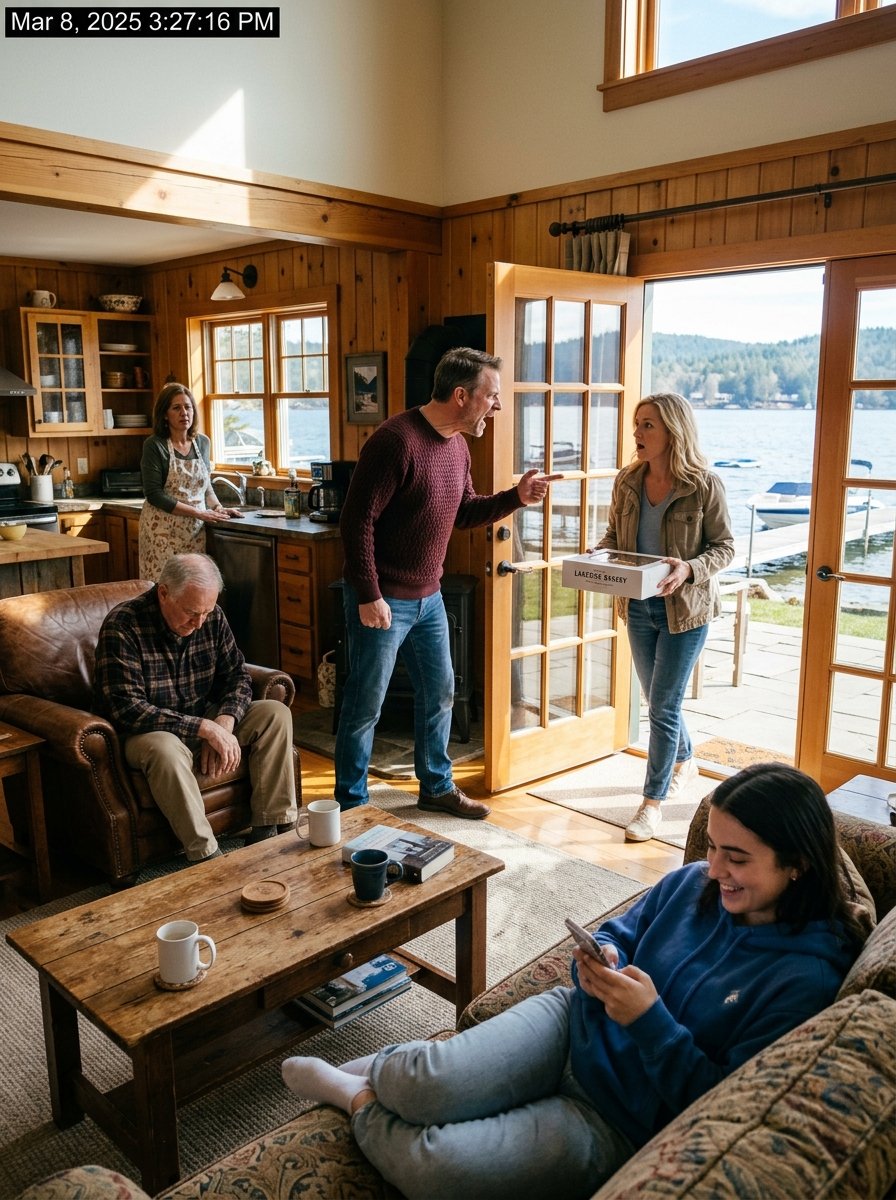
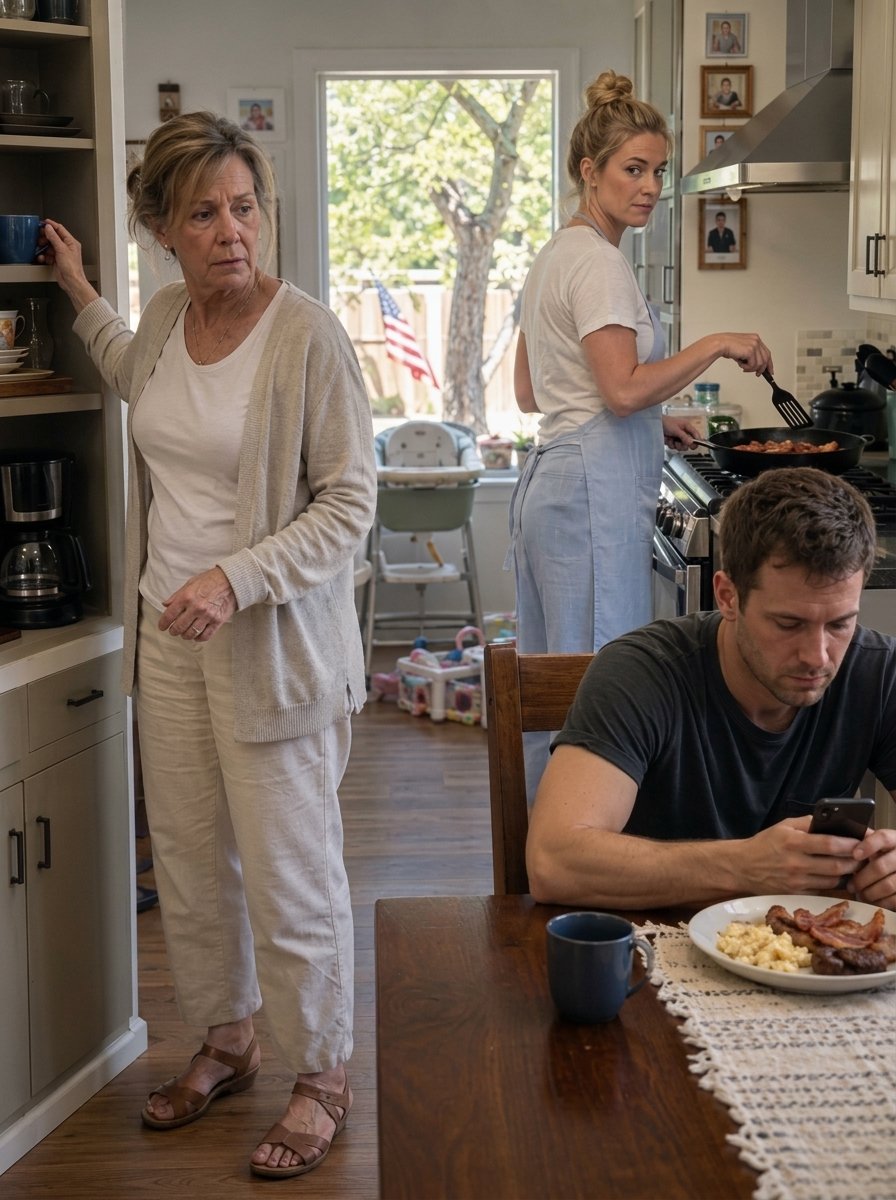
“You’re embarrassing this family,” my husband said in front of everyone. Even my stepdaughter called me a “deadbeat.” Then the most respected man in town walked in with his 3 kids… They ran straight to me. My father-in-law dropped his fork. My husband went pale.
every conversation stopped. Forks froze halfway to mouths. Even the waitress standing beside our table hesitated before setting down another basket of warm rolls.
I looked up from my untouched plate and met Ethan’s cold stare.
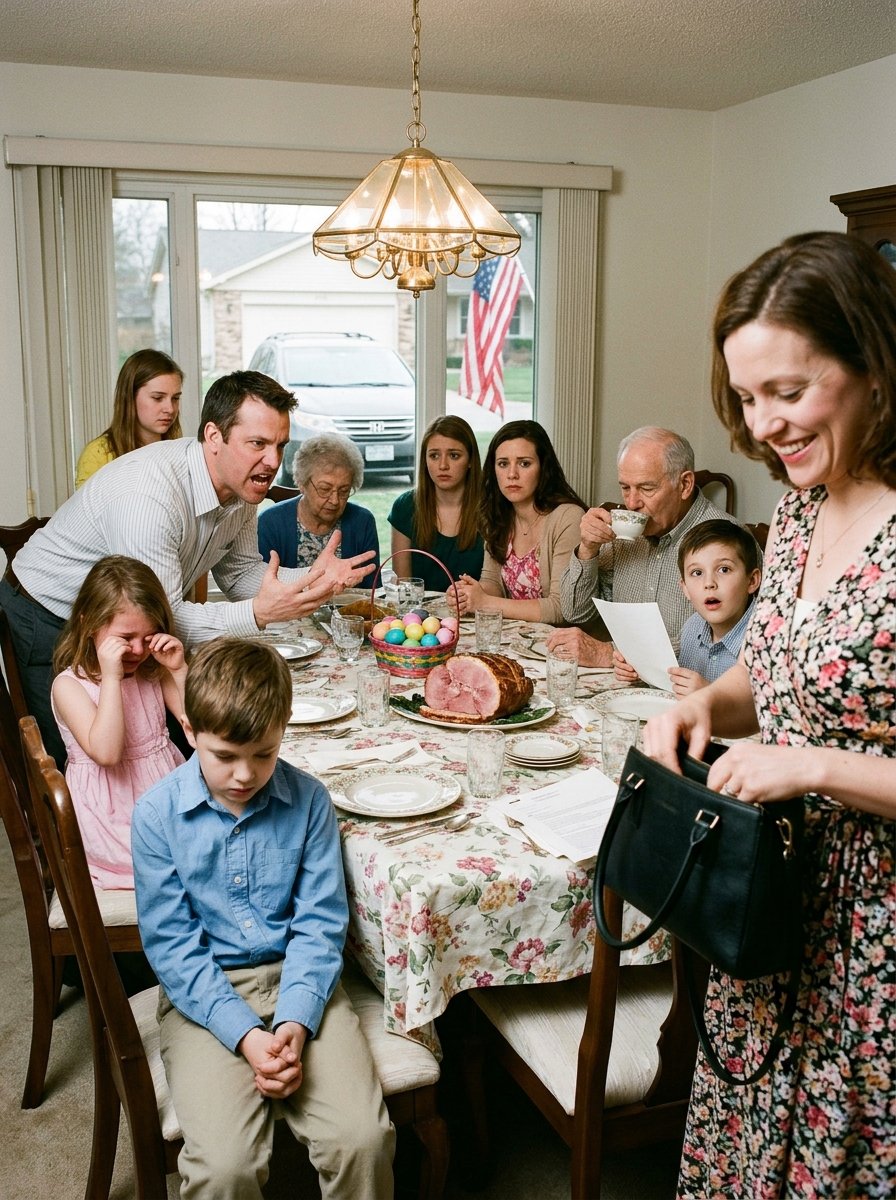
“I’ve had enough,” he said loud enough for everyone to hear. “You contribute nothing around here, Emma.”
A few uncomfortable chuckles rippled around the table. Before I could answer, Madison, my 16-year-old stepdaughter, leaned back in her chair, folded her arms, and laughed. “She’s a dead beat.”
The word hit harder than I expected, not because it was new, because she’d finally become comfortable saying it in public.
Across the table, my father-in-law slowly lowered his eyes. My mother-in-law sighed as if Madison had simply spoken an uncomfortable truth. No one defended me. No one even looked surprised.
Then the restaurant doors opened. The most respected man in town walked inside. Three children ran straight toward me. My father-in-law’s fork crashed onto his plate. My husband turned pale.
My name, my name is Emma Collins. And until that night, nearly everyone in my husband’s family believed I was living off him. If you had asked them what I did for a living, they probably would have shrugged. “Nothing important.”
That was Ethan’s favorite answer.
It wasn’t always this way. When we married 5 years earlier, he admired that I had been an elementary school teacher. He loved telling people I had patience, that I cared about children, that I’d someday make an incredible mother.
Somewhere along the way, those compliments disappeared. They were replaced by questions.
“How much do you make?”
“When are you getting a real job?”
“Why are we always depending on my paycheck?”
The truth was simple. I had left teaching two years earlier to work full-time for Hope Harbor Children’s Outreach, a nonprofit that helped foster families and children in emergency placements. The salary wasn’t
impressive. Actually, it was embarrassingly small compared to what I could have earned elsewhere.
But every morning, I woke up believing my work mattered.
Unfortunately, Ethan measured success differently. If it didn’t increase our bank account, he didn’t think it counted. At first, he complained only when we were alone. Later, he complained in front of friends. Eventually, he stopped caring who heard, including his family.
That evening was supposed to celebrate his father’s 70th birthday. His parents had reserved the back room at Bailey’s Steakhouse, one of the nicest restaurants in our small North Carolina town. Nearly 20 family members
filled the long table. His older sister, Laura, sat beside her husband. Several cousins laughed over old stories. His mother floated around making sure everyone had enough sweet tea.
From the outside, we looked like one of those families who gathered every Sunday after church.
Inside, cracks had been spreading for years.
As everyone ordered dinner, Ethan casually mentioned that he’d recently worked overtime.
“I’m basically carrying this household,” he joked.
Several people laughed. His mother smiled proudly. Someone asked what I had been doing lately. Before I could answer, Ethan shrugged.
“Oh, Emma stays busy.”
Madison smirked. “Busy spending Dad’s money.”
“More laughter.”
I forced a smile that felt painfully stiff. “I still work,” I said quietly.
Ethan leaned back. “At that charity place.”
“It’s a nonprofit.”
“Same difference.”
“It isn’t.”
He waved dismissively. “They barely pay you.”
His mother nodded. “You were happier when you were teaching.”
“I was exhausted.”
“Aren’t you exhausted now?”
I looked at her. “Sometimes.”
“Then why stay?”
Because every week frightened children walked through our doors carrying garbage bags filled with everything they owned. Because somebody had to tell them they were finally safe. Because some jobs couldn’t be measured by direct deposits.
But I knew better than to explain. I’d tried before. People only heard the salary, never the purpose.
Madison glanced down at her phone before looking directly at me. “You know what my friends ask?”
I stayed silent.
“They ask what you do, and I tell them you’re unemployed.”
A few nervous laughs circled the table.
“Madison,” I said softly.
“What?”
“You know that’s not true?”
She shrugged. “You make almost nothing.”
Ethan didn’t correct her. Instead, he cut into his steak.
“She’s got a point.”
My chest tightened. I searched the faces around the table. Laura suddenly became fascinated by her mashed potatoes. My father-in-law stared into his iced tea. No one wanted to get involved.
Sometimes silence hurts more than insults.
Dinner continued awkwardly. Conversations shifted toward football, vacation plans, rising grocery prices. I barely tasted my food. I wondered, not for the first time, how I’d become invisible inside my own marriage.
Ethan wasn’t cruel every hour of every day. That almost made it worse. He could still be charming with neighbors, funny with co-workers, patient with strangers.
But somewhere along the way, respect for me had disappeared. Little by little, until nights like this felt normal.
About 20 minutes later, the restaurant grew strangely quiet. People near the entrance stood. Several diners whispered. I glanced toward the front doors.
Daniel Harper had just walked inside.
Everyone in town knew Daniel. He had spent 30 years as a firefighter before becoming chief. After retiring, he founded Harper Children’s Foundation, helping foster families across three counties. Every Christmas, he organized toy drives. Every Fourth of July, he led the Veterans Parade.
People trusted him, not because he was wealthy, because he never stopped serving others.
Walking beside him were three children I recognized instantly.
Lily, Ben, and Little Noah.
My heart nearly stopped. What were they doing here?
Daniel smiled the moment he saw me. The children followed his eyes. Then everything happened at once.
“Miss Emma!”
The three of them broke into a run.
Little Noah reached me first and threw both arms around my waist, then hugged me from one side. Lily clung to my hand with tears already filling her eyes.
“We missed you.”
“We’ve been looking for you.”
“I drew you another picture.”
The entire room went silent.
My father-in-law’s fork slipped from his hand and clattered loudly against his plate before crashing onto the hardwood floor. Every head turned toward me.
Ethan slowly stood. His face had lost all its color.
Daniel walked calmly toward our table. His warm smile never faded. Then he looked directly at me.
“There you are, Emma.”
He paused just long enough for every person in the room to lean forward.
“We finally found you.”
For several long seconds, nobody spoke.
Little Noah buried his face against my stomach, wrapping his tiny arms around me as though he was afraid I might disappear again. Ben stood close enough that his shoulder touched mine. Lily reached into her backpack and carefully pulled out a folded piece of paper.
“I finished it,” she whispered.
She unfolded a crayon drawing. It showed four stick figures holding hands beneath a bright yellow sun. One was labeled Miss Emma. The other three were labeled with their names.
I felt my throat tighten.
“I love it,” I said softly.
“I knew you would.”
Around us, 20 people sat frozen. Even the servers had stopped moving.
Daniel Harper rested a gentle hand on Ben’s shoulder before smiling toward my father-in-law.
“I’m sorry for interrupting your celebration.”
Nobody answered.
Daniel looked back at me. “I’ve been trying to reach you all afternoon.”
“I left my phone in the office.”
“I figured.”
His eyes drifted around the table before settling briefly on Ethan. “I didn’t realize you were having a family dinner.”
Ethan swallowed. His confident smile from only moments earlier was gone.
“You know my wife?”
Daniel looked genuinely surprised. “Know her?”
He chuckled softly. “I’ve known Emma for almost 2 years.”
The room became even quieter.
2 years.
Exactly the amount of time my husband had spent telling everyone I had thrown away my career.
2 years earlier, I had resigned from the elementary school where I’d taught third grade for nearly 11 years. Some people thought I had burned out. Others assumed I’d found a better paying job.
The truth was much more complicated.
It had started with a little boy named Caleb.
He arrived in my classroom wearing the same sweatshirt almost every day. Even in spring, he was polite, quiet, always hungry. One afternoon, he fell fell asleep during reading time.
When I gently woke him, he apologized.
“I’m sorry, Miss Collins.”
“Were you up late?”
He hesitated. “We slept in the car.”
That single sentence changed my life.
Child protective services became involved. Our school counselor worked tirelessly. Eventually, Caleb entered emergency foster care.
Watching the process from the outside opened my eyes to something I’d never fully understood. Removing a child from danger wasn’t the end of the story. It was only the beginning.
The foster families needed support. The children needed stability. Someone had to help them through court hearings, therapy appointments, school transfers, nightmares, birthdays, and all the moments in between.
I couldn’t stop thinking about it.
Months later, Hope Harbor Children’s Outreach posted an opening for a family support coordinator. The salary was nearly 40% lower than my teaching income.
Everyone told me not to apply except my heart.
When I accepted the position, Ethan stared at my resignation letter as if I’d announced I was moving to another country.
“You’ve lost your mind.”
“I don’t think so.”
“We finally have financial stability.”
“We’ll still be okay.”
“No, we won’t.”
“We’ll adjust.”
He laughed. “Adjust.”
“I’ll cut back.”
“You shouldn’t have to.”
“I want to do this.”
“You want to play social worker?”
“I want to help.”
“You can help by keeping your teaching job.”
We argued for weeks. Eventually, he stopped arguing. Not because he understood, because he’d decided I was making a mistake. One that, in his mind, proved I wasn’t practical.
Every month afterward became another opportunity for him to remind me.
“My bonus was bigger than your paycheck.”
“My co-worker’s wife just got promoted.”
“My sister makes twice what you do.”
At first, I defended myself. Eventually, I stopped trying.
Hope Harbor wasn’t glamorous. Most days began before sunrise. There were emergency phone calls, home visits, meetings with overwhelmed foster parents, hours spent helping children enroll in new schools after being removed from unsafe homes.
Sometimes I delivered groceries. Sometimes I assembled bunk beds. Sometimes I simply sat beside a frightened child until they believed someone wasn’t going to leave.
The hardest days were court days.
Children rarely understood why strangers in suits decided where they would live. They only knew they wanted someone familiar nearby.
That’s how I met Daniel Harper.
His foundation partnered with dozens of nonprofits across the county. Whenever a foster family needed furniture, school supplies, winter coats, or emergency funding, Daniel somehow found a way to provide it.
People admired him because he solved problems without asking for recognition.
One afternoon, we both arrived at the same foster home carrying boxes.
He laughed. “I think we brought the same crayons.”
From that day on, we worked together often.
He noticed something I never intended anyone to notice. I stayed after everyone else left. If a child was frightened at bedtime, I’d stay. If a foster parent felt overwhelmed, I’d listen. If paperwork kept volunteers late, I’d order pizza with my own money.
Not because anyone asked, because those children deserved consistency.
Daniel once told me something I’d never forgotten.
“The people who change lives usually aren’t the ones standing behind microphones.”
I smiled. “I’m perfectly happy staying off the stage.”
He nodded. “I know.”
3 months after meeting Daniel, another emergency call came late on a Friday night.
A house fire, three siblings, no surviving parents.
Lily was 11. Ben had just turned 8. Little Noah was only five.
Everything they owned fit inside three plastic trash bags.
Hope Harbor asked if I could stay with them during their first weekend placement until a long-term foster family became available.
I said yes before hearing the details.
That weekend became another, then another. Although I wasn’t legally adopting them, I became their emergency caregiver whenever schedules changed, placements shifted, or court dates created uncertainty.
They began calling me Miss Emma.
Eventually, Noah accidentally called me mom. He covered his mouth in horror.
“I’m sorry.”
I hugged him. “You never have to apologize for feeling safe.”
He cried for nearly 20 minutes.
After that, the other two occasionally slipped and called me mom, too. Never because I replaced their mother, because grief sometimes creates complicated love.
I never corrected them.
Neither did Daniel. He understood.
Back in the restaurant, Daniel looked down at the children gathered around me.
“They’ve been asking to see you all week.”
Lily nodded enthusiastically.
“You promised you’d come watch my softball practice.”
“I still will.”
Ben grinned. “I hit my first home run.”
“I heard.”
“You did?”
“I hear everything.”
He beamed with pride.
Noah tugged gently on my sleeve. “I lost another tooth.”
“Oh, no.”
He proudly opened his hand. “I kept it.”
I laughed despite the tension filling the room. “You certainly did.”
Only then did I remember everyone watching.
Slowly, I turn turned toward Ethan. He looked as though he were seeing me for the first time.
Before he could speak, Daniel faced the entire table.
“I don’t think any of you realize just how much Emma has done for these children.”
Every pair of eyes shifted toward him, and for the first time that evening, someone else was finally about to tell my story.
No one at the table moved. The only sound came from the faint clink of dishes somewhere in the restaurant and the soft hum of an old country song drifting through the speakers overhead.
Daniel Harper stood with one hand resting gently on Noah’s shoulder. The three children remained close to me as though they had every right to be there.
In truth, they did.
Daniel looked around the room with the calm confidence of a man who had spent decades walking into emergencies. He wasn’t angry. He wasn’t trying to embarrass anyone. He simply believed people deserved to know the truth.
“I don’t think any of you realize just how much Emma has done for these children.”
Nobody answered.
My father-in-law slowly bent down, picked up his fork from the floor, and set it beside his plate without saying a word. Even Madison had put away her phone.
Daniel smiled at Lily.
“Would you like to tell them how you met Miss Emma?”
Lily looked at me first, silently, asking permission. I gave her a small nod.
She took a deep breath.
“Our parents died in a house fire.”
Her voice was steady. She had told the story enough times that the facts came out smoothly, but I still recognized the sadness hidden underneath every sentence.
“My brother woke me up because the smoke alarm was going off.”
Ben stared quietly at the table. Noah reached for my hand.
“We got outside,” Lily continued. “But mom and dad didn’t.”
The room became painfully still.
Even Ethan lowered his eyes.
“When everything happened,” Lily said, “people kept asking us questions.”
She glanced toward Daniel.
“Police officers, doctors, social workers, so many strangers.”
Then she looked back at me.
“But Miss Emma wasn’t a stranger for very long.”
Daniel picked up the story.
“When children lose their parents unexpectedly, the system moves fast.”
He wasn’t criticizing anyone. He was simply explaining.
“Emergency placements have to happen immediately. Relatives are contacted. Foster families are located. Schools are notified. Therapists become involved.”
He folded his hands. “It’s overwhelming.”
His eyes settled briefly on Ethan. “Especially for children.”
I noticed my husband shift uncomfortably.
Daniel continued, “The first night these three arrived at Hope Harbor…”
He smiled at Noah. “They wouldn’t sleep.”
Noah nodded. “I thought there would be another fire.”
Daniel looked at everyone around the table.
“Emma stayed all night.”
I immediately shook my head. “It wasn’t just me.”
“No,” Daniel replied gently. “But you were the one who stayed until sunrise.”
I looked down.
Recognition had never been something I wanted. That wasn’t why I did the work.
The memories returned so clearly, I could almost smell the stale coffee from that long night.
Noah had refused to let go of my hand. Every time I stood up, he panicked.
“You’re leaving?”
“No.”
“You promise?”
“I promise.”
Ben hadn’t cried. He simply sat in the corner staring at the floor for hours. Lily tried so hard to act brave that she nearly made herself sick.
Around 3:00 in the morning, I made grilled cheese sandwiches because none of them had eaten dinner. Noah finally took one bite, then another.
At dawn, all three children had fallen asleep in the living room. I covered them with blankets before quietly making breakfast for the foster parents who were arriving later that morning.
Nobody asked me to stay.
I simply couldn’t leave.
Daniel’s voice pulled me back to the restaurant.
“Most people don’t realize foster care isn’t only paperwork.”
He looked around the room.
“It’s birthdays. It’s nightmares. It’s panic attacks. It’s helping children believe adults can still be trusted.”
He paused.
“Emma never treated these kids like a case file.”
He smiled at the children.
“She treated them like family.”
Noah squeezed my hand tighter.
Madison stared openly at him. She looked confused, almost guilty.
Ben finally spoke. His voice was quiet.
“I used to have bad dreams.”
I rubbed his shoulder. “You still have a few.”
“Not as many.”
He smiled shily.
“Miss Emma sat outside my room until I could fall asleep.”
He shrugged as though that were perfectly ordinary.
“I knew if I woke up…”
He looked at me.
“She’d still be there.”
I blinked quickly. Some memories never became easier.
Lily reached into her backpack again.
This time, she removed a folded photograph. She handed it to my father-in-law. It showed the three children standing beside me at last year’s county fair. Cotton candy covered Noah’s face. Ben held an oversized stuffed bear. Lily was laughing.
Across the bottom, someone had written in blue marker, “Our best day.”
My father-in-law studied the picture for several long seconds before quietly passing it to his wife. She looked at it without speaking. Her expression softened for the first time that evening.
Daniel cleared his throat.
“Do you know why these children still come looking for Emma?”
No one answered.
“Because she never disappeared after the crisis ended.”
He folded his arms.
“Many good people help during emergencies. But after the headlines fade, after the casserles stop arriving, after everyone returns to their own lives, children still need someone.”
He looked directly at Ethan.
“Emma kept showing up. Not once, not twice, hundreds of times. School conferences, therapy appointments, doctor visits, softball games, reading nights, birthday parties, court hearings, Christmas mornings when foster parents worked overnight shifts.”
“She never asked anyone to notice. She just came.”
My husband looked at me as though searching for an explanation.
“When were you doing all this?”
His voice barely rose above a whisper.
I answered honestly. “Most Saturdays.”
He frowned. “You told me you were volunteering.”
“I was.”
“You never said…”
“You never asked what volunteering meant.”
He opened his mouth, then closed it again because he knew I was right.
Whenever I mentioned work, he usually changed the subject. Whenever I came home exhausted, he assumed I had wasted another day.
The truth had always been there.
He simply hadn’t cared enough to look.
Madison finally spoke.
“You mean…”
She looked at me.
“They call you mom.”
The question hung in the air.
Before I could answer, Noah did.
“Sometimes.”
He lowered his head.
“I miss my real mom. I always will.”
Then he smiled at me.
“But Miss Emma makes me feel safe.”
The innocence in his voice broke something inside the room.
Nobody misunderstood what he meant. He wasn’t replacing his mother. He was describing trust, the kind children build only after someone proves over and over again that they won’t walk away.
My father-in-law slowly removed his glasses. He rubbed his eyes.
“When Ethan said you worked at a charity…”
His voice cracked. I thought he couldn’t finish.
I smiled gently. “It’s okay.”
“No.” He shook his head. “It isn’t.”
He looked around the table.
“We never asked.”
Nobody argued because nobody could.
Daniel reached into the inside pocket of his jacket and removed a cream colored envelope.
“I actually came tonight for another reason.”
He handed it to me.
“The board voted this afternoon.”
I looked at him, puzzled. “What is it?”
“A letter.”
I carefully opened it. Inside was an official document from Harper Children’s Foundation.
My eyes filled before I finished reading.
Daniel smiled.
“Congratulations. You’ve been selected as this year’s Community Guardian Award recipient.”
I stared at him. “I didn’t even know I was nominated.”
“You weren’t?”
He chuckled.
“The children nominated you.”
I covered my mouth.
Lily grinned proudly. “We all wrote letters.”
Ben nodded enthusiastically.
“So did our foster parents.”
Noah bounced on his feet. “I drew pictures.”
Daniel laughed. “You certainly did.”
I looked around the room.
Just 20 minutes earlier, I had been called an embarrassment.
Now the same people who had laughed at me couldn’t meet my eyes.
And for the first time in a very long while, the silence belonged to them.
I barely remembered how the rest of the dinner ended. People spoke to me. They shook my hand. A few even hugged me. But their voices blended together like distant echoes.
The children stayed close until Daniel finally reminded them that they had an early morning the next day.
Before leaving, Noah hugged me one last time.
“When are you coming over again?”
“This Saturday.”
“You promise?”
I smiled. “I’ve never broken one of my promises.”
He nodded, completely satisfied.
“I know.”
As Daniel led the children toward the restaurant entrance, nearly every customer watched them leave. Several people recognized him and waved. Others quietly glanced back at me, not with pity anymore, with respect.
It was a feeling I hadn’t experienced in a very long time.
The drive home was silent.
Ethan gripped the steering wheel so tightly that his knuckles turned white. Madison sat in the back seat staring out the window. She hadn’t looked at her phone once since we left the restaurant.
That alone told me how shaken she was.
Street lights passed over the windshield one after another. Neither of them spoke. Neither did I.
Sometimes silence says everything words cannot.
When we finally pulled into the driveway, Ethan turned off the engine but didn’t move. He stared straight ahead.
“What the hell was that?”
His voice was calm. Too calm.
I unbuckled my seat belt. “What do you mean?”
“You know exactly what I mean.”
I turned toward him. “No.”
“You made me look like an idiot.”
I blinked. “I made you?”
“You never told me Daniel Harper knew you.”
“I mentioned him.”
“You said you worked with some foundation.”
“I told you his name when more than once.”
He frowned. “I don’t remember.”
“I know.”
That was the problem.
He had never really listened.
Inside the house, Madison quietly disappeared upstairs without saying good night. I could hear her bedroom door close.
Ethan loosened his tie and paced across the living room.
“You should have told me though those kids were so attached to you.”
“I thought you knew what I did.”
“I knew you worked at Hope Harbor.”
“You never wanted to hear about it.”
“That’s not true.”
I looked at him steadily.
“How many times have you asked me how my day went?”
He didn’t answer.
“How many names of the children do you know?”
Silence.
“Can you tell me what my actual job title is?”
More silence.
I wasn’t asking impossible questions. I was asking questions a spouse normally knew.
Finally, he muttered, “I just figured you handled paperwork.”
A tired smile crossed my face.
“You figured.”
That phrase summarized the last two years of our marriage.
He figured. He assumed. He concluded without ever asking.
The next morning, I woke before sunrise.
Old habits. Children in crisis don’t care if it’s Saturday.
Coffee in one hand, I stepped onto the back porch. The summer air was already warm. Birds filled the maple tree behind our fence.
For for 10 peaceful minutes, I almost convinced myself the previous night had been a strange dream.
Then my phone buzzed.
It was a message from Daniel.
“Hope you’re okay. The kids keep talking about seeing you.”
I smiled.
“I’m okay. Give them hugs for me. I’ll see them Saturday.”
Before I could put my phone away, another message appeared.
This one wasn’t from Daniel.
It was from someone I hadn’t spoken to in years.
“Mrs. Collins.”
I recognized the number only after reading the signature.
Caleb, the little boy from my classroom, the one whose story had changed my life.
He was 20 now.
“I heard what happened at Bailey’s last night. My aunt was there. I just wanted to say thank you again.”
A lump formed in my throat for what I typed.
His answer came almost immediately.
“For not giving up on me when everybody else did.”
I closed my eyes.
Sometimes you never know whether you’ve made a difference until years later.
By Monday morning, our town had already begun talking.
Small towns have their own way of spreading news. Nobody intends to gossip. It simply travels. At the grocery store, at church, at the diner where retired veterans gathered every morning.
By lunchtime, three different co-workers asked whether I had really received the community guardian award.
I laughed awkwardly. “I guess the news travels fast.”
One of them smiled.
“This town finally learned what you’ve been doing.”
I wasn’t sure how I felt about that.
Recognition was nice, but it also made me uncomfortable. Helping children had never been about applause.
Wednesday afternoon, Harper Children’s Foundation released a short video promoting its annual fundraising banquet. It featured volunteers, foster parents, social workers, and several families whose lives had been changed through community support.
I appeared for less than 30 seconds.
No dramatic music, no spotlight, just me helping Noah tie his shoes before a school field trip, helping Lily hang artwork at a summer camp, cheering as Ben crossed home plate during a little league game.
The video wasn’t really about me.
It was about the children.
But people noticed.
By evening, my inbox filled with messages. Former co-workers, old students, church members, parents I’d taught years earlier.
One message simply read, “Thank you for choosing the harder path.”
I cried after reading that one.
Someone else watched the video, too.
Madison.
I discovered that Thursday evening. She stood quietly in the kitchen while I chopped vegetables for dinner. She looked unusually nervous.
“I saw the foundation video.”
I kept slicing carrots. “I figured you might.”
“You were everywhere.”
I smiled softly. “Not really.”
“You were.”
She leaned against the counter. “They interviewed one of the boys.”
“Ben?”
She nodded.
“He said…”
Her voice became almost a whisper.
“He said you taught him what a family feels like.”
I stopped cutting.
Neither of us spoke for several seconds.
Finally, she asked, “Is that true?”
I looked at her carefully. “What do you think?”
She stared at the floor.
“I think…”
Another long pause.
“I think I never really knew you.”
That hurt. Not because she meant to hurt me, because she was right.
She had known me only through her father’s complaints. Only through jokes about my paycheck. Only through labels.
Never through truth.
That evening, Ethan came home carrying takeout from my favorite Italian restaurant. A peace offering. At least I assumed that was what he intended.
He set the bags on the counter.
“I thought maybe we could have dinner together.”
“We already planned dinner.”
“I know.”
He hesitated. “I’ve been thinking.”
I folded my arms. “So have I.”
“I’m sorry people laughed.”
I waited.
He didn’t say anything else.
“That’s it?”
“What do you mean?”
“You aren’t sorry for what you said.”
“I…”
“You’re sorry everyone found out you were wrong.”
His shoulders slumped. He looked exhausted. Maybe for the first time in years.
“I don’t know how to fix this.”
His words were honest. But honesty wasn’t enough anymore.
“You start by understanding this wasn’t about one dinner.”
I looked into his eyes.
“This has been happening for 2 years.”
He slowly sat down at the kitchen table as though the weight of those words had finally landed.
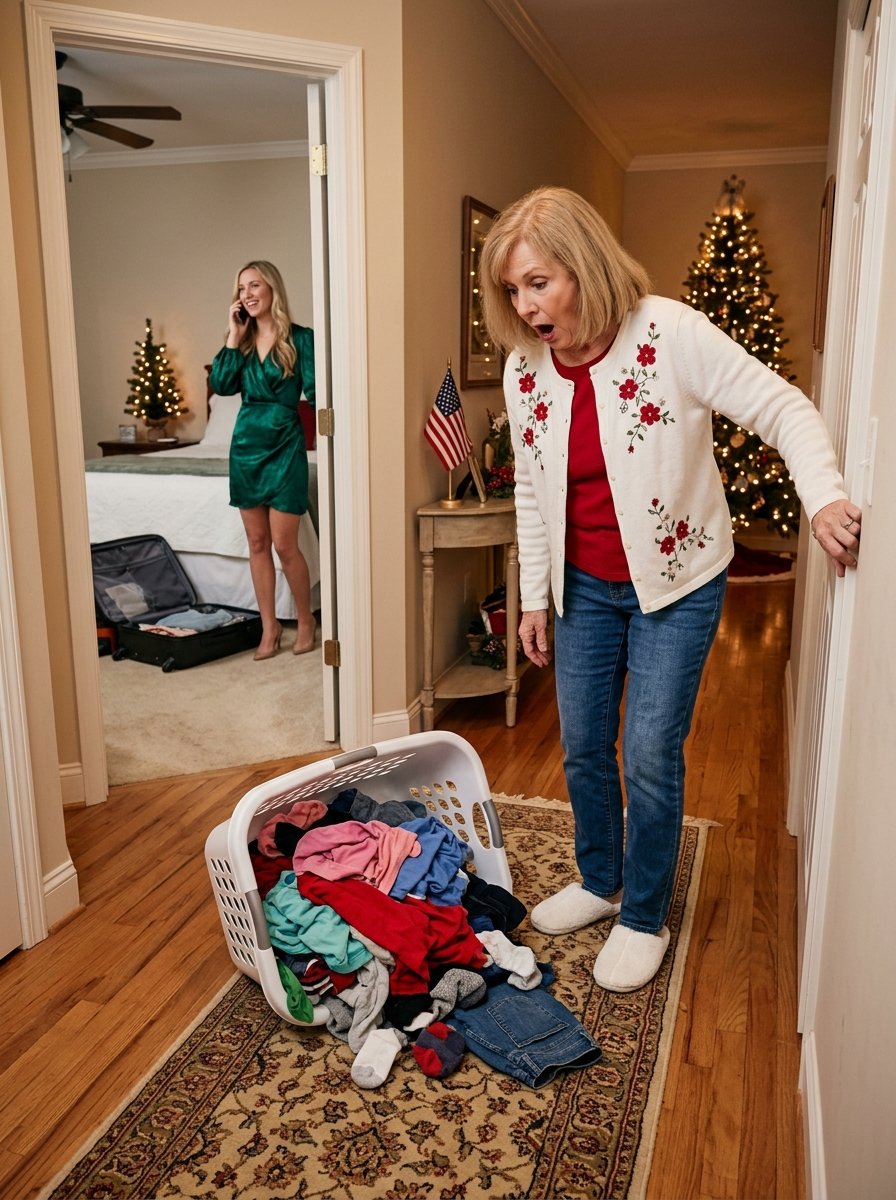
Later that night, I stood alone in our bedroom folding laundry. There was a gentle knock on the halfopen door.
Madison stood there clutching her phone. She looked like a frightened little girl instead of a confident teenager.
“Can I come in?”
“Of course.”
She stepped inside but remained near the doorway. For several seconds, she simply stared at the floor.
Then she looked up. Her eyes were already full of tears.
“I think…”
She swallowed hard.
“I think I owe you an apology.”
“I think I owe you an apology.”
Madison’s voice trembled.
For the first time since I’d known her, she wasn’t defensive. She wasn’t sarcastic. She wasn’t trying to win an argument.
She looked like a 16-year-old girl who had suddenly realized the world was much more complicated than she’d believed.
I set the folded towel on the bed.
“You don’t have to stand by the door,” I said gently.
She hesitated before walking farther into the room. Her eyes were red.
“I’ve been watching videos.”
“What videos?”
“The Harper Foundation interviews.”
I nodded.
“There are more than I thought.”
“There are.”
She swallowed hard.
“I watched one little girl talking about you.”
I smiled. “Sophie?”
“I think so.”
Madison wiped her eyes.
“She said you stayed with her in the hospital because nobody else could.”
I remembered that week.
Sophie had broken her arm after falling from a bicycle while living with a foster family. Her foster parents were caring for another child recovering from surgery.
I had stayed until nearly midnight, so Sophie wouldn’t wake up alone.
I had never thought twice about it.
“It wasn’t a big deal,” I said.
Madison stared at me.
“It was to her.”
She sat carefully on the edge of the chair near my dresser.
“I’ve been awful to you.”
I didn’t answer immediately. She deserved honesty.
“You’ve hurt me.”
“I know.”
“I don’t think you always understood that.”
“I didn’t.”
She lowered her head.
“I thought…”
Another pause.
“I thought everyone secretly agreed with Dad.”
The sentence broke my heart.
Children learn how to judge people by watching adults. Madison hadn’t invented those opinions.
She had inherited them.
“When Dad joked about your job…”
She looked miserable.
“Everyone laughed.”
“They did.”
“So I thought it was okay.”
“It wasn’t.”
“I know that now.”
Silence settled between us.
Not uncomfortable, just honest.
Finally, she looked up.
“I called you a deadbeat.”
“You did?”
“I’m so ashamed.”
I walked over and sat beside her.
“I accept your apology.”
She blinked.
“Just like that?”
“An apology is the beginning.”
She frowned. “Not the end?”
I gently shook my head.
“Trust doesn’t return because someone says they’re sorry.”
She nodded slowly.
“You have to live differently.”
“I want to.”
For the first time in years, I believed her.
That Saturday morning, I arrived at Hope Harbor just before 8. The children were helping decorate for our annual summer family picnic.
Volunteers carried folding tables across the lawn. Church groups unloaded coolers filled with sandwiches. A local hardware store had donated flower pots. A retired couple spent every year grilling hamburgers for anyone who came.
This was what community looked like.
Not glamorous, just people quietly helping one another.
As I stepped out of my car, Noah spotted me from across the parking lot.
“Miss Emma!”
He ran so fast that Daniel barely had time to laugh.
“I think he missed you,” Daniel said.
“I can tell.”
Noah wrapped his arms around my waist.
“You came.”
“I told you I would.”
“I know.”
He smiled proudly.
“You always keep promises.”
About 20 minutes later, another car pulled into the parking lot.
I looked up in surprise.
Madison climbed out.
She wore jeans, an old t-shirt, and a baseball cap. She looked nervous enough to turn around and leave.
Daniel glanced at me. “Expected?”
I shook my head. “No.”
Madison slowly walked over.
“I, um…”
She looked at the children.
“I wanted to help.”
Before I could answer, Noah tugged on her sleeve.
“Can you hold this?”
He handed her a bag of soccer balls.
She blinked. “Sure.”
Just like that, she became part of the morning.
Children have a remarkable ability to ignore awkwardness. They simply accept kindness when they see it.
Throughout the day, I watched Madison change. She tied balloons with Lily. She helped Ben organize baseball equipment. She played tag with Noah until both of them collapsed, laughing in the grass.
Around lunchtime, she found me filling cups with lemonade.
“I get it now.”
I looked at her. “What do you get?”
She watched Noah chase bubbles across the field.
“Why you stayed.”
I smiled. “They’re pretty easy to love.”
“They really are.”
She laughed softly.
“I don’t think Dad ever understood.”
“No.”
“I didn’t either.”
She looked around the picnic.
“There are hundreds of people here.”
“There usually are.”
“They all volunteer?”
“Most of them.”
“And nobody gets paid?”
“No.”
She stood quietly for a long moment.
“I’ve never seen adults work this hard for nothing.”
“They’re not getting nothing.”
“What are they getting?”
I handed her another stack of cups.
“A chance to make someone’s life a little easier.”
She considered that.
“I never thought of it like that.”
Meanwhile, things at home continued falling apart.
Ethan noticed the distance between us. We spoke politely, shared meals, paid bills. But something fundamental had changed.
The easy trust we once had was gone.
One evening, he sat across from me at the kitchen table.
“I’ve been thinking about counseling.”
I nodded. “I think that’s a good idea.”
His face brightened slightly.
“You do?”
“I do.”
“Then maybe…”
I gently interrupted him.
“But counseling isn’t going to erase the last 2 years.”
His expression fell again.
“I know.”
“I need you to understand something.”
“I’m listening.”
“I don’t want to spend the rest of my life proving my value.”
He looked down at his hands.
“You shouldn’t have had to.”
“No.”
For the first time, he didn’t argue.
A week later, my father-in-law called.
“Emma.”
“Hi, Frank.”
“I was wondering…”
He cleared his throat.
“Do you think your organization could use another volunteer?”
I smiled.
“We’re always looking for volunteers.”
“I don’t really know what I’m doing.”
“You’ll learn.”
“I’d like that.”
He hesitated.
“I owe you more than an apology.”
“You don’t owe me anything.”
“I do.”
His voice cracked.
“I judged you without ever asking who you really were.”
I closed my eyes.
“Thank you for saying that.”
The following Saturday, Frank spent 6 hours repairing broken bicycles for foster children. He left covered in grease, smiling like a little boy.
Sometimes redemption begins with a wrench and a willing heart.
Not everyone changed.
My mother-in-law remained distant. She wasn’t rude anymore. But pride can be stubborn. She found it easier to avoid the subject altogether.
I accepted that people grow at different speeds.
Some never grow at all.
One evening, nearly a month after the dinner, Ethan came home early.
“I signed up for…”
“What?”
“Volunteer orientation.”
I looked at him carefully.
“You don’t have to do that because of me.”
“I’m not.”
“Then why?”
He answered without hesitation.
“Because I need to see the world you’ve been living in.”
I appreciated the honesty. I truly did.
But honesty and effort, while important, couldn’t instantly repair years of disrespect.
A few days later, I met with a counselor by myself.
Not because I’d already decided to leave my marriage, because I needed clarity.
After listening quietly for almost an hour, she asked one simple question.
“When was the last time you felt emotionally safe with your husband?”
I opened my mouth, then closed it again.
I searched through birthdays, vacations, Christmases, ordinary Tuesday evenings.
I couldn’t find an answer.
That silence told me everything I needed to know.
That weekend, after another volunteer event, Ethan found me sitting alone on the back porch watching the sunset.
He sat beside me.
Neither of us spoke for several minutes.
Finally, I turned toward him.
“I’ve made a decision.”
He immediately understood. His shoulders tensed.
“I think we need to separate.”
He closed his eyes, not in anger, in heartbreak.
“I don’t want that.”
“I know.”
Tears filled his eyes.
“Is there anything I can say?”
I answered as gently as I could.
“Not right now.”
Because sometimes love survives, but trust needs room to breathe before it can decide whether it’s willing to come home.
The hardest part wasn’t moving into my sister’s spare bedroom. It wasn’t packing boxes. It wasn’t dividing furniture.
The hardest part was watching Ethan stand in the doorway of the house we’d built together, holding the last cardboard box I’d packed.
Neither of us cried, not because we weren’t hurting, because some pain settles so deeply that tears can’t reach it anymore.
“I’ll call when you’re ready to pick up the rest of your things,” he said quietly.
I nodded. “Thank you.”
He looked as though he wanted to hug me.
Instead, he simply stepped aside and watched me walk to my car.
As I drove away, I didn’t feel victorious. I didn’t feel defeated either.
I simply felt tired.
Sometimes choosing yourself isn’t dramatic.
Sometimes it’s just painfully necessary.
The weeks that followed were strangely peaceful.
I kept working at Hope Harbor.
The children still needed rides to appointments. There were backpacks to organize before school started. One foster family needed help finding bunk beds for two brothers, arriving unexpectedly. Another grandmother needed someone to explain guardianship paperwork she found overwhelming.
Life didn’t stop because my marriage had changed.
If anything, helping others reminded me that heartbreak and hope often exist in the same room.
Daniel noticed the difference in me one afternoon while we were unloading donated school supplies.
“You seem lighter.”
“I don’t know if lighter is the right word.”
“What word would you use?”
I thought about it.
“Honest.”
He smiled. “That’s usually lighter.”
True to his word, Ethan began volunteering.
Not because anyone pressured him, because he genuinely wanted to understand.
The first Saturday he arrived at Hope Harbor, I happened to be organizing art supplies. He looked uncomfortable standing in the parking lot like a new student on the first day of school.
Daniel greeted him with the same warmth he offered everyone else.
“No special treatment,” Daniel whispered to me with a grin. “He’ll earn his place.”
And he did.
Noah immediately handed Ethan a rake.
“We’re cleaning leaves.”
“There aren’t many leaves.”
“There will be if you wait.”
Ethan laughed despite himself.
For the next 3 hours, he worked beside retired teachers, church volunteers, high school students, and grandparents. Nobody cared what his salary was. Nobody asked about his job title.
They only noticed whether he was willing to help.
By lunchtime, his expensive polo shirt was stained with dirt. His hands were blistered. His smile looked more genuine than I had seen in years.
Over the next two months, something remarkable happened.
He kept showing up.
Not every weekend, but often enough that people began greeting him by name.
One afternoon, I walked past the reading room and paused. Ethan was sitting on a beanag chair reading Charlotte’s Web aloud to four children.
He gave each character a different voice. The children laughed so hard they nearly fell over.
He looked up and noticed me standing in the doorway.
For a brief second, our eyes met.
There was no awkwardness, only quiet understanding.
Later, he found me outside.
“I get it now.”
I smiled. “What?”
“Why you stayed.”
I waited.
He shook his head slowly.
“I spent 2 years thinking you had chosen a smaller life.”
He looked toward the playground where Noah and Ben were chasing each other.
“You actually chose a bigger one.”
Counseling began several weeks later, not marriage counseling.
At first, individual counseling.
Our therapist believed healing required honesty before reconciliation.
She was right.
Months passed before Ethan and I sat in the same office together. There were difficult conversations.
He admitted something that surprised even himself.
“I tied my worth to providing.”
The therapist nodded.
“And when Emma chose work that paid less, I felt like she was rejecting the life I wanted.”
He looked at me.
“So, I made her feel small.”
Those words hurt, but they were true.
“I kept waiting for you to apologize,” I admitted.
“I know.”
“I stopped needing flowers.”
He nodded. “I know.”
“I just wanted respect.”
He closed his eyes.
“I know.”
This time there were no excuses, only responsibility.
Spring arrived.
The community guardian award banquet finally took place. I almost declined. Recognition still made me uncomfortable.
Daniel insisted.
“The award isn’t only for you. It’s for every quiet person doing work no one sees.”
When my name was called, I walked to the podium feeling more nervous than I’d ever felt in a classroom.
The audience stood, not because I was extraordinary, because they recognized something extraordinary and ordinary kindness.
I looked across the ballroom.
Frank sat beside my mother-in-law.
She wasn’t clapping politely anymore. She was crying, real tears.
After the ceremony ended, she approached me slowly.
“I owe you an apology.”
I waited.
“I judged your paycheck.”
Her voice trembled.
“I never looked at your heart.”
I hugged her before she could say anything else.
“We’ve both learned something.”
She nodded. “I hope so.”
It wasn’t a perfect reconciliation, but it was a genuine one.
Sometimes that’s enough.
A few weeks later, another beautiful chapter quietly came to a close.
After a long legal process, Lily Ben and Noah were adopted by an incredible couple who had spent nearly a year earning their trust.
The adoption hearing was simple. No television cameras, no dramatic speeches, just a courtroom full of smiling faces.
When the judge finalized the adoption, Noah immediately looked around the room.
“Can Miss Emma still come to my birthday?”
Everyone laughed.
The judge smiled.
“I certainly hope so.”
The adoptive parents looked at me.
“We wouldn’t have it any other way.”
I cried all the way home, not because I was losing them, because I wasn’t.
Families are built in many different ways. Love doesn’t disappear simply because paperwork changes.
To this day, they still call every birthday, every Christmas, every Mother’s Day.
Sometimes Noah still accidentally says, “Love you, Mom.”
Then he quickly adds, “I mean, Miss Emma.”
I always laugh.
“You never have to apologize for love.”
People often ask whether Ethan and I got back together.
The honest answer is slowly.
Very slowly.
We didn’t reunite because one apology fixed everything. We rebuilt because consistent actions replaced empty promises.
Trust returned one ordinary day at a time.
One honest conversation, one shared volunteer shift, one difficult counseling session, one act of respect.
By the time we renewed our vows in a small church chapel nearly 2 years later, we both understood something we had missed the first time.
Marriage isn’t sustained by income.
It’s sustained by honor, by listening, by choosing each other again and again.
Looking back now, I sometimes think about that birthday dinner.
The moment I was called an embarrassment.
At the time, it felt like the worst night of my life.
Instead, it became the night the truth finally stepped into the light.
People often measure success by promotions, salaries, and titles. Those things have value, but they can never measure compassion.
They can never measure the hand that calms a frightened child at 2 in the morning.
They can never measure the quiet courage of someone who keeps showing up long after everyone else has gone home.
Real success leaves quiet footprints.
Sometimes the people doing the greatest good are the ones nobody applauds until one day the the truth speaks for itself.
If this story touched your heart, I hope it reminds you to look beyond appearances before judging someone’s worth. You never know what quiet battles they’re fighting or whose life they’re changing when no one is watching.
If you’ve ever seen kindness overlooked or found hope after being underestimated, I’d love for you to share your story in the comments. And if stories like this remind you that compassion, accountability, and second chances
still matter, please consider subscribing so we can continue sharing them together.
If you came here from Facebook because of this story, please go back to the Facebook post, tap Like, and leave exactly “Respect” in the comments to support the storyteller. That small action means more than you might
think, and it gives the writer real encouragement to keep bringing you more stories like this.