I served 12 years in the shadows of governments that denied I existed. I dismantled regimes without leaving a fingerprint.
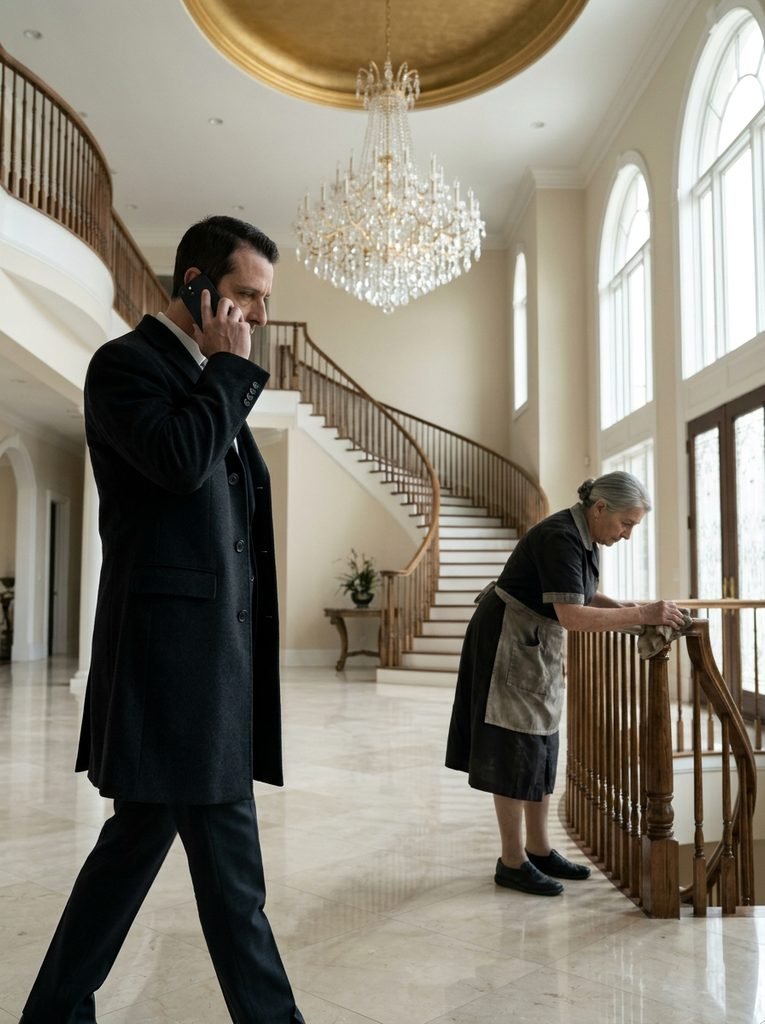
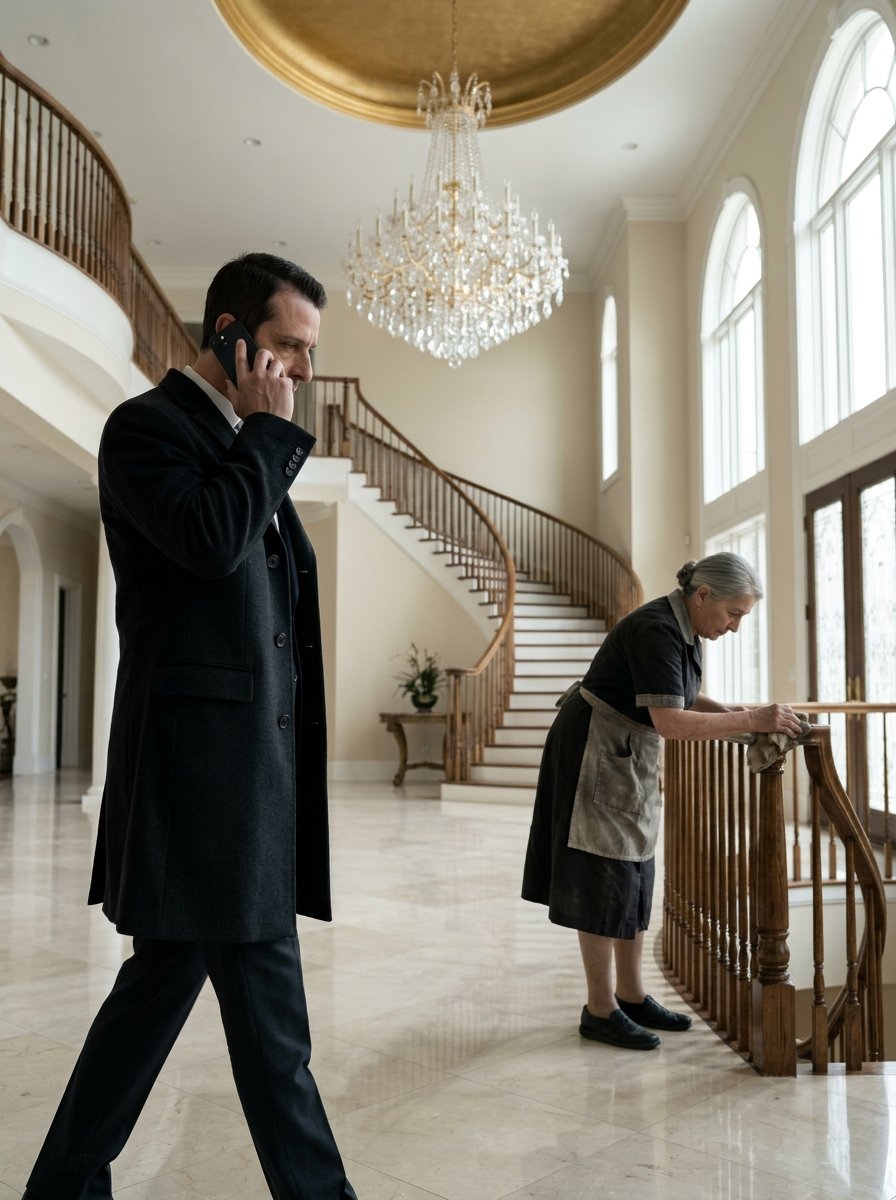
But when I came home to the mansion I bought to keep my mother safe, I found her in a maid’s uniform, trembling, serving champagne to the people who had stolen my life.
Before I unleash hell, let me know where you’re watching from.
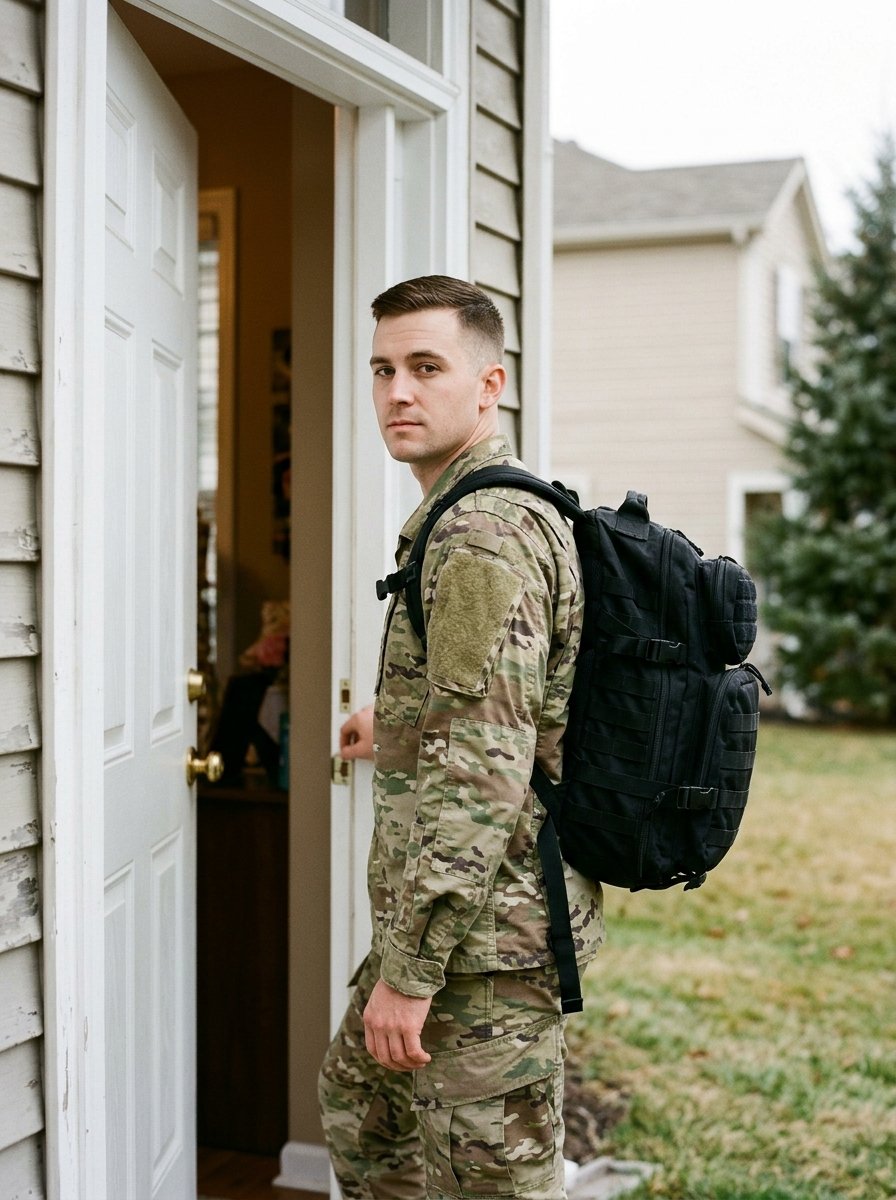
My name is Lucius King, and most people think I died in a boating accident 5 years ago. That was the cover story my handlers gave my family when I went dark for one final off-the-books operation.
I’m 73.
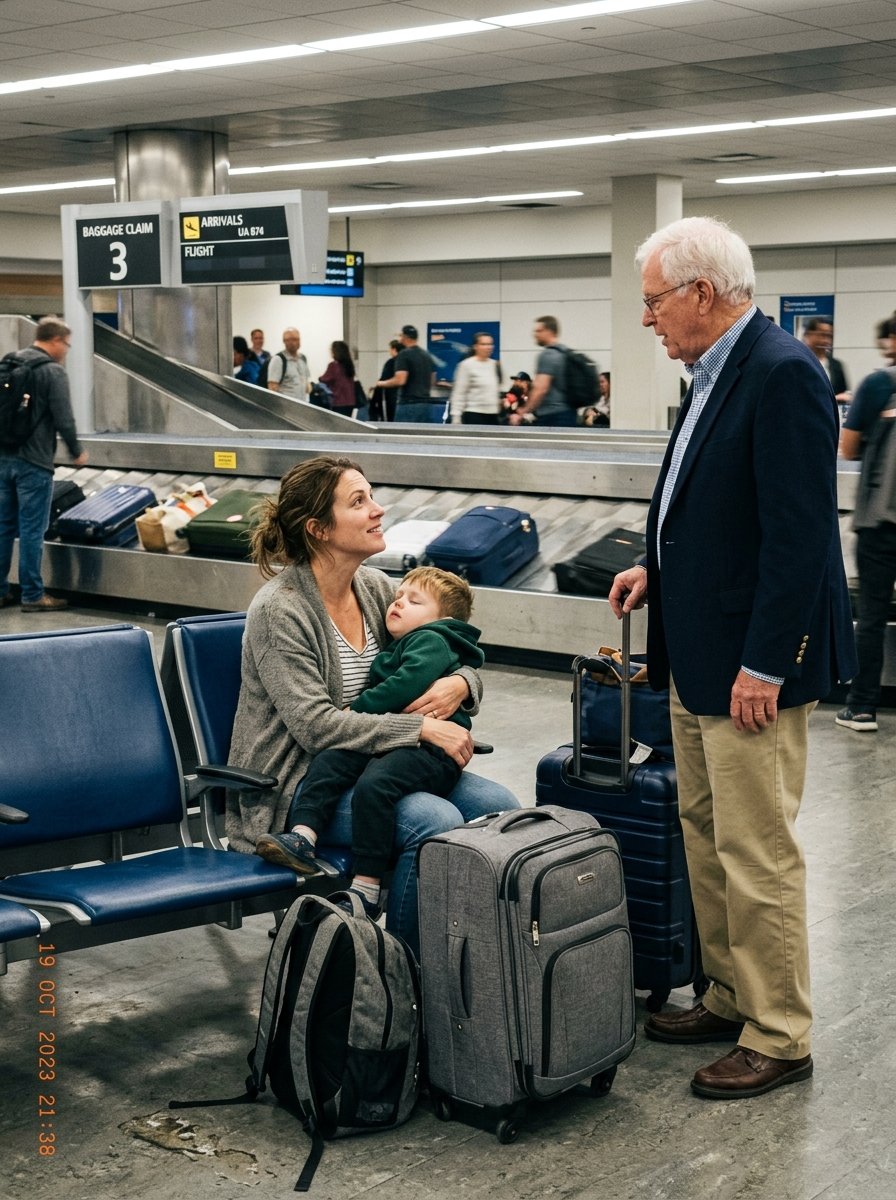
The limp I wore stepping out of the taxi at JFK was only half real. I exaggerated it along with the stoop in my shoulders. I needed to look exactly like what I was on paper: a broken old man with a duffel bag and a faded army jacket.
I’d wired money to my daughter Tiana and her husband Brad 12 years ago with simple instructions.
Build the house. Move Mama in. Hire the best nurses. Keep her happy.
I stayed away to keep them safe from my enemies. Now retired and officially a ghost, I was coming home to surprise them.
The gates were closed.
A security booth stood where none had been in the blueprints. Bass music thumped through tinted windows.
A guard half my size looked me over, saw a black man in dirty clothes, and pointed me toward the delivery entrance. He told me the estate belonged to Mr. and Mrs. Sterling, not Odessa King.
My stomach turned.
The house was supposed to be in Mama’s name.
I didn’t argue.
In my line of work, you don’t storm the front door when you can slide through the cracks.
I circled to the service hatch I’d had built behind the generator 12 years ago, meant as an emergency exit for my family.
Today, it was my way in.
The backyard was a spectacle.
An infinity pool I’d designed for my mother’s hydrotherapy was now cluttered with inflatable swans and drunk strangers.
I scanned for Tiana.
Instead, I found Brad in a $5,000 suit, playing Lord of the Manor.
And then I saw her.
A tiny woman in a black dress and white apron, hands shaking around a silver tray.
The high cheekbones.
The silver bun.
It was Mama.
A guest bumped her hard enough to shatter a glass.
Brad marched over, shoes crunching on broken glass, and didn’t ask if she was hurt.
“Jesus Christ, Nana,” he hissed. “You’re embarrassing me.”
She apologized, blamed her arthritis.
He told her to clean it up before he put her back in the basement room with no window.
She knelt and picked up the glass until her thumb was cut.
She didn’t flinch.
Brad turned back to his guests, beaming.
“Good help is so hard to find these days, especially when you inherit them.”
They laughed.
I stood in the hedge line with my nails cutting into my palms, every instinct screaming to charge.
But 12 years in Black Ops teaches you one thing: anger is a weapon only if you control it.
I was legally dead, with no ID and no standing. If I moved now, I’d be the crazy old man arrested at a rich man’s party, and Brad would use it against Mama.
Death was too easy for him anyway.
I wanted him dismantled.
His money, his status, his pride—gone.
But I still didn’t know where Tiana stood.
Victim or accomplice?
I needed that answer before I moved.
I found her in the kitchen the next morning, pouring liquor into a glass at 11:00 a.m.
Her eyes were ringed with the kind of exhaustion makeup can’t hide.
She didn’t recognize the new gardener standing in her doorway.
My own daughter looked straight through me.
I found my wife Odessa in the laundry room, sleeping on a cot wedged between the washer and the wall.
A whiteboard on the dryer read:
“Rules for Nana. No wandering during party hours. No eye contact with guests. Toilet flushing limited to nighttime.”
This wasn’t neglect.
It was a system built to strip away a human being’s dignity, and it had Brad’s fingerprints all over it.
Brad caught me in the hallway, sneered at my hobo look, and fired me on the spot until the pool pump conveniently seized.
I fixed it quickly with the experience of someone who had spent decades working with machines.
Brad recalculated.
He offered to keep me on, off the books, half-rate cash.
I took it.
He didn’t know he’d just invited the judge, jury, and executioner into his house.
That night, I went to work.
I got past his smart lock and opened his office.
His wall safe held a folder that stopped my heart.
My own death certificate, signed by Tiana, filed so the family trust would release funds early.
Beneath it, a $5 million loan from Janice Holdings, a known mob front, collateralized against my house.
Brad wasn’t just cruel.
He was drowning.
Three months behind on payments to people who don’t foreclose with lawyers—they foreclose with fire.
I photographed everything and gathered what evidence I could before going back to my shed to listen.
They’d signed my death certificate.
They thought Lucius King was a memory.
They were half right.
I was a ghost now.
Just not the kind that fades.
Odessa’s 92nd birthday arrived, and Brad turned it into a product-launch backdrop for investors, dressing her as a servant caricature and demanding she sing spirituals for the crowd.
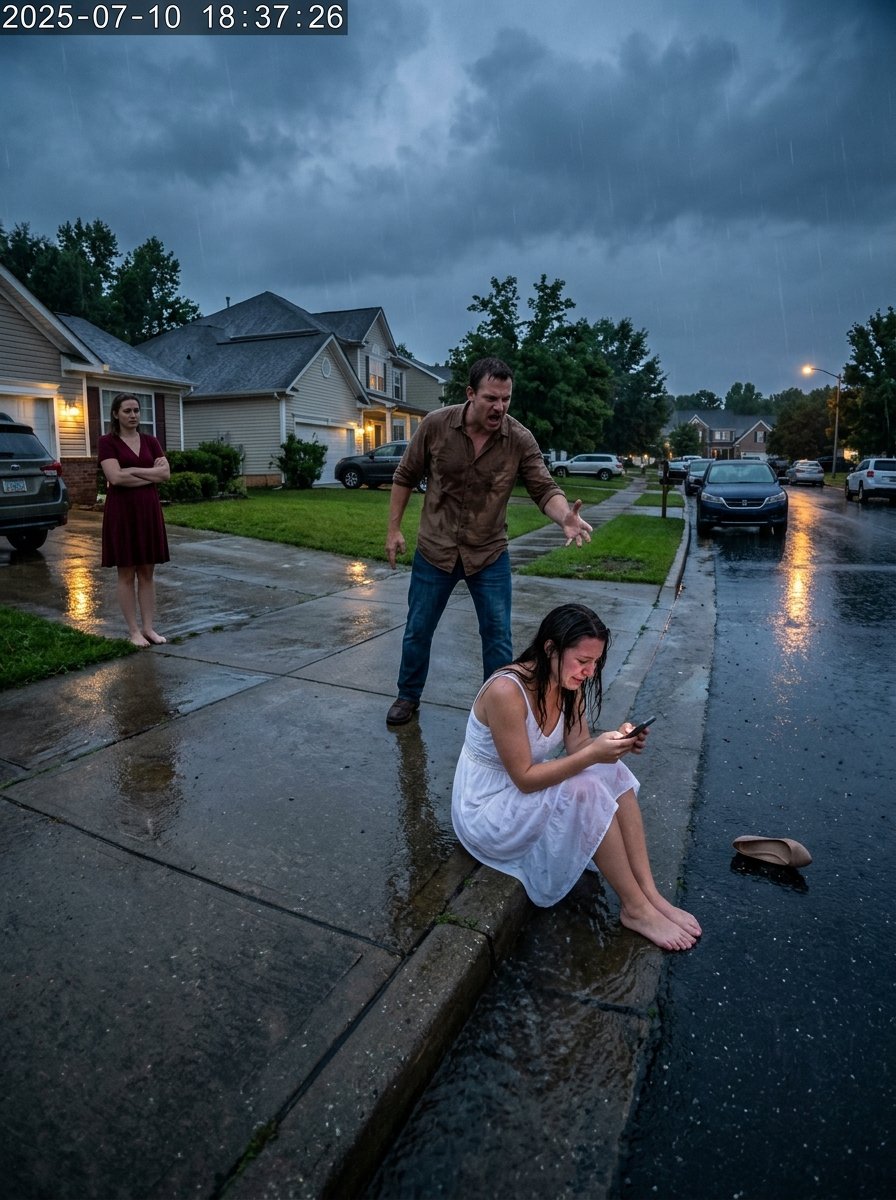
When a splash of wine landed on his shoes, he knocked her to the ground in front of everyone.
Tiana screamed and started forward.
Then she saw Brad’s eyes flick to her bracelet, to the house behind her, and she froze.
She let fear win.
I was 15 feet away with pruning shears in my hand, close enough to intervene.
I stopped myself.
A clean ending was mercy, and Brad didn’t deserve mercy.
He deserved to lose everything he loved more than life—his money, his reputation, his ego—while he was still alive to feel it disappear.
That night, I made one call on an old satellite phone to a name from my former life.
“They hit my wife,” I said.
That was the only justification needed.
“Scorched earth. Leave him nothing but the suit on his back.”
The dismantling began like a whisper.
A series of carefully engineered problems started closing in around Brad.
His Porsche ended up in the hedges at the end of his own driveway.
Blaming everyone but himself, he fired the entire household staff on the spot, leaving just Brad, Tiana, Odessa, and the gardener he thought too stupid to be dangerous.
A pipe burst over the master bedroom at 2 in the morning, soaking them out of their own bed.
His routines began unraveling.
His smart TV suddenly filled with financial crime reports and elder-abuse prosecutions.
Small amounts began disappearing from his accounts and landing in elder-care charities, hour after hour, until he was screaming at Tiana that she was stealing from him to punish him for what he’d done to her grandmother.
Then, while I mopped the hallway as he raged, Brad went to his wall safe to prove to Tiana that he still had power.
In his anger and arrogance, he exposed information he thought was untouchable.
He had handed me another piece of his own downfall.
The next day, I found Tiana in the solarium and left two things on the bench where she always hid.
A small wooden doll I’d carved for her when she was 6 years old.
And a faded photo from her graduation day, my arm around her shoulder.
She broke completely, grief tearing out of her in a sound I hadn’t heard since she was a child.
I sat beside her and placed my scarred hand between us—the same V-shaped scar she used to trace as a girl.
She looked up.
And finally, she saw me.
“Daddy.”
I told her enough.
A team was coming.
Evidence was already gathered.
He was going down.
But I needed her to hold the mask one more day.
The alpha team moved fast after that.
My cyber specialist buried Brad in SEC investigation notices and froze his accounts overnight.
Desperate for cash to pay off the mob loan, he agreed to sell the house—my house—for $7 million in cash to a buyer named Victor, who was actually my man, funneling the estate back into a trust Brad couldn’t touch.
Brad signed away his own legacy without realizing he had just evicted himself.
That night, as the deal’s last condition, he tried to force Odessa’s thumbprint onto a quitclaim deed.
When she refused, he tried to force the issue while she was vulnerable.
That was the line.
I cut the power.
The house plunged into darkness.
Brad panicked, convinced someone was coming for him, while the hidden system around him amplified every fear he had spent years creating.
The police arrived to find a man screaming about ghosts and a security feed showing Brad alone, losing control.
Out on bail days later, he tried to force Tiana’s silence with a raised fist.
I stopped him before he could strike her and put him on the floor.
He knew exactly what had happened.
He also knew no one was eager to believe a man already flagged as unstable and violent.
A package arrived days later.
My own Patek Philippe watch, the one he’d sold years ago to cover a gambling debt, engraved with my initials and my wedding date.
With it was a note.
“I am waiting for you in hell, broken and unraveling.”
Brad hired a private investigator.
One of my old associates.
The investigator led him at midnight to my own grave to confront the truth.
He found an empty casket.
And a second note.
Lightning lit my silhouette at the edge of the hole.
He collapsed into hysterical laughter, certain now that the dead didn’t stay buried.
The final blow came at the estate sale he was forced to hold to pay his debts, auctioning off everything we owned to a ballroom of vultures.
When he unveiled what he believed was a $200,000 family painting, the cloth instead revealed a blown-up photograph.
Brad, syringe in hand, looming over a terrified Odessa.
The room turned on him instantly.
Tiana, asked to defend him, only wept and walked out.
Her silence convicted him more than any accusation could have.
He ran.
I let him run all the way to the bottom of the grand staircase, where the lights cut out and a single spotlight found me at the top in my old dress uniform.
Medals catching the light.
Odessa on my arm in midnight-blue silk.
I walked down to him one measured step at a time.
“I didn’t die, Brad,” I told him. “I was just on a very long business trip.”
The federal agents who came for him weren’t local police.
My team had built a case tying the sale of the estate, legally linked to old defense-contractor paperwork, to the unauthorized transfer of a secure asset to a foreign national.
Treason on top of fraud on top of assault.
There would be no bail.
No phone calls.
No appeal that mattered.
As they dragged him to the car, Tiana walked out to meet him one last time.
She pulled the diamond ring from her finger—the one he told her cost $50,000 and was, in fact, glass—and threw it at his forehead.
“Just like your love,” she said. “Fake.”
I leaned toward the SUV window before they shut the door and made sure Brad understood that consequences were waiting for him on the other side.
He screamed until the door closed on it.
Inside, the house was wrecked.
Mud.
Shattered porcelain.
Holes in the walls.
But for the first time in years, it felt like ours.
Tiana collapsed under the weight of her own guilt, certain she deserved prison beside him.
I let her cry it out before I told her the truth.
She hadn’t broken.
She’d bent.
And she’d snapped back the moment she threw that ring.
Guilt changes nothing.
Living well is the only apology that counts.
I made tea for Odessa in the good china at the head of the table Brad had ruled from for years.
And for one clear moment, the fog lifted from her eyes.
She looked at the new lines on my face, at the medals on my chest, and called me by the name she used when I was young and just shipping out.
“Don’t leave me with the loud people again,” she said. “I get lonely.”
I promised her I never would.
Four seasons later, the estate is a home again.
Hydrangeas instead of inflatable swans.
My great-grandson’s laughter drifting from the solarium, where Odessa teaches him hymns on the piano.
Tiana runs a foundation now, helping other families recover what predators like Brad take from the elderly and the trapped.
Brad is three life sentences deep in a federal supermax.
I still sit on the porch some evenings, not because peace is a natural state of the world.
It isn’t.
Peace is something you build.
And then something you guard.
I didn’t forgive Brad.
I offered him consequences instead.
Some sins don’t wash off with an apology, and some men only understand a storm.
Respect your elders, not just for their age, but for the battles they survived so you wouldn’t have to.
And remember: the quietest man in the room might not be weak.
He might just be reloading.