The drive from Portland International took just under 3 hours. And for most of it, I kept the window cracked despite the November cold because after 5 months on a pipeline crew in the back and oil fields of of North Dakota, I needed the Oregon air on my face to believe I was actually home.
The work had done what it always does, rewired the way I moved through time. Out there, days were measured in footage of pipel and temperature drops and the particular brand of exhaustion that comes from physical labor in the dark at 12 degrees.
I had turned 62 in a crew trailer on the edge of a frozen field, eaten a piece of gas station birthday cake someone had left on my bunk, and called home to hear my wife Edna tell me she was fine.
Everything was fine. Cody had it handled.
She always said Cody had it handled.
I had believed her because I needed to.
Tonight, I was coming home 3 weeks early. The contract had wrapped ahead of schedule, and I had not told anyone.
I wanted to see Edna’s face when I walked through the door. That was the whole plan. Nothing more complicated than that.
I had a wool cardigan from a shop near the Bismar airport, the kind Edna had shown me in a catalog back in the summer and never ordered because she said it was indulgent.
I had a jar of huckleberry jam from a roadside stand outside Baker City and a lemon cake from a bakery near the rental car counter.
The cake sat in a white box on the passenger seat the whole drive, and every time I looked at it, I thought about Edna’s face.
I pulled onto our street in Boise just after 9:30. The neighborhood was quiet the way it always gets quiet on week nights in late fall.
Porch lights on, living room curtains glowing, a dog somewhere down the block with strong opinions about something.
Normal, ordinary, the kind of ordinary I had been carrying in my chest like a photograph for 5 months.
Our house was dark.
Not one light. Not the kitchen, not the small lamp in the front window that we had kept on a timer for as long as I could remember.
Not even the nightlight Edna kept plugged into the outlet in the downstairs hallway because she had learned early in her recovery that a dark floor at night was a broken ankle waiting to happen.
Cody’s truck was not in the driveway.
I sat with the engine ticking for a moment, both hands still on the wheel.
Something was wrong.
I could not have named it precisely, but it was there. The same way a change in pipe pressure is there before you can measure it.
Something in the weight of the dark.
I took the cake and my duffel and walked to the front door.
The cold had a bite to it, and the porch smelled stale, closed in, the way a house smells when the air inside has not been moving for a long time.
My key turned, and I pushed the door open and stood in the dark hallway, reaching for the wall switch.
The light buzzed on.
The entryway console had a film of dust across it. The silk flowers Edna kept in a vise on the table had dropped petals onto the surface, and nobody had swept them.
The small plastic bin near the door was overflowing.
There were two pieces of unopened mail on the floor beneath the slot, which meant nobody had checked since at least yesterday.
“Edna.”
My voice sounded too sharp in the quiet.
Then I heard it, small, from the direction of the converted study at the end of the hall.
We had turned that room into her bedroom a year ago after her surgery, partly for the accessibility and partly because the stairs had become more effort than either of us wanted to manage when she was using the walker.
We had put in a proper bed, a good lamp, the television she liked, her books.
She had made it hers.
“Walter.”
The voice was barely there.
The name was not mine, but the sound was unmistakably hers.
I pushed the study door open.
Edna was in her wheelchair beside the window. She was wearing an oversized flannel shirt I had left on the back of the closet door before I flew out in June, and it hung off her frame in a way that stopped me cold in the doorway.
I had memorized my wife’s shape over 34 years of marriage.
I knew the set of her shoulders and the way she held her head, and the particular way her hands rested in her lap when she was tired.
The woman in front of me was thinner than any version of those memories.
Her collar bones made shadows above the shirt collar. Her wrists looked like something that would snap if you grip them wrong.
She looked up and saw me, and her face collapsed.
Not immediately.
For one second, she just stared. The way a person stares at something they have been hoping for so long they have stopped trusting their eyes.
Then her chin went and her shoulders followed, and she pressed one trembling hand over her mouth and wept.
I was across the room and on my knees in front of her wheelchair before I knew I had moved.
Her hands were ice cold, both of them.
“Hey,” I said.
My voice came out rough and broken.
“I’ve got you. I’m right here.”
“You’re early.”
She said it into her hand like an accusation and a prayer at the same time.
“I wanted to surprise you.”
She made a sound that had nothing funny in it.
“Edna.”
I kept my voice low and steady because she was shaking enough for both of us, and somebody needed to be the anchor.
“When did you last eat something?”
She turned her head toward the nightstand.
There was a sleeve of crackers, a bottle of water with about 2 in left in it, a prescription bottle she had not bothered to put away.
That was everything on the surface.
“Helen brought something.”
Her voice was barely audible.
Her hands were gripping mine so hard the knuckles had gone white.
“Helen,” I said.
“The neighbor.”
She hesitated.
“3 days ago, maybe four.”
I stood up and went to the kitchen.
I did it slowly, deliberately, because I needed the 30 seconds it took to walk down the hall to compose whatever was happening in my chest before I came back.
The refrigerator had half a dozen eggs, a container of yogurt 3 weeks past its date, a block of cheese that had gone hard at the corners, and a takeout container I could not identify.
The pantry had two cans of soup and a box of oatmeal.
I stood with my hand on the cold metal door of the refrigerator and breathed through my nose and counted to 10.
Then I closed it and went back.
“Where is Cody?” I asked from the doorway.
Edna looked down at her hands.
“Edna.”
I crossed the room and sat on the edge of the bed so we were level.
“Where is our son?”
She raised her head and met my eyes, and what I saw in her face was not the answer to the question.
It was the face of a woman who had been carrying something very heavy, completely alone, and had just watched someone finally walk through the door.
“Hawaii,” she said.
The word landed in the room like a stone dropped into still water.
“I’m sorry. Cody took Tess and Quinn and Tess’s family, a group trip.”
Her voice was thin and careful.
“10 days. They come back in four.”
I reached out and took her cold hands again.
My jaw was tight, and I worked to keep my expression level because she was still shaking and I did not want her to see what I was doing behind my eyes.
“How many people?” I asked.
“11.”
She counted on her trembling fingers.
“Tess’s parents, her brother and his wife and their two kids. Tess’s aunt from Sacramento.”
She stopped.
“11 people, Walter.”
“Okay,” I said.
I went downstairs and I heated the soup.
Both cans.
I made toast.
I brought it to her on a tray the way she used to bring things to me when I was sick.
And I sat in the chair beside her bed while she held the bowl with both hands like it was the most valuable object in the room.
And I watched her eat spoonful by spoonful and kept my breathing steady and my hands flat on my knees.
When the bowl was empty, she looked up at me and said, “You want to know everything?”
It was not a question.
“Yes,” I said.
She set the bowl on the tray.
Her hands were less cold now. The shaking had eased somewhat, and a tentative amount of color was beginning to find its way back into her face.
Spoonful by spoonful.
“He told me not to call you,” she began.
Her voice was steady in the way that voices get steady when a person has been practicing what they are going to say for a long time and has finally arrived at the moment.
“He said you were under pressure up there, that the contract was good money and you could not afford to be distracted. He said every time you worried about us, it took something out of you and he did not want to be the cause of that.”
I felt the first cold current of something move through me.
“He said that?”
[snorts]
“More than once.”
She pulled the sleeves of the flannel shirt down over her hands, a gesture I had seen her make in every winter of our marriage.
She did it when she was nervous.
“I tried to call you. There were nights I picked up the phone and started dialing. And then I thought, he is up there working himself to the bone for us. What am I going to do? Call him because the house is cold?”
“You could have called me because the house was cold.”
My voice came out rough at the edges.
“Edna, that is precisely when you should have called me.”
She pressed her lips together and nodded.
Her eyes were filling again, but she did not let them spill.
I squeezed her knee through the flannel.
Then I stood up.
“Who else went on the trip?” I asked.
She counted again with those same trembling fingers.
Tess’s mother and father, Linda and Roy, her brother and his wife and their kids.
Tessa’s aunt from Sacramento.
11 total.
A resort on Maui and an Inter Island cruise package.
She had seen the itinerary because Cody had left a copy on the kitchen counter before they left.
I went downstairs and called Robin Sato.
Robin was the home health aid who had been coming to our house 4 days a week since Edna came home from the hospital the previous spring.
She was 53, steady, professional, with the particular calm that the best caregivers carry the way other people carry keys.
Edna trusted her.
That was not a small thing.
Edna was particular about people in her space.
Robin picked up on the third ring.
Her voice told me she had been expecting the call.
“Mr. Greer.”
Careful, measured.
“Robin, how long has it been since you were here?”
A pause.
“8 weeks,” she said.
And the honesty in those two words, the absence of hedging, told me she had been waiting to say them to someone.
“I’m so sorry. Your son called the agency. He told us you had made arrangements for family members to cover Mrs. Greer’s care going forward. He said you’d been in contact about the transition. I sent one follow-up email through the agency portal. I never heard back. Something felt wrong about it from the beginning, and I should have pushed harder.”
“Did he tell you why?”
“He said the family had decided it together. He said you’d both agreed.”
“I had agreed to nothing of the sort. Can you start again?” I asked.
“Tomorrow morning. 7.”
She said it without hesitating.
“I’ll be there. I’m glad you’re home.”
I called Deb Marlo next.
Deb was Edna’s physical therapist, patient and methodical with a kind of clinical optimism that is not cheerfulness, but something more durable, genuine investment in a patients outcome.
Edna had been making real progress before I left in June.
The improvement in her strength and mobility had been measurable, documented, something I had held on to during the long nights in the Bakan like a second kind of paycheck.
Deb answered on the fourth ring, slightly breathless.
“Your son contacted me approximately 7 weeks ago,” she said.
“He explained that the family was managing some unexpected financial pressures related to the medical costs and that you needed to pause the therapy sessions temporarily while you worked out a new payment arrangement with the insurance company.”
She hesitated.
“He said you would call when you were ready to resume. I sent two emails. Neither was answered.”
“I received neither of them.”
She was quiet for a moment.
“Mr. Greer, I have to be honest with you. Stopping at this stage of her recovery is not ideal. She had real momentum. Interrupting that has consequences.”
“Can you restart?”
“Monday,” she said. “I’ll move things around.”
I hung up.
I sat at the kitchen table with both hands flat on the surface and looked at the wood grain for a long moment.
Cody had told Robin we had all agreed.
He had told Deb we were having financial difficulties.
He had told Edna that calling me might cost me the contract.
Three different stories to three different people, all pointing in the same direction.
I went back to Edna’s room.
She had turned her wheelchair slightly toward the window.
The street light outside cut a pale strip across the floor.
“Walter,” she said without turning. “There is something else.”
She turned to face me.
The expression on her face was the particular look of someone who has survived something alone and is only now finally being given permission to admit how bad it was.
“I fell,” she said. “3 weeks ago.”
My hand tightened on the door frame.
“In the kitchen. I was trying to reach the counter. I thought if I went along the wall slowly enough I could manage. I almost did.”
“Almost,” I repeated.
“I went down near the stove.”
She folded her hands in her lap and looked at them.
“I couldn’t get up. I tried for a long time. I called Cody.”
She stopped.
“He said he was in a meeting. He said to try rolling onto my side and pushing up from there. He said he would check on me later.”
I kept my voice very quiet because if I raised it, I was not sure what would come out instead.
“Did he come?”
“No.”
She pressed the back of her hand against her mouth.
Her chin was trembling violently, and she was working hard to hold it still.
“I called out loud enough that Norma heard me through the kitchen window. I had left it cracked for the air. She came over and helped me up.”
“How long were you on that floor?”
“Almost 2 hours,” she said.
And then she looked at me directly, and her eyes were full, and she said, “Norma called 911. I asked her not to. Cody had told me an ambulance would be too expensive and that I wasn’t seriously hurt.”
I reached up and put both hands on either side of her face very gently, and she grabbed my wrists and held on so hard her knuckles went white.
“I’m here,” I said. “I’m here now.”
She bent forward and pressed her forehead against my shoulder.
And the grief that came out of her then was the deep breaking kind.
The kind that has been sealed for a long time in a body that had no safe place to put it.
I held her.
And over her shoulder, behind everything warm and present and necessary about holding my wife while she finally came apart, a number was forming in the back of my mind.
I didn’t know it yet, but I was about to.
I did not sleep.
I lay beside her in the narrow study bed until her breathing evened out, listening to every exhale.
And sometime before 5:00 a.m., I got up and went to the kitchen and sat at the table with my phone.
Four months of texts from Cody.
Short ones, cheerful ones.
“Everything’s good, Dad.”
“Mom’s doing great.”
“Don’t worry about a thing.”
I turned the phone face down.
Norma Kesler knocked on the front door at 7:00 a.m.
She was 71 years old and had lived across the street from us for 11 years.
She had a spare key to our house that I had given her myself before I flew to North Dakota specifically because I trusted her.
When she saw my face, she didn’t say good morning.
She just said, “Thank God.”
We sat at the kitchen table.
She told me everything she had seen over the 8 weeks since Robin stopped coming.
The condition of the house, the lights, the days she had brought food over, sometimes twice a week, the fall exactly as Edna had described it, and the two hours on the kitchen floor, and the ambulance Edna had refused because Cody had told her not to make a fuss.
Norma’s voice was controlled and flat the whole time she spoke, and that flatness held more judgment than any raised voice could have.
“I should have called you,” she said when she finished. “I kept telling myself it wasn’t my place. That Cody was handling it.”
“Nobody was handling it,” I said.
“I know that now.”
After she left, I sat at the kitchen desk and opened my laptop and logged into our bank account.
The balance on the screen made me go completely still.
Not the sharp, reactive stillness of a person who is startled.
The deep, quiet stillness of a person whose body has stopped doing anything that isn’t processing what is directly in front of them.
I leaned forward and read the number again.
Then I opened the transaction history.
The charges began 6 weeks after I left for North Dakota.
At first, they looked ordinary.
Groceries, gas, the medical supply company where we ordered Edna’s equipment.
I scrolled forward.
Then the pattern shifted.
Alaska Airlines.
Four tickets to Honolulu, then four more.
A resort hotel on Maui.
Seven nights.
A rate that made my back teeth ache.
Norwegian Cruise Line.
A deposit, then a second charge, then a third labeled suite upgrade, nearly $2,800 on its own.
A spa booking.
Shore excursions in Lahina.
A beachfront restaurant, $640 for one dinner.
A boutique in Wlaya, $900 in a single transaction.
I stopped scrolling.
I sat back in the chair and pressed both hands flat on the desk and looked at the ceiling.
“$22,460.”
I said it out loud to the empty room.
Then I picked up my phone and opened Instagram.
I found Tess’s account.
The way you find things you did not want to look for.
Too fast, too easily.
The most recent post was 3 days ago.
11 people on a ship’s upper deck, the Pacific behind them, turning everything gold and effortless.
Tess in front in a white coverup holding a drink, laughing at something off camera.
Cody beside her with his arm around her shoulders, squinting into the Hawaiian sun, grinning the grin of a man without a single thing pressing on him.
Quinn was in the back row.
She was not quite smiling the way everyone else was.
Her expression was off by just enough that someone who loved her would notice.
“The family first, always.”
I set the phone face down on the desk.
The feeling in my chest was not the hot explosive kind of anger.
It was colder and quieter than that.
The kind that settles in behind your ribs and gets patient because it understands that there is work to be done and fury is not a tool.
I picked up the phone and called the bank.
As the primary account holder, I had full authority to freeze or permanently cancel any supplemental card at any time without notice to the card holder.
The representative confirmed this in under a minute.
“Freeze it,” I said. “Permanently. Effective right now. And I need a complete transaction history for the past 6 months mailed to my home address.”
Then I called Clint Hadley.
Clint and I had known each other for 19 years, since a job in Nampa where we had both ended up on the same crew and discovered we were both from the same county and both constitutionally incapable of passing up a decent hand of poker.
He had spent nights studying law while I was learning industrial maintenance.
Somewhere in the intervening years, he had become one of the sharper civil attorneys in Boise without losing the ability to talk plainly to a man who needed plain talk.
“Don’t touch the account,” he said after I had given him the outline in the fewest words that would convey what had happened.
“Don’t move anything. Don’t confront Cody yet. Screenshot every transaction and send them to me tonight.”
“And Walter, don’t call him.”
“I won’t,” I said.
I looked at Cody’s face, still visible on my phone screen.
That easy, sunlit grin.
I ended the call, and I began screenshotting.
71 transactions in total.
I sent them to Clint’s email with a brief note and a timestamp, then set the phone on the desk.
The phone started ringing the next morning at 7:15.
Cody’s name on the screen.
I watched it ring through.
Missed call.
Then again.
Then Tess.
Then Cody, five more times in a row, each call hitting voicemail the moment the previous one ended.
By 8:00 a.m., there were 26 missed calls.
Robin arrived at 7 as promised, and the relief in Edna’s face when she heard that familiar voice in the hallway was something I had to look away from because it was too direct to see straight.
I answered the 27th call.
Cody’s voice came through so loud I had to hold the phone away from my ear.
Something about the card declining at the resort.
Something about an excursion booking that had been flagged.
Something about outstanding charges and two more days on the island.
And whatever I had done, I needed to undo it immediately.
“Cody,” I said.
My voice came out quiet and level.
Not raised, not hard, just steady, the way you speak when precision matters more than force.
“How much weight has your mother lost since I left?”
A sharp silence.
“That’s not—Dad, the card—”
“When did you cancel Robin’s contract?”
Silence.
A different kind.
“I can explain that.”
“When did you tell Deb Marlo we were having financial difficulties?”
“Dad, listen—”
“Your mother fell,” I said quietly. “She was on the kitchen floor for 2 hours. You told her to try to get herself up. You said you would check on her later.”
The sound on the other end was the background noise of a Hawaiian resort on a Tuesday morning.
Bright, indifferent, unbothered by anything happening on the mainland.
“She told me she was okay,” Cody said, and his voice had gone flat.
“She was on the floor for 2 hours, and you did not come.”
Silence.
“$22,460, Cody. 71 transactions. Do you want me to read them to you, or do you already know what they are?”
“Dad, I can explain.”
“The card is frozen permanently,” I said. “Any charge you attempt from this point forward will be declined. If you have outstanding resort charges, you will need to settle them with your own funds.”
He started to say something.
I spoke through it.
Not loudly.
Just clearly.
“Come home, Cody. And when you get back, don’t come to this house without calling me first.”
I ended the call.
I stood in the kitchen with the phone in my hand and listened to the sounds of the house.
Robin’s voice through the wall.
Edna answering her short sentences that sounded stronger than the night before.
The phone buzzed again.
Tess voicemail.
Cody voicemail.
A number I didn’t recognize, which turned out to be Tess’s mother.
Her voice formal and careful, asking me to please call back as soon as possible because there seemed to be some kind of misunderstanding.
I deleted it.
Clint called the following morning at 7:20.
That told me things had moved faster than expected.
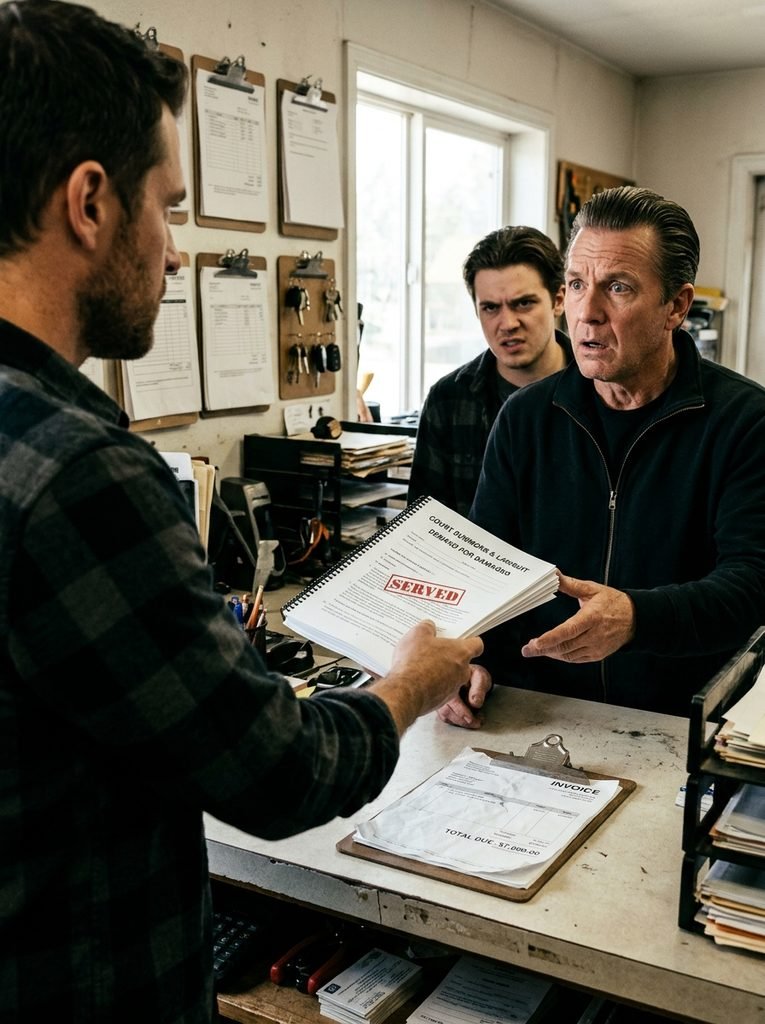
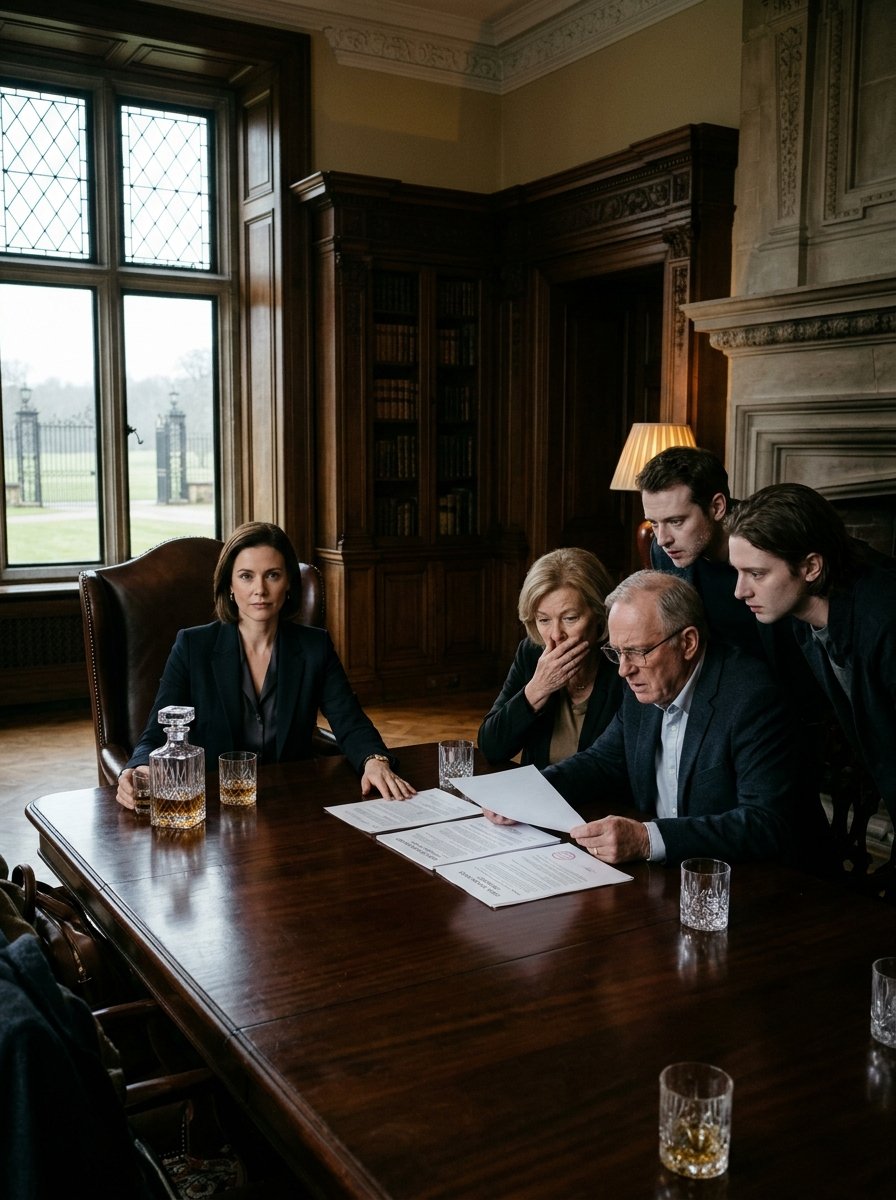
“Walter,” he said, skipping past any greeting. “I need you to come in today. There’s a document in this account file I need you to look at in person.”
His office was on the fourth floor of a building on Capitol Boulevard with a view of the Boise Foothills.
Clint was already standing when his assistant showed me in, which he did not always do, and that small break from habit told me more than any words could have.
He slid a single sheet of paper across the desk.
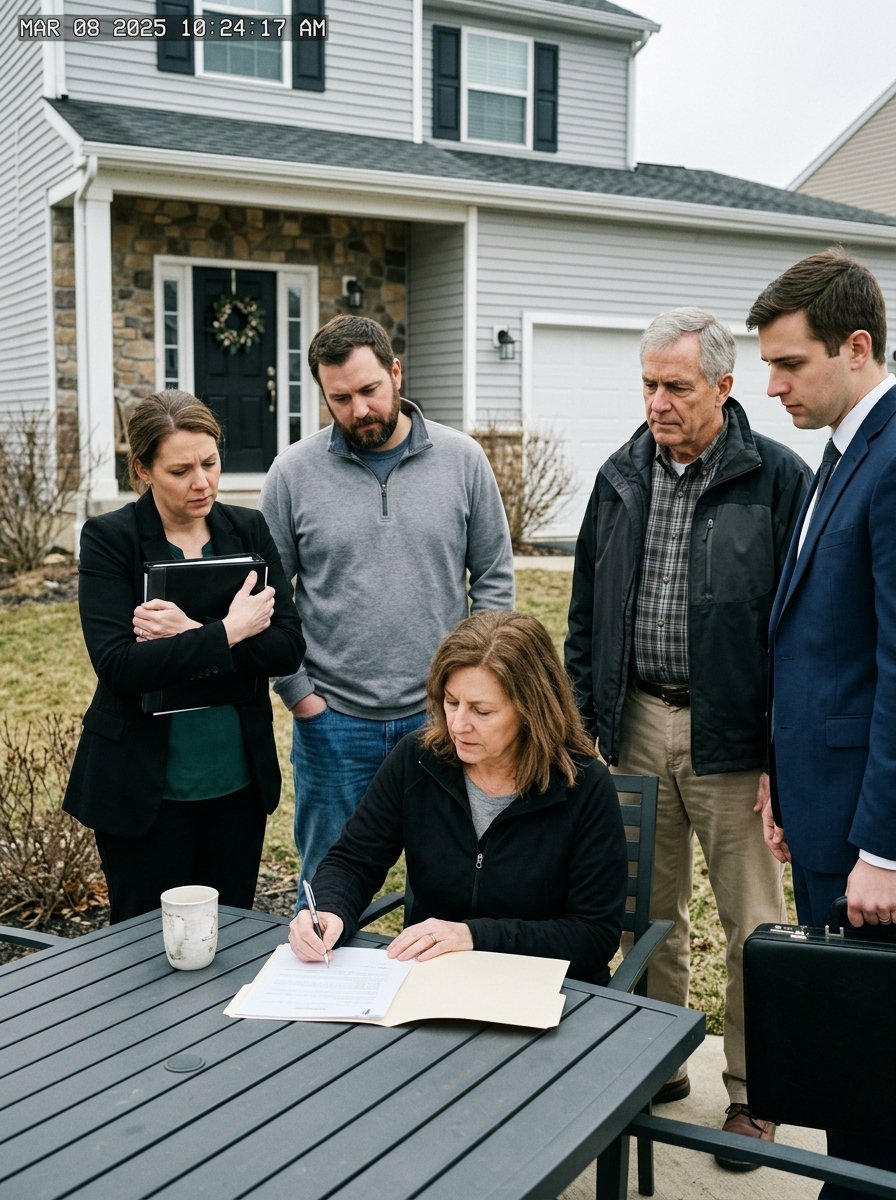
It was a financial authorization form, the kind of document that grants an individual expanded authority over a primary account holders finances, allowing them to execute transactions above a set threshold without direct approval.
At the bottom of the page was a signature.
My signature.
Or something close enough to make the floor feel uncertain beneath me.
“Is that yours?” Clint asked.
I picked up the page.
I looked at it carefully.
My name.
My handwriting, almost.
The loop on the first letter dropped at a slightly wrong angle.
The pressure of the pen released differently than mine always does.
I have been signing my name for 62 years.
I know every place my pen lifts and every place it presses.
“No,” I said.
“You’re certain?”
“Absolutely.”
Clint nodded slowly.
He reached back into the folder.
“This form was submitted to your bank on a date when your employment records show you were actively badged inside a restricted work site facility in North Dakota.”
He looked at me.
“Do you have timestamped access records from the job?”
I had already called the contracting company that morning.
I pulled the badge access log from my jacket pocket and slid it across the desk.
“In at 6:51 a.m. Out at 6:44 p.m. Inside a locked facility. Personal phone in a locker. Not in the same time zone. Not capable of signing anything.”
Clint looked at the log for a long moment.
Then he looked at me.
“That,” he said carefully, “is what we call an alibi.”
He walked me through the rest of it plainly.
A forged authorization document submitted to a financial institution to obtain expanded financial authority.
A class D felony under Idaho code.
Potential sentence up to 5 years.
He paused.
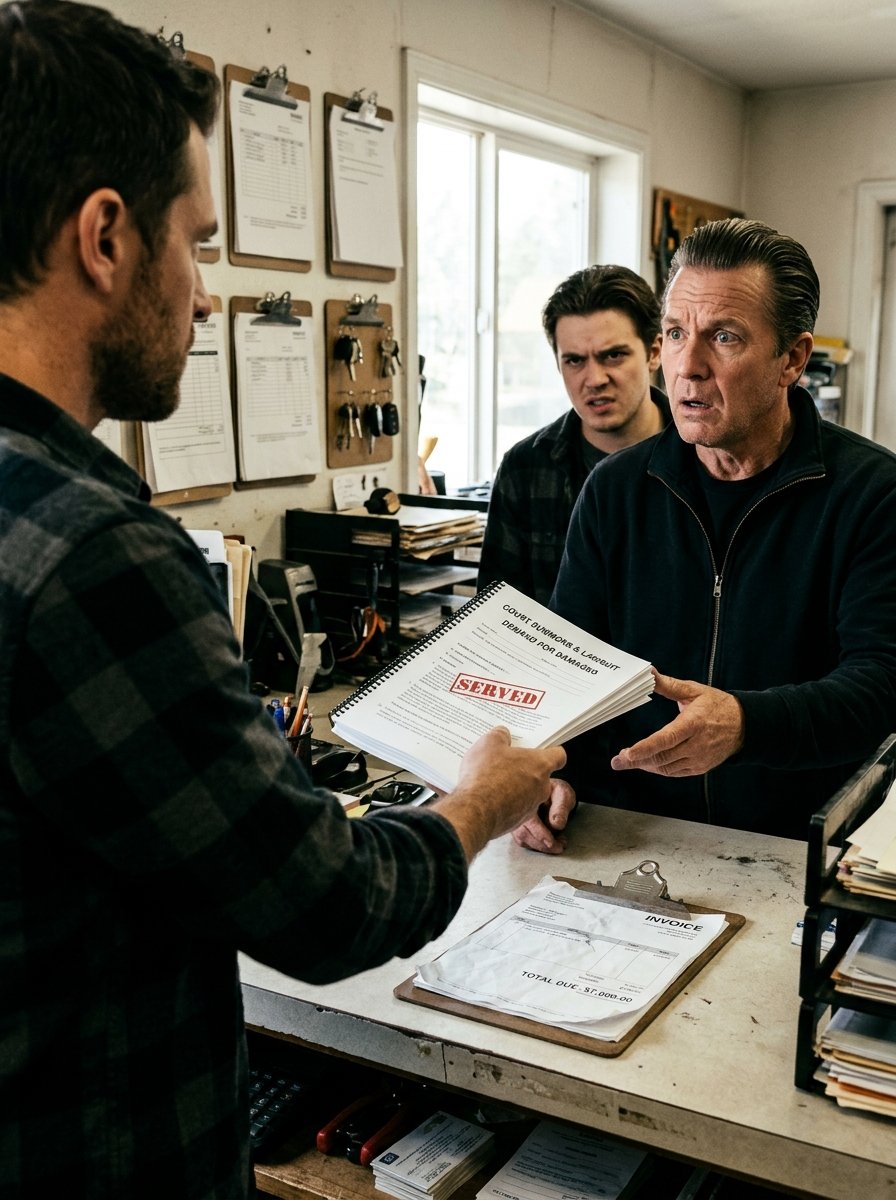
“This is no longer a family dispute over a supplemental card, Walter. This is a criminal matter.”
The word criminal sat in the air between us with considerable weight.
He told me one more thing before I left.
In the preliminary file the bank’s compliance officer had flagged, there was a screenshotted image of the authorization form sent from Cody’s email address to a member of Tess’s family 9 weeks prior.
Below the image was a caption.
It read, “Finally sorted things out with dad. He’s on board with all of it.”
He had used the forge document to reassure Tessa’s family to make the vacation look authorized.
I drove home.
I changed the locks on the front door, the back door, the side entrance.
I changed the garage keypad first thing the following morning.
3 days after the ship docked in Honolulu, my phone buzzed with a text from a number I didn’t recognize.
“Grandpa, it’s Quinn. I borrowed Aby’s phone. Can I call you?”
I was on my feet before I finished reading it.
I typed back, “Call me right now. I’m here.”
The three dots appeared, disappeared, appeared again.
She called 11 seconds later.
I put it on speaker and carried the phone down the hall to Edna’s room, where Edna was mid session with Robin.
Edna saw my face, and Robin stepped back without being asked.
“Grandpa.”
One word.
The relief packed into those two syllables was something I had to breathe carefully around.
“I’m here,” I said. “Grandma’s here, too.”
A sharp intake of breath.
The sound a 17-year-old makes when they have been holding something for a long time and have just been told they can put it down.
“Grandma.”
Quinn’s voice cracked open on the second syllable.
Edna reached for the phone with both hands.
“I’m right here, sweetheart. I’m right here.”
Quinn cried for a moment.
The quiet kind.
The kind you cry when you have been trying very hard not to for too long.
She told us what she had seen on the trip.
The quiet fighting between her parents, careful voices that carried anyway because she had grown up in the same house and knew exactly what their fight voices sounded like even when they were trying to hide them.
The way she kept thinking about her grandmother at home, the time she had asked her father and he had said everything was arranged.
The last FaceTime before they left, when Grandma had been wearing Grandpa’s old flannel and saying she was fine, but something in her voice had been wrong in a way that wasn’t just regular tired.
“I almost called you,” she said. “I had Aby’s phone in my hand and I started dialing, and then I told myself I was overreacting. I didn’t call.”
“Quinn.”
I kept my voice steady and direct.
“You were 17 years old on that island with no way to know how serious things were. That was never your responsibility to carry. Do you understand me?”
A shaky exhale.
“I’m trying.”
“Keep trying,” I said, because it’s true.
She was quiet for a moment, then quieter.
“The last few nights, Dad kept going out to the resort balcony by himself. Really late, 2 or 3:00 in the morning. He just sat out there in the dark and looked at the water for a long time.”
She paused.
“He looked scared. Not angry scared, just scared. Like someone who knows they did something they can’t undo.”
I held that image carefully.
My son alone on a balcony in the Hawaiian dark, the Pacific in front of him and whatever was building behind him.
“Tell Grandma I love her,” Quinn said.
“Tell her yourself,” I said. “She’s right here.”
I set the phone on the bed between us.
Edna picked it up with both trembling hands and said her granddaughter’s name, just the one word.
“Quinn.”
And her voice broke completely on the single syllable.
They talked for 37 minutes, and by the end of it, Edna’s shoulders had come down from around her ears, and something in her face had opened that had been shut tight for 2 months.
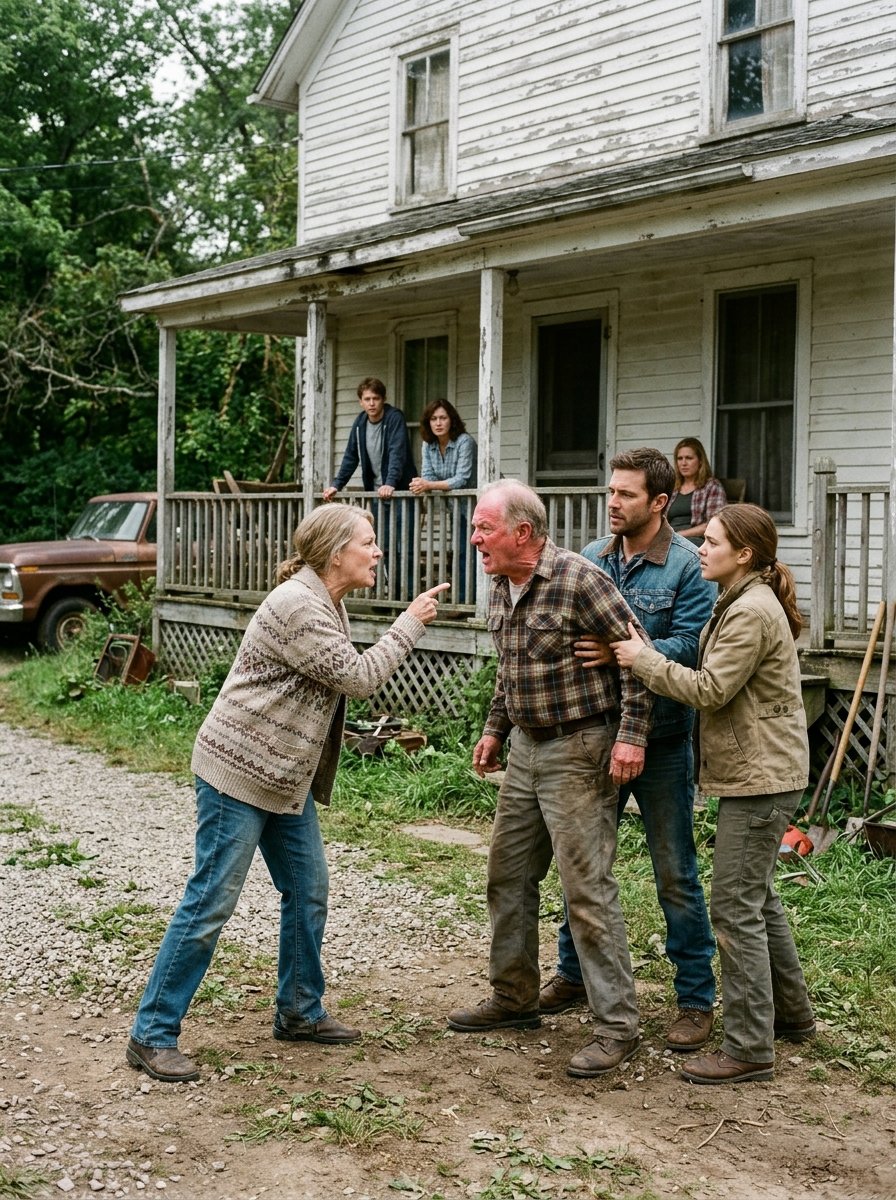
Cody came to the house 4 days after they landed.
He came alone.
He stood on the front porch with his hands in his jacket pockets and looked at the door with an expression I’d seen on his face since he was a teenager who had done something he did not know how to undo.
I watched him from the front window for two full minutes.
Then I opened the door and stepped out onto the porch.
His voice when he said, “Dad,” was quieter than I expected.
Not the loud detonating version from the phone call.
Not the deflection he had been running for 10 days.
Just quiet.
He stood there for a moment.
Then, “I know what I did.”
I kept my hands in my pockets and my eyes on his face.
He talked for a while about the money and where it had come from and the story he had told himself about it.
About Tess’s family and the pressure he had felt to provide things he couldn’t actually provide on his own.
About the way every time he fell, I had caught him, and how somewhere along the way he had stopped believing he needed to catch himself because I was always going to be there first.
His voice broke when he got to his mother on the kitchen floor.
He pressed the back of his hand against his mouth, and his eyes went red, and he stood there shaking on my front porch like a man trying to hold himself together with bare hands.
“She called me,” he said.
His voice was barely there.
“And I told myself she’d be fine. I told myself I’d go over after.”
He stopped.
“I didn’t go.”
I looked at my son.
I still loved him.
That was the hardest part.
Standing here with all of it between us and still loving him the way I had loved him since the moment I held him in a hospital in Boise 36 years ago and understood for the first time what the word helpless really meant.
But love, I had learned 11 days ago, was not the same thing as rescue.
I reached into my back pocket and took out my wallet.
Not for cash.
I found the small card Clint had handed me before I left his office, a counselor he had referred other clients to, a man who worked specifically with people navigating financial crisis and family breakdown.
I held the card out.
Cody looked at it, then at me.
“That’s all I’m giving you right now,” I said. “Not money, not a solution, just that.”
He reached out and took the card.
His fingers were not entirely steady.
He turned it over once, then held it carefully like something he did not want to drop.
“Tell mom I’m sorry,” he said. “Just tell her.”
“Tell her yourself,” I said. “When you’re ready to mean it.”
He nodded, walked back to his truck, pulled away from the curb, and moved slowly down the street until the corner took him.
I stood on the porch and did not feel like I had won anything.
I felt tired and sad and more certain than I had been about anything in years.
2 months is not a long time, but it is long enough for a house to learn how to breathe again.
Robin came 5 days a week.
Deb came three times.
Edna had gained 7 lbs by the end of the second month.
Deb told me in the matter-of-act way that good medical professionals deliver good news, like they are being careful not to let hope outrun progress, but her eyes were warm when she said it.
The legal matters moved at their own pace.
The bank dispute process returned a portion of the money.
Clint called it a reasonable outcome, and from Clint that was something close to enthusiasm.
The forgery investigation was ongoing.
I had stopped measuring my days by its outcome.
Norma brought dinner over on a Thursday in the third week and stayed for 2 hours and talked about everything except what had happened, which was exactly the right thing to do.
Quinn called from her own phone 2 weeks after they landed home.
Tess had given it back to her the day they arrived.
Quinn and Edna talked for 45 minutes, and when Edna hung up, she sat at the kitchen table for a while without speaking.
And eventually, she said, “She sounds more like herself.”
That was enough.
On a Saturday morning in January, I was reading in the chair by the front window when I heard Deb’s voice shift in the living room.
Not the steady coaching voice she used during exercises.
Something quieter, more intent.
Then Edna’s voice, focused, counting under her breath.
Edna called my name.
I walked to the doorway.
She was standing.
Both hands on the walker frame, knuckles pale with the effort of it, feet planted on the hardwood floor.
Her whole body was trembling with the concentration it required to simply be upright.
But her chin was lifted, and her eyes, when they found mine across the room, were bright and fierce and wet all at once.
“Don’t come help me,” she said.
Her voice was steady and absolute.
I did not move.
62 years of reflexes fired all at once.
Every instinct I had built around the idea that when someone you love is struggling, you close the distance.
You put your hands out.
You make yourself useful.
My feet knew exactly what to do.
I stood in the doorway, and I did not move.
Edna’s jaw was set, and her grip on the walker was white knuckled, and the trembling that ran through her arms and shoulders was visible from across the room.
She was going to do this.
She was going to do it whether I helped or not.
And she needed me to know that.
[snorts]
She took the first step.
Small, careful.
Her right foot lifted perhaps 2 in and came down 5 in forward.
And the effort of it was visible in every part of her.
The set of her jaw.
The adjustment of her shoulders.
The short, controlled exhale like someone releasing pressure from a valve.
She took the second step, her left foot more deliberate than the first.
I pressed the back of my hand against my mouth.
The third step was stronger than the second, some quality of momentum that comes from a body remembering what it was built for.
Her shoulders squared by a fraction, her chin lifted another degree.
On the fourth step, she began to cry.
Not loudly.
The quiet kind that happens when a body is doing two enormous things simultaneously and cannot quite contain both of them.
She cried and she kept moving, the tears running freely down her face, her hands locked on the walker frame.
She took a fifth step.
Then she stopped.
Not because she had to.
Because five was the number she had set for herself before she started.
And she was not the kind of woman who changed her own terms in the middle of something just because she had momentum.
She stood.
She breathed.
The tears ran.
I was crying, too.
I hadn’t noticed when it started.
My vision had gone blurry somewhere around the third step, and I had not done anything about it.
Across the room, Robin had pressed her phone flat against her chest, her own face wet.
Deb was looking at the ceiling with a careful composure of someone working very hard to remain professional.
Edna looked at me.
“Five,” she said.
Her voice came out rough and triumphant and completely undone all at once.
I crossed the room.
I walked because running felt like it would disturb something in the air I did not want disturbed.
I crouched in front of her and took both her hands in mine.
The way I had on the very first night, kneeling in the dark of the study while she was ice cold and shaking.
Her hands were warm this time.
“Five,” I said back to her.
She laughed.
The short, wet laugh that lives right next to tears and sometimes gets mistaken for one.
And she squeezed my hands with a strength that still surprised me, even after 2 months of watching her fight her way back from a place that had felt in the worst weeks like it might be permanent.
Robin said from across the room, “I’m putting this on the refrigerator.”
Edna laughed again properly this time, and I felt the sound of it move through me like something coming home.
Later, after Deb had left, after Robin had made tea and set it on the kitchen table, after the ordinary afternoon had gathered itself back around the extraordinary thing that had just happened in the living room, Edna and I sat across from each other the way we had sat across from each other 10,000 times in 34 years of mornings and evenings and ordinary meals.
She wrapped both hands around her mug.
They did not shake.
“Walter,” she said, “do you regret going to North Dakota?”
I looked at her across the table.
The January light was coming through the kitchen window at the long pale angle it only reaches in winter, making everything it touched look like something preserved.
I thought about the question honestly, the way she deserved.
“Yes,” I said.
She looked at me.
“I regret not seeing what was happening sooner,” I said. “I regret telling myself everything was fine because the alternative was too hard to look at from a thousand miles away. I regret the months of your life that I cannot give back.”
She was quiet.
“And the other part?” she asked. “The part where you went because we needed the money.”
“I don’t regret that,” I said. “I’d go again. I just wouldn’t go the same way.”
She nodded slowly.
Her thumbs moved in small circles on the side of the mug, the gesture I had watched her make in 34 Winters together.
The particular motion she made when she was settling something inside herself.
“Good,” she said finally. “That’s the right answer.”
Outside the kitchen window, the bare elm in the backyard moved in a light January wind.
The bird feeder I had refilled that morning was already drawing a small crowd, two sparrows, and something boulder working the perches while the others waited their turn.
“What are you thinking about?” Edna asked.
“The bird feeder,” I said.
She looked at me for a moment.
Then she smiled.
The small private kind that doesn’t need an explanation.
“Go fill it,” she said.
“I already did,” I said.
Her smile widened.
“Good,” she said again. “That’s also the right answer.”
I have been a lot of things in 62 years.
A son, a husband, a father, a man who could troubleshoot a failing pump on a pipeline in a North Dakota winter and have it running before the shift ended.
A man who believed for most of his adult life that being useful was the same thing as being good.
It took me a long time to understand the difference.
The recovery is real, but it is not linear and it does not come with guarantees.
Ed walked eight steps last Tuesday.
8, not five.
She did not mention it until dinner, and even then she said it quietly, watching my face the way she always watches my face when she is saying something that matters and wants to know if I understood before she has to explain.
I understood.
I do not know if Cody called the counselor.
I have not asked, and he has not offered.
What I know is that Quinn calls Edna from her own phone now.
And the last time they talked, they went for an hour.
And when Edna hung up, she sat at the kitchen table for a while without saying anything.
And eventually, she said, “She sounds more like herself.”
I believed her.
That was enough.
That was more than enough.
The forgery investigation is in the hands of people who handle such things, and I have stopped measuring my life by its outcome.
I went to North Dakota to save my family.
I came home to find that the money I had earned was being spent to abandon the woman I had earned it for.
I froze a card.
I changed some locks.
I stood on a porch and said no to my son for the first time in 36 years.
It was the hardest thing I have ever done.
It was also the right thing.
But that is not what I want to leave you with.
What I want to say is this.
For 60 years, I believed that a good father kept the door open and the checkbook ready and kept showing up to pull his son back from whatever edge his son had reached because that was what love looked like.
I had been taught that.
I had taught it back.
I had called it devotion when it was something more complicated than that.
I understand now that I was not only loving Cody, I was also making it possible for him to keep falling.
There is a version of love that protects people from the consequences of their own choices.
It feels like generosity.
It comes from a real place, a place that genuinely cannot bear to watch it raised suffer for their own mistakes.
But it is also, if you are not careful, a way of telling someone they never have to be responsible for themselves.
That there will always be a net.
That the ground is never quite as close as it looks.
My love, from that day on the porch forward, would no longer come with a blank check.
It never should have.
That is the thing.
It took me 62 years and one very cold house to finally understand.