My name is Henry. I’m 32 and for as long as I can remember, I’ve carried the title of the broke one in my family. It wasn’t just an occasional jab or light-hearted tease. It was a constant drum beat in every gathering, every phone call, every holiday dinner.
My parents, my siblings, even my extended family had a way of reminding me directly or indirectly that in their eyes I was the one who didn’t measure up. My brother bought a car straight out of college.
My sister got married in a lavish ceremony my parents helped pay for and my cousins. Well, they were the golden examples everyone loved to parade around.
Meanwhile, I was the guy patching together jobs, saving pennies, and trying to build something of my own with almost no support. What stung the most wasn’t the money itself. I learned to live with less and didn’t mind
working hard, but the mockery, the smirks, the whispered jokes, the pitying looks, those were harder to stomach.
At my niece’s birthday party, for example, when I showed up with a modest toy and a handmade card, my sister leaned over and said, “Oh, Henry, you always try your best. It’s the thought that counts.”
She said it with a sugary smile, but her husband chuckled under his breath, and I caught the smirk my brother shot across the table. At another dinner, my dad raised his glass to toast my brother’s promotion and added
almost as an afterthought. Maybe one day Henry will figure it out, too. The table laughed.
I laughed with them, though inside every word landed like a stone. For years, I kept quiet. I told myself that speaking up would only make things worse, that I’d look bitter or defensive. So, I swallowed it even as the resentment grew.
I worked nights, picked up freelance jobs, invested what little I had into an idea no one believed in, and slowly, inch by inch, I built something.
It wasn’t glamorous at first. My clothes still came from discount racks. My car coughed and sputtered its way down the road, and I still had to turn down vacations because I couldn’t afford them.
But behind closed doors, my work started to pay off. A contract here, a deal there, and over time, the numbers in my bank account shifted. I didn’t announce it. I didn’t even hint at it. I wanted it to be mine, away from the constant judgment and comparison.
The shift came the year I quietly bought a property. Nothing too flashy at first. Just a house on the edge of town. It was bigger than any place I’d ever lived with high gates and enough land to give me privacy.
When my family heard, the questions poured in, wrapped in disbelief.
Wait, how did you afford that? Are you renting? Oh, is it some kind of foreclosure deal?
Their voices carried that same mocking tone like they couldn’t imagine me owning something of value without there being a catch. I brushed them off, gave vague answers, and kept working.
They didn’t know that the house was only the beginning. As time passed, I expanded. Land, investments, contracts. What they had once laughed at turned into something they couldn’t quite ignore.
But instead of congratulating me, they grew restless, uneasy. They wanted details, invitations, access. When I dodged their questions, they grew sharper.
At one family gathering, my brother asked, half joking, but not really.
So, Henry, when are you going to let us crash at your big fancy place? Or is it members only?
My mother, sipping her wine, chimed in, “Don’t be so secretive, Henry. Family should share. You wouldn’t even have gotten anywhere without the values we raised you with.”
I smiled, said nothing, and poured myself another drink.
That was when I realized the dynamic had shifted. They used to laugh at me because I had nothing. But now, their laughter had a nervous edge. They didn’t understand what I was doing, and worse, they couldn’t control it.
For the first time, I had something they wanted, and that terrified them.
The day it all came to a head was ordinary enough at first. I was at home reading through some paperwork when I heard the buzz at my front gate. My estate gates.
I checked the monitor and nearly dropped my glass.
There they were. My entire family, my parents, my siblings, their spouses, even a couple of cousins.
They hadn’t called, hadn’t texted. They were just standing there expectant as though showing up uninvited to my property was the most natural thing in the world.
For a long moment, I just stared at the screen. Part of me wanted to ignore them, to let them stew outside until they realized they weren’t welcome. But another part of me, colder, sharper, saw something else, an opportunity.
So, I pressed the button and the gates slowly opened.
They came in like they owned the place. My brother slapped me on the back as though he’d been invited. My sister immediately started snapping photos, angling her phone to capture the size of the property behind me.
My mom wrinkled her nose and said, “Well, it’s nice. Not as warm as your sister’s house, but nice.”
My dad, ever the showman, clapped his hands together, and announced, “Look at our Henry. Finally made it. We knew he had it in him.”
The words rang hollow like a performance for the group.
I forced a smile, led them inside, and began pouring drinks. As I watched them settle into my living room, feet up on my furniture, voices loud, laughter filling the space, I felt something tighten in my chest.
For years, they’d laughed at me, dismissed me, treated me like I was nothing. And now here they were, sipping my whiskey, admiring the walls I paid for, pretending as though they’d always believed in me.
They thought they were in control. They thought this was their victory, too.
But they had no idea what was coming.
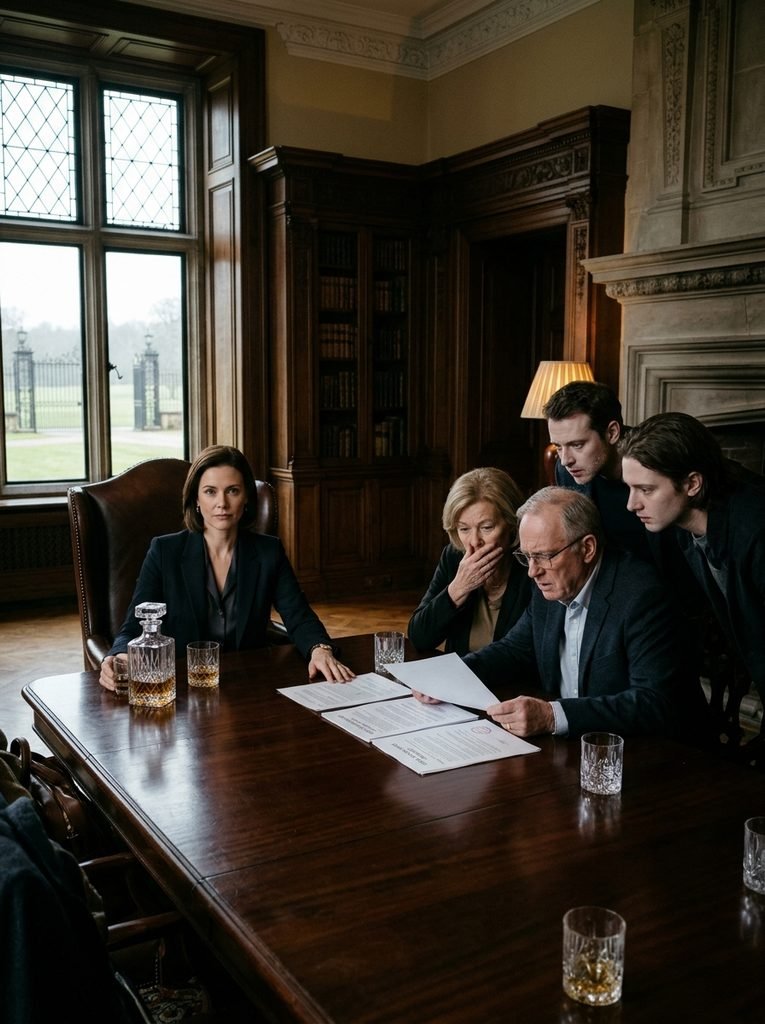
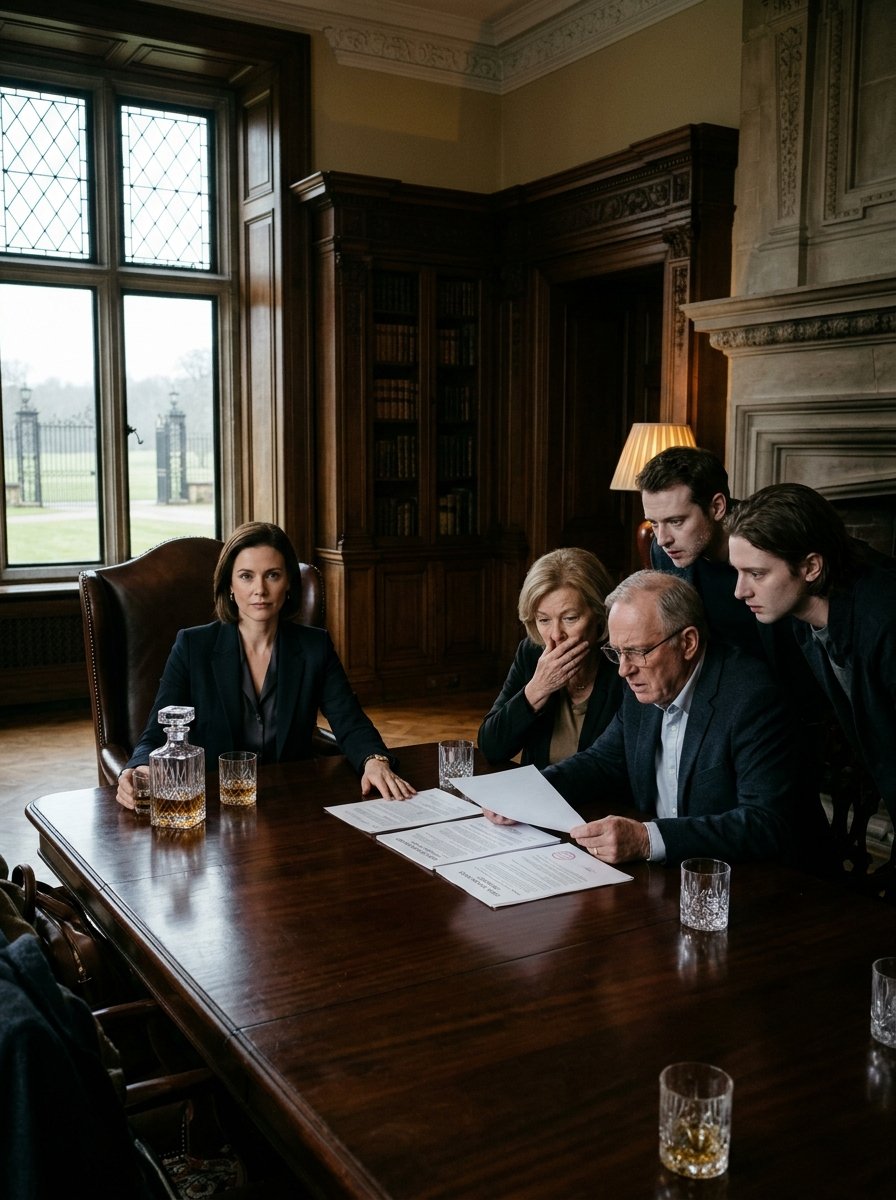
I poured another round, set the glasses down, and slid a folder across the table.
Their voices faltered as they noticed it.
My brother, always the first to grab, reached for it and pulled it open. As his eyes moved across the page, the color drained from his face.
My sister leaned over, frowned, then gasped.
One by one, their smiles faded. The laughter stopped. The room fell silent, and I sat back, watching, saying nothing.
My hands steady around my glass.
That was the moment I had been waiting for.
My brother’s hand lingered on the papers, his eyes darting back and forth while his lips moved as though sounding out each line. My sister leaned in, her bracelets clinking against the table as she tried to snatch a better look.
My parents didn’t even bother hiding their impatience. My mother sighed loudly, muttering about how long it could possibly take to read a few sheets of paper, while my father leaned back in his chair, arms crossed, smirking like he already knew whatever was written there belonged to him somehow.
“What is this supposed to mean?” my brother finally asked, his voice tight, more irritated than curious.
He shoved the contract across the table toward me, though not before my sister pulled it back, scanning the lines herself. She didn’t understand either, but I caught the flicker of unease in her eyes.
It means what it says, I replied evenly, lifting my glass to my lips.
That wasn’t enough for them. It never was.
Within minutes, the room that had fallen silent buzzed again, but this time, the laughter was brittle, sharpedged.
My mom leaned forward, tapping the contract with her finger.
Henry, dear, I don’t know what game you’re playing, but you don’t need to show off in front of us. We’re family. We’ll always take care of you, no matter how confused you get with these business things.
The words slid out like honey, but there was steel underneath them.
She hadn’t even read the fine print. She didn’t need to. In her mind, everything of mine was theirs by default.
My dad chuckled low and grally.
Yeah, don’t get too carried away, son. You’ve done well, finally. But let’s not pretend you’re some kind of tycoon. You wouldn’t even know where to start without our advice over the years.
Advice? That was rich.
Their advice had been years of reminders that I was a disappointment, of telling me to take safe jobs, mocking me when I refused to settle, acting like my persistence was stupidity.
My sister set the folder down, her eyes darting toward the marble countertop in my kitchen.
Honestly, Henry, it’s nice you finally got something to your name. I mean, it took long enough, right? But you could at least be generous with it. Family should share. My kids would love to come stay here for the summer. You wouldn’t mind.
Right there.
It was the pivot from dismissal to entitlement. Not even a pause in between.
My brother jumped in before I could respond.
Actually, I’ve been thinking. This place has so much land, Henry. You’re not even using half of it. You should let me build a workshop out back.
I’d pay you, of course, he added quickly. But the way his grin spread told me he didn’t mean a word of it.
It’s just keeping all this space to yourself feels kind of selfish, don’t you think?
Selfish.
That was the word they always circled back to.
When I worked long hours, I was selfish for not coming to family dinners. When I didn’t chip in for extravagant gifts for relatives, I was selfish for not contributing. And now, with everything I had built, I was selfish for not immediately handing it over.
I stayed quiet, sipping my drink, and that silence only seemed to embolden them.
My mom patted my knee like I was still a child who didn’t know better.
Henry, darling, don’t overthink things. Your father and I can help manage everything. Estates, contracts, it’s complicated stuff. You don’t want to make mistakes, do you? Better to let us handle the hard parts.
My father nodded, raising his glass.
Exactly. You’ve always had a good heart, Henry. But not the sharpest head. You need guidance. That’s what family is for, guidance.
As though I hadn’t navigated every obstacle on my own.
While they sat back and laughed, my sister’s husband, who had been quiet until now, piped up, his voice oily.
“You know, Henry, if you really wanted to secure this place, you should think about adding us to the deed. Keep it in the family so no outsiders swoop in if anything happens to you.”
He grinned at me like he was doing me a favor.
The air in the room felt heavier with every word, every casual suggestion that my hard work was theirs to divide.
I could feel that old familiar tightness in my chest, the same one I’d felt at every family dinner where I was the punchline.
Only now, I wasn’t the broke one sitting at the kids table.
Still, they didn’t see it. Or maybe they did, and they thought they could twist it to their advantage.
My mother stood brushing imaginary lint from her dress and wandered toward the window overlooking the grounds.
This view, she sighed, her voice dreamy. It reminds me of those estates we used to visit when your father’s company had retreats. You’ve really done well, Henry. I always said you had it in you.
That was a lie.
She had never said that. Not once.
My father leaned forward, lowering his voice like we were conspiring together.
Look, son, I’ll be straight with you. You’ve got something good here, but you’re going to need us. Taxes, upkeep, security, it adds up. We can help lighten the load. You don’t want this place to become a burden, do you?
I stared at him, my mind racing.
A burden.
That’s what they wanted me to believe. That success was too heavy for me to carry alone. That without them, I’d collapse under the weight of it.
The contract still sat on the table between us. Its words etched into my mind.
They hadn’t bothered to understand it yet. Too busy circling like vultures, each trying to stake their claim in what they assumed was already theirs.
And as I listened to them talk, demand, dismiss, and manipulate, I realized something.
They weren’t just underestimating me anymore.
They were making a mistake far greater than that.
They were underestimating what I had become.
The fire in my chest burned steady, calm now instead of chaotic. I had spent years swallowing their laughter, their judgment, their endless reminders that I was less.
Now, as their voices filled my home, my home, I felt the balance shifting.
They had no idea what was written in that contract.
Not yet, and I wasn’t about to explain it to them.
Not until the moment was right.
My brother’s laugh cut through the room like a blade. Low at first, then louder as he leaned back in his chair.
“You know what, Henry?” he said, tossing the contract onto the table like it was a menu he didn’t care to order from. “You’re not fooling anyone with these papers. You’ve probably just copied some online template to make yourself feel important.”
The others chuckled, not because they understood, but because they followed his lead.
My sister smirked, reaching for her glass.
Exactly. If this were something real, Henry, you wouldn’t be hiding it. You’d have told us long ago. But no, you’re still playing games, trying to prove you’ve what? Grown up.
She gestured around the room.
It’s cute, but you’re still you. You can’t rewrite who you are.
My mother nodded in approval. Always quick to back whichever child made me look small.
They’re right, Henry. All this secrecy isn’t healthy. You’ve always been so sensitive about money. Maybe it’s time to let go of that pride and admit you need us. We’re your family. You’ll only get so far without us.
And then, like they had planned it, came the moment that turned everything in my chest into fire.
My dad rose from his chair, walked over to the contract, and without hesitation, dragged it closer to himself.
“You know what, son?” he said, glancing at me with a smirk that had haunted me since childhood. “You don’t need to waste your time with this nonsense. Why don’t I take care of it?”
Before I could stop him, he pulled a pen from his pocket and scribbled something across the last page.
His handwriting was rough, impatient.
He tapped the paper afterward and grinned.
“There, now it’s official. Your old man is in the picture, just the way it should be.”
I froze, my throat tightened.
It was one thing for them to mock me, to belittle me, to circle around my success with greedy eyes.
But this, taking a document they hadn’t read, hadn’t understood, and signing it as though my life’s work belonged to them.
My sister’s eyes lit up as she leaned in to see what he’d written.
Dad, did you just sign it?
She gasped like it was a victory for her, too.
Oh, that’s brilliant. Now it’s legally binding, right? That means we’re all in.
Her husband chimed in quickly.
Exactly. It keeps everything safe. Henry doesn’t need to worry about carrying this burden alone anymore.
Burden.
Again, that word.
My brother, emboldened, reached over and scrolled his name under my father’s, laughing as though it was the funniest joke of the year.
If we’re doing this, let’s do it properly. Don’t want Henry stuck running around with no one to protect him.
He leaned back with a satisfied grin, his arms stretching along the back of the couch like a man who had just claimed territory.
My hands trembled, but not with fear.
With rage, cold, controlled rage.
I clenched the glass in my hand. Every muscle in my body tightening as the years of mockery and dismissal replayed in my head.
The cheap toy I’d been ridiculed for bringing to my niece’s party. The toast at dinners where I was the punchline. My mother patting my knee like I was still a child.
And now my own father and brother writing their names across my contract as if everything I had built existed for them to take.
They thought this was theirs.
They thought I was still that boy sitting quietly at the corner of the table, swallowing every insult, pretending their laughter didn’t sting.
They thought I wouldn’t stop them.
My sister picked up the folder again. Her face flushed with excitement now instead of scorn.
This is good, Henry. Really good. You’ll thank us later. We’ll make sure this estate stays in the family. You don’t need to carry all this alone. It’s better this way.
I stared at her, my voice finally breaking through the haze in my head.
Calm, steady, but sharp.
You don’t even know what you’ve just signed.
The room went quiet again, but this time not with awe, with confusion.
My father chuckled, shaking his head like I was being dramatic.
Stop trying to scare us, Henry. You’re still the same boy who couldn’t pay his rent without calling us for help. Don’t play games. We’re protecting you from yourself.
My mother folded her arms, her lips pressed tight.
Don’t talk to your father that way. He knows what’s best. We all do. You should be grateful we’re stepping in.
Grateful.
The word echoed inside me, twisting like a knife.
They expected me to thank them for mocking me, for dismissing me, for signing their names on something that wasn’t theirs.
I looked down at the contract. Their messy signatures scrolled across the page.
And in that moment, something inside me snapped.
Not the kind of snap that makes you reckless. No, it was quieter, sharper, colder than that.
It was the snap of a man who finally realizes he’s not the weak one anymore.
I leaned back, setting my glass down with care, my eyes sweeping over each of their faces, the smug grins, the expectant stares, the certainty that they had won.
They didn’t know it yet, but they had just given me everything I needed.
And for the first time in years, I smiled.
Not the forced smile they had seen at countless dinners, but a genuine one.
One they couldn’t understand.
Not yet.
I don’t remember much of what was said after that moment. Only the feeling, that hollow pit opening in my chest as I stared at the page, their sloppy signatures bleeding across lines they hadn’t even bothered to read.
It was like watching someone walk into your house, put their feet up on your table, and declare, “This is mine now.”
They carried on as if nothing had happened.
My dad poured himself another drink. My brother started telling a story about his latest business idea while motioning toward my backyard like he was already planning where he’d build his workshop.
My sister wandered down the hall without asking, peeking into rooms like a realtor inspecting property.
My mom drifted between them all, a queen surveying her new domain, occasionally glancing back at me as though expecting me to beam with gratitude.
I didn’t. I couldn’t.
I sat there, my glass heavy in my hand, feeling the weight of years pressing down all at once.
Every insult, every dinner where I was the joke, every time they reminded me that I was less than them, it all collapsed into this moment.
I excused myself quietly, slipping into my office and closing the door behind me.
The sound of their laughter and chatter filtered through the walls, muffled but relentless.
I leaned against the desk, staring at nothing, my mind spinning.
This was supposed to have been different.
I had imagined it a hundred times. What it would be like to finally have them see me, to walk into a room without being the punchline, to have the kind of success they couldn’t ignore.
I thought maybe, just maybe, they would look at me and see the man I’d become, not the boy they’d mocked.
But even now, sitting in the house I had built with my own hands, they didn’t see me.
They saw opportunity.
And that realization cut deeper than any insult ever had.
I should have stormed back into that room, ripped the contract from the table, told them to get out, and never come back.
But I didn’t.
Instead, I stayed there in the quiet, my hands gripping the edge of the desk until my knuckles went white.
Because beneath the anger, there was still that old familiar ache.
The ache of wanting their approval, the ache of realizing I was never going to get it.
For the next hour, I let them roam my house like it was theirs.
My brother’s laugh boomed down the hall. My sister’s heels clicked against the hardwood as she inspected each room.
My mother’s voice floated above it all with little remarks about the decor.
A bit too modern for my taste, but fine.
Like her opinion carried weight here.
I sat there in silence, letting it wash over me, letting myself feel small again for the last time.
Because in that silence, the fire returned.
Not the reckless blaze of anger, but something steadier, controlled, precise.
I thought of every time they had called me selfish. Every time they had told me I needed them, every smirk across a dinner table.
And now I thought of their signatures sprawled across that contract.
They thought it was their victory.
I realized it was my weapon.
When they finally called me back into the living room, I put on the same smile I’d worn for years.
The one that never reached my eyes.
My sister was sprawled on the couch, scrolling through her phone, already posting pictures of the estate to social media.
My brother was leaning back, his arm thrown over the chair like he owned it.
My dad raised his glass toward me, his smirk as smug as ever.
“You’ve done well, son,” he said as though the words were a gift. “And with us here, you’ll keep doing well. Family looks after its own.”
Family.
I nodded, swallowing the bitterness rising in my throat.
Of course, I said softly, my voice steady.
Family always comes first.
They smiled satisfied.
They thought I’d given in, that I had accepted their claim.
And in a way, I had, but not in the way they imagined.
That night, long after they had left, I sat alone at the table, the contract still lying there under the dim light.
Their signatures stared back at me, arrogant and careless.
I traced the ink with my finger, my mind already working.
This wasn’t the end.
This was the beginning, but no one knew it yet.
Not them, not even me fully.
Not until the plan began to form in the quiet corners of my thoughts.
For now, I let the silence hold me.
I let myself feel the weight of what they’d done.
The betrayal, the dismissal, the theft.
I let it carve its place inside me, not as a wound, but as a reminder, because the next time they walked through my gates, things would be different, and I would make sure they never forgot it.
The weeks after that visit were some of the quietest of my life, yet also the loudest inside my own head.
Every time I walked past the living room table, I saw that contract sitting there, their arrogant signatures staring back at me.
For a while, it hurt.
The ink felt like proof that no matter what I built, my family would always try to claim it, reshape it, bend it into something that served them.
But slowly, that sting transformed.
The paper stopped feeling like a wound and began to feel like a map. A reminder of where I’d been and where I needed to go.
I buried myself in work.
Not the frantic, desperate kind of work I had once done to prove myself, but something calmer, sharper.
I stopped chasing scraps and started negotiating real deals.
I turned down offers that would have tied me up with too many strings, and I chose partners who valued discretion over bragging rights.
Money flowed in, not all at once, but steadily, like a river finding its course.
Every check I deposited, every signature I placed on a real contract that wasn’t scrolled over by my family felt like another brick in a wall I was building between me and them.
The estate began to change, too.
I invested in it, expanded it.
Landscapers shaped the grounds. Architects added wings. Security companies reinforced the gates and cameras.
The house that had once felt too big for me alone suddenly felt like it was growing into me.
It became a fortress, not just of stone and steel, but of resolve.
Every upgrade wasn’t just for comfort.
It was a statement.
This was mine.
Word began to spread outside of my family.
Business acquaintances who had once dismissed me as just starting out began seeking me out instead.
A few even admitted quietly that they had underestimated me.
That meant more to me than any false praise from my parents ever could.
And yet, even as the world shifted, my family didn’t.
They still called occasionally, usually with some thinly veiled excuse.
My sister rang one afternoon, her voice syrupy sweet.
Henry, darling, my kids have been dying for a change of scenery. Wouldn’t it be lovely if they spent the summer at your estate? They’d hardly take up any space.
I said no.
Calmly, politely, but firmly.
The silence on the other end was almost satisfying.
My brother tried next.
Hey man, I’ve been thinking. You’ve got that land out back, right? Perfect spot for my workshop. Tell you what, I’ll handle the building costs. It’ll even raise your property value. Win-win.
I told him no, too.
He laughed like I was joking, then grew serious when I didn’t waver.
His voice hardened, his words clipped.
You’re being selfish, Henry. Don’t forget who’s always been there for you.
I hung up before he could finish.
Even my parents tried in their way.
My mom called one evening, her tone laced with false concern.
Henry, dear, managing an estate is a lot. Your father and I worry about you. You don’t want to get in over your head, do you? Why don’t you let us come by, help keep things in order?
I thanked her for the thought and told her it wasn’t necessary.
The silence that followed was telling.
Each time I refused them, a new kind of strength settled into me.
For so long, I’d been the boy who kept quiet. Who swallowed the insults. Who laughed along to hide the sting.
But with every no, I felt less like that boy and more like the man I’d become.
The man who didn’t need their approval, their guidance, their false sense of family.
Meanwhile, my success grew.
Contracts doubled, then tripled.
I hired staff, not a huge team, but people I trusted.
The estate that had once echoed with emptiness now hummed with life.
Not from family who took without giving, but from people who believed in my work, who respected what I had built.
I remember one evening walking the grounds alone, the sunset spilling gold across the gardens.
For the first time in years, I felt steady, not triumphant, not boastful, just steady, like I had finally found a rhythm that belonged only to me.
But even as the world outside flourished, the shadows of my family lingered.
They hadn’t forgotten that day at the gates.
They hadn’t forgotten the contract.
They hadn’t forgotten the taste of what they thought they almost had.
And deep down, I knew they would be back.
The only question was when.
And when they did return, I would be ready.
The turning point came on a morning that started like any other.
I was sitting in my office with a cup of coffee, the contract still tucked in its drawer like a loaded weapon, when my lawyer, an older man named Whitaker, who had guided me quietly through the last few years, called.
He wasn’t the type to waste words, which is why the first thing he said caught my full attention.
Henry, he began, his voice calm, but deliberate. I’ve been reviewing the documents you asked me to keep on file. That contract your family signed, did you realize what they actually gave you?
My heart skipped.
What do you mean?
Whitaker chuckled softly, though it wasn’t unkind.
They thought they were taking something from you. But what they signed, Henry, it wasn’t an addition. It was a release. By scribbling their names, they waved any potential claim they could have ever made on your estate.
It’s airtight.
You now hold written proof that should they ever contest your ownership or your wealth, their signatures themselves dissolve their standing.
I sat there in stunned silence.
The weight of his words pressing down like a stone.
For weeks, that contract had felt like a symbol of their arrogance, of how they had mocked me, even in my own home.
Now, it was something else entirely.
A weapon.
Whitaker must have sensed my silence because he added, “Henry, this is one of those rare moments where life hands you leverage on a silver platter. Use it wisely.”
After we hung up, I pulled the folder out of the drawer and looked at it again.
My father’s messy scrawl, my brother’s careless flourish, both written with the smug certainty that they had claimed me, claimed my work, claimed my home.
And all along, they had handed me the very rope I would use to tighten the boundaries around my life.
For the first time in years, I didn’t just feel steady.
I felt powerful.
And as if on Q, the calls began again.
My sister, this time, her voice unusually soft, dripping with false kindness.
Henry, I’ve been meaning to ask. Have you thought about hosting Christmas at your place this year? It would mean so much to the family. The house is so big, it’s perfect for everyone. We could even invite extended relatives. Imagine the memories.
I smiled into the phone, though she couldn’t see it.
I’ll think about it, I said.
Because now I wasn’t just reacting to them.
I was planning.
The more I leaned into my work, the more doors opened. Invitations to exclusive business circles, whispers of partnerships with names my family would recognize instantly.
I didn’t flaunt it.
Not yet.
But I kept mental notes.
Every contract signed, every piece of land acquired, every door opened widened the gap between who I had been and who I was becoming.
The estate itself grew into a symbol.
I invested in renovations, not just for comfort, but for presence.
The gates were taller now, reinforced with steel. The drive was lined with manicured trees. The fountains in the courtyard lit at night.
Anyone who entered knew immediately this wasn’t just a house.
It was a statement.
My staff, loyal and discreet, became an extension of that power.
They knew who to let in and who to keep out. They knew when to serve and when to disappear into the background.
They understood without me needing to explain that this home was both sanctuary and stage.
But what truly shifted things was when I secured a deal with an old acquaintance of my father’s.
A man who had once dismissed me as the kid fumbling with ideas now signed a contract with me that not only expanded my reach, but placed me directly in circles my family revered.
The kind of circles they had always boasted about belonging to.
Even when their influence was fading, it wasn’t just money anymore.
It was reputation, standing, authority.
And with that authority came the realization I could set the terms.
The next time my brother called, trying once again to pitch his workshop idea, I didn’t hang up.
Instead, I listened patiently.
Let him believe for a moment that I was considering it.
And when he finally paused, waiting for my approval, I simply said, “Put it in writing.”
There was a long silence on the other end.
What?
Draw up the paperwork.
I repeated my tone even.
I don’t move without contracts.
He laughed nervously, unsure if I was joking, but I wasn’t, and he knew it.
For once, the balance had shifted.
I began imagining scenarios, rehearsing conversations, picturing the exact way their expressions would change when the trap I was building finally closed.
The contract they had signed was already leveraged.
But I wanted more.
I wanted them to see, truly see, that the boy they mocked, the broke one, was gone.
And in his place stood a man who didn’t just survive their ridicule, but thrived in spite of it.
I wanted them to walk through my gates again, but this time it would be on my terms.
So I waited patiently, carefully, and as each week passed, the pieces moved into place.
They thought they had written me off years ago.
They thought they had claimed me when they signed that contract.
They had no idea.
They had only set the stage for what was coming.
The invitation went out 2 weeks before Christmas.
Just a simple card, white with gold lettering, sent to every member of my immediate family.
Christmas dinner at the estate, 6:00 p.m.
No flowery message, no personal notes, just the time, the place, and my name at the bottom.
I could almost hear their excitement buzzing through the phone calls that followed.
My mother called first, her voice practically gleaming.
Oh, Henry, how thoughtful of you, finally bringing the family together like this. It’s about time you realize traditions matter.
My father followed, less sentimental, but more direct.
We’ll be there. I’ll bring the wine. You don’t have to worry about the little things.
My sister texted me photos of dresses she was choosing between for the evening, asking for my opinion, though she didn’t really care.
My brother sent a message that simply read, “Looking forward to seeing the place again. Maybe we can talk business afterward.”
I didn’t respond to any of it beyond polite clipped acknowledgements.
I wanted their anticipation to build.
I wanted them to walk through my gates believing they were coming to claim something.
That was the only way they’d feel the full weight of what was about to happen.
The night arrived cold and clear.
The air crisp enough that every breath turned white.
The estate was lit beautifully, fountains glowing, lanterns lining the drive, candles flickering in the windows.
When their cars rolled up the drive, I watched from the balcony above the grand hall, the same way a host might watch guests arriving for a play.
And in a sense, that’s exactly what it was.
They entered with the same casual arrogance as before.
My sister’s children ran ahead, their voices echoing off the marble floors, while she called after them with mock scolding.
My brother slapped me on the back the moment he stepped through the door, his grin wide and unearned.
Looks good, Henry. Real good. Almost like you knew what you were doing all along.
Almost.
Dinner was laid out in the dining hall.
Long tables draped in linen, glasses polished to shine under the chandelier.
The food was impeccable, prepared by staff who moved silently, professionally, disappearing before anyone had a chance to notice them.
My family sat down, plates filled, drinks poured, laughter spilling like they had already won something.
I let them talk.
I let them toast.
I let my father raise his glass and say to Henry, finally finding his place.
And when their glasses clinkedked, I placed the folder on the table.
The same folder, the same contract.
The room stilled.
Again with this, my brother scoffed, reaching for it as though it was already his.
Henry, come on. You’re dragging this out. What’s the point?
Read it, I said simply, my voice calm, almost quiet.
They laughed at first, exchanging glances like I was performing some tired joke.
But I didn’t laugh.
I didn’t move.
I only watched.
Curiosity got the better of my sister.
She slid the folder closer, flipped it open, and began to read.
Her eyes moved slower this time, the lines sinking in deeper.
Her smirk faded, replaced by a small crease in her brow.
My father leaned over her shoulder, squinting at the words.
My brother grabbed it impatiently, scanning at himself, his face darkening with each line.
“This This can’t be right,” my father said, his voice sharp, defensive. “This isn’t what it looks like.”
Oh, but it is, I replied, leaning back in my chair.
You remember that day you all came here uninvited, poured my drinks, and decided to scrawl your names across something you hadn’t read?
You thought you were signing yourselves into my future?
You weren’t.
My brother slammed the folder shut.
This is a trick. Some legal game. It doesn’t mean anything.
On the contrary, I said, sliding a second folder across the table.
This one thicker stamped with Whitaker’s seal.
That contract combined with this filings, notoriizations, confirmations means you’ve officially relinquished any potential claim to my estate, my assets, my company, and any future holdings tied to my name.
It’s ironclad.
Every signature you gave that day was a gift to me.
Silence.
Heavy suffocating silence.
My sister’s face flushed crimson.
You You set us up.
I tilted my head.
My smile small, deliberate.
No, I gave you a choice. You made it.
My father tried to bluster, his voice rising.
We’re your family. You think some piece of paper can change that?
I met his eyes evenly.
It already has.
My mother whispered something then, so soft I almost missed it.
You planned this.
I didn’t answer.
I didn’t need to.
The truth was written all over my face.
In the calmness of my voice, in the steady way, I held their gaze without flinching.
They had walked into my house, years of arrogance trailing behind them, and handed me the power I now wielded.
And tonight, for the first time, they realized it.
The weight of the room pressed down, their laughter gone, their plates untouched, their drinks forgotten.
Their eyes flicked between one another, searching for reassurance, for someone to tell them it wasn’t true.
But it was, and I sat there in the silence, letting them drown in it.
The silence didn’t last long.
It cracked first with my brother, who shoved back his chair so violently it scraped against the floor.
His face was red, his voice loud enough to rattle the chandelier.
This is ridiculous, Henry. You think some fancy lawyer and a stack of papers make you better than us? We’re your blood. You can’t just cut us out like strangers.
I didn’t move.
I didn’t cut you out, I said evenly.
You signed yourselves out.
My sister jumped in next, her voice shrill, trembling between anger and panic.
You tricked us. You knew what you were doing that day. You set a trap. This isn’t fair. You can’t hold us to it.
I raised an eyebrow.
Unfair.
You came into my home uninvited, poured my drinks, and signed a document you never bothered to read.
You laughed at me as you did it.
I didn’t force your hand.
You handed me everything.
Her husband tried to recover ground. Speaking in that oily, calculated tone I’d always hated.
Henry, listen. This can be resolved. We don’t need to fight. Family should stick together. We can renegotiate, draw up something new, tear this old thing up, and start fresh.
Right.
I leaned forward slightly, my voice dropping.
Wrong.
My father finally spoke, his face tight with fury, the mask of control slipping.
Don’t do this, Henry. Don’t make an enemy of your own family. You’ll regret it.
I met his eyes without blinking.
No, I said quietly.
I regretted staying silent for 32 years.
That regret ends tonight.
The weight of those words seemed to settle on the table heavier than any contract could.
My mother’s hands trembled as she reached for her glass, her voice breaking as she whispered, “We were only trying to help.”
I almost laughed, but the sound stuck in my throat.
Help!
They had mocked me, dismissed me, used me, and when they saw what I’d built, they tried to claim it as their own.
If that was their version of help, I wanted nothing to do with it.
I stood then, pushing my chair back calmly, deliberately.
This dinner is over.
My staff will see you out.
They erupted at once.
My sister crying, my brother shouting, my father swearing under his breath, my mother pleading with me not to be so cold.
Their words over overlapped into a storm of anger, panic, and disbelief.
But I didn’t respond.
I didn’t raise my voice.
I simply walked toward the balcony doors and opened them, letting the cold night air pour into the hall.
One by one, my staff approached, firm but polite, guiding my family toward the exit.
My brother tried to resist, but two guards stepped forward, and he thought better of it.
My sister sobbed into her husband’s shoulder, muttering about betrayal.
My mother paused at the threshold, her eyes wide and wet, whispering, “Henry, please were your family.”
I looked at her for a long moment.
The woman who had raised me, who had laughed at me, who had stood silent when the others mocked me, and I said the only thing that felt true.
“No, you’re not.”
The door shut behind them.
The echo of it rolled through the empty hall, leaving me alone in the glow of the chandelier.
I stood there for a while, listening to the silence, feeling the weight lift from my shoulders.
For years, they had called me the broke one, the failure, the disappointment.
Now they were gone, and I was free.
I poured myself one final drink, raised the glass toward the quiet room, and spoke the last words they would never hear to family.
And then, with a steady hand, I drank every drop.
The night outside was cold, but inside for the first time in my life, I felt warm.