My Family Bought My Dream House to Humiliate Me—Then They Learned I Owned the Bigger Mansion Next Door
Olivia happened to drive past while I was sitting across the street.
She pulled over behind me.
“What happened?” she asked.
I should have lied.
I should have said I had a flat tire.
Instead, I told my sister the truth.
I told her Bellweather House had been my dream since childhood.
I told her I had saved enough for a serious down payment.
I told her I had already called a realtor.
I even laughed and said, “Maybe I’m finally going to do it.”
Olivia hugged me.
Or at least I thought she had.
Now, standing in front of that same house, I understood the hug differently.
She had not been sharing my happiness.
She had been collecting information.
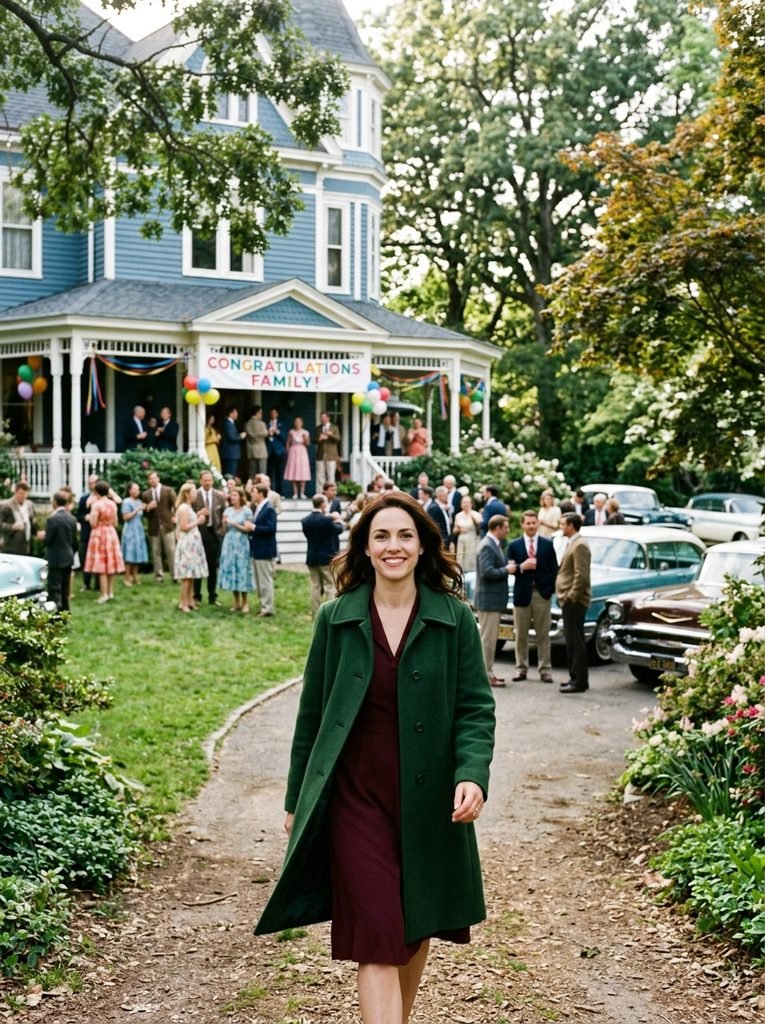
My mother walked toward me and wrapped cold fingers around my wrist.
“Come on,” she whispered. “People are watching.”
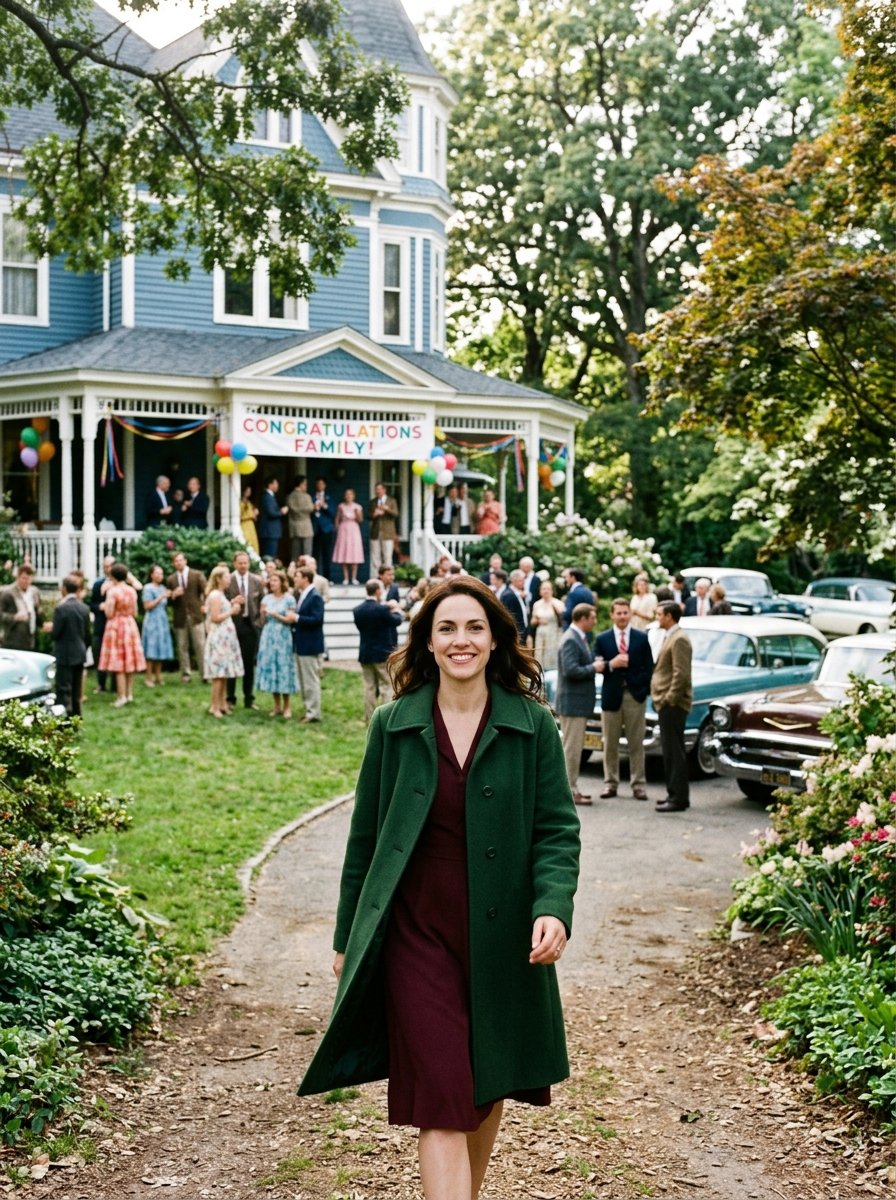
That was when I finally noticed the cars.
My aunt’s red Buick.
My cousin Mark’s pickup.
Two vehicles belonging to family friends.
Several neighbors stood around the lawn holding drinks.
They had invited an audience.
Of course they had.
My humiliation had been scheduled.
Catered.
Decorated.
My mother tightened her grip.
“Smile.”
I pulled my arm away.
My father stepped closer.
He lowered his voice enough that only the people nearest us could hear.
“Maybe this will teach you something.”
I stared at him.
He continued.
“Wanting something doesn’t mean you deserve it.”
The porch went quiet.
Even Olivia’s expression changed.
For one second, nobody moved.
That sentence landed differently from everything else.
It carried years inside it.
Every ignored achievement.
Every comparison.
Every family dinner where I was made to feel deficient because my life did not resemble my sister’s.
Every birthday where my mother asked whether I was seeing anyone.
Every holiday where my father told me career success could not replace a family.
Every moment when they treated my independence like a personality defect.
Wanting something doesn’t mean you deserve it.
I looked at the brass keys in his hand.
The original Bellweather key tag still hung from the ring.
And then I smiled.
I could not help it.
Olivia’s eyebrows lifted.
“What’s funny?”
“Nothing.”
My voice came out surprisingly calm.
I looked at the house.
“It’s beautiful.”
My mother studied me.
She had expected a scene.
That was obvious.
She had already prepared for my tears.
Maybe even rehearsed how she would comfort me in front of witnesses before later telling everyone I had ruined their housewarming party.
Instead, I walked past my father and climbed the porch stairs.
I touched the carved wooden frame beside the entrance.
“You’ll want to treat this wood before winter,” I said.
My father frowned.
“What?”
“The east side holds moisture.”
He stared at me.
“How would you know?”
I looked over my shoulder.
“I’ve been paying attention.”
Then I stepped inside.
The smell hit me immediately.
Old plaster.
Lemon polish.
Dust trapped inside heating vents.
For decades, I had imagined this moment.
Entering Bellweather House.
Walking across its parquet floors.
Running my hand along the oak staircase.
Seeing sunlight pass through the blue-and-gold stained glass above the landing.
Only I had imagined entering as the owner.
Not as the entertainment.
My mother moved ahead of me.
“Wait until you see the dining room.”
She guided me from room to room as though giving a tour to someone beneath her.
Olivia announced that the front parlor would become her book-club room.
I nearly laughed.
She had not finished a novel since 2014.
My father explained the closing process twice.
“Cash deals are simply cleaner,” he said loudly enough for our relatives to hear.
My aunt Margaret caught my eye.
She looked uncomfortable.
When my mother walked away, Margaret leaned closer.
“Are you okay?”
I squeezed her hand.
“I’m fine.”
She searched my face.
I could tell she did not believe me.
She was right.
I wasn’t fine.
I was furious.
But beneath the anger was something else.
Something almost dangerous.
Relief.
Because my family had made one enormous mistake.
They believed I had been waiting helplessly for Bellweather House.
They did not know that one month earlier, I had watched Olivia leave a private showing here with my parents’ realtor.
I had been coming from a meeting in town when I saw her descend the front steps.
My mother followed.
Then my father.
At first I sat frozen behind the wheel.
I remember staring at them through the windshield while the realtor locked the door.
I understood immediately.
They were going after Bellweather.
That night, I went back to my apartment.
I was angry enough to shake.
Then I opened my laptop.
And I changed my plan.
Because Bellweather House was not the only historic mansion on Maple Street.
Next door, hidden behind massive sycamore trees and an iron gate, stood Ashcroft Manor.
Most people in town barely talked about it.
Bellweather was prettier.
More romantic.
More visible.
Ashcroft was different.
It sat farther back from the road.
Four stories.
Nearly twelve thousand square feet.
Gray stone exterior.
Slate roof.
Library wing.
Glass conservatory.
Carriage house.
Guest cottage.
Three acres.
It had once belonged to the Ashcroft textile family, then spent decades passing through trusts and private estates.
It was older than Bellweather.
Larger than Bellweather.
And worth substantially more.
For years, Ashcroft Manor had not technically been for sale.
Then, by pure coincidence, I discovered through my realtor that the elderly owner, Evelyn Ashcroft, had quietly moved to an assisted-living community near her daughter.
She did not want developers.
She did not want the estate divided.
She wanted one buyer.
Someone who understood old houses.
Someone who would preserve it.
My realtor said, “Claire, this is going to sound crazy, but I think you should meet her.”
So I did.
Evelyn Ashcroft was eighty-two.
Sharp-eyed.
Silver-haired.
Unimpressed by money.
We drank tea in the library beneath a ceiling painted with faded constellations.
She did not ask what car I drove.
She did not ask whether I had a husband.
She asked why I loved old houses.
I told her the truth.
I told her about Bellweather.
About walking past it as a child.
About the comfort I felt imagining a future that belonged entirely to me.
Then I told her something I had never told my family.
I did not love historic houses because they represented status.
I loved them because they survived.
Families changed.
Money disappeared.
People left.
But houses carried evidence that life continued.
Evelyn watched me quietly.
Then she said, “Bellweather is lovely.”
I smiled.
“Yes.”
She glanced around her library.
“But this one needs someone too.”
We talked for two hours.
Two weeks later, she accepted my offer.
Not because it was the highest.
I later learned it wasn’t.
She accepted because I agreed to preserve the library, conservatory, and original gardens.
The closing happened through a private trust.
Quietly.
Three weeks before my family’s Bellweather housewarming party.
Which meant that as my father stood in Bellweather’s dining room bragging about his cash offer, I already owned the mansion next door.
And they had absolutely no idea.
“Claire.”
Olivia snapped her fingers near my face.
I turned.
“What?”
“I asked whether you liked the wallpaper.”
We were standing in an upstairs bedroom.
Pink roses covered every wall.
“It’s memorable.”
She laughed.
“You always hated wallpaper.”
“I hate bad wallpaper.”
Her smile tightened.
For a moment, we simply looked at each other.
Then she lowered her voice.
“You’re taking this better than I expected.”
There it was again.
Expected.
They had discussed my reaction.
Planned for it.
I leaned against the doorframe.
“What did you expect?”
Olivia shrugged.
“I don’t know. Tears?”
“At your housewarming?”
“You know what I mean.”
“No,” I said. “I’d like to hear you say it.”
She shifted.
For the first time that afternoon, some of her confidence faded.
Then she rolled her eyes.
“Claire, you always act like everything is some huge emotional event.”
I almost laughed.
“You bought the house I told you I’d dreamed about since childhood.”
“We bought a property.”
“You found out I planned to make an offer, then convinced Dad to buy it first.”
She crossed her arms.
“You make everything sound malicious.”
“Was it?”
She opened her mouth.
Nothing came out.
Then my mother appeared at the doorway.
“There you two are.”
She looked between us.
“Please don’t start.”
I stared at her.
“I haven’t started anything.”
“That tone, Claire.”
My mother had always been brilliant at that.
She could provoke me, insult me, humiliate me, then criticize my response.
“It’s a celebration,” she said. “For once, just try to be happy for your family.”
I stepped past her.
“My family seems very happy already.”
Downstairs, a caterer announced that champagne was being served in the garden.
Everyone drifted toward the back terrace.
From there, through the trees, you could see part of Ashcroft Manor’s western façade.
My mansion.
The thought still felt surreal.
Aunt Margaret moved beside me.
She followed my gaze.
“Such a shame about Ashcroft,” she said.
I turned carefully.
“What do you mean?”
“It’s been empty for months, hasn’t it?”
“Not exactly.”
She looked at me.
Before she could ask, my father struck a spoon against his glass.
“Everyone!”
Conversations stopped.
Grant stood beneath the pergola.
My mother beside him.
Olivia near the garden steps.
My stomach tightened.
Of course there was a speech.
“I want to thank everybody for coming,” my father began.
He smiled around the garden.
“Bellweather House has been part of this neighborhood for more than a century, and we’re proud that it’s staying with a family that appreciates tradition.”
Tradition.
I almost choked.
My father continued.
“Diane and I have been fortunate. We worked hard. We planned carefully. And if there’s one thing I’ve tried to teach my daughters, it’s that a successful life requires priorities.”
His gaze shifted toward me.
Several people noticed.
My mother did not stop him.
“Olivia understood that early,” he said. “Marriage. Children. Community. Building something that lasts.”
I stood perfectly still.
There was no subtlety left now.
“Claire chose another path,” he continued.
Aunt Margaret muttered, “Grant.”
He ignored her.
“And that’s fine. But eventually, life has a way of reminding us what truly matters.”
There were uncomfortable glances now.
Someone set down a champagne glass.
I looked at Olivia.
She was smiling.
Not broadly.
But enough.
My father lifted his glass.
“To family.”
A few people repeated it weakly.
I did not.
My father looked directly at me.
“Well?”
I tilted my head.
“Well what?”
“Aren’t you going to toast?”
“No.”
The word dropped into the garden.
Clean.
Simple.
My mother’s face hardened.
“Claire.”
“No.”
I placed my untouched glass on the table.
“You bought this house because you knew I wanted it. You invited relatives because you wanted me here when you announced it. You gave a speech comparing my life to Olivia’s. And now you want me to toast you.”
My father’s jaw tightened.
“You’re embarrassing yourself.”
“No, Dad.”
I smiled slightly.
“That’s the interesting part.”
I picked up my purse.
“You brought me here because you thought you were embarrassing me.”
Olivia exhaled loudly.
“Oh, please.”
My mother said, “This is exactly why we didn’t tell you before closing.”
I looked at her.
“You didn’t tell me because the entire point was surprise.”
Silence.
Then Olivia stepped forward.
“Fine. You know what? Maybe it was.”
My mother hissed, “Olivia.”
But my sister had spent too much champagne and too many years being rewarded for cruelty.
“She’s always acted like Bellweather belonged to her,” Olivia said. “Every time we drove past it. Every childhood story. Every stupid sketch. Bellweather this, Bellweather that. We were tired of hearing about it.”
My aunt stared at her.
“You bought a million-dollar property because Claire talked about liking it?”
Olivia flushed.
“That isn’t what I said.”
“It’s exactly what you said,” I replied.
My father raised his hand.
“Enough.”
Then he looked at me.
His voice dropped.
“This is why you never move forward, Claire. You become emotionally attached to fantasies.”
Something inside me clicked into place.
I nodded.
“You might be right.”
He blinked.
The answer threw him.
I turned toward the trees separating Bellweather from Ashcroft Manor.
“Sometimes you do have to let go of the smaller dream.”
My sister frowned.
“What does that mean?”
I checked my watch.
“It means I have to leave.”
My mother gave a bitter laugh.
“Of course you do.”
I started toward the side gate.
My father called after me.
“Running away doesn’t make you right.”
I stopped.
Then I turned.
“I’m not running away.”
At that exact moment, a black landscaping truck rolled slowly along Maple Street.
It passed Bellweather.
Then turned through the iron gates next door.
Behind it came a delivery van.
Then another vehicle.
My father glanced toward the road.
“What’s going on over there?”
I smiled.
“My furniture is arriving.”
No one spoke.
Olivia stared at me.
“What?”
I walked through the side gate.
Aunt Margaret followed.
Then my cousin Mark.
Then several neighbors.
My family came last.
We crossed the narrow strip of lawn between the properties.
At Ashcroft Manor’s iron gate, a man in work clothes saw me approaching.
“Ms. Harper,” he called.
He opened the gate.
My father stopped walking.
My mother’s face went blank.
Olivia stared past me at the enormous gray-stone mansion rising behind the sycamore trees.
Four stories.
Tall chimneys.
Lead-glass windows.
A conservatory glittering in the afternoon sunlight.
Workers carried crates through the front entrance.
A moving company van sat beside the circular drive.
My father looked at the house.
Then at me.
Then back at the house.
“What is this?”
I walked up the stone path.
“My home.”
Olivia actually laughed.
It was a sharp, disbelieving sound.
“No.”
“Yes.”
“You bought Ashcroft?”
“I did.”
My mother whispered, “That’s impossible.”
I reached into my purse.
Pulled out my keys.
The ring was simple.
No brass tag.
No trophy.
I unlocked the front door.
My father did not move.
“How?”
I looked at him.
It was such a revealing question.
Not congratulations.
Not when.
Not why.
How.
How could Claire, the daughter they treated like a cautionary tale, possibly own something grander than the prize they had used to humiliate her?
“Work,” I said. “Planning. Investing. The same things you taught me.”
His face reddened.
Olivia stepped past him.
“You said you were going to make an offer on Bellweather.”
“I was.”
“So why didn’t you?”
“Because I saw you touring it.”
That stopped her.
I continued.
“One month before your closing.”
My mother went pale.
“I saw all three of you.”
Nobody answered.
“So I changed plans.”
My father found his voice.
“This house wasn’t even listed.”
“Correct.”
“How did you buy it?”
“The owner wanted a private sale.”
“How much?”
I smiled.
“That’s not your concern.”
His expression hardened.
“You’re making this into some competition.”
For the first time that day, I laughed.
A real laugh.
The sound echoed beneath Ashcroft’s stone entryway.
“You bought my childhood dream because you wanted to teach me a lesson, Dad. You invited half the family to watch. And now you’re accusing me of competition because I bought another house?”
Aunt Margaret covered a smile.
Olivia folded her arms.
“So this was revenge?”
“No.”
I looked around the entrance hall.
The carved walnut staircase curved toward the second floor.
Afternoon light spilled through a massive stained-glass window.
“No, Olivia. That’s the part you don’t understand.”
I turned back toward them.
“I didn’t buy Ashcroft to beat you.”
My voice softened.
“I bought it because the moment I realized what you were doing, I finally stopped asking myself how to win your approval.”
That landed harder than shouting would have.
My mother’s lips parted.
I continued.
“For years, I thought Bellweather represented success because it was something I had wanted since I was a child.”
I looked toward the windows.
“But the child who wanted Bellweather also wanted her family to be proud of her.”
Nobody moved.
“She wanted her father to come to her graduation and say he was proud.”
My father looked away.
“She wanted her mother to introduce her without immediately explaining why she wasn’t married.”
My mother’s face changed.
“She wanted her sister to celebrate one thing without turning it into a comparison.”
Olivia’s expression hardened.
“And when I saw the three of you touring Bellweather in secret, I finally understood something.”
My throat tightened.
I had imagined this moment many times over the previous weeks.
Yet saying the words still hurt.
“You were never going to give me that.”
The house fell silent.
“So I stopped choosing my life based on whether it would impress you.”
My father recovered first.
He always did.
He pointed toward the foyer.
“So what now? You expect us to believe you just happened to buy the mansion next door?”
“No.”
I shook my head.
“I bought it knowing you were buying Bellweather.”
Olivia’s eyes widened.
“So you did know.”
“Yes.”
“And you still came today?”
“Yes.”
“Why?”
Because I wanted to see how far they would go.
But I did not say that.
Instead, I looked at my father.
“I needed to know whether there was any part of you that would stop.”
His face tightened.
I nodded slowly.
“Now I know.”
My mother looked wounded.
“You’re acting like we did something monstrous.”
Aunt Margaret finally interrupted.
“Diane, you bought the house your daughter dreamed about specifically because she dreamed about it.”
My mother turned sharply.
“This is family business.”
Margaret shook her head.
“No. You made it public when you invited us.”
My father stepped toward me.
“We bought Bellweather as an investment.”
“Then why did you need me at the party?”
He stopped.
No answer.
I looked at Olivia.
“Why the banner?”
Silence.
“At least own what you did.”
Olivia stared at the floor.
My mother’s eyes filled with tears.
It might have moved me once.
Not anymore.
“You’ve made your point,” she whispered.
“No.”
I shook my head.
“I don’t think I have.”
I walked toward a narrow table in the foyer.
On it sat a thick folder.
I had placed it there that morning.
My father watched me open it.
“What is that?”
“Property documents.”
His eyes narrowed.
I removed a survey map.
Ashcroft Manor and Bellweather House were shown side by side.
I pointed to the eastern boundary.
“You see this strip?”
He leaned closer.
Olivia moved beside him.
My father frowned.
“That’s the access lane.”
“Yes.”
Bellweather’s detached carriage garage sat behind the house.
For decades, owners had reached it using a narrow lane that curved partially across Ashcroft land.
The arrangement had been tolerated informally for years.
But it was not an easement.
It was not part of Bellweather’s deed.
And Evelyn Ashcroft had warned me about it before closing.
My father’s eyes moved across the survey.
Then his face changed.
“You’re kidding.”
“No.”
Olivia looked confused.
“What?”
My father ignored her.
“You can’t block that road.”
“I haven’t blocked anything.”
“But Bellweather needs garage access.”
“Then you should probably speak with your attorney.”
My father stared at me.
“You knew about this?”
“Before I closed.”
“And you didn’t tell us?”
I almost smiled.
“You never told me you were buying Bellweather.”
His face flushed dark red.
For once, Grant Harper had no immediate answer.
I slid the survey back into the folder.
“I’m not going to make your life difficult, Dad.”
He eyed me suspiciously.
“I’ll grant Bellweather a formal access easement.”
My mother blinked.
“You will?”
“Yes.”
Olivia looked almost disappointed.
My father straightened.
“Good.”
“Under one condition.”
There it was.
His eyes narrowed.
“What condition?”
I closed the folder.
“You stop.”
“Stop what?”
“All of it.”
I looked from him to my mother to Olivia.
“The insults disguised as advice. The comparisons. The comments about my marriage status. The jokes about my career. The family performances where one daughter is displayed as the example and the other as the warning.”
My mother shook her head.
“We don’t do that.”
Aunt Margaret said quietly, “Yes, you do.”
I continued.
“You don’t have to understand my life.”
I looked at my father.
“You don’t even have to approve of it.”
Then I looked at my mother.
“But you don’t get to disrespect it anymore.”
Finally Olivia.
“And if you need to hurt me to feel better about yourself, you can do it from farther away.”
Her eyes flashed.
“You’re cutting us off?”
“I’m giving you a choice.”
My father laughed bitterly.
“You’re blackmailing your own family with driveway access.”
“No.”
I picked up the folder.
“You can build a new driveway entirely on your property. It’ll cost money, landscaping, permits, and probably the removal of two old trees.”
His expression shifted.
“So no. This isn’t blackmail.”
I held his gaze.
“It’s a boundary.”
For years, my father had used that word against me.
You need better boundaries with work.
You need boundaries with ambition.
You need boundaries with your expectations.
Now he heard it coming back.
And he hated it.
My mother walked toward the door.
“This has been a terrible day.”
I nearly laughed.
A terrible day.
She had bought my dream house to humiliate me, invited relatives, watched my father insult my life publicly, then discovered I owned the estate next door.
And somehow she was the victim.
“That’s probably enough for today,” I said.
Olivia stared at me.
“You’re throwing us out?”
“No.”
I walked to the open front door.
“I’m asking you to leave my home.”
That was different.
They all understood it.
My father walked out first.
My mother followed.
Olivia lingered.
For the first time in my life, she looked smaller than me.
Not physically.
Something else.
The certainty was gone.
“Did you really know?” she asked quietly.
“That you were buying Bellweather?”
She nodded.
“Yes.”
“For weeks?”
“Yes.”
“And you didn’t say anything?”
“No.”
“Why?”
I studied my sister.
“Because I wanted to see whether you would actually do it.”
Her face tightened.
“And now?”
“Now I believe you.”
She flinched.
Then she walked away.
I watched them cross the lawn toward Bellweather.
The house glowed beautifully in the late-afternoon light.
For twenty-seven years, I had believed owning it would mean I had finally arrived.
Standing in Ashcroft Manor’s doorway, I understood how wrong I had been.
A dream could be real and still become too small for you.
That night, I slept in Ashcroft for the first time.
Only one bedroom was furnished.
Half the rooms were full of boxes.
The heating system knocked like someone trapped inside the walls.
At two in the morning, I walked downstairs barefoot and sat in the library.
Moonlight spilled across the floor.
For the first time in years, nobody was evaluating my life.
Nobody was comparing it to Olivia’s.
Nobody was asking when I would get married.
Nobody was telling me what should have made me happy.
The silence felt enormous.
And safe.
The next morning, I found an envelope pushed beneath the front door.
Inside was a handwritten note.
From Olivia.
Just four words.
I didn’t think you’d win.
I stared at it for a long time.
Then I turned it over and wrote:
That was never the point.
I left it in her mailbox.
For several weeks, nobody called.
Then my father’s attorney contacted mine regarding the access easement.
We handled it professionally.
I granted Bellweather permanent use of the lane in exchange for maintenance responsibility and clear property boundaries.
No emotional conditions.
No revenge.
No drama.
That mattered to me.
Because I did not want to become my family.
I wanted boundaries.
Not weapons.
Christmas came two months later.
For the first time in my life, I did not go to my parents’ house.
I invited Aunt Margaret.
Cousin Mark.
Three colleagues from Boston.
Evelyn Ashcroft and her daughter.
We ate dinner beneath the old chandelier in the Ashcroft dining room.
Someone burned the rolls.
Mark spilled wine on an antique napkin.
Margaret laughed so loudly she snorted.
At nine o’clock, snow began falling over Maple Street.
I walked alone to the conservatory.
Through the bare trees, I could see Bellweather House glowing next door.
For a moment, I felt that old childhood ache.
Not for the building.
For what I once believed it represented.
Belonging.
Approval.
Family.
Then I noticed movement outside.
Olivia stood beyond the garden fence.
No coat.
Arms folded against the cold.
I opened the side door.
She looked embarrassed.
“I saw the lights.”
I waited.
She swallowed.
“Can I come in?”
A year earlier, I would have said yes instantly.
Now I asked a different question.
“Why?”
She looked toward Bellweather.
Then down.
“Because Mom and Dad are fighting.”
I almost smiled.
“That isn’t a reason.”
Her eyes lifted.
“No.”
She rubbed her hands together.
“I guess it isn’t.”
Silence stretched between us.
Then she said, “I’m sorry.”
Two words.
No audience.
No champagne.
No explanation.
I waited.
She took a shaky breath.
“I knew how much Bellweather meant to you. I knew Dad wanted to prove something. I helped him.”
Her eyes filled.
“And I enjoyed it.”
That was the sentence that mattered.
Not because it hurt.
Because it was true.
“I was jealous of you,” she whispered.
I stared at her.
She laughed bitterly.
“Crazy, right?”
I said nothing.
“You think Mom and Dad always preferred me.”
“They did.”
“I know.”
She nodded.
“But I also knew why.”
I frowned.
“Why?”
“Because I did what they wanted.”
Her voice cracked.
“I married the right person. Bought the right house. Had kids on schedule. Hosted everything. Smiled when Mom criticized me. Let Dad make our financial decisions.”
She looked toward the warm windows behind me.
“You left.”
“I didn’t leave.”
“You did in the way I couldn’t.”
That silenced me.
Olivia wiped her face.
“When you got your doctorate, I made fun of it because I was jealous. When you got promoted, I told myself you were lonely. When Bellweather came up, I saw one thing you wanted and thought…”
She closed her eyes.
“If I had it instead, maybe that would prove I had made the better choices.”
There it was.
Not victory.
Fear.
I stepped aside.
“Come inside.”
She looked surprised.
“This doesn’t fix anything,” I said.
“I know.”
“It doesn’t erase Bellweather.”
“I know.”
“And if you ever do something like that again—”
“I know.”
I almost smiled.
“Good.”
She entered.
Aunt Margaret saw her and froze.
Mark nearly dropped his glass.
I said only, “Olivia is staying for dessert.”
Nobody argued.
My parents did not come.
Not that year.
Healing, I learned, is not the same as returning to normal.
Sometimes normal was the thing that hurt you.
My relationship with Olivia changed slowly.
Not perfectly.
But honestly.
My mother took longer.
My father took longest of all.
Almost eleven months after the housewarming, I found him standing outside Ashcroft’s gate.
No appointment.
No audience.
No keys spinning around his finger.
He looked older.
“I owe you an apology,” he said.
I waited.
His jaw tightened.
Grant Harper had probably negotiated eight-figure banking deals more easily than those five words.
“I thought I was teaching you humility.”
I said nothing.
He looked toward Bellweather.
“The truth is, I didn’t understand your life.”
“No.”
“I still don’t.”
That almost made me laugh.
“But I was wrong to punish you for that.”
My chest tightened.
He took a breath.
“And I was wrong about the house.”
“Which house?”
For the first time, my father smiled.
A small, embarrassed smile.
“Both of them.”
I opened the gate.
We sat in the library for almost an hour.
Nothing magically healed.
He did not become a different father in sixty minutes.
But he listened.
Actually listened.
And that was new.
Two years after the day my family bought Bellweather House to shame me, I finished restoring Ashcroft Manor.
The conservatory bloomed again.
The library shelves were repaired.
The carriage house became my writing studio.
I even published the novel I had been talking about writing since I was nine years old.
At the launch party, Olivia stood beside me.
Aunt Margaret cried.
My mother brought flowers.
My father bought twelve copies and insisted they were “for friends,” even though I later found three of them in different rooms of his house.
And Bellweather?
My parents still owned it.
Olivia eventually moved out and bought a smaller place closer to her children’s school.
She told me Bellweather had always felt like a trophy rather than a home.
Sometimes I still walk along Maple Street in the evening.
I pass the blue shutters.
The stained-glass turret.
The rose trellis.
The sunroom where a nine-year-old girl once imagined writing stories.
I still love Bellweather House.
I probably always will.
But I no longer wish it were mine.
Because on the other side of the trees stands Ashcroft Manor.
Larger.
Quieter.
Unexpected.
Chosen not by the child I used to be—
but by the woman I became.
And every time I unlock the front door, I remember my father standing on Bellweather’s porch, turning those brass keys around his finger and telling me:
“Wanting something doesn’t mean you deserve it.”
He was right about one thing.
Wanting something does not guarantee that life will give it to you.
Sometimes someone else gets there first.
Sometimes the dream changes.
Sometimes the people closest to you try to use what you love against you.
But what my family never understood was this:
Losing the house I thought I wanted did not destroy me.
It freed me.
Because while they were busy buying my old dream just to watch me break—
I was next door building a bigger life they never saw coming.