My Son’s Wife Took My Spare Key and Planned New Year’s for 15 People in My House Five Weeks Later, She Opened the Door and Found It Empty
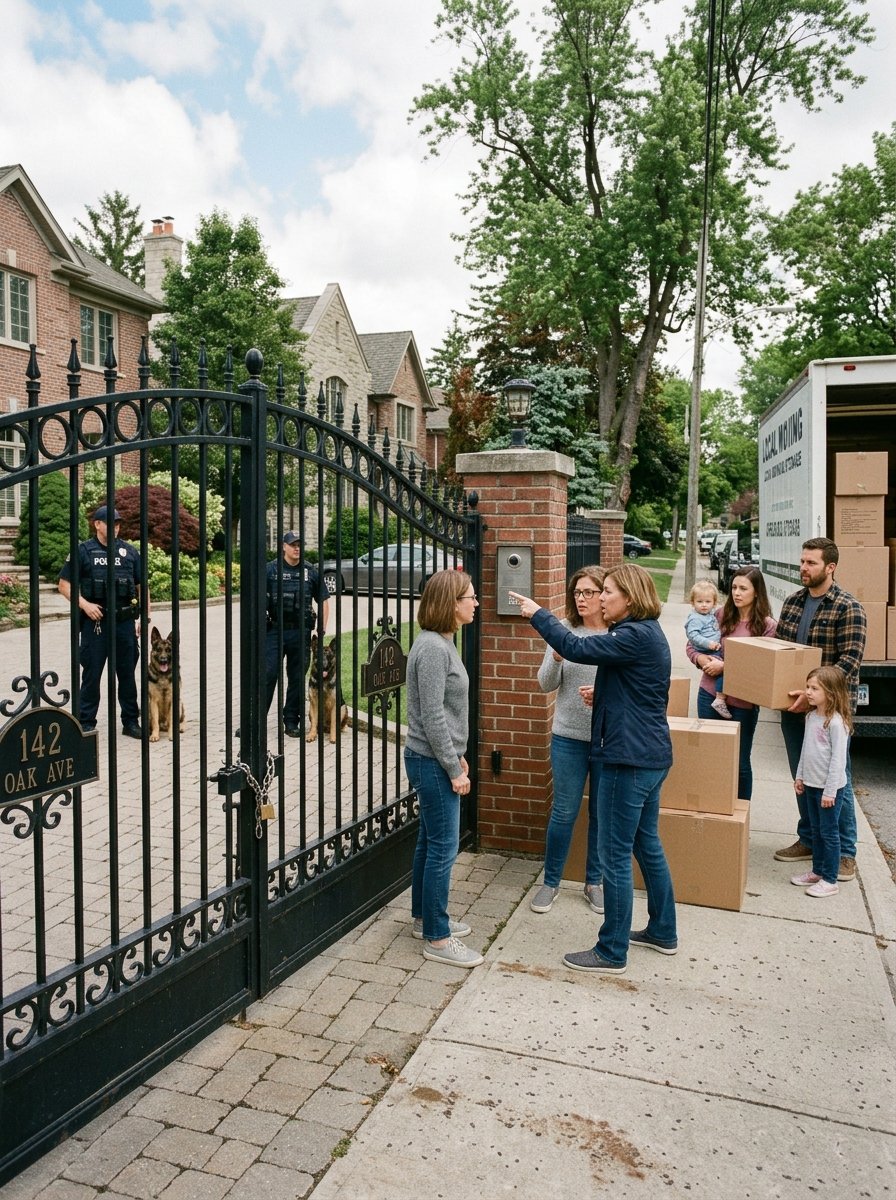
On Sunday morning, my daughter-in-law stood in my kitchen and casually said, “We need your house for New Year’s. My whole family is coming. Fifteen people. I already found you a motel off the highway.”
I looked at my son. He just lowered his head.
“I’ll be away that weekend,” I replied.
“Great.”
My daughter-in-law smiled, but as she left, she quietly slipped my spare house key into her pocket.
I saw everything but said nothing.
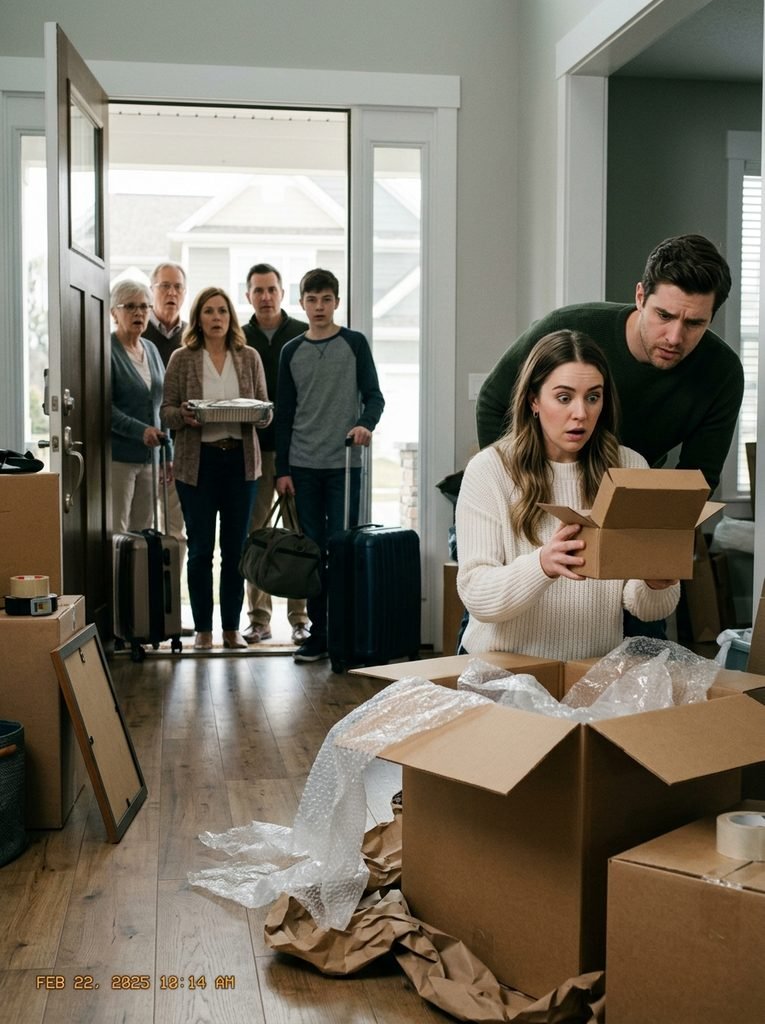
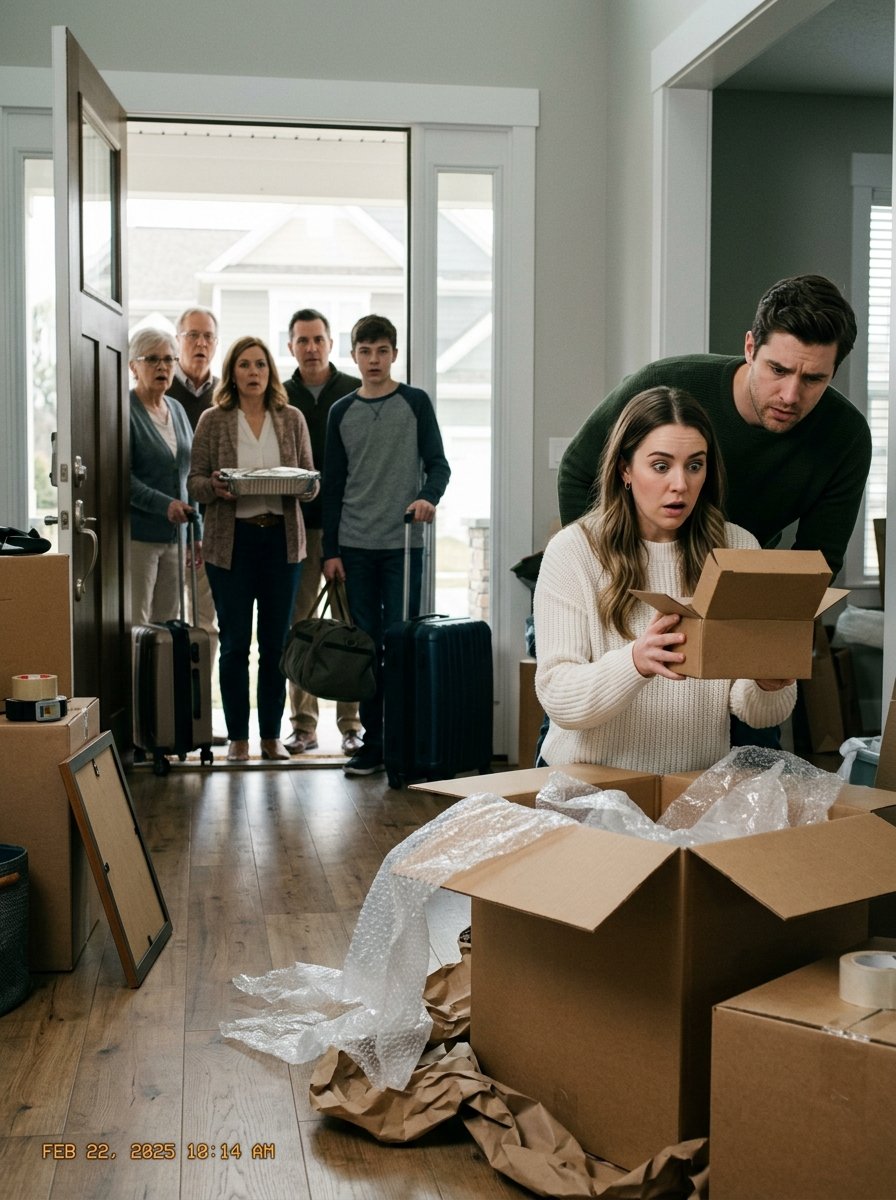
Five weeks later, she returned with all fifteen people, opened my front door, and froze when she saw what was waiting for her.
The hydrangeas needed water every morning, even in December. That was the thing about winter gardens that most people never understood. The cold did not mean the growing stopped. It only meant you had to pay closer attention.
I pulled on my garden gloves and stepped out through the back door into the pale morning light, my breath forming small clouds in the air. The yard was quiet in the way that only early Sunday mornings could be, quiet before the neighborhood fully woke up and the sound of leaf blowers and car engines filled in all the empty spaces. I moved slowly between the rows, tilting the watering can at the base of each plant, watching the dark soil soak it in.
Sixty-six years old. Thirty years as a head nurse at Millbrook Regional Hospital. A pension. A 401k that had grown steadily and quietly for three decades. And a life insurance policy from my late husband, Gerald, that had paid off this house entirely before I turned fifty-eight.
None of that was visible from the outside, of course. From the outside, I was just a woman in old gardening clothes, driving a beat-up Subaru with a cracked bumper sticker. That was exactly how Blythe saw me.
The sliding glass door at the back of the house opened with a sharp metallic scrape. Her heels struck the stone patio in quick, deliberate taps, the walk of someone who expected surfaces to hold still for her. I did not look up.
“We need your house for New Year’s weekend,” Blythe said in the same tone she might use to tell a restaurant server to hold the onions. She was holding the glass of orange juice I had squeezed forty minutes ago, one thumb scrolling her phone without pause. “My parents are flying in from Florida. All fifteen of us. Your house has five bedrooms and a big yard. Hotel prices right now are absolutely ridiculous.”
I set the watering can down slowly. She finally glanced up from her screen, her expression carrying the mild inconvenience of someone asking a stranger to move their shopping cart. Not quite rude enough to be embarrassing, but not quite polite enough to be human.
“I already found you something,” she continued, as if this were a kindness. “There is a motel off the highway. Very affordable. Three days, maybe four. You would barely notice you were gone.”
I turned and looked at Corbin. My son, thirty-two years old, was standing just inside the sliding glass door with both hands shoved into the front pockets of his jeans, his eyes fixed on the patio stones like he was reading something written there.
As Blythe crossed back toward the door, she passed the small brass hook mounted beside the pantry window, the one where I kept the spare house key. And her hand moved so quickly and naturally that if I had blinked, I would have missed it entirely.
Corbin’s gaze shifted for exactly one second, then dropped back to the ground.
“Corbin,” I said. “What do you think?”
He shifted his weight from one foot to the other and cleared his throat. “Mom, it’s just a few days. Blythe’s parents haven’t been out to the East Coast in a long time. The house really is big for one person.” His eyes still had not met mine. “It would mean a lot to us.”
Blythe smiled that sharp, self-satisfied smile of someone who has already decided the conversation is finished.
“I will be away that weekend,” I said simply.
“Even better,” she chirped, already turning back toward the door. “We’ll let ourselves in. Don’t worry about a single thing.”
The front door closed. The kitchen settled into silence.
I pulled off my garden gloves one finger at a time and walked back inside. I set them on the counter, crossed to the pantry, and looked at the small brass hook beside it. Empty.
I stood there looking at it for what felt like a long time. My chest did not tighten. My eyes did not sting. What moved through me was something quieter and more precise than anger. A cold, clear feeling, like stepping out of a warm fog into sharp winter air and suddenly being able to see all the way to the tree line.
I thought about the morning five years ago when Blythe had walked into this house for the first time as Corbin’s wife and looked around the living room and said, “It’s cozy for its size,” with a smile so polite it could only mean the opposite. I thought about the Thanksgiving she had spent two hours reorganizing my kitchen cabinets because my system didn’t make sense to her, then left without putting a single dish in the sink. I thought about the tuition checks, the wedding catering bill, the insurance payments that came out of my account every month without a word of acknowledgment from either of them.
I had made choices. Every one of those things had been a choice I made willingly because I loved my son, and I had believed, in the quiet and reasonable way that mothers believe things, that love given freely finds its way back eventually.
But the key was not a disagreement. The key was not a difference of opinion about kitchen cabinet organization. Taking the key meant she had already decided that what I wanted did not factor into any of this. It meant she had looked at me and seen not a person, but an obstacle that had conveniently agreed to remove itself.
That was the thing that changed.
I picked up my phone from the kitchen counter, scrolled through my contacts, and stopped at a name I had known for over thirty years. My thumb hovered over the screen for just a moment. Then I pressed call. The line rang once, twice. Then Doris picked up, her voice alert even on a Sunday morning.
“Lavinia, what’s wrong?”
I looked at the empty brass hook one last time. “Nothing’s wrong,” I said. “I just need your truck.”
Doris arrived in nineteen minutes. I heard her Ford F150 pull into the driveway before I saw it, that familiar low rumble of an engine that had driven me to the airport, helped me move Gerald’s things out of the bedroom after he passed, and sat idling outside the hospital on the night I finally retired.
She killed the engine and walked through the front door without knocking, the way she had done for thirty-one years. She took one look at me sitting at the kitchen table with my hands wrapped around a cold mug of tea and said, “Tell me everything.”
So I did. I told her about the orange juice, about Blythe standing in my kitchen scrolling her phone while she issued instructions like a property manager to a tenant who had overstayed her welcome. About Corbin and his shoes and his complete, practiced inability to look his own mother in the eye. About the empty brass hook.
Doris listened without interrupting, which was one of the things I had always loved most about her. When I finished, she was quiet for a moment. Then she said, “How long has this been going on?”
I thought about that honestly. “Five years,” I said. “Give or take.”
She nodded slowly, the way she did when she had already suspected the answer before she asked the question.
I told her about five years of it. The condescending comments disguised as opinions. The kitchen cabinets. The tuition checks. The wedding bills. The $18,000 in car insurance premiums I had paid without being asked and without being thanked. I told her all of it in about four minutes. It didn’t take long. I had never said it out loud before, but I had been carrying it for years.
Doris didn’t say anything for a moment. Neither did I. We just sat there with the weight of it between us on the kitchen table.
Every single time, I had told myself it was a choice. That I was giving freely. That love didn’t keep a ledger. But Blythe had looked at that hook this morning and made a calculation. She had decided that the key was already hers. That the house was already hers. And that I was simply a logistical obstacle that had been gracious enough to agree to move itself out of the way.
She hadn’t asked. She hadn’t discussed. She had simply reached out and taken.
That wasn’t a misunderstanding. That was a conclusion she had arrived at because I had spent five years providing no evidence to the contrary.
“I’ve been thinking about selling the house,” I told Doris.
She raised an eyebrow.
“It’s too big,” I said. “Too much maintenance for one person. There’s a young couple, the Hendersons, from the open house back in September. They left a note with my realtor. They’re still interested.” I looked around the kitchen at the cabinets Blythe had rearranged two Thanksgivings ago, which I had quietly put back the way I liked them the day after she left. “I just hadn’t decided on the timing yet.”
“And now you have,” Doris said. It wasn’t a question.
“Now I have.”
She leaned back in her chair and crossed her arms. “So what do you need from me?”
I opened my laptop. “Your truck. Your Saturday. And your opinion on Caribbean cruise packages.”
Doris stared at me for a full three seconds. Then she laughed. A real laugh, the kind that comes from somewhere deep and genuine.
“Book it,” she said. “Book it right now.”
I pulled up the cruise line website and filtered by departure date. There was a sailing out of Miami on December 30th, five nights, returning January 4th. New Year’s Eve on the water, somewhere between the Bahamas and open sea. The cabin was small, but the balcony faced east toward the sunrise. The price was almost exactly what I had paid in car insurance premiums for Corbin and Blythe over the past eight months.
I entered my card number. I did not hesitate. The confirmation screen appeared. Booking confirmed. Welcome aboard, Mrs. Sterling. We look forward to celebrating the New Year with you.
Doris read it over my shoulder. “You know,” she said, “I always thought Gerald would have liked a cruise.”
“He would have hated it,” I said. “He got seasick on the Staten Island Ferry.”
We both laughed, and the sound of it filled the kitchen in a way it hadn’t in a long time.
I closed the laptop and looked at Doris. “I also need six boxes,” I said. “Different sizes. Each one small enough to fit inside the next. And I need to find a party supply store that carries those plastic kazoos. The neon ones they hand out at children’s birthday parties.”
Doris studied my face carefully. A slow smile crossed hers. “Lavinia Sterling,” she said, “what exactly are you planning?”
I picked up my cold mug of tea, stood up from the table, and walked to the kitchen window. Outside, the hydrangeas were still standing in the pale winter light, patient and unhurried.
“A proper send-off,” I said.
The five weeks between that Sunday morning and New Year’s Eve passed away the way December always did, quickly and with a great deal of noise from other people. I packed a little each day. Not frantically. Not in one exhausting push. But steadily and without sentiment.
A box of books here. The good china wrapped in dish towels and stacked near the garage door. Gerald’s old armchair, which I had kept for years more out of habit than love, finally loaded into Doris’s truck and driven to the storage unit on Whitfield Road. Each evening, the house felt a little lighter. Each morning, I woke up without the tight feeling in my chest that had lived there unacknowledged for longer than I cared to admit.
Corbin called on a Tuesday in the second week. “Mom, I just wanted to check in,” he said, which meant he wanted to complain. I’d learned to hear the difference.
He spent eleven minutes telling me about a project deadline his manager had moved up without warning, a colleague who had taken credit for his work in a team meeting, and the inexplicable price of parking near his office building. I listened. I made the appropriate sounds.
When he ran out of steam, he said, “Anyway, I should let you go.” And that was the end of it. He didn’t ask how I was. He didn’t ask what my plans were for the holiday. He didn’t ask anything at all. I said, “Take care of yourself, honey,” and meant it, and put the phone down and went back to wrapping picture frames in newspaper.
He called again on a Thursday in the fourth week. This time his voice carried a different kind of energy. Lighter. More purposeful. “Mom, quick question. Do you think you could pick up some extra bath towels before you leave? Blythe wants everyone to have fresh ones. You know how her mother is about that kind of thing.”
I pressed my lips together. Outside the kitchen window, a cardinal landed on the bare branch of the oak tree and sat there, bright red against the gray December sky.
“I’ll take care of it, honey,” I said.
I wrote it on the notepad beside the phone. Then I drew a single line through it.
The following Saturday, I drove to the party supply store on Clement Avenue. The young man restocking the balloon section looked up when I came in.
“Can I help you find something?”
“Kazoos,” I said. “The plastic ones. Neon colors, if you have them.”
He blinked. “Like for a kids’ party?”
“Something like that.”
He led me to a shelf near the back. I found exactly what I needed. Fifteen plastic kazoos in bright neon green, individually wrapped, the kind given out at children’s birthday parties and immediately confiscated by tired parents. I set them in my basket without ceremony.
From there, I drove to the dollar store on Route 9 and spent twenty minutes selecting six cardboard boxes in descending sizes, each one small enough to nest inside the next. The largest was roughly the size of a laundry basket. The smallest could have held a piece of jewelry.
My last stop was the FedEx office on Garrison Street, where a young woman with reading glasses pushed up on her forehead helped me print a single sheet of paper. On it was a reservation confirmation for a room at the Ridgeway Motor Inn, forty-two miles from my house, off Exit 14 on the Interstate. Two bunk beds. Maximum occupancy, four persons. Complimentary continental breakfast from 7 to 9 a.m. Booked under the name Blythe Calloway. Paid in full.
“Do you want it laminated?” the young woman asked.
“No,” I said. “It will only need to last one evening.”
On my way home, I stopped at Ray Kowalski’s house. Ray had lived next door for twenty-two years, ever since he and his wife had moved in the summer Corbin started middle school. He was sixty-five, recently retired from forty years as a licensed electrician, and possessed of the particular kind of patience that comes from spending four decades fixing problems other people had created through carelessness.
He answered the door in his flannel shirt and reading glasses with a mug of coffee in his hand. “Lavinia,” he said. “Everything all right?”
“I need a favor,” I told him. “I’ll be away over New Year’s weekend. I wanted to let the HOA patrol know in advance that I won’t be home, and that any vehicles parked on my grass or blocking the sidewalk after eight p.m. should be treated as unauthorized and reported for towing. Section 4.2 of the community guidelines covers it.”
Ray regarded me steadily over the rim of his mug. He had watched Blythe park her Lexus directly on top of my hydrangeas at least four times, something he had never mentioned to me but which I had seen him clock with that same steady gaze.
“I can make sure the patrol has it in writing,” he said. “Consider it done.”
“Thank you, Ray.”
He nodded once. Then, just as I turned to leave, he said, “You know, I always thought that daughter-in-law of yours had a remarkable talent for parking in the exact wrong place.”
I smiled at him over my shoulder. “So did I, Ray. So did I.”
That evening, I sat at the kitchen table and assembled the boxes one layer at a time. Into the smallest, I placed what I had prepared. A single folded sheet of paper and something small enough to fit in a child’s hand. I sealed it with packing tape, then slid it into the next box, and the next, working outward until the largest box sat closed and solid on the table in front of me.
I uncapped a black marker and wrote across the top in large, even letters: For Blythe and Corbin. Happy New Year.
I set the marker down. I looked at what I had made. Then I turned off the kitchen light and went to bed. And I slept better than I had in years.
Doris backed the F150 into my driveway at 7 in the morning on December 29th, two days before New Year’s Eve. The sky was the flat, colorless gray of midwinter, and her breath came out in small clouds as she climbed down from the cab and pulled on her work gloves.
“Ready?” she said.
“I’ve been ready for five weeks,” I told her.
We started with the big pieces. The sofa came out first, a deep burgundy sectional that Gerald and I had picked out together at a furniture store in Westchester the year Corbin turned seven. I had always loved that sofa. I also knew, with the calm certainty of someone who has made a real decision, that it would look better in Doris’s spare room than in a storage unit. She had admired it for years without ever saying so directly, which was very much her way.
“You don’t have to give me the sofa,” she said when I told her where it was going.
“I know,” I said. “Help me lift it.”
We worked steadily through the morning. The oak dining table. The upholstered chairs. Corbin’s old bedroom set, which had been sitting in the guest room since he moved out, serving no purpose except to make the room feel smaller. The sixty-five-inch television came down from the living room wall and went into the truck wrapped in moving blankets. The Persian rug in the hallway, which Blythe had once called dated, rolled up and tied with twine.
By two in the afternoon, the storage unit on Whitfield Road was organized and locked, and the house had been reduced to bare floors and empty walls and the particular kind of silence that only completely unfurnished rooms produce. A silence with depth to it, like the inside of a held breath.
We drove back and stood in the kitchen together, drinking water from paper cups because I had already packed the glasses.
“What’s left?” Doris asked.
I walked to the refrigerator and pulled the door open. Three cans of cat food sat on the middle shelf, lined up with the labels facing out. I had purchased them specifically for this purpose at the grocery store on Tuesday. I did not own a cat.
Doris looked at the cans for a long moment. “Pete?” she said.
“In case they get hungry,” I said.
She pressed her lips together very hard. Her shoulders shook once. Then she got herself under control, which I respected enormously.
I closed the refrigerator and moved to the back door. The gas line to the outdoor grill ran along the exterior wall, terminating in a shut-off valve just below the deck. I turned it clockwise until it would not move any further. No one would be barbecuing at my house this New Year’s Eve, regardless of how many pounds of imported beef they had carried in from Florida.
Back inside, I opened the Nest app on my phone. The thermostat in the hallway glowed its usual soft green. I navigated to the settings, selected Eco mode, entered a temperature of fifty-nine degrees Fahrenheit, warm enough that no pipes would freeze, cool enough that no one would be comfortable, and set a pin that bore no resemblance to any number Corbin or Blythe might reasonably guess. The app confirmed the change. I locked my phone and put it in my pocket.
The router was next. I logged into the network settings from my laptop, which I would be taking with me, and changed the Wi-Fi name to: Motel 6 — Welcome Home, Blythe. For the password, I opened a random password generator and copied twenty-four characters of mixed letters, numbers, and symbols into the field. Something like that is not guessed. It is surrendered to.
Then I opened my email and found the message from my realtor, Patricia, which had been sitting in my inbox since Tuesday. The purchase agreement for the house was attached as a PDF. The Henderson family, the young couple who had left their information after the September open house, had come in with a clean offer and no contingencies.
Closing was set for January 15th. I opened DocuSign, found my signature fields, and clicked through each one without pausing. When the final confirmation appeared, I closed the laptop and set it by the door with my suitcase.
The house was someone else’s now. At least on paper. It felt correct.
I carried the metal folding chair from the garage to the center of the empty living room and set it down on the hardwood floor. The sound of its legs touching the wood rang out sharp and clear in all that emptiness. I went back to the kitchen, picked up the large cardboard box with its black-lettered address, For Blythe and Corbin, Happy New Year, and carried it out and placed it squarely on the seat of the chair.
Doris stood in the doorway with her keys in her hand, looking at the chair and the box in the center of the bare room. The late afternoon light came through the windows at a low angle and lay across the floor in long, pale strips.
“It looks like a throne,” she said quietly.
“It is,” I said.
I walked through the house one final time. Down the hallway. Into each of the five bedrooms. Back through the kitchen. Through the living room. I was not looking for anything I had forgotten. I was not feeling sentimental. I was simply closing something properly, the way you close a book you have finished and set it on a shelf and do not need to open again.
I locked the front door from the inside, walked through the kitchen to the garage, and pressed the button to lower the door behind me. I put my suitcase in the back seat, my laptop bag in the front, and started the car. At the end of the driveway, I stopped and looked once into the rearview mirror. The house stood still in the gray December light. Quiet and patient and completely, entirely empty.
I pulled onto the road and drove south toward Miami.
The Caribbean in late December was everything the brochure had promised and nothing like New Jersey. I was sitting on the narrow balcony of my cabin on Deck 8, watching the water change color as the afternoon sun dropped lower in the sky, from bright turquoise near the surface to a deep ink blue further out where the shelf fell away and the ocean became serious about its depth. I had a glass of Chardonnay on the small table beside me, a novel open in my lap that I had not read a single page of, and absolutely nowhere to be.
My phone buzzed against the table. The notification read: Motion detected. Front door camera.
I set the novel aside and opened the app. The live feed loaded in four seconds. The image was grainy, the way outdoor cameras always are in fading afternoon light, but clear enough. I watched a black SUV pull into my driveway, followed closely by a second, then a third, then a minivan with a Florida license plate that had a small dent in the front bumper.
Doors opened. People poured out the way people do when they have been sitting in vehicles for too long, stretching, reaching back for bags, saying things to each other that the camera’s microphone could not quite catch.
I counted as best I could through the grainy feed. Exactly as advertised. They came with luggage that had wheels and hard shells and monograms. They came with two large coolers that required two people each to carry. They came with a wooden crate of wine bottles packed in straw, which one of the men carried under one arm with the confidence of someone who considered himself a connoisseur. And they came with Morwenna.
I recognized her from the one photograph Corbin had shown me after the wedding. A tall woman with the kind of rigid posture that announces itself before the rest of the person arrives. She stepped out of the lead SUV in a faux fur coat the color of champagne and stood at the edge of my driveway, looking at my house and then at the neighboring houses and then back at my house, with the particular expression of a woman who had expected something slightly more impressive and was already composing her opinion of it.
Blythe came around from the passenger side, her sunglasses pushed up on her head despite the December cold. She was already moving toward the front door with the focused energy of someone who has planned this moment and intends to perform it well. I watched her reach into her coat pocket and pull out my brass spare key. She held it up briefly. Just briefly. And something in her posture in that moment, some small unconscious squaring of the shoulders, told me she had been looking forward to using it.
She slid it into the lock. The door swung open. She walked in first, leaving the front door open behind her.
The camera’s microphone caught everything. The hollow sound of her heels striking the bare hardwood floor before a single word was spoken. A clean, echoing knock that was nothing at all like the sound a furnished room makes.
She stopped walking. The feed showed the rest of the family pressing in behind her, bottlenecking at the doorway, luggage wheels catching on the threshold. Someone saying, “Blythe, why are you stopping?” Then Morwenna’s voice, clipped and carrying. “Blythe, where is the furniture?”
I took a sip of my Chardonnay.
Through the camera, I could see Blythe move in fast, purposeful steps, disappearing toward the hallway. She would be checking the bedrooms. I knew the route she was taking because I had walked it myself just two days ago in the opposite direction, saying goodbye to each empty room in my own quiet way.
She came back into the camera’s frame less than ninety seconds later. And whatever composure she had carried up the front walk was no longer visible on her face.
Corbin stood in the center of the empty living room, turning slowly in a full circle. His arms at his sides. His mouth slightly open. He looked very young suddenly. He looked like the boy who used to stand in the middle of the backyard after a thunderstorm, looking at the damage the weather had left behind, not entirely sure what to do with the information.
Someone tried the thermostat. Someone walked to the kitchen and pulled open the refrigerator. The camera didn’t reach that far, but I knew exactly what they found. Three cans of cat food lined up on the middle shelf with the labels facing out. I did not own a cat.
Someone else picked up their phone and held it up, searching for a signal. And I watched their expression shift when they found the Wi-Fi network.
My phone buzzed again. Incoming call. Blythe. I watched her on the camera, standing in the empty living room, phone pressed to her ear, her free hand moving through the air in short, tight gestures. I let it ring through to voicemail. Thirty seconds later, she called again. I put the phone face down on the table and looked out at the water.
When I looked back at the feed, Morwenna had moved to the center of the room and discovered the folding chair with its large cardboard box. She placed both hands on her hips, read the label, For Blythe and Corbin, Happy New Year, and her voice changed immediately, warming by several degrees.
“She left something,” Morwenna announced to the room with the authority of a woman reclaiming a situation. “Probably air mattresses or bedding. She would not just leave us with nothing.”
Blythe crossed the room in four strides, pulled her car key from her pocket, and dragged it across the packing tape.
Someone behind me on the deck laughed at something, and I realized I was smiling.
On the screen, Morwenna was already calling the others in from the doorway. They gathered around the chair in their winter coats, rolling suitcases parked haphazardly behind them, wine crate set on the bare floor, coolers still sitting on the front porch because there had been nowhere obvious to put them.
One of those coolers held, by Blythe’s own prior announcement, over a thousand dollars of fresh seafood. Two whole lobsters. Two pounds of king crab legs. Chilean sea bass.
And a quantity of jumbo shrimp she had described to Corbin as “the good kind.” Which was why, before she tore into the first layer of cardboard, one of the men suggested they move the coolers to the back porch and let the cold December air do what the refrigerator apparently was not going to.
“Smart,” Blythe said without looking up from the tape. “The cold will keep it fresh.”
I watched two of them drag the coolers around the side of the house toward the backyard, disappearing from the camera’s frame.
I picked up my novel. I turned to the first page. I did not read it. I was waiting for the next notification.
Through the feed, I could see Corbin had his phone raised, recording. He swept it slowly across the room. The bare walls. The empty floor. The fifteen people standing in their winter coats around a folding metal chair with a cardboard box on it, looking like witnesses at a very unusual ceremony. That was his generation, I thought. When something happened, you documented it first and processed it later.
Blythe cut through the tape on the first box with her car key and pulled the flaps open. Inside was another box. She stared at it for one full second. Then she reached in and lifted it out and set it on the floor and cut through that tape too. Another box.
“What is this?” someone near the back said. A cousin, I thought, based on his age and the way he was holding his phone at the same angle as Corbin.
“It’s fine,” Blythe said in the tone of someone who is not at all sure it is fine. “She probably just packed it this way to protect whatever is inside.”
She opened the third box. Another box. Morwenna crossed her arms. The champagne-colored fur coat rustled as she shifted her weight. She said nothing, but the quality of her silence had changed from expectant to watchful.
By the fourth box, a woman near the window, one of Blythe’s sisters-in-law judging by the family resemblance, let out a short sound that was almost a laugh. She caught herself immediately, pressing her fingers to her lips, her eyes moving quickly to Blythe. Blythe’s jaw tightened. She did not look up.
The fifth box was the size of a shoe box. Blythe cut the tape with more force than necessary, and a small piece of cardboard tore away under the key’s edge. She lifted the flap. Another box. This one no larger than something you might put a bracelet in.
The room had gone very quiet. The kind of quiet that happens when a group of people simultaneously realizes they have all been wrong about something and are each waiting for someone else to say it first.
Blythe ripped the tape off the final box and pulled the lid free. Inside, packed neatly in a single layer, were fifteen plastic kazoos in neon green. The kind handed out at children’s birthday parties. The kind that cost less than two dollars a piece at a party supply store on Clement Avenue.
Beneath them, folded once, was a sheet of paper. Blythe’s hand was trembling slightly as she reached in and unfolded it. She read it once to herself. The color in her face changed in a way that was visible even through the grainy feed I was watching from eight hundred miles away.
Then Morwenna said, “Read it out loud, Blythe.”
Blythe read it out loud. “Since you suggested I find a motel, I went ahead and booked one for you instead. The address is below. The host is expecting you. Happy New Year. Lavinia.”
Nobody laughed. One person exhaled. Someone else shifted their weight, and the floor creaked under them in that resonant way empty floors do.
Morwenna snatched the paper from Blythe’s hand and opened Google Maps. I could not see her screen, but I did not need to. I knew what the map would show. Forty-two miles. Exit 14 off the interstate. The Ridgeway Motor Inn. Two bunk beds. Maximum occupancy, four persons. Continental breakfast from 7 to 9.
“This is forty miles away,” Morwenna said.
“Forty-two,” Corbin said quietly, and then seemed surprised he had spoken at all. It was the kind of correction that comes out before the brain catches up. Precise. Automatic. And entirely beside the point.
Whatever Morwenna was about to say in response was swallowed by the sound that came from outside. A heavy diesel engine idling at low speed. And the mechanical groan of a hydraulic lift engaging.
Someone near the front window looked out and said, very flatly, “They’re towing the cars.”
The room moved all at once toward the windows and the front door. Through my camera feed, I watched them spill out onto the porch and down the walkway, voices overlapping, someone grabbing someone else’s arm. Three of the SUVs that had been parked with their wheels on my grass and their rear bumpers extending over the sidewalk were now in various stages of being attached to tow trucks. The fourth vehicle, which had made it into the driveway itself, was untouched.
Blythe pushed through to the front and addressed the nearest tow truck driver with the full force of her personality. He listened with the patience of someone who had heard every variation of this particular conversation before and handed her a carbon copy of the violation notice without changing his expression.
Ray was standing on his front porch in his flannel shirt with a mug of coffee, watching the proceedings with the calm interest of a man who has nowhere else to be.
“HOA regulation Section 4.2,” he said when Blythe turned toward him. “No unauthorized vehicles on landscaped areas or blocking the public sidewalk after eight p.m. Mrs. Sterling notified the association on December the 22nd that she would be absent this weekend and that any vehicles meeting that description should be reported for removal.” He paused. “That’s three hundred fifty dollars per vehicle at the impound lot on Route 17. They close at midnight, so I’d move quickly if I were you.”
Blythe stared at him. Ray took a sip of his coffee.
A thousand and fifty dollars before midnight on New Year’s Eve.
Corbin had stopped recording at some point during the towing. He stood on the porch with his phone in his hand, not filming anything, not saying anything, his breath coming out in visible clouds in the cold air. He looked down at the screen. There was a message he had not seen before, sent according to the timestamp nearly an hour ago while they were still on the road. It was from his mother. It said: Check the backyard.
Corbin. He walked around the side of the house alone. He pushed open the gate to the backyard, stepped through, and stopped.
The cooler had been dragged to the center of the patio. The lid had been removed, presumably to speed along the natural refrigeration process that Blythe had considered so clever. Three raccoons were working through the contents with the methodical efficiency of animals that had done this before and expected to do it again.
One of them was holding a king crab leg in both front paws. Another had its entire head inside the foam lining of the cooler. The third looked up when Corbin opened the gate, regarded him with complete indifference, and went back to the sea bass.
Corbin stood there in the cold for a long time. He did not move. He did not go back inside. He just stood there looking at what was left of the seafood, and I could not tell from eight hundred miles away whether he wanted to laugh or simply disappear into the frozen ground.
Blythe came around the side of the house two minutes after Corbin did, moving fast, her heels punching into the frozen ground with each step. She had already been on the phone with someone, her mother most likely, and she ended the call with a sharp tap as she pushed through the back gate.
She stopped when she saw the cooler. The lid was on the patio stone six feet away from where it had started. The foam lining had been peeled back on one side. One of the raccoons, the largest of the three, with a broad flat face and the unhurried confidence of an animal that has never once been successfully chased away from anything, was sitting upright on the edge of the cooler eating a king crab leg with both front paws, the way a person might eat corn on the cob. The second raccoon had worked its way through the paper wrapping on the sea bass and was making steady progress. The third was at the bottom of the cooler, mostly invisible, producing a sound like someone rummaging through a paper bag.
“No,” Blythe said. Not as an exclamation. As a flat, exhausted statement of refusal directed at the universe.
She took three steps toward the cooler and clapped her hands together hard. The raccoon with the crab leg looked up at her with complete indifference. It did not move. It resumed eating.
“Blythe,” Corbin said. “Don’t.”
She turned on him with an expression that had moved past anger into something rawer and more dangerous. “Do not say a single word to me right now, Corbin.”
“I was going to say the raccoon isn’t going to move.”
She looked back at the animal. It was demonstrably not moving.
The thousand-dollar seafood order. Two whole lobsters. Two pounds of king crab legs. The Chilean sea bass. The jumbo shrimp, packed in crushed ice. Had been Blythe’s centerpiece for the evening. She had described it to her mother on the phone three days ago as “the good stuff, not the supermarket kind.” She had planned to serve it on platters in my dining room, at my dining table, to her family gathered in my house. There was no dining room. There was no dining table. And now there was no seafood.
“This is your mother’s fault,” Blythe said.
Corbin looked at the raccoon. He looked at the cooler. He looked at the patio where they were standing, which was the backyard of a house that was, as of two days ago, no longer his mother’s legal property. I knew what he was looking at, even through a camera eight hundred miles away. He was looking at the back gate the way a man looks at something he cannot undo. The way I imagined he had been looking at things he could not undo since that Sunday morning in November.
He said, “You took her key, Blythe.”
She turned to look at him as if he had spoken in a language she did not recognize.
“You walked into her kitchen,” he continued, “and you drank her orange juice, and you told her to go sleep at a motel in her own house, and then you took her key off the hook on your way out. And I watched you do it, and I did not say anything.” He stopped. “That’s not her fault. That’s ours.”
Blythe’s face went through several rapid changes. “She overreacted,” she said finally. “It was three days. She has five bedrooms. We needed the space, and she was going to be away anyway.”
“She was going to be away because you told her to leave.”
“I suggested.”
“You told her,” Corbin said. “I was standing right there. So were you.”
The raccoon finished the crab leg and dropped the shell onto the patio with a small clatter. It reached back into the cooler for something else.
Blythe stared at her husband for a long moment. Then she turned and walked back into the house without another word, her heels striking the frozen ground in sharp, irregular beats.
Corbin stayed in the backyard. The cold was serious now, the kind that settled into your collar and worked its way down your spine regardless of how you were dressed. He shoved his hands into his coat pockets and stood there watching the raccoons finish what had cost more than his first car payment. And he did not go inside.
What Corbin could not have known, standing out there in the cold, was what was already happening twenty feet away through the kitchen wall. Morwenna had gathered herself in the empty kitchen, standing at the counter because there was nowhere to sit, and was typing into the family group chat with the focused energy of a woman who has decided that offense is the only viable defense.
She was addressing all twenty-two members of the extended family, most of whom were not present, but all of whom, in her estimation, needed to know what had happened. The message described Lavinia as vindictive. It used the word “cruel” twice. It mentioned the cold, fifty-nine degrees, which Morwenna had confirmed by checking the thermostat, as evidence of deliberate
endangerment. It mentioned her own lower back, which had been problematic since a car accident in 2019 and which she felt the evening’s events had aggravated significantly. It ended with a question directed at no one in particular. “What kind of woman does this to her own family on New Year’s Eve?”
The message went out at 9:47 p.m.
On the upper deck of a cruise ship somewhere east of Nassau, my phone lit up with twenty-two notifications in under four minutes. I read Morwenna’s message once. I did not feel angry. I felt something closer to tired. The specific exhaustion of watching a situation you have already accounted for unfold exactly as you expected it to.
I had prepared for this. I had prepared for it the same way I had prepared for everything else over the past five weeks. Quietly. Completely. And without leaving anything to chance.
I opened my photo library and found the video file from my doorbell camera, exported the morning of December 29th before I left and saved to my phone as a backup. The footage was forty-one seconds long. It showed my front porch on a Sunday morning in late November, the timestamp in the upper left corner reading 8:00 a.m. It showed Blythe walking past the pantry window on her way to the front door.
It showed her hand reaching out and lifting the brass key from the hook in one smooth, practiced motion. Not hesitant. Not accidental. Not the gesture of someone who had misunderstood a situation. It showed her dropping the key into her coat pocket. It showed her saying something to Corbin, who was standing in the frame’s edge. It showed Corbin looking at the hook and then looking away.
The audio was clear enough. As Blythe passed through the front door, she said three words to Corbin over her shoulder. “I have it.” Meaning the key. Meaning my house. Meaning everything she had already decided belonged to her.
I also opened my email and found the document I had prepared two weeks earlier. A single-page PDF summarizing thirty-seven months of automatic payments from my checking account. Car insurance premiums for two vehicles, itemized by month. Health insurance supplement payments, itemized by quarter. A total figure at the bottom in bold. $18,420.
I sent both files into the group chat. No caption. No explanation. No punctuation after the dollar figure. I let the numbers speak at whatever volume they chose.
Then I typed one sentence and sent it separately. Blythe took my spare key without permission to host an event I did not agree to. I provided accommodations for her parents. The rest is her responsibility.
I put my phone face down on the table. For the next six minutes, nothing came through. I could see in the small indicator at the top of the chat that people were reading. Some of them were typing and then stopping. Some of them were presumably watching the forty-one seconds of footage and making their own calculations.
Then Morwenna’s name disappeared from the group. She had removed herself. A minute after that, a message appeared from a number I did not immediately recognize. One of Blythe’s cousins, the one who had laughed during the unwrapping and been silenced by a look. The message was four words long. It said: Honestly, good for you.
Thirty seconds later, a second message appeared. This one from Corbin’s uncle on Gerald’s side, a retired plumber from Allentown who had never particularly warmed to Blythe and who had, I now recalled, sent me a very kind card when Gerald passed. He wrote: Corbin, your wife owes this woman an apology tonight if possible.
The chat went quiet after that.I picked up my phone. I walked to the railing of the deck and stood there looking out at the water, which was black and enormous and completely indifferent to the evening’s events, in the way that large bodies of water tend to be. The ship moved through it slowly, steadily, with the kind of purpose that does not require anyone’s permission.
My phone buzzed once more. The screen showed a name I had been waiting for in the particular way you wait for something you already know is coming but still feel when it arrives like a door opening. Corbin.
I looked at his name on the screen for a moment. Then I answered.
“Mom.” His voice came through the line sounding smaller than I had heard it in years. Not the voice of a thirty-two-year-old man standing in the cold outside a motel on New Year’s Eve, but something younger and less certain. The voice of a boy who had broken something and was not entirely sure yet what it was. “Where are you?”
I looked out at the water. The ship was moving northeast now, the stars reflecting on the surface in long, broken lines that shifted with the swells. Somewhere below me, music was playing. A live band on the main deck, counting down the last hour of the year with a jazz standard I recognized but could not immediately name.
“I’m on a cruise ship,” I said. “Somewhere east of Nassau. The water is beautiful tonight.”
A long pause. I could hear wind on his end of the line, which meant he was still outside. I could hear faintly the sound of voices from inside the motel carrying through the walls.
“A cruise ship,” he repeated.
“Yes.”
Another pause. When he spoke again, the careful steadiness he had found in the backyard with Blythe had loosened somewhat. His voice was uneven at the edges in the way that voices get when a person is cold and tired and has spent the last two hours absorbing one piece of bad news after another.
“Mom, three of the cars got towed. It cost us over a thousand dollars to get them out of the impound lot, and two of Blythe’s cousins had to drive to Route 17 at 10 o’clock at night to pay it. Her mother’s back is hurting. The seafood is gone. We ended up getting two rooms at a motel off Exit 14, and some of the people slept on the floor. Blythe cried for most of the drive over.” He stopped. “It was a bad night.”
I listened to all of it without speaking. When he finished, I let a moment pass. “Are you done?” I asked.
“Yes.”
“Good,” I said. “I need to ask you something, and I need you to answer me honestly. Not the way you answer when you’re trying to keep the peace. Honestly.”
The wind on his end shifted. “Okay.”
“Did you know Blythe took my key?”
The pause that followed was the longest of the conversation. Longer than the one after I told him where I was. Longer than the one after he finished describing the evening. This pause had a different quality to it. Not the pause of someone searching for words, but the pause of someone who has had the words ready for a while and has been deciding whether to use them.
“I saw her take it,” he said.
I had known. I had known from the moment I saw his eyes move to the hook and then away that Sunday morning in my kitchen. I had known the way you know things you have been quietly knowing for a long time without letting yourself think them directly.
“And you said nothing,” I said.
“No.”
“Why?”
He exhaled. It was a long, slow breath, the kind that carries something out with it. “Because I didn’t want another fight. Because I thought — I told myself it wasn’t a big deal. That you were going to be away anyway. That it would just be easier if I didn’t say anything and everything went smoothly.” A pause. “I know how that sounds.”
“It sounds like what it is,” I said. “You watched your wife take something that belonged to me. You watched her tell me to go sleep in a motel in my own home, in the home where you grew up, and you decided that your comfort was worth more than my dignity.”
He did not argue with that. I had not expected him to.
“I’m sorry, Mom.” His voice cracked on the last word. A clean, involuntary break, the kind you cannot manufacture. “I should have said something. I should have said something a long time before that morning. I know that.”
I stood at the railing and looked out at the black water for a moment. Thirty years of nursing had taught me a great many things, but the most durable lesson was this: an apology is not the end of something. It is the beginning of the work that comes after. I had watched enough patients and their families move through hard moments to know the difference between remorse and resolve. And I was not yet sure which one I was hearing.
But I also knew my son. I knew the particular sound of his voice when he was performing contrition versus when he was actually feeling it. And what I heard on the other end of that line, standing in the cold outside a motel off Exit 14 on New Year’s Eve, sounded genuine in the way that only genuine things do.
“I love you,” I said. “I have loved you since before you were born, and I will love you until well after I am gone. And nothing that happened tonight changes that. But I need you to hear me clearly right now, because I am only going to say this once.”
“Okay,” he said quietly.
“I am not a backup plan. I am not a free hotel that you and your wife can reserve when it suits you and vacate when it does not. I am not the number you call when something needs to be paid for or fixed or managed. I am your mother, which means I am a person with a life of my own and a home of my own and thirty years of work behind me that I earned without anyone’s help. For the past five years, I have been paying your car insurance. I have been supplementing your health coverage. I paid for your wedding and your last two years of college, and I did all of it willingly because I love you and I wanted to help. But I did not do those things so that your wife could decide I was an inconvenience to be relocated when her family needed the space.”
Corbin said nothing. I could hear him breathing.
“The insurance stops at the end of this month,” I said. “The health supplement stops at the end of January. You are thirty-two years old, and you are more than capable of managing those things yourself. This is not a punishment. This is simply what should have been true for several years already.”
“I understand,” he said. His voice was very quiet.
“I also need you to understand something else.” I turned away from the railing and looked back at the ship. The lit windows. The movement of people inside. The ordinary, beautiful fact of a large vessel moving through the night with confidence. “I am not cutting you off. I am not ending our relationship. I am ending an arrangement that should never have become as one-sided as it did. And I am ending it now instead of five years from now because your wife took a key off my wall, and it clarified some things for me.”
“She shouldn’t have done that,” he said.
“No, she shouldn’t have. And you shouldn’t have let her.”
“I know.”
“Then we understand each other.”
He was quiet for a moment. When he spoke again, his voice had steadied somewhat. Not recovered. Not relieved. But settled into something more honest. “What happens now? With us, I mean.”
“What happens is that you go inside and get some sleep. And in the New Year, you call me when you want to talk. Not when you need something, but when you want to talk. And I will answer the way I answered tonight.” I let that sit for a moment. “That is what mothers do, Corbin. They answer.”
He made a sound that might have been a laugh or might have been something else. “Okay, Mom.”
“Happy New Year, sweetheart.”
“Happy New Year,” he said. “I love you.”
“I love you too. Now go inside. You sound like you’re freezing.”
He laughed then. A real one. Short and surprised. “I really am.”
“Go.”
The line went quiet. I stood at the railing for a moment longer, the phone loose in my hand, the night air moving around me with that particular Caribbean warmth that feels like a small miracle in December. Below me, the jazz band had shifted into something with a quicker tempo, and I could hear the crowd responding to it. Laughter. The sound of movement. Glasses being set down and picked up again.
From somewhere on the upper deck, a voice began counting. Others joined it. Nine. Eight.
I did not move from the railing. I looked out at the water, which was enormous and dark and entirely unimpressed by the passage of one year into the next. And I thought about the brass hook on the pantry wall of a house that no longer belonged to me. And I thought about the hydrangeas that were wintering now in someone else’s yard. And I thought about a folding metal chair sitting in the center of an empty room, holding its cardboard cargo with a kind of patient dignity.
Three. Two. One.
The sky above the ship erupted. The cruise line had arranged fireworks launched from the upper deck and detonating in wide red and gold bursts that reflected off the water in long, shimmering columns. Below, the crowd around me cheered. Somewhere behind me, two people kissed. A child I had not noticed before pressed her face against the railing and watched the lights with her mouth open.
I raised my glass to Gerald, who would have been seasick before we cleared the harbor and who would have complained about it cheerfully for the entire voyage, and whom I missed with the specific, manageable ache of someone who has learned to carry a loss without being defined by it. To Doris, who had shown up in nineteen minutes with her truck and her coffee and her complete absence of unnecessary questions.
To the hydrangeas, which would come back in spring regardless. And to myself. To Lavinia Sterling, sixty-six years old, retired widow, standing on the deck of a ship in the Caribbean on New Year’s Eve with a glass of wine and nowhere to be and no one to accommodate and the whole of the coming year opening up in front of her like a door she had finally, after a very long time, decided to walk through.
I drank.
March came in quietly that year, the way it sometimes does after a hard winter. Not with drama or announcement, but with a gradual loosening. A softening of the light. The ground releasing its frost in slow increments over the course of two weeks until one morning you step outside and the air simply feels different. Lighter. Like something has been put down.
I was on my balcony with my coffee when I noticed the first hydrangea bud. It was small, barely a suggestion of green against the dark soil of the pot, but it was there. And it was undeniable. I stood looking at it for longer than the occasion probably required.
I had planted these cuttings from the old garden two weeks after moving in, pressing them into fresh soil with the same focused attention I had once given to difficult patients, the ones who needed you to believe in their recovery more than they could manage to believe in it themselves. I had not been entirely sure they would take. They had.
The townhouse was a two-bedroom unit on the third floor of a building on Aldermore Lane, twelve minutes from the old neighborhood and a different world in every way that mattered. The rooms were smaller. The ceilings were lower. There was no backyard. No five-bedroom expanse to heat and maintain and feel the absence of in the evenings. No guest rooms accumulating the particular dust of spaces that exist primarily to serve other people’s convenience.
What there was, was mine. I had painted the living room walls in the first week of January a soft, warm yellow that the paint store called Harvest Morning and that Gerald would have called aggressively cheerful, and that I thought was exactly right. I had arranged the furniture the way I wanted it, which was not the way any previous arrangement had ever been allowed to remain for
long. The kitchen cabinets held what I chose to put in them and nothing else, organized in the system I had developed over thirty years of cooking that made sense to me and did not require anyone else’s approval. The brass hook beside the kitchen door held my spare key. The door was locked. No one had a copy.
It was the second Wednesday in March when Corbin called. He called every Wednesday now, around noon, from his lunch break. The first few calls had been careful, tentative, in the way of someone testing weight on a repaired bridge, not entirely sure it would hold. He did not ask for anything. He did not mention Blythe unless I asked directly, and when I did, he answered briefly and
without elaboration. He talked about work. About a podcast he had started listening to. About the fact that he had finally taken his car in for the inspection it had needed since October.
“I also figured out the insurance,” he said on the call in early February. “Through my job. It’s more than what you were covering, but I set up automatic payments so I don’t have to think about it.”
“Good,” I said.
“I should have done it years ago.”
“Yes,” I said. “But you’re doing it now.”
He was quiet for a moment. “Is that enough?”
I thought about that honestly, the way I had learned to think about hard questions. Not with the answer I wanted to give, but with the answer that was actually true. “It’s a start,” I said. “A real one.”
On the Wednesday in March, the call came at 12:04, which was two minutes later than usual because, as he explained, he had been held up by a colleague who needed help with a spreadsheet.
“How are the plants?” he asked. He had started asking about the plants three weeks ago after I mentioned the balcony garden on a call. I was not sure whether it was genuine interest or an attempt at connection, and I had decided that the distinction did not matter as much as the attempt.
“One of the hydrangeas is budding,” I said.
“Already? It’s still cold.”
“Hydrangeas know what they’re doing,” I said. “They don’t need to be told when it’s time.”
He laughed. It was an easy laugh. Not performed. And I held it for a moment the way you hold a thing you have been quietly hoping for.
We talked for twenty-two minutes. He told me about a project at work he was genuinely interested in for the first time in two years. I told him about the gardening club, the Wednesday evening meetings at the community center three blocks away, the retired schoolteacher named Margaret who had opinions about soil pH that were delivered with the conviction of someone who had spent thirty years managing a classroom and had not entirely left the habit behind. He found this funny. I found it funny too, which was the point.
When he said goodbye, he said, “I love you, Mom.”
“I love you too,” I said. “Go eat something. You sound like you skipped breakfast.”
“I did skip breakfast.”
“Corbin.”
“I know. Okay. Goodbye.”
I put the phone down on the balcony table and picked up my coffee, which had gone lukewarm during the call. I did not mind.
Doris came by that afternoon with a container of the chicken soup she made every March, which she claimed was a seasonal tradition and which was in reality an excuse to check on people she loved without making a production of it. I had known her long enough not to point this out. I simply let her in and got out two bowls.
We sat at the kitchen table. My kitchen table. The round one that had been in storage and was now positioned exactly where I wanted it, under the window that faced east and caught the afternoon light at this time of year. And we ate soup and talked about the gardening club and about a documentary series Doris had been watching and about whether the family two doors down had gotten a new dog or whether it was visiting.
“How is Corbin?” she asked eventually.
“Better,” I said. “Slowly, but genuinely.”
She nodded. She did not ask about Blythe, because she knew I would mention it if there was something to mention. There was not. Blythe had not contacted me since New Year’s Eve. I did not know whether this was pride or shame or simply the path of least resistance, and I had stopped trying to determine which. Some silences are answers. You learn, at sixty-six, to receive them as such.
“Do you miss the house?” Doris asked. She had asked me this before, in January. I had given her a partial answer. I wanted to give her a better one now.
I looked around the kitchen. The yellow walls. The organized cabinets. The single brass hook with its single key. The east-facing window with its long afternoon light. The container of soup between us. The sound of a child on a bicycle somewhere below on Aldermore Lane. And the sound of March birds doing what March birds do when they finally decide the worst is over.
“I miss the garden,” I said. “The original one. The hydrangeas that grew there for twelve years.” I paused. “But I brought cuttings. They’re doing fine.”
Doris smiled. It was the smile of a woman who has known you for thirty-one years and does not need you to explain yourself further.
After she left, I washed the bowls and put them away and stood at the kitchen sink, looking out at the slant of late afternoon light on the building across the street. I thought about the morning in November when I had stood at a different sink in a different kitchen, looking at a different view, and felt something cold and clarifying move through me. I thought about the five weeks of quiet, careful preparation. The boxes. The key. The packing tape. And the black marker. And the neon green plastic kazoos that had cost a dollar and fifty cents a piece and had, in the end, done exactly what they were meant to do.
I thought about Gerald, who had loved this city in the blunt, undemonstrative way of a man who did not often say what he felt but showed it in thirty years of small choices, and who would have had very little to say about recent events except perhaps that it was about time.
I thought about Lavinia Sterling. Head nurse. Retired widow. Gardener. The woman in the photograph on the refrigerator, taken from the upper deck of a cruise ship on New Year’s Eve, a glass of wine raised toward a sky full of light, the dark water behind her stretching away in every direction toward nothing and everything. Her face carrying the particular expression of a person who has just put something down that she has been carrying for a very long time and discovered, with some surprise, how much lighter the air is without it.
I dried my hands on the dish towel. I walked to the balcony door and opened it and stepped out into the March air, which was cool and clean and smelled faintly of the city coming back to itself after winter. I looked at the hydrangea pot. The bud was still there. Small and green and entirely serious about what it intended to become.
I had a gardening club meeting in two hours. I had a Wednesday call to look forward to next week. I had a kitchen organized exactly the way I wanted it and a spare key that hung inside a locked door and belonged to no one but me.
For the first time in longer than I could honestly account for, I was not someone’s convenience. I was not a spare bedroom or a free kitchen or an open checkbook waiting to be drawn from. I was not the person who smiled and stepped aside and told herself that accommodation was the same thing as love.
I was Lavinia Sterling, sixty-six years old. Head nurse. Retired widow. Gardener. The woman in the photograph on the refrigerator, holding a glass of wine above a dark Caribbean Sea, laughing at nothing in particular and everything all at once.
I pulled my cardigan a little tighter against the March air. I looked at the bud on the hydrangea.
I was finally, completely, and irrevocably home.