At my husband’s funeral, my daughter-in-law stopped me from sitting in the front row: “That seat belongs to the new lady of the house.” I smiled in silence… and when I revealed the truth about the will, she turned pale. She used the funeral to disgrace me.
The funeral home was silent except for the soft melancholic melody playing in the background. I stood at the entrance, clutching my purse so tightly my knuckles had turned white. After 45 years of marriage, I was now a widow.
George was gone, and I felt like half of me had disappeared with him. I smoothed down my black dress, the one George always said made me look elegant, and took a deep breath before stepping further into the room. So many familiar faces turned to look at me, some with pity, others with genuine sadness.
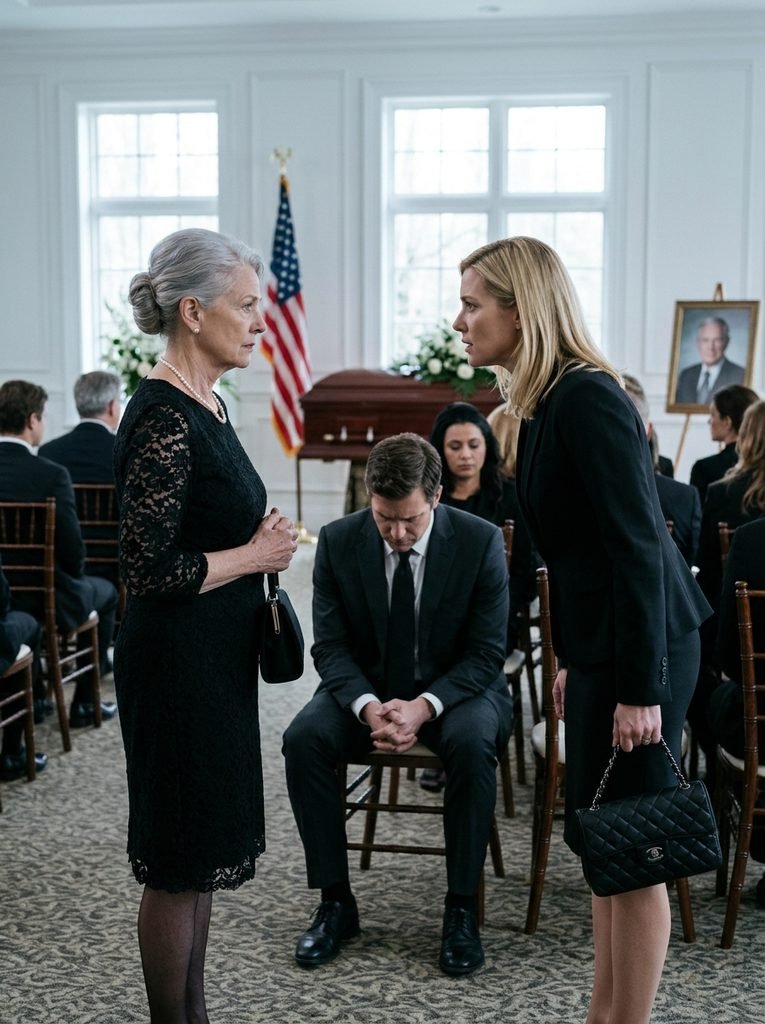
But I was only searching for one face, my son Thomas. I spotted him in the front row, his shoulders slumped, staring at the casket that held his father. Next to him sat Violet, my daughter-in-law, her back straight as a rod, her hair perfectly styled despite the occasion.
Even in grief, she managed to look immaculate. I made my way toward them, toward the empty seat next to Thomas. I needed to be close to my son today.
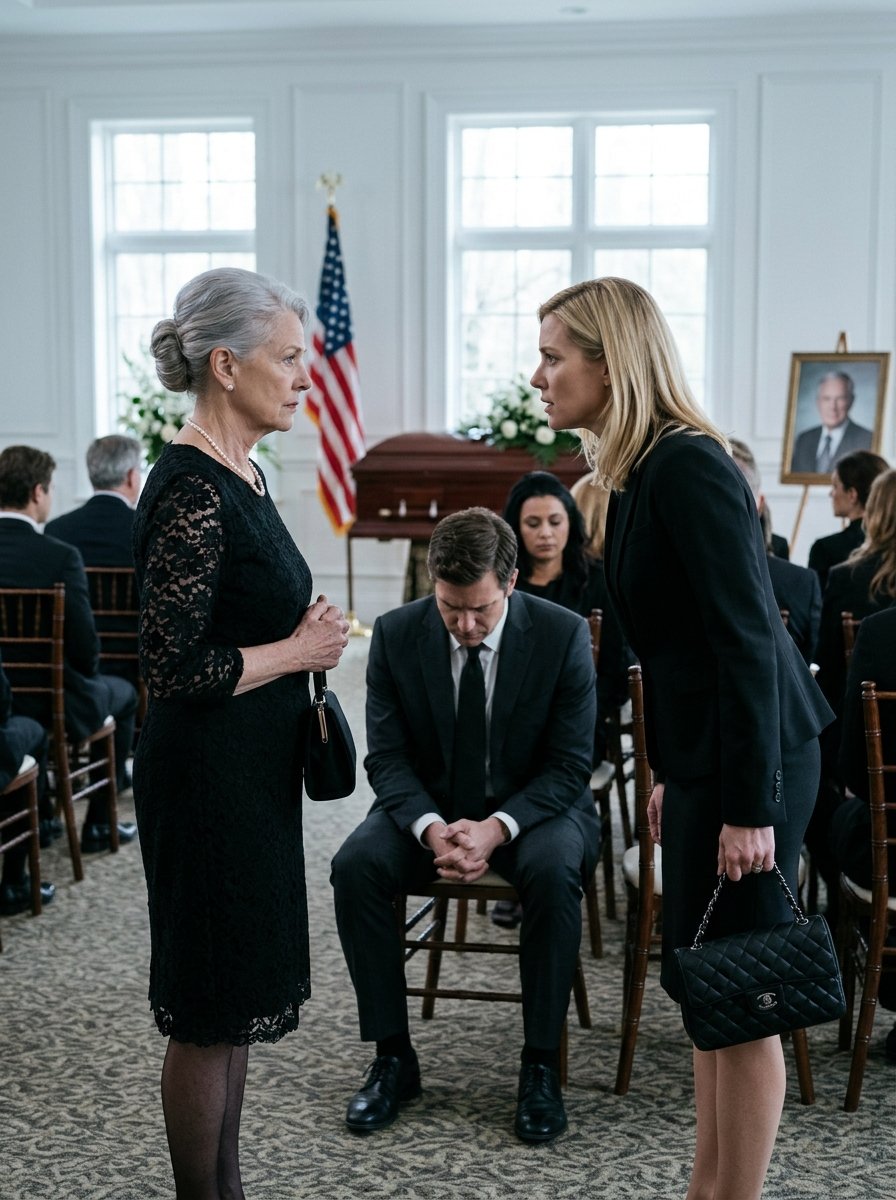
I needed to hold his hand and share our grief together. But before I could reach the chair, Violet stood up. Her expression was cold, calculated, as if she’d been waiting for this moment.
“Ellen,” she said, her voice just loud enough for those nearby to hear. “That seed is reserved for family.” I blinked, confused. “I am family, Violet. I’m his wife.”
A small, cruel smile played on her lips. “You were his wife. This chair is for the new head of the household.” She smoothed her skirt and sat back down, placing her designer purse on the seat I had been heading for.
Thomas didn’t even look up. He just stared ahead, either not hearing or choosing to ignore what had just happened. The room suddenly felt airless.
I could feel dozens of eyes on me, watching, waiting to see what I would do. My cheeks burned with humiliation, but I wouldn’t give Violet the satisfaction of seeing me break down. Not here, not now.
“Of course,” I said softly, turning to find a seat in the second row. As I sat down, I caught whispers from people around me. “Poor Ellen,” someone murmured.
“Violet has always been so controlling.” I kept my eyes forward, my back straight, just as George had taught me. “Never let them see you crumble, Ellie.”
He used to say, “You’re stronger than they know.” The service began, but I barely heard the words. My mind was filled with memories of George. His laugh, the way his eyes crinkled when he smiled, how he’d bring me wild flowers picked from our garden every Sunday morning.
And now he was gone, leaving me alone with a daughter-in-law who had always resented me and a son who seemed to have forgotten I existed. This wasn’t the first time Violet had pushed me aside. Over the years, her tactics had grown increasingly bold.
First, it was forgetting to invite me to family dinners. Then, it was scheduling vacations during holidays so Thomas and the children couldn’t visit me. She’d even started suggesting to others that I was becoming forgetful, planting seeds of doubt about my mental capacity.
George had been my shield against her cruelties. “She’s just insecure,” he’d say, always trying to keep peace in the family. “Give her time.”
But time had only made Violet more determined to erase me from the family picture. After the service, people gathered at our home, the home George and I had built together over decades. But as I entered, I felt like a guest rather than the owner.
Violet had taken over, directing the catering staff, accepting condolences as if she were the grieving widow, not me.
“Mom.” Thomas finally approached me, giving me a quick, awkward, “Are you holding up okay?”
Before I could answer, Violet appeared at his side. “Thomas, your mother must be exhausted. Perhaps she should rest upstairs while we handle the guests.”
“I’m fine,” I said firmly, meeting her gaze. “This is my home and these are my friends.”
Something flickered in Violet’s eyes. Annoyance, perhaps, or determination.
“Of course it is, Ellen. For now.”
She linked her arm through Thomas’s and guided him away, leaving me standing alone in the entryway of my own home. I watched as she leaned close to my son’s ear, whispering something that made him nod.
I stood there, invisible in plain sight, a ghost in my own life. But what Violet didn’t know, what none of them knew, was that George had prepared for this moment.
My quiet, thoughtful husband had seen through Violet’s facade long ago, and he had made arrangements.
As I looked around at the home that held 45 years of memories, I allowed myself a small, secret smile. Let Violet play lady of the manor for now.
Tomorrow would bring the reading of the will, and with it a truth that would wipe that smug smile right off her face.
George always said timing was everything. And soon, very soon, Violet would learn just how right he was.
I couldn’t sleep that night. The house felt different without George’s steady breathing beside me. I got up at dawn and wandered through the rooms, running my fingers along the furniture we’d chosen together, remembering this Victorian home on Maple Street had been our dream.
When we first saw it in 1975, it was falling apart. Peeling wallpaper, creaky floors, outdated everything. But George had squeezed my hand and whispered, “I see us growing old here, Ellie.”
We spent weekends stripping wallpaper, sanding floors, and arguing goodnaturedly about paint colors. George built the back porch himself, working through summer evenings while I brought him lemonade.
When Thomas was born, George converted the small study into a nursery, painting blue sailboats on the walls.
Now I stood in our kitchen, where sunlight streamed through the windows George had installed. The marble countertops we’d saved five years to afford. The oak cabinets he’d refinished by hand.
Every corner of this house contained pieces of our life together.
The sound of footsteps interrupted my memories. Violet appeared in the doorway, already dressed impeccably in a black pencil skirt and silk blouse.
“You’re up early,” she said, her tone suggesting this was somehow inappropriate.
“I’ve always been an early riser,” I replied, pouring myself coffee. “Would you like some?”
She ignored my offer.
“Thomas and I were talking last night. We think it might be best if you start considering other living arrangements.”
The coffee cup nearly slipped from my hand. “Excuse me?”
“This house is much too large for just one person, especially at your age.” Her voice was syrupy with false concern. “There’s a lovely assisted living community near us. Thomas could visit more often.”
This was hardly the first time Violet had tried to push me aside.
When Thomas and Violet first married 12 years ago, I’d been so happy for them. Thomas had been lonely since his divorce, and Violet seemed to bring light back into his life.
That none early signs were subtle.
Violet would accidentally forget to tell me about family gatherings. She’d make comments about my outdated clothes or old-fashioned ideas.
When I’d visit their home, she’d whisper to Thomas just loudly enough for me to hear, “Your mother seems confused today.”
George noticed it, too.
“That woman has claws,” he’d said after one particularly tense Christmas dinner where Violet had corrected nearly everything I said. But he always advocated for peace.
“She’s Thomas’s choice, Ellie. We have to respect that.”
The situation worsened when George was diagnosed with heart disease 3 years ago. Violet started suggesting I couldn’t properly care for him.
“It might be too much responsibility for someone your age,” she told me, as if I hadn’t been caring for my husband for over four decades.
She even tried to convince Thomas that we should sell our house and move into an assisted living facility.
“For both your parents’ safety,” she’d insisted.
George had put his foot down.
“Then ing the house I built, not some sterile facility,” he’d told Thomas firmly.
“For once, our son had backed us up.”
Now, standing in my kitchen with Violet, suggesting I should leave my home just one day after burying my husband, I felt a surge of anger I rarely allowed myself to express.
“This is my home, Violet,” I said quietly. “George and I built it together. I’m not going anywhere.”
She sighed as if I were being difficult.
“Ellen, be realistic. You’re 70 years old. This house has stairs. The maintenance alone?”
“I said no.”
My tone was sharper than I’d intended, but I was done being pushed around. A flash of something, annoyance, hatred, crossed Violet’s face before she composed herself.
“Well, we can discuss it after the will reading. Things might be clearer.”
Then the will reading.
Of course, that’s what this was about.
Violet assumed George had left everything to Thomas, which would effectively give her control. She’d been circling like a vulture, waiting to swoop in and take what was mine.
What she didn’t know was that 6 months ago, George had asked me to drive him to his lawyer’s office.
He’d been unusually quiet that day.
“What are we doing here, George?” I’d asked as we parked.
“Making sure you’re taken care of, Ellie.” He’d squeezed my hand. “No matter what happens.”
I hadn’t thought much about it then. George had always been methodical about our affairs, but now his words took on new meaning.
As Violet strutdded out of the kitchen, phone already in hand, I remembered something else George had said to me in his final weeks.
“You’ve always been too kind, Ellie,” he’d told me, his voice weak, but his eyes clear. “Sometimes kindness needs to be protected.”
The grandfather clock in the hallway chimed eight times.
In four hours, we would all gather at Mr. Peterson’s law office for the reading of George’s will.
Violet was in for a surprise.
I ran my hand along the smooth kitchen counter that George and I had selected together after saving for years. This house wasn’t just walls and a roof.
It was the physical manifestation of our love story.
Every scratch, every repair, every upgrade reflected our journey together.
As I sipped my coffee, I heard Thomas coming down the stairs. He entered the kitchen with the hesitant step of someone who doesn’t know what to say.
“Morning, Mom,” he mumbled, avoiding my eyes.
“Good morning, son,” I replied, pushing a mug toward him. “Coffee?”
He nodded, taking the mug.
“Mom, about the funeral yesterday. I’m sorry about the seating thing. Violet just thought—”
“It’s fine,” I interrupted, not wanting to hear whatever excuse he’d rehearsed. “We all grieve differently.”
Thomas looked relieved that I wasn’t going to make it an issue.
That had always been his way, avoiding conflict at all costs, even if it meant letting Violet run roughshot over his mother.
“About the house,” he started again.
I held up my hand. “Let’s wait for the will reading before we discuss any changes, shall we?”
He looked surprised but nodded.
From upstairs, Violet called his name, and like a trained puppy, he immediately set down his barely touched coffee and went to her.
I watched him go, my heart heavy.
My son had a good heart, but he’d always been easily influenced. First by his ex-wife, now by Violet.
I wondered what George would say if he could see how quickly Violet was moving to push me out of my own home.
Actually, I knew exactly what he’d say.
“Just wait, Ellie. Just wait.”
Mr. Peterson’s law office hadn’t changed in 20 years. The same leather chairs, the same mahogany desk, even the same faded landscape paintings on the walls.
George had always joked that stepping into Peterson’s office was like stepping into a time capsule.
I sat quietly, handsfolded in my lap, as everyone else filtered in.
Thomas arrived with Violet, who was dressed in a black designer suit that seemed more appropriate for a business merger than a will reading.
She’d even brought a small notebook as if she planned to inventory her new possessions.
George’s sister Martha arrived next, giving me a warm hug before taking the seat beside me.
“How are you holding up, Ellen?” she whispered, squeezing my hand.
“I’m managing,” I replied softly.
Martha had never liked Violet.
“That woman has the warmth of a snake,” she’d told me once after witnessing Violet deliberately exclude me from a family photo at Thomas’s birthday.
Martha was the only one who saw through Violet’s facade from the beginning.
Mr. Peterson entered last, carrying a leather portfolio.
He was in his 70s now, a contemporary of George and me, and had handled our legal matters for decades.
“Thank you all for coming,” he began, adjusting his reading glasses. “We’re here to discuss the last will and testament of George William Montgomery.”
Violet straightened in her chair, pen poised over her notebook.
I noticed how she angled herself toward Thomas, her body language suggesting they were a unit separate from me.
“Before I begin,” Mr. Peterson continued, “I want to note that George made changes to his will approximately 6 months ago. These changes were made when he was of sound mind and body with full legal capacity.”
Violet’s pen paused midair.
I saw her shoot a quick concerned glance at Thomas.
“I’ll begin with the basic provisions,” Mr. Peterson said, opening the portfolio. “To my sister Martha Montgomery, I leave my collection of first edition books and the sum of $50,000.”
Martha nodded, dabbing at her eyes with a tissue.
“To my son, Thomas Montgomery, I leave my vintage car collection, my woodworking tools, and my fishing cabin at Lake Tahoe.”
Thomas looked surprised but pleased. He’d always loved that cabin.
“Additionally,” Mr. Peterson continued, “I leave to Thomas the sum of $200,000 to be held in trust and distributed in quarterly payments over a period of 5 years.”
The satisfied smile on Violet’s face faltered.
“In trust with quarterly payments?” she interrupted. “Why not a lump sum?”
Mr. Peterson looked at her over his glasses.
“I’m simply reading the will as written, Mrs. Montgomery, if you’ll allow me to continue.”
Violet fell silent, but I could see the tension in her jaw.
“To my beloved wife, Ellen Montgomery, I leave our family home at 1423 Maple Street, including all furnishings and personal effects contained therein.”
I heard Violet’s sharp intake of breath.
“Additionally, I leave to Ellen the sum of1 million dollars from my life insurance policy, my investment portfolio, and full ownership of Montgomery Consulting Group.”
The room went completely still.
Montgomery Consulting had been George’s pride and joy, the business he’d built from nothing into a successful regional firm. Everyone had assumed Thomas would inherit it.
“This—this must be a mistake,” Violet finally sputtered. “George always intended for Thomas to take over the business.”
Mr. Peterson shook his head.
“There’s no mistake. George was very clear about his wishes.”
“But Ellen knows nothing about running a consulting firm,” Violet protested, her composure cracking. “She’s just a housewife.”
“Just a housewife?” I repeated quietly. “I worked alongside George for 20 years before retiring. I helped him build that company from our garage.”
Violet turned to Thomas, her eyes wide with disbelief.
“Are you going to let this happen? Your father’s company, your inheritance going to her?”
Thomas looked stunned, unable to form words.
Mr. Peterson cleared his throat.
“There’s more. George included a personal letter to be read at this time.”
He pulled out an envelope and began to read.
“If this letter is being read, then I am no longer with you. To my dear Ellen, my partner in everything, thank you for 45 years of love and support. You were always the strength behind my success, even when others didn’t see it.
“To my son, Thomas, I love you deeply. I’ve watched with concern as you’ve allowed others to influence your judgment and come between you and your mother. I hope you’ll reflect on what truly matters in life.
“To Violet, I’ve observed your treatment of Ellen over the years. Your attempts to isolate her, to diminish her role in our family, and recently your suggestions that she is no longer capable of making her own decisions. These actions have not gone unnoticed.
“I’ve structured my will to protect Ellen from further manipulation. The house belongs to her alone. The business will provide her with income and purpose. And Thomas, your inheritance is structured to ensure that it remains yours, protected from outside influence.”
Violet’s face had turned ashen.
She looked at me with undisguised hatred.
“You did this,” she hissed. “You manipulated a dying man.”
I met her gaze steadily.
“George made his own decisions, Violet. He always did.”
“There’s one final provision,” Mr. Peterson interjected, looking uncomfortable. “George stipulated that if Thomas and Violet continue to reside in the Montgomery home, they must pay fair market rent to Ellen, otherwise they must vacate the property within 30 days.”
Violet stood up so abruptly that her chair nearly toppled backward.
“This is outrageous. We’ll contest it.”
Mr. Peterson shook his head.
“I advised George extensively on making this will contest proof. He documented Violet’s behavior over the past several years, including recordings of conversations where she discussed plans to have Ellen declared incompetent after his death.”
Violet’s mouth opened and closed, but no words came out.
Thomas stared at her, shock evident on his face.
“He recorded conversations?” Thomas finally asked, his voice barely audible.
“George was very thorough,” Mr. Peterson confirmed. “He wanted to ensure his wishes would be respected.”
I sat quietly, feeling no joy in Violet’s humiliation.
This wasn’t about revenge.
It was about protection, exactly as George had intended.
“I think we should go,” Thomas said to Violet, standing up.
He looked at me, confusion and hurt in his eyes.
“Mom, I—I don’t know what to say.”
“You don’t need to say anything right now,” I told him gently. “Take some time to process everything.”
As they left, Martha moved to sit beside me.
“Well,” she said softly. “George always did think of everything.”
I nodded, tears finally filling my eyes.
Even in death, George had found a way to shield me from Violet’s cruelty. His last act of love was to ensure I wouldn’t be cast aside, forgotten in my own family.
“He certainly did,” I whispered, clutching the copy of the will Mr. Peterson had handed me.
The paper felt solid and reassuring in my hands, tangible proof that George had seen everything, understood everything, and acted to protect what we had built together.
I just wondered what would happen when I returned home to a house where I was now indisputably the only one with the right to decide who belonged there.
I arrived home to a house in disarray.
Violet had apparently wasted no time after the will reading. Drawers hung open, closets had been rifled through, and several of my favorite decorative pieces were missing.
It looked like she’d been searching for something. Or perhaps this was just her way of lashing out.
I sighed heavily, too emotionally drained to feel angry.
Martha had offered to come home with me, but I’d declined. I needed time alone to process everything that had happened.
I was making tea when I heard the front door slam.
Heavy footsteps approached the kitchen and Thomas appeared in the doorway, his face flushed with anger.
“How could you do this to me?” he demanded without preamble.
I set down my teacup.
“Do what exactly?”
“Turn Dad against me. Against Violet. Make him think we were trying to—”
“What? Get rid of me? Take over the house?”
“I didn’t turn your father against anyone, Thomas. He made his own observations and decisions.”
“That’s not what Violet says.” His voice was accusatory. “She says you’ve been feeding Dad lies about her for years, making him think she was trying to push you out.”
I felt a wave of sadness.
Even now, after what he’d heard at the law office, he was still taking Violet’s word over mine.
“Thomas, when have I ever lied to you?”
He faltered slightly.
“You—you’ve always been manipulative in your own quiet way, making Dad feel guilty about spending time with us instead of you.”
“Is that what Violet told you?” I asked softly.
“She says you resented her from the beginning because she took your place as the most important woman in my life.”
I couldn’t help it. I laughed, not out of humor, but from sheer disbelief.
“Thomas, you’re 43 years old. I’ve never expected to be the most important woman in your life since you were a teenager. All I’ve ever wanted was to be treated with basic respect and included in family activities.”
“Dad’s will is completely unfair. I should have gotten the business. I’ve been working there for 5 years.”
“As a vice president who comes in late and leaves early,” I pointed out, “the position your father created for you because you couldn’t hold down a job elsewhere.”
His face flushed deeper.
“That’s not true.”
“Thomas, you were fired from three jobs before your father hired you. The company has been carrying you, not the other way around.”
“Violet was right,” he muttered. “You’re just a bitter old woman who can’t stand to see others happy.”
The word stung, but I refused to show it.
Instead, I walked to the study, opened the bottom drawer of George’s desk, and pulled out a thick folder.
“Your father kept records,” I said, returning to the kitchen, “not because I asked him to, but because he was concerned about what would happen to me after he was gone.”
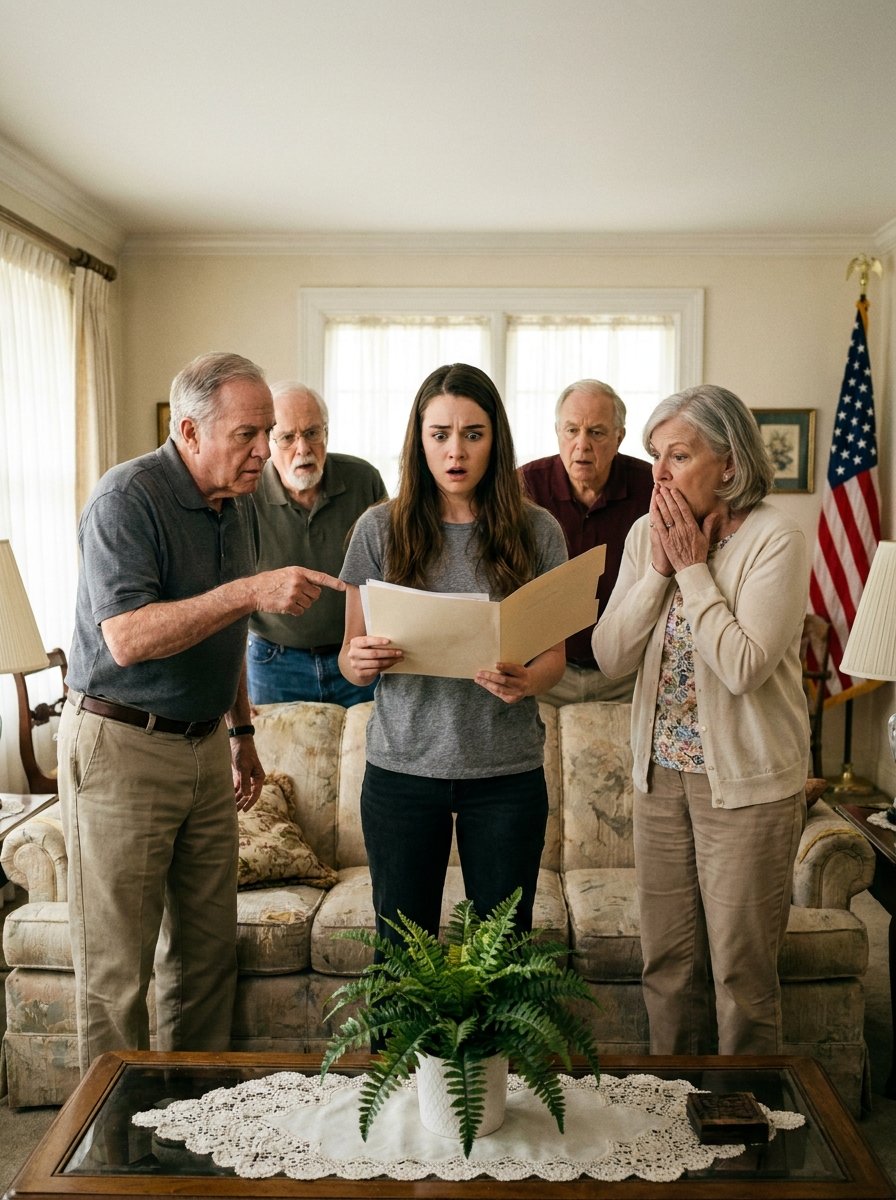
I spread the contents on the table.
Photographs of Violet going through my personal papers when she thought no one was watching.
Printed emails where she discussed with friends her plans to get the old lady into a home.
A log of dates and times when family events were planned specifically when I couldn’t attend.
And then the recordings.
I played one on my phone.
“I can’t wait until George is gone.”
Violet’s voice rang out clearly.
“Ellen won’t know what hit her. Will have her declared incompetent so fast her head will spin. The house, the money, everything will be ours.”
Thomas stared at the evidence, his face draining of color.
“This—this could be manipulated, taken out of context.”
“There are dozens of recordings, Thomas, dating back 3 years. Your father may have been dying, but he wasn’t stupid.”
I played another.
“Thomas is so easy to control.”
Violet’s voice again.
“He believes whatever I tell him about his mother. It’s almost sad how gullible he is.”
Thomas flinched as if I’d slapped him.
“Your father never wanted to show you these,” I said quietly. “He hoped Violet would change or that you would see through her on your own. But he made sure I would have protection if neither of those things happened.”
Thomas sank into a chair, his anger deflating.
“Why didn’t you ever say anything?”
“Would you have believed me? Or would you have told Violet, who would have convinced you I was making things up?”
He didn’t answer, which was answer enough.
“I don’t blame you entirely, Thomas. Violet is manipulative and convincing, but you chose to believe the worst about your mother, a woman who has never given you reason to doubt her honesty.”
Thomas stared at the pile of evidence, then rubbed his hands over his face.
“Dad really recorded all this.”
I nodded.
“After his diagnosis, he became very concerned about what would happen to me. He saw how Violet was already positioning herself to take over and the business, the trust for my inheritance. He wanted to make sure Violet couldn’t access your money or take control of the company. He was protecting you, too, Thomas.”
A heavy silence fell between us.
I could see Thomas struggling to reconcile the truth with the reality Violet had constructed for him.
The front door opened and closed softly.
Violet appeared in the doorway, freezing when she saw the evidence spread across the table.
“What is all this?” she asked, her voice artificially light.
“The truth,” I replied simply.
Her eyes darted to Thomas, then back to me.
“Tommy, don’t tell me you’re falling for this. She obviously fabricated all this after George died.”
“The timestamps and authentication certificates say otherwise,” I said calmly. “As do the witnesses who helped George document your behavior.”
Violet’s facade cracked.
“You think you’re so clever, don’t you? Turning George against me from his deathbed.”
“George was never against you until you gave him reason to be,” I said. “All he wanted was for his family to get along, for his wife to be respected.”
“Respected?” Violet spat. “You’re nothing. Just an old woman who held on to her husband’s coattails her whole life.”
Thomas stood up suddenly.
“Stop it, Violet.”
She turned to him, surprised.
“Tommy—”
“My name is Thomas, not Tommy. And I want you to stop talking to my mother like that.”
Violet’s expression shifted, her eyes widening with calculated innocence.
“I’m just upset, honey. Ellen has turned everything upside down with these ridiculous accusations.”
“I heard your voice on those recordings,” Thomas said quietly. “That was you, not some fabrication.”
“Recordings can be manipulated,” she insisted desperately. “You know how crafty she is.”
“My mother has never been anything but honest with me,” Thomas said, his voice strengthening. “I’m the one who hasn’t been honest with myself about what’s been happening in this family.”
Violet’s face hardened.
“So, you’re choosing her over me? Your pathetic mother over your wife?”
“I’m choosing the truth,” Thomas replied. “And I’m finally seeing it clearly.”
Violet looked from Thomas to me, her eyes narrowing.
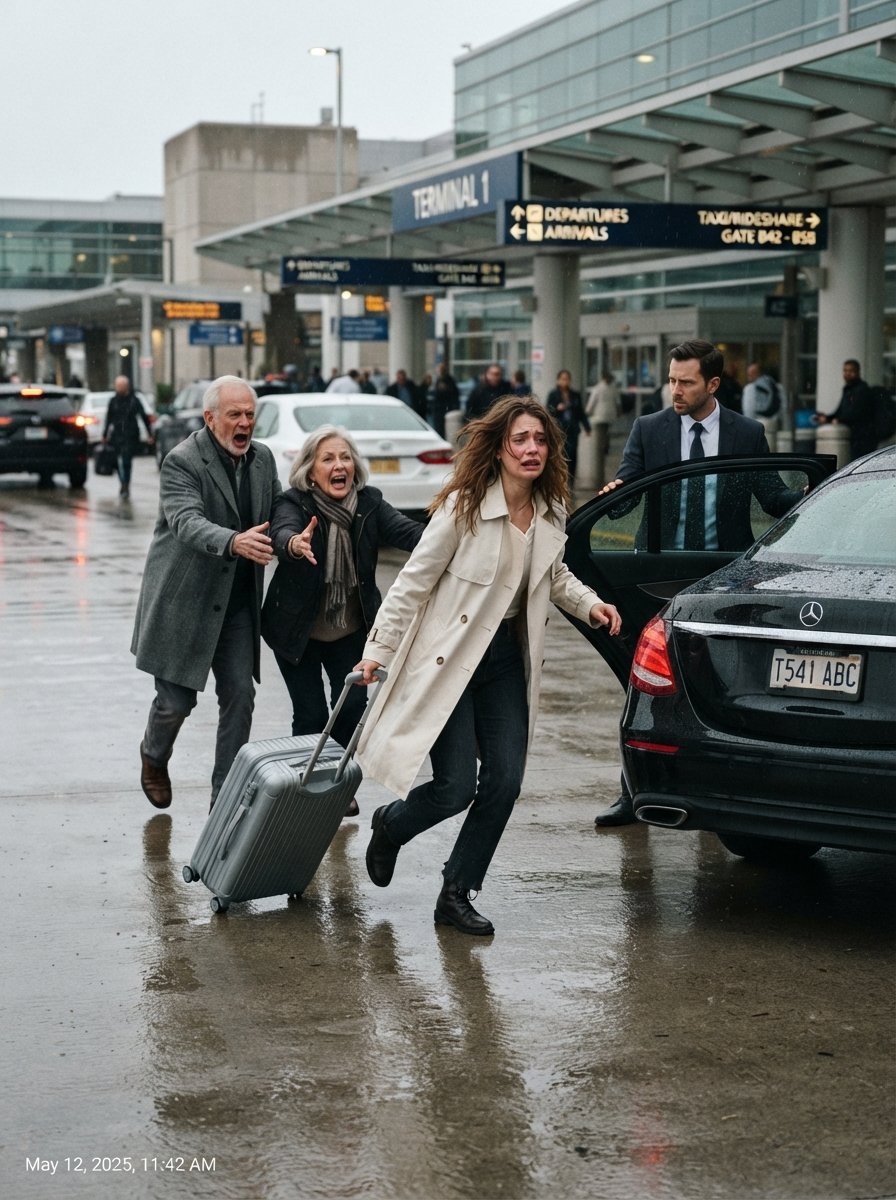
“This isn’t over,” she hissed. “You’ll regret this, both of you.”
She stormed out, the front door slamming behind her with such force that the windows rattled.
Thomas turned to me, his expression a mixture of shame and confusion.
“Mom, I don’t know what to say. I’ve been so blind.”
I reached across the table and took his hand.
“You saw what you wanted to see, Thomas. We all do sometimes.”
“How can you forgive me so easily after everything I’ve let happen?”
I smiled sadly.
“Because that’s what mothers do. And because your father would want us to heal this family, not break it further.”
Thomas squeezed my hand.
“I don’t know what happens next.”
“Neither do I,” I admitted, “but for the first time in a long time, I feel like we might figure it out together.”
The next few weeks unfolded like a slow motion earthquake with aftershocks rippling through what remained of our family.
Thomas moved into the guest bedroom downstairs while Violet stayed with her sister across town. The separation wasn’t official yet, but the fracture between them seemed to widen with each passing day.
I took no joy in their marital troubles.
Despite everything Violet had done, she was still Thomas’s choice. And seeing my son in pain brought me no satisfaction.
One morning, I found Thomas sitting on the back porch, staring at the garden George had meticulously maintained.
Spring had arrived, and the first daffodils were pushing through the soil.
“Dad always said you could set your watch by those flowers,” Thomas remarked as I joined him.
“He planted those bulbs the year you were born,” I said, settling into the chair beside him. “Said they were as reliable as he hoped you would be.”
Thomas smiled faintly, then let it fade.
“I haven’t been very reliable, have I? Not to him. Not to you.”
“You’ve been through a lot,” I said gently. “Finding out your wife isn’t who you thought she was. That’s not easy.”
He shook his head.
“That’s the thing, Mom. I think I always knew on some level. There were moments when I’d catch her in little lies or see how she treated people she thought weren’t important. I just chose to ignore it.”
“We often see what we want to see in the people we love.”
“Violet called again last night,” he said after a pause. “She wants to meet with our lawyers to discuss a settlement.”
“A settlement?”
“She says she’s entitled to half of my inheritance since we were married when Dad died.”
I sighed.
Even now, Violet was still focused on what she could take.
“What did you tell her?”
“That Dad put my inheritance in a trust specifically to protect it from divorce settlements.”
Thomas ran a hand through his hair.
“She didn’t take it well.”
I could imagine. Violet’s rage when thwarted was a force of nature.
“She’s also been calling my cousins, Aunt Martha, even some of my colleagues at the company, telling them I abandoned her, that you brainwashed me.”
This didn’t surprise me. Violet had always been skilled at spinning narratives that cast her as the victim.
“I’m sorry, Thomas. I know this is difficult.”
He looked at me directly.
“I’m the one who should be sorry, Mom. I let her isolate you. I believed her when she said you were manipulative or trying to control me. I was a terrible son.”
“You weren’t terrible,” I protested. “Just misguided.”
“That’s generous.”
He smiled weakly.
“I’ve been thinking about moving out, finding my own place. Give you back your space.”
A pang of sadness hit me.
After years of feeling pushed out of my son’s life, I was finally reconnecting with him. The thought of him leaving so soon felt like another loss.
“You don’t have to go,” I said. “This house has plenty of room for both of us.”
“Are you sure? After everything?”
“Thomas, this is your home, too. Your father would want you here, especially now.”
His eyes glistened with unshed tears.
“Thanks, Mom.”
Later that afternoon, the doorbell rang.
I opened it to find my grandchildren, Emma and Jack, standing on the porch, backpacks in hand.
At 15 and 12, they were at that awkward age where they were too old for toys but too young for adult conversations.
Behind them, I spotted Thomas’s ex-wife, Karen, in the driveway, waving briefly before driving off.
“Grandma!” Jack exclaimed, giving me a quick hug before darting inside to find his father.
Emma, more reserved like her father, offered a small smile.
“Hi, Grandma. Dad said we could stay here this weekend. Is that okay?”
“Of course it is,” I said, stepping aside to let her in. “It’s always okay.”
I hadn’t seen much of my grandchildren over the past few years. Violet had always found reasons why visits to Grandma’s house were inconvenient or unnecessary.
The few times they did come over, she supervised every interaction, as if afraid I might say something to undermine her.
“Your room is just as you left it,” I told Emma. “Though I’m afraid the stuffed animals might be a bit childish for you now.”
“I don’t mind,” she said, following me upstairs. “I remember how Dad used to read to us in that room when we visited.”
“He did,” I confirmed, smiling at the memory. “Your grandfather would sit in that rocking chair by the window and your dad would do all the character voices.”
Emma set her backpack on the bed and glanced around the room.
“Violet said you were getting rid of all the kids stuff. She told us you were turning our rooms into some kind of art studio.”
I blinked in surprise.
“I would never do that. These rooms will always be here for you.”
Emma seemed to consider this, comparing it against whatever narrative Violet had constructed.
“She also said you didn’t really want us to visit, that it was too much trouble for you.”
My heart achd at the thought of my grandchildren believing I didn’t want them around.
“Emma, that’s simply not true. I’ve always wanted to see more of you and Jack. Always.”
“That’s what Dad said, too. Now that he’s—”
She trailed off, unsure how to describe the current situation.
“Now that he’s seeing things more clearly,” I supplied gently.
She nodded, then surprised me by asking, “Was Violet always mean to you, Grandma?”
The question caught me off guard.
I hesitated, not wanting to badmouth their stepmother, but also unwilling to lie.
“Violet and I had different ideas about family,” I said carefully. “Sometimes that created tension.”
Emma’s perceptive gaze told me she understood more than I was saying.
“She didn’t like when Dad paid attention to you or us. Really, she always wanted to be the most important person.”
Out of the mouths of babes.
“That must have been difficult for you and Jack.”
Emma shrugged with the practiced nonchalants of a teenager.
“We got used to it. Dad was different when she was around. Less fun, more worried about making her happy.”
I sat on the edge of the bed, patting the space beside me.
Emma joined me, her long legs, so like her father’s, stretched out in front of her.
“Your dad loves you very much,” I told her. “Sometimes adults make mistakes or get confused about what’s important, but that doesn’t change how much he loves you.”
“I know,” she said softly. “He seems happier now, even though he’s sad about Violet. Does that make sense?”
“Perfect sense,” I assured her.
Downstairs, I could hear Jack’s excited voice as he showed Thomas something on his tablet.
The sound of male laughter, so like George’s, filled the house in a way it hadn’t for years.
That evening, we ate dinner around the kitchen table.
Thomas ordered pizza and we played board games afterward. Simple activities that had once been regular occurrences in our family, but had fallen away under Violet’s influence.
As I watched Thomas laughing with his children, I felt both joy and sorrow.
Joy at seeing this side of my son again, the playful father who had been submerged beneath Violet’s demands and manipulations.
Sorrow that it had taken George’s death and such painful revelations to bring him back.
Later, after the children had gone to bed, Thomas found me in the study looking through old photo albums.
“They’ve missed you,” he said, leaning against the door frame. “We all have, really.”
I looked up at my son, so much like his father in the dim lamplight.
“I’ve missed you, too. All of you.”
“I want to fix this, Mom. I want to be the son Dad would be proud of.”
I smiled, feeling a warmth that had nothing to do with the spring evening.
“You already are, Thomas. You already are.”
6 months after George’s death, I finally felt ready to make changes to the house.
Not drastic renovations, but small adjustments that would make the space feel like mine alone.
For decades, every decision had been a compromise.
George preferred blue. I loved green, so we chose teal.
He wanted modern. I liked traditional, so we settled on transitional styles.
Now I could finally paint the kitchen the soft sage green I’d always wanted.
I could replace the heavy drapes in the living room with the light, gauzy curtains that George had vetoed as too feminine.
Thomas helped me move furniture and paint walls on weekends.
Sometimes Emma and Jack joined us, turning household chores into family projects.
The house began to transform, not into something unrecognizable, but into a warmer, lighter version of itself.
“Dad would have hated these curtains,” Thomas joked one afternoon as we hung the new window treatments in the living room.
“Your father was a wonderful man with terrible taste,” I replied, making him laugh.
The divorce proceedings between Thomas and Violet had turned ugly, as expected.
She fought for everything she could claim, and invented grievances where none existed.
But the prenuptual agreement George had insisted upon when they married, another act of foresight from my practical husband, limited what she could take.
“The judge saw right through her,” Thomas told me after a particularly contentious court hearing. “She tried to claim I was abusive, that I’d kept her from advancing in her career, but she couldn’t produce a single witness to back up her stories.”
I wasn’t surprised.
Violet had always operated through manipulation and lies, maintaining a careful facade that only those closest to her could see through.
Without Thomas to shield her, that facade was crumbling.
One afternoon, I was in the garden planting tulip bulbs for next spring when a familiar car pulled into the driveway.
Violet stepped out, looking as polished as ever in a tailored suit. Her blonde hair swept into a perfect shiny.
I straightened up, wiping my hands on my gardening apron.
“Violet, this is unexpected.”
She approached cautiously, stopping several feet away.
“Ellen, you’re looking well.”
“Thank you,” I replied, waiting for her to reveal the purpose of her visit.
“I suppose you’re enjoying all this,” she said, gesturing vaguely toward the house. “Playing the victim, turning Thomas against me, taking everything that should have been ours.”
“I never wanted any of this, Violet. All I ever wanted was to be treated with respect and included in my family’s life.”
She scoffed.
“Always so righteous, so perfect. Ellen Montgomery, the saintly widow who never does anything wrong.”
I sighed, suddenly feeling too tired for this conversation.
“What do you want, Violet?”
“I want what’s mine. Thomas is being completely unreasonable about the division of assets. I deserve half of everything, including this house.”
“This house was never yours to claim,” I reminded her. “It belonged to George and me. Now it belongs to me alone.”
“I lived here, too,” she snapped. “I helped renovate the kitchen. I chose the new carpeting upstairs.”
“You did those things without consulting me,” I interrupted. “You made changes to my home as if I weren’t there, as if my opinions didn’t matter.”
Violet’s perfectly composed expression faltered for a moment.
“You were always in the way. Always the saded mother-in-law making Thomas feel guilty for not visiting enough, for not calling enough.”
“Is that really how you saw me?” I asked, genuinely curious. “As some manipulative old woman trying to steal your husband’s attention?”
“What else was I supposed to think? You were always there with your stories about Thomas as a child, your little inside jokes with George. You had decades with them before I came along. What was left for me?”
For the first time, I glimpsed something real beneath Violet’s calculated exterior, insecurity, perhaps even fear.
She had always seen me as competition rather than family.
“Marriage isn’t a competition, Violet. Love isn’t a limited resource that runs out if you share it too widely.”
She looked away, blinking rapidly.
“Easy for you to say. You had George wrapped around your finger for 45 years.”
“I had a partnership with George. We respected each other, supported each other. That’s what made our marriage work.”
Violet was silent for a long moment.
Then, squaring her shoulders, she seemed to remember why she’d come.
“I want $50,000 to drop my claim to the vacation property at the lake. Otherwise, I’ll drag this out in court for years.”
I studied her face, the hard set of her jaw, the coldness that had returned to her eyes.
Whatever moment of vulnerability I’d witnessed was gone.
“I’ll discuss it with Thomas,” I said finally. “But Violet, you should know that George documented everything. Every threat you made about pushing me out, every plan to have me declared incompetent. Fighting this will only expose more of that evidence in court.”
Her eyes widened slightly, then narrowed.
“You’re bluffing.”
“I have no reason to bluff. The house is mine. The business is mine. I’m not afraid of you anymore, Violet.”
She stared at me for a long moment, then turned and walked back to her car without another word.
As she drove away, I realized my hands were shaking, but not from fear.
For the first time, I had stood my ground with Violet without George or Thomas to back me up.
The divorce was finalized 3 months later.
Violet received a settlement that was fair, but far less than she’d demanded.
She moved to Phoenix shortly afterward, taking a job with a competing consulting firm.
“She’s already dating one of the senior partners there,” Thomas told me with a rise smile. “Poor guy doesn’t know what he’s in for.”
On the one-year anniversary of George’s death, I decided to host a family dinner.
Not a somber memorial, but a celebration of the life we’d shared and the family that remained.
Martha came, as did Thomas, Emma, and Jack.
Even Karen joined us, our relationship having improved dramatically without Violet’s interference.
I set the dining room table with our best china, the set George and I had received as a wedding gift all those years ago.
I placed fresh flowers from the garden in the center, Dalia’s, George’s favorite, and lit the candles in the silver holders that had been his mother’s.
As everyone took their seats, I hesitated for a moment before sitting at the head of the re table, George’s spot for over four decades.
It felt strange yet somehow right.
“To Dad,” Thomas said, raising his glass, “who taught me what it means to be a good man, even if it took me too long to learn the lesson.”
“To George,” Martha echoed, “my big brother who always looked out for everyone he loved.”
“To Grandpa,” Emma and Jack chimed in.
I raised my own glass, looking at the faces of my family gathered around the table.
“To George, who knew us better than we knew ourselves, and who made sure we’d find our way back to each other, even when he couldn’t be here to guide us.”
We touched glasses, the crystal ringing like music in the warm candle lit room.
Later, after everyone had gone and I was alone in the quiet house, I sat in George’s favorite chair and looked around at the home we’d built together.
The walls were now painted in colors I’d chosen, the furniture arranged the way I preferred, the garden outside blooming with flowers I’d planted with my own hands.
Yet George was still everywhere, in the solid craftsmanship of the bookshelves. He’d built in the creaky third step of the staircase he’d never gotten around to fixing, in the nicks and scratches that told the story of our life together.
“You planned it all so perfectly,” I whispered as if he could hear me. “You made sure I’d be safe, that I’d have Thomas back, that the house would remain our haven.”
I could almost hear his reply, the thing he’d always say when I complimented his foresight.
“I just know what matters, Ellie. The rest is just details.”
I smiled, running my hand along the arm of his chair, feeling the indentation where he’d rested his elbow for countless evenings.
The emptiness of losing him would never completely fade.
But it had transformed into something bearable, even precious, a testament to a love that had shaped my entire adult life.
As I got up to turn off the lights before heading to bed, I caught my reflection in the hallway mirror.
I stood a little straighter now, my eyes clearer, my smile more genuine.
I was no longer just George’s wife or Thomas’s mother. Roles that had defined me for so long.
I was Ellen Montgomery, a woman who had found her own strength in the face of loss and betrayal.
And for the first time since George’s death, I felt not just acceptance of my new reality, but a quiet, steadfast joy in the life that still stretched before me.
A life that was finally truly my own.
Now, I’m curious about you who listen to my story. What would you do if you were in my place? Have you ever been through something similar?
Comment below. And meanwhile, I’m leaving on the final screen two other stories that are channel favorites, and they will definitely surprise you.
If you came here from Facebook because of this story, please go back to the Facebook post, tap Like, and comment exactly “Respect” to support the storyteller. That small gesture means more than it may seem, and it gives the writer real encouragement to keep sharing more stories like this with you.
Disclaimer: This story is fictional and created for entertainment purposes only. Any names, characters, places, or events are fictitious or used fictitiously. No real person or organization is intended to be portrayed.