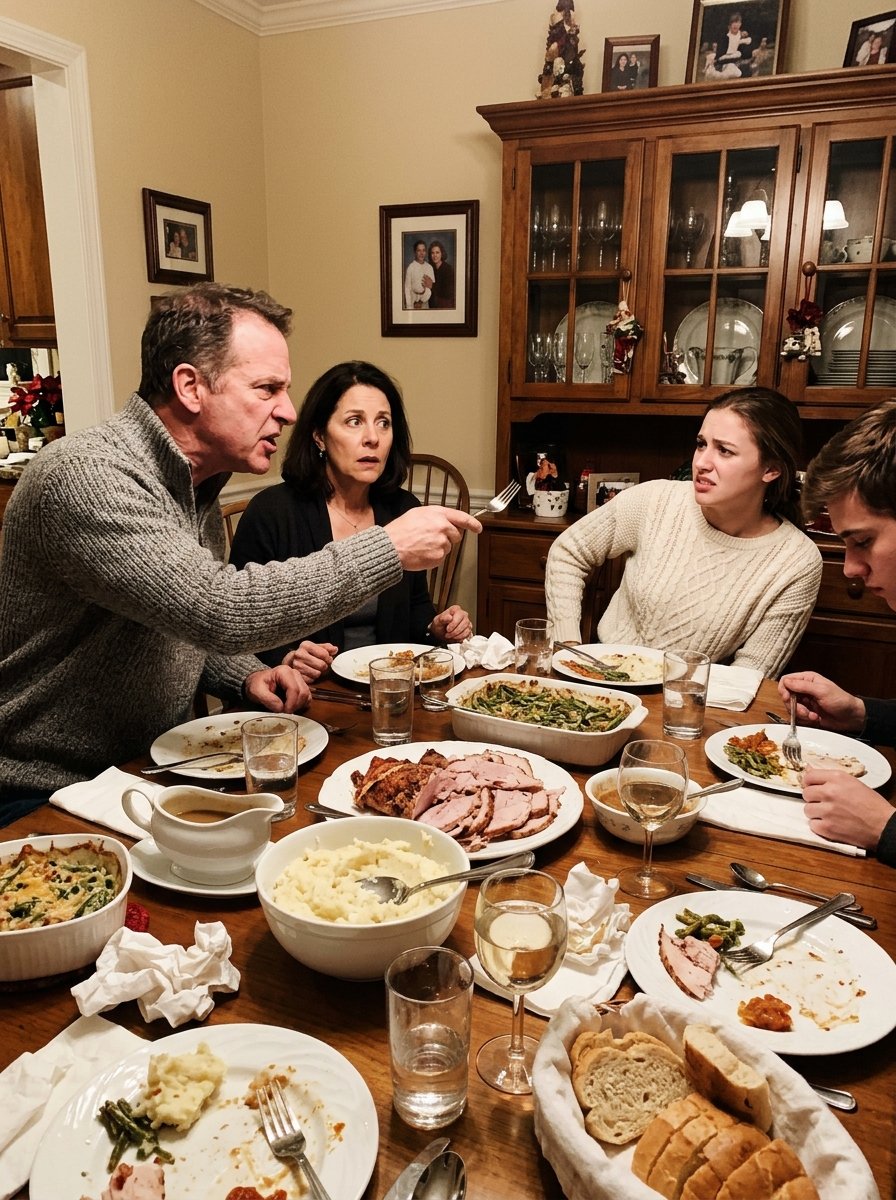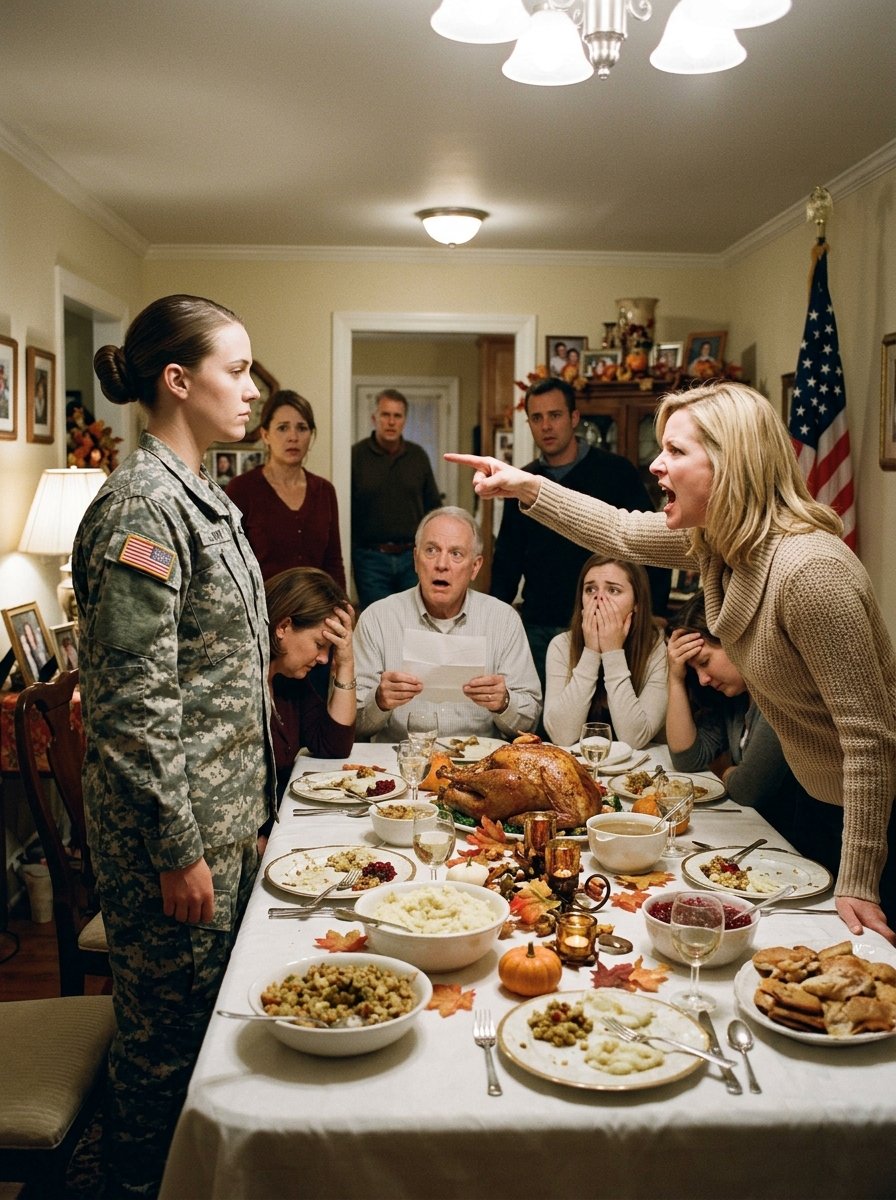
My parents flew to Paris for 68 days for my brother’s “graduation.” They abandoned me, bedridden and seriously ill. Before leaving, mom gave a cold, calculated order: throw away my life-saving medication, empty my water, cut off
the power, and lock me in a sweltering concrete laundry room. They thought they had broken me. They thought they had won. They had no idea what was waiting for them when they finally returned…
Chapter 1: The Depreciation of Blood
The human body, when deprived of a crucial synthetic immunosuppressant, does not stage a theatrical, screaming rebellion. It behaves precisely like an under-capitalized municipal transit authority during a brutal August heatwave: the
peripheral lines shut down first, the switchboards stop taking incoming signals, and the central cooling system defaults to an emergency hum that rattles your teeth.
I knew this because I spent eleven years in forensic medical billing. My entire adult career had been constructed around the meticulous, unromantic discovery that people are constantly lying about the cost of maintaining a pulse. I built Barrett
Reconciliation Services from the ground up, identifying when hospitals charged seventy-four dollars for a pair of non-sterile nitrile gloves, and reducing their bloated profit margins to ash.
I understood margins. I understood that when human beings claim they are acting out of unconditional love, they are almost always hiding a six-figure administrative surcharge.
When I sold my firm for a very comfortable eight-figure sum, I bought a sprawling, single-story ranch house in the quietest, most heavily wooded suburb of Baton Rouge. I also agreed to fund my brother Julian’s master’s degree in Art
Administration in Paris. I didn’t do it out of sisterly affection. I considered it an insurance premium to keep his chaotic, entitled energy an ocean away from my hard-won peace.
Then, my immune system turned on me.
Acute inflammatory demyelinating polyneuropathy. AIDP. It is a terrifying, silent thief. Without my monthly, five-thousand-dollar intravenous infusions—kept strictly regulated in a specialized cold box on my kitchen counter—the myelin sheath protecting the signals between my spine and my legs degraded into static. When a flare-up hit, my legs didn’t just feel tired. They became fifty-pound sacks of wet sand, entirely disconnected from my brain’s command center.
That was when my mother, Margaret, and my aggressively passive father, Arthur, moved into my guest wing.
They framed it to their church group as a Christian rescue mission. In reality, it was a hostile takeover of my square footage, funded entirely by my bank accounts. Margaret immediately hired a live-in housekeeper, Maria, paying her exorbitant wages out of my funds while treating the poor woman like an indentured servant.
I tolerated it because the flare-ups left me exhausted, and fighting Margaret required an energy reserve I simply did not possess. I let her play the martyr. I let her run my debit cards.
The uneasy truce shattered when Julian’s graduation approached. Margaret decided, unilaterally, that she and Arthur needed to spend sixty-eight days in Paris to “support his transition into the international art world.”
On the morning of their flight, my legs were already going numb. My morning dose was twelve hours overdue. The familiar, terrifying tingling was creeping up my calves.
From my master bedroom, the sound traveled along the hardwood floors with exceptional acoustic clarity. I heard Margaret’s voice drop to that low, administrative register she used when complaining to retail managers.
“The three glass bottles in the counter unit,” Margaret instructed Maria in the kitchen. “Take them out. Throw them in the garage trash. Empty her emergency water jugs into the sink. We are not leaving provisions that encourage her theatrics.”
My breath hitched. Theatrics.
“Mrs. Barrett,” Maria’s voice wavered, thick with a heavy Spanish accent and genuine fear. “What about the girl? She can’t walk to the sink if the legs go. The doctor said the medicine—”
“The girl is thirty-eight years old,” Margaret snapped, the sound of her heavy diamond rings clinking against the granite countertop. “She plays this sick,
attention-seeking routine every single time Julian has an achievement that requires the family’s focus. Put her in the back laundry room. Lock the deadbolt from the outside. Do you understand me, Maria? You do not open that door until I email you from Paris.”
A cold dread, entirely separate from my neuropathy, coiled in my gut. I tried to swing my legs over the edge of the mattress. Nothing happened. From the knees down, I was paralyzed.
The heavy front door clicked shut. Arthur, as always, had already fled to the waiting car, avoiding any unpleasantness. A moment later, Maria entered my bedroom. She didn’t meet my eyes. Tears were streaming down her face.
She hauled my dead weight off the mattress. I was too weak to fight her. She dragged me across the Persian rug, down the hallway, and toward the carport laundry room. It was an uninsulated, windowless eight-by-ten concrete box where the previous owner had kept a deep freezer. The heat of the Louisiana morning was already baking the exterior walls.
“Maria,” I rasped, my tongue heavy, my heart hammering against my ribs. “The cold box. I will write you a check for ten thousand dollars right now. I’ll double your salary.”
“Mrs. Barrett said no,” Maria whispered, her voice greasy with shame. “She said if I help you, she will call immigration on my sister. I am so sorry. I am so sorry.”
She dropped me onto the rough concrete floor. But as she turned away, her hand brushed my shoulder. A small, hard object wrapped in a thin hand towel slid down my collar, lodging against my ribs.
The solid-core birch door swung shut.
The heavy brass deadbolt engaged with a heavy, oiled thunk.
A half-second later, the main electrical breaker for the wing was thrown. The vent fan above me ground to a halt. The sliver of light under the door vanished.
I was trapped in a dark, rapidly heating concrete box. No water. No medicine. And knowing my mother, absolutely no mercy.
Chapter 2: The Sixty-Second Window
The darkness was absolute. It pressed against my eyes, thick and suffocating.
I rolled onto my side, my useless legs dragging behind me like dead wood. I fumbled frantically inside my shirt for the object Maria had dropped. My fingers brushed against hard plastic. I pulled it out.
It was an old, prepaid flip phone from my hurricane emergency kit. Maria hadn’t thrown it away. She had risked Margaret’s wrath to hide it for me.
My hands were shaking violently as I pressed the power button. The screen illuminated the pitch-black room with a pale, cold blue light. It cast long, distorted shadows against the concrete blocks.
I looked at the top right corner of the tiny screen. The battery icon flashed a desperate, blinking red.
Two percent.
I had perhaps sixty seconds of power. Maybe less.
If I called 911, dispatch would take two minutes just to ask for my cross streets. They would ask for the nature of the emergency. They would put me on hold while they routed the call to the local precinct. And the police wouldn’t break down a
locked door without a warrant or visual confirmation of a crime in progress. I would die while they stood on my front porch knocking.
I didn’t dial 911.
I dialed the direct cell phone number of my Aunt Clara.
Clara was Margaret’s older sister, but they might as well have been born on different planets. Clara was a retired freight train dispatcher who drove a dually diesel truck, smoked unfiltered cigarettes, and possessed an emotional range that ran from mildly unimpressed to actively litigious. She hated Margaret. And she was the only person I knew who wouldn’t ask for permission to destroy property.
I pressed the phone to my ear. The sweat was already pouring down my face. The temperature in the room was pushing eighty-five degrees and climbing fast.
The phone rang once.
Please.
Twice.
“Speak,” Clara barked, her voice raspy with morning coffee and irritation.
“Clara. It’s Elena,” I choked out, talking as fast as my parched throat would allow. “Laundry room. Deadbolt locked. Breakers off. Margaret left for Paris. Battery dying. Bring a drill.”
The screen flickered. The blue light dimmed, struggling to pull voltage from a dead cell.
“I’m putting my boots on,” Clara’s voice cracked through the tiny speaker. “I’ll be there in—”
The screen went entirely, terrifyingly black. The call dropped.
I pressed the power button again. Nothing. I slammed the phone against the concrete in a brief, useless surge of frustration.
Silence rushed back into the room, broken only by the ragged sound of my own breathing.
The heat began to compound. Louisiana in late spring is not just hot; it is aggressively, maliciously humid. Without the vent fan, the small concrete room turned into a slow cooker. The air grew heavy, thick with the smell of old dust and my own panicked sweat.
Ten minutes passed. My mouth felt like it was stuffed with cotton.
Twenty minutes. The tingling in my legs had moved up to my hips. The demyelination was accelerating without the medicine. If it reached my diaphragm, my lungs would simply forget how to draw breath. I would suffocate long before the dehydration killed me.
I lay flat on the cool concrete, pressing my cheek against the floor, trying to siphon whatever ambient chill was left in the foundation. I closed my eyes, listening to the buzzing of the cicadas outside the thick walls.
Did Clara hear the address? Does she remember which room is the laundry room?
My thoughts began to blur, the edges of my consciousness fraying like old rope. The darkness behind my eyelids started to bloom with strange, hallucinatory colors.
Thirty minutes. My chest felt heavy. Drawing air required conscious, agonizing effort. I was slipping away, my body shutting down its peripheral functions just to keep my heart beating.
This is it, I thought, a strange, clinical detachment settling over me. Margaret actually did it. She balanced her ledger by zeroing mine out.
And then, just as the darkness threatened to pull me under completely, a sound vibrated through the concrete floor.
It wasn’t a knock. It was a high-pitched, metallic scream.
Home Stories My parents flew to Paris for 68 days for my brother’s “graduation.”…
My parents flew to Paris for 68 days for my brother’s “graduation.” They abandoned me, bedridden and seriously ill. Before leaving, mom gave a cold,
calculated order: throw away my life-saving medication, empty my water, cut off the power, and lock me in a sweltering concrete laundry room. They thought they had broken me. They thought they had won. They had no idea what was waiting for them when they finally returned…
Chapter 3: The Carbide Rescue
The screeching whine of a carbide-tipped hole-saw tore through the brass cylinder of my laundry room door.
I forced my eyes open. Blue and orange sparks spat through the door jamb, illuminating the pitch-black room in violent, strobe-like flashes. The smell of burning metal and ozone instantly overpowered the stale, hot air.
CRACK.
The heavy brass deadbolt shattered. A heavy boot kicked the solid-core door directly in the center. The door crashed open, rebounding off the concrete wall with a deafening slam.
I recoiled from the sudden, blinding assault of the Louisiana sun.
Silhouetted in the doorway stood Aunt Clara. She was wearing faded denim jeans and steel-toed work boots, holding a smoking, industrial-grade Makita drill in her right hand. Behind her, the flashing red lights of an ambulance reflected off the windows of my house.
“Jesus Christ,” Clara muttered, dropping the drill and rushing forward. “Paramedics! Get in here now! Bring the ice packs!”
Hands were suddenly all over me. Cool oxygen rushed into my nose through a plastic cannula. A needle bit into the back of my hand, and the blessed, freezing rush of intravenous saline flooded my veins.
“Blood pressure is tanking,” a paramedic yelled. “Let’s get her on the board. One, two, three—lift!”
I spent the next forty-eight hours in the intensive care unit at Our Lady of the Lake Hospital. I allowed them to push four liters of fluid and a massive, emergency dose of intravenous immunoglobulin through my system. For two days, I drifted in and out of a chemical sleep, my body fiercely battling the nerve damage.
On the morning of the third day, the feeling in my toes returned.
As soon as I could hold a pen without dropping it, I demanded my discharge papers. I signed the Against Medical Advice release, ignoring the frantic protests of my attending physician.
“You need at least another week of observation, Ms. Barrett,” the doctor pleaded, holding his clipboard like a shield.
“I don’t have a week,” I rasped, my voice sounding like dry gravel. “I have a hostile corporate takeover to dismantle.”
An hour later, I was sitting in a wheelchair beside my hospital bed, dressed in a set of scrubs Clara had bought from the gift shop. Sitting opposite me, balancing an iPad on his knees, was my attorney, Marcus.
Marcus was a property and estate litigator who specialized in dismantling family trusts with the cold, rhythmic efficiency of a slaughterhouse mechanic. He wore bespoke suits and possessed the moral flexibility required to destroy people legally. I kept him on a very expensive retainer.
“They landed in Paris roughly seventy hours ago,” Marcus said, tapping his screen, pulling up the forensic monitors I had authorized him to place on my accounts. “They checked into a luxury boutique hotel on the Rue de Vaugirard. Your mother has already charged a fourteen-hundred-dollar linen blazer, three dinners at Michelin-starred restaurants, and a private car service to your authorized emergency card.”
Clara, leaning against the hospital window, snorted. “She always did love spending blood money.”
“Let it clear,” I said, my eyes fixed on the digital ledger reflecting on Marcus’s glasses. “Every swipe is documented. The higher the aggregate unauthorized balance, the easier the statutory threshold for grand larceny. But look deeper, Marcus. I don’t care about the dinners. Look at Julian’s accounts. The tuition drafts.”
Marcus pulled up the routing numbers, his brow furrowing. He zoomed in on a specific transaction history. His thumb paused on the glass screen.
“That’s… highly anomalous,” Marcus murmured, the lawyer in him waking up.
“What is it?” I asked, leaning forward, the IV line pulling painfully at my wrist.
“The twelve-thousand-dollar draft you authorized last month for his semester tuition. It didn’t go to the French Ministry of Higher Education.” Marcus tapped the screen rapidly, tracing the digital footprint. “It was routed through a tertiary banking clearinghouse in Cyprus. Then it was deliberately fragmented into four different shell accounts, all registered under an LLC called Le Renard Rouge.”
I stared at him. “The Red Fox? That’s not a university.”
Marcus didn’t answer. He picked up his cell phone, stepped out into the hospital hallway, and made a quick, hushed phone call to a colleague in international banking.
When he walked back into the room ten minutes later, his face was an unreadable, terrifying mask. And the entire trajectory of my revenge fundamentally shifted.
Home Stories My parents flew to Paris for 68 days for my brother’s “graduation.”…
My parents flew to Paris for 68 days for my brother’s “graduation.” They abandoned me, bedridden and seriously ill. Before leaving, mom gave a cold,
calculated order: throw away my life-saving medication, empty my water, cut off the power, and lock me in a sweltering concrete laundry room. They thought they had broken me. They thought they had won. They had no idea what was waiting for them when they finally returned…
Chapter 4: The Syndicate Ledger
Marcus closed the door to my hospital room, ensuring it clicked shut. He walked back to his chair and sat down slowly, resting his elbows on his knees.
“It’s an underground syndicate, Elena,” Marcus said, his voice dropping an octave. “My guy in London ran the LLC. Le Renard Rouge isn’t an art school. It’s a front. They specialize in high-stakes illicit gambling, sports betting, and fraudulent art appraisals for money laundering.”
The sterile air of the hospital room suddenly felt very heavy.
“Julian isn’t attending a master’s program,” Marcus continued, his eyes locked onto mine. “According to the university registrar, he hasn’t been enrolled in a single class for eight months. He was quietly expelled for non-attendance. He is
systematically drowning in debt to some very dangerous, very unforgiving men. And he is using your corporate accounts to keep his kneecaps intact.”
I leaned back in the wheelchair, the puzzle pieces slamming into place with sickening velocity.
Margaret hadn’t just gone to Paris to celebrate her golden child’s graduation. She knew. She had to know. The frantic packing, the sudden demand for a sixty-eight-day trip, the absolute necessity of locking me away so I couldn’t monitor the banking alerts.
She had gone to manage a crisis. She was using my money to pay off a criminal syndicate, while leaving me in a concrete box to die so I couldn’t stop the cash flow.
“She was going to let me suffocate for a gambling debt,” I whispered, the sheer, breathtaking evil of it washing over me.
“Yes,” Clara said from the window, her voice hard as flint. “She was. So, what’s the play, kid? We call the cops? We tell them she tried to murder you?”
“No,” I said, a cold, razor-sharp clarity overtaking the lingering weakness in my body. “If we call the police now, Margaret claims it was a misunderstanding. She says Maria misunderstood the instructions. She plays the weeping mother, posts
bail, and stays in Paris spending my money while the lawyers fight it out for three years.”
I looked at Marcus. “Shut it down.”
Marcus raised an eyebrow. “Shut what down?”
“Everything,” I commanded. “Revoke the authorized user privileges on the Black Card. Stop the outgoing wire transfers. Freeze the international routing on Julian’s accounts. Flag every single credit card with Margaret or Arthur’s name on it as stolen.”
Marcus nodded slowly, a predatory smile touching the corners of his mouth. “If I do that, Elena, the syndicate will immediately realize the golden goose is dead. The next time they try to pull a payment, it will bounce hard. Julian will be entirely exposed to his creditors.”
“Exactly,” I said, my voice barely above a whisper, but vibrating with absolute intent. “And cancel their international cell phone plans. Cut the data roaming.”
“They’ll be stranded,” Clara noted, lighting a cigarette right there in the hospital room, daring the nurses to stop her. “In a foreign country. With angry bookies looking for them.”
“They wanted an international adventure,” I replied, standing up from the wheelchair. My legs trembled, but they held my weight. “I’m just adjusting their itinerary.”
Home Stories My parents flew to Paris for 68 days for my brother’s “graduation.”…
My parents flew to Paris for 68 days for my brother’s “graduation.” They abandoned me, bedridden and seriously ill. Before leaving, mom gave a cold, calculated order: throw away my life-saving medication, empty my water, cut off
the power, and lock me in a sweltering concrete laundry room. They thought they had broken me. They thought they had won. They had no idea what was waiting for them when they finally returned…
Chapter 5: Fortifying the Castle
We moved my command center back to my house that afternoon.
The first thing I did was fire Maria. I gave her three months’ severance in cash, looked her dead in the eye, and told her if she ever stepped foot in Baton Rouge again, I would ensure she was deported. She packed her bags and was gone before sunset, sobbing her apologies to the empty hallway.
Then, Clara and I went to work.
I didn’t just change the locks. I militarized the perimeter. Clara called in a favor from an old union buddy who ran a commercial security firm. Within forty-eight hours, every exterior door in the ranch house was replaced with solid-core steel.
On the heavy oak door of the laundry room—the door Clara had drilled through—we had them install a military-grade biometric keypad. It required a thumbprint and a retina scan to open. It was massive, ugly, and entirely impenetrable.
For two weeks, as my body slowly healed and the physical therapy brought the strength back to my calves, we watched the digital ledger.
It was a masterclass in watching a manufactured reality collapse in real-time.
Marcus had set up a live feed of the declined transactions on my laptop. They piled up like a slow-motion digital car crash.
Day 14, 10:00 AM (Paris Time): Margaret’s attempt to buy two silk scarves at Hermès: Declined. Code 04 (Pick Up Card). Day 15, 7:30 PM: Arthur’s attempt to pay for a luxury dinner at Le Jules Verne: Declined. Day 17, 9:00 AM: A massive, desperate swipe at the hotel concierge desk for seven thousand euros: Declined.
“They’re panicking,” Marcus noted over a Zoom call, watching the feed from his downtown office. “They’ve tried the Visa fourteen times in the last hour. They have no cash flow, their phones are dead, and they can’t access your brokerage accounts.”
“Let them sweat,” I replied, sipping green tea, feeling the power return to my limbs.
Then, on a Tuesday evening, exactly twenty-two days into their trip, my secondary landline rang.
It was the old, copper-wire house phone in the kitchen, a number Margaret knew but rarely used. I was sitting at the island, chopping vegetables. Clara was cleaning her revolver at the kitchen table.
I didn’t pick it up. I let the answering machine click on. The automated voice announced the recording, and then a voice echoed into the quiet, air-conditioned kitchen.
It was a man. He spoke with a thick, guttural Parisian accent, his tone completely devoid of warmth.
“Julian. You do not answer your phone. Your mother’s card is dead. The twelve thousand euros did not clear the Cyprus account.”
The man paused, and I could hear the faint sound of a lighter clicking open in the background.
“You have until Friday, little boy. After that, we do not call the house in America. We come to the hotel on Rue de Vaugirard. Tell your mother her jewelry will not cover the interest.”
The line went dead with a sharp click.
I looked over at Clara. She slowly pushed a cleaning rod through the barrel of her .38 special.
“Well,” Clara said grimly, locking eyes with me. “Looks like their European vacation just officially turned into a hostage situation.”
“And the best part is,” I replied, watching the red light on the answering machine blink in the dark kitchen, “they have absolutely no idea what’s waiting for them when they manage to drag themselves home.”
Chapter 6: The Hostage Vacation
The timeline compressed. The silence from Paris was deafening, but the digital footprint told a story of profound, escalating desperation.
By day thirty, they had checked out of the luxury boutique hotel. Marcus tracked a single, successful transaction on Arthur’s personal, low-limit emergency credit card—a charge for a cheap motel on the outskirts of the 18th arrondissement.
By day forty-five, Arthur’s card was maxed out entirely on basic groceries and metro tickets.
Sixty-eight days. That was the timeline Margaret had arrogantly carved out for her grand Parisian triumph. She had told everyone she would return on the 14th of August. And Margaret Barrett, above all things, was a slave to her own public relations. She would rather die than admit to her church group that her trip was a failure.
By day sixty, I was walking without a cane. My house was pristine. I had utilized Marcus to legally sever every financial, medical, and property tie linking me to my parents. They were officially and legally classified as transient licensees whose
permission to occupy my premises had been permanently revoked by a judge. All their belongings had been carefully boxed and moved to a storage unit across town.
On day sixty-seven, my cell phone chimed. It was an email forward from Mrs. Higgins, my elderly neighbor across the street.
The subject line read: Fwd: Welcome Home Julian! A Celebration of Art!
I clicked it open. Margaret, likely using a public library computer in Paris, had managed to send out a mass email to her church group and all my immediate
neighbors. She had invited them to a “Welcome Home Julian” garden party in my front yard, scheduled for the exact hour of their arrival the next day.
“Please join us on the lawn at 2:00 PM to welcome our genius boy home from his European conquests! Refreshments will be served inside!”
I read the email twice. I started to laugh. It was a cold, hollow sound.
Even hunted by a syndicate, even financially ruined, Margaret’s absolute priority was maintaining the illusion of superiority. She was planning to use my house, my food, and my social standing to mask her catastrophic failure.
“Clara,” I called out to the living room. “You might want to make some potato salad. We’re hosting a party tomorrow.”
Chapter 7: The Grand Illusion
Day sixty-eight. 2:00 PM. The Louisiana heat was a physical weight, pressing down on the manicured lawns of my subdivision.
I was standing perfectly still behind the plantation blinds in my kitchen, looking out at the front yard. Clara was sitting at the island, casually eating potato salad directly from a plastic tub with a silver fork.
I had expected a quiet, shameful return in the dead of night. I had vastly underestimated my mother’s malignant narcissism.
Already, Mrs. Higgins from across the street and Mr. Abernathy from next door were standing on my front lawn, sweating through their pastel clothes. They were
holding Tupperware containers of deviled eggs, pitchers of iced tea, and a brightly colored “Welcome Home” balloon. They were looking confusedly at my locked, heavy steel front door.
At exactly 2:05 PM, a yellow parish taxi—not the private black car service Margaret usually demanded—pulled into my driveway. It coughed a plume of blue exhaust and idled roughly.
The taxi doors opened.
Arthur stepped out first. He looked like a man who had been dragged behind a horse for a mile over cobblestones. His suit was severely wrinkled, his hair was unkempt, and his face was gray with a bone-deep exhaustion.
Then came Julian. The golden child looked absolutely terrified. He was twitching, constantly looking over his shoulder toward the street as if expecting a Parisian
enforcer to leap out of the azalea bushes. He dragged a battered suitcase, his designer clothes stained and clearly unwashed for days.
Finally, Margaret emerged.
She was wearing a cream-colored knit suit that had clearly not been dry-cleaned in weeks. There was a stain on the lapel. But as soon as her Italian leather heels hit the concrete driveway, she plastered a wide, manic, terrifyingly fake smile on her face.
“Welcome! Welcome, friends!” Margaret trilled, her voice cracking slightly under the strain. She waved grandly, entirely ignoring the fact that she had arrived in a
beat-up cab and that the driver was yelling at Arthur for the fare. “We are so thrilled to be back from Europe! Julian’s artistic triumphs were simply exhausting!”
She marched up the concrete steps to the front porch, exuding the false authority of a queen returning to her castle. She reached out, her thumb moving with thirty years of muscle memory toward where the old mechanical deadbolt used to be.
She froze.
The lock was gone. In its place was the brushed-steel biometric keypad Clara had installed. Its illuminated blue touch-screen and biometric glass circle glowed with a faint, mocking red light.
Margaret blinked, her smile faltering for a fraction of a second. She tapped the glass screen.
PLEASE ENTER PIN.
Margaret confidently punched in 1-1-0-4—Julian’s birthday. The code that had opened every door, unlocked every phone, and bypassed every alarm in our family since 1998.
BZZZT. INVALID CREDENTIALS.
The sharp, electronic rejection echoed on the quiet porch. The neighbors, holding their deviled eggs, fell silent. The oppressive heat seemed to suddenly magnify the humiliation.
Margaret’s jaw tightened. She punched it again, hitting the numbers harder.
BZZZT. SYSTEM LOCKOUT. PLEASE CONTACT ADMINISTRATOR.
“Arthur!” Margaret hissed, keeping her back to the neighbors, her fake smile straining so hard I thought her facial muscles would snap. “The keypad is broken. Call Elena out here right now. She must have hired a cheap contractor while we were gone.”
I didn’t wait for Arthur to knock.
I reached out, disengaged the heavy interior deadbolts, and opened the door.
Chapter 8: The Confrontation on the Porch
The rush of cool, heavily air-conditioned air hit Margaret’s sweating face.
She looked up, her eyes immediately dropping to the floor, expecting to see me slumped in a wheelchair, weak and compliant. Instead, I stood tall, my posture perfect, wearing crisp linen trousers and a silk blouse. I was holding a thick, blue legal folder.
“Elena, darling!” Margaret practically screamed, projecting her voice for the benefit of the audience on the lawn. “Open the door and help with the bags! We have so much luggage, and Julian needs to rest his creative mind!”
I didn’t step aside. I filled the door frame, a physical barrier between her illusion and my reality. I looked past her, making eye contact with the crowd of neighbors.
“There’s no party today, Margaret,” I said. My voice was calm, perfectly modulated, and carried with crystal clarity across the manicured lawn. “And you don’t live here anymore.”
Margaret’s smile vanished. It didn’t just fade; it evaporated, replaced by a look of absolute, venomous shock.
“What are you talking about?” Margaret demanded, stepping closer, lowering her voice to a furious, venomous whisper. “Let us inside right this second before you embarrass this family in front of the whole neighborhood!”
“You embarrassed this family the moment you ordered Maria to lock me in an unventilated concrete box to die of dehydration,” I replied smoothly, my voice cold enough to freeze water.
I stepped out onto the porch, forcing her to take a step back down the stairs. The neighbors shifted uncomfortably, clutching their Tupperware, but nobody looked
away. In the South, public scandal is a spectator sport, and nobody wanted to miss the main event.
“I have a master’s degree to unpack!” Julian whined, trying to push past Arthur on the stairs, desperate to get inside and hide. “Elena, stop being a psycho and open the damn door. My phone is dead and I need to use the Wi-Fi to check my international wires!”
“You don’t have a master’s degree, Julian,” I said, opening the thick blue folder. I pulled out a stack of paper and casually tossed it down the concrete steps.
The pages scattered in the slight breeze, fluttering across the driveway.
“You have twenty-eight thousand dollars in gambling debts to a French syndicate,” I announced loudly. “That’s a copy of the wire transfers you tried to hide in Cyprus.
Oh, and the threatening voicemails from Le Renard Rouge? The ones promising to
come to your hotel and break your legs? I had them transcribed and translated by a certified court reporter. They’re on page three.”
Julian’s face went the color of skim milk. He stumbled backward, tripping over his own battered suitcase. “How… how did you…”
“Because I am an auditor, Julian,” I said, staring down at him with profound disgust. “I track fraud for a living. And you are the sloppiest, most pathetic fraud I’ve ever encountered.”
Margaret lunged forward, her hands clawing for the folder in my hands, abandoning all pretense of southern grace. “You ungrateful, lying wretch! I am your mother! I gave you life! This is my house!”
“My name is the only one on the deed,” I stated, easily sidestepping her clumsy grab.
At that exact moment, the screech of heavy tires broke the suburban silence. A black Ford Explorer with municipal plates pulled up to the curb, parking aggressively directly behind the idling taxi.
The doors opened, and two uniformed deputies from the East Baton Rouge Parish Sheriff’s Office stepped out, adjusting their utility belts.
Chapter 9: The Public Execution of Pride
Margaret’s face morphed from pure rage to absolute, primal panic as the deputies unlatched the gate and walked up the driveway, stepping over the scattered bank statements.
“Mrs. Margaret Barrett?” the lead deputy asked, his voice carrying the heavy, bored authority of law enforcement. He rested his hand casually on his radio. “We have a
court-issued emergency protective order signed by Judge Landry. You are required to maintain a distance of five hundred feet from Elena Barrett and this property, effective immediately.”
“A protective order?” Mrs. Higgins gasped loudly from the lawn, clutching her pearls.
“She’s lying!” Margaret screamed, her voice cracking, pointing a trembling, manicured finger at me. “She’s a sick, manipulative, ungrateful girl! Arthur, tell them! Julian, defend your mother!”
She turned desperately to her husband and her golden child.
Julian didn’t look at her. He was staring at the scattered bank statements on the driveway, the horrifying realization washing over him that his Parisian creditors now knew exactly where he lived, and that he had absolutely zero access to my money to pay them off. He was entirely exposed.
Julian grabbed his suitcase, turned his back on his screaming mother, and began walking fast down the sidewalk, away from the house, away from the police, leaving her to burn.
“Julian!” Margaret wailed, the sound tearing from her throat.
She turned to Arthur. “Arthur, for God’s sake, do something! Tell them she’s crazy!”
Arthur looked at his wife of forty years. He looked at the deputies with their hands on their belts. Then, he looked up at me standing on the porch. His shoulders slumped, carrying the sudden, crushing weight of a lifetime of cowardly complicity.
Arthur slowly picked up his small carry-on bag, stepped carefully around Margaret as if she were a toxic spill, and walked toward the street without saying a single word.
Margaret stood entirely alone on the concrete path, surrounded by the neighbors she had invited to witness her triumph.
“Ma’am,” the deputy said, stepping closer, pulling a pair of heavy steel handcuffs from his belt. “I’m going to ask you to step away from the door and turn around, or I will place you under arrest right now for violating a judicial order.”
Margaret looked at the steel cuffs glistening in the sun. She looked at the horrified, gossiping faces of her church friends. The carefully constructed illusion of her
grand, superior, religious life shattered into a million irreparable pieces right there on the concrete.
“You planned this,” Margaret hissed at me, tears of pure, undiluted malice tracking through her heavy makeup.
“No, Margaret,” I said softly, as the deputy stepped onto the porch and gently but firmly grabbed her arm. “You wrote the invoice. I just finally made you pay it.”
The deputy clicked the handcuffs around Margaret’s wrists. The metallic snick-snick sound was the most beautiful thing I had ever heard.
As they led her down the driveway and pressed her head down into the back of the cruiser, the neighbors parted like the Red Sea, watching in stunned, absolute silence.
I thought it was over. I thought the ledger was finally closed. But as Marcus told me over the phone later that night, the real bloodletting hadn’t even begun.
Because Margaret hadn’t just tried to kill me through neglect. She had tried to steal my kingdom while I was dying.
Chapter 10: The Forged Signature
“She did what?” I asked, sitting in Marcus’s downtown office three days later, staring at the document on his mahogany desk.
“She tried to steal the house, Elena,” Marcus said gently, sliding a clear plastic evidence sleeve across the desk.
Inside the sleeve was a legal document titled: Durable Power of Attorney for Healthcare and Property Management.
“We found this filed with the county clerk’s office,” Marcus explained, pointing a silver pen at the date stamp. “It was filed precisely two days before they left for
Paris. This document grants Margaret Barrett full, unmitigated control over your real estate, your liquid assets, and your medical decisions in the event of your ‘incapacitation’.”
I stared at the signature at the bottom of the page. It was my name: Elena Barrett. But the loop on the ‘E’ was too wide, and the cross on the ‘t’ lacked my usual sharp aggression.
“It’s a forgery,” I breathed, feeling a fresh wave of nausea.
“A very clumsy one,” Marcus agreed. “I had a forensic handwriting expert review it this morning. He laughed. It’s definitively not your signature. Margaret knew your disease was progressing. She knew she was locking you in that room without your
medicine. She filed this so that when they eventually found you brain-damaged or dead from the demyelination, she could legally absorb your entire estate and pay off Julian’s syndicate debts without probate interference.”
The sheer, calculated malice of it took my breath away. It wasn’t just neglect. It was attempted murder for financial gain.
“We presented this to the District Attorney an hour ago,” Marcus said, leaning back in his leather chair. “They are upgrading her charges. But there’s a catch.”
“What catch?”
“Margaret is claiming you signed it voluntarily before the flare-up,” Marcus sighed. “And without a witness to say she forged it, her defense attorney might be able to inject enough reasonable doubt to beat the heavy fraud charge. We need someone who saw her sign it.”
I looked out the window at the Baton Rouge skyline. I thought about the coward who had walked away from the porch.
“Subpoena Arthur,” I said coldly.
“Elena, he’s her husband. He can invoke spousal privilege.”
“Not if you threaten to charge him as an accessory to fraud and attempted manslaughter,” I countered, the auditor in me finding the exact leverage point. “Arthur’s entire life is based on avoiding discomfort and prison. Apply enough pressure, and he will crack like an egg.”
Chapter 11: The Final Ledger
The 19th Judicial District Court smelled of floor wax, old paper, and quiet desperation.
Margaret sat at the defense table, wearing a borrowed grey suit, looking small, deflated, and incredibly old. The state had formally charged her with felony reckless endangerment, elder/dependent abuse, and first-degree forgery.
She had pleaded not guilty to everything, her lawyer arguing it was all a tragic misunderstanding—that she had simply forgotten to leave the water, that she believed I was safely resting, and that I had signed the Power of Attorney willingly.
The prosecutor, a sharp woman named Vance, called their first surprise witness.
Maria walked into the courtroom.
Margaret’s head snapped up, her eyes widening in terror. Maria had vanished the day after I fired her. Margaret thought she was gone. But Marcus’s private investigators were very good at finding people who didn’t want to be found.
Maria took the stand. She was trembling, but she didn’t look at Margaret. She looked directly at the judge.
“Mrs. Barrett told me to throw the medicine in the trash,” Maria testified, her heavily accented voice echoing in the quiet, cavernous room. “She told me to lock the deadbolt and shut off the breakers. She said, ‘Do not open that door until I email you.’ She knew the girl couldn’t walk. I… I was terrified of losing my job and being deported. But before I locked the door, I hid a phone in the towel. I couldn’t let her die.”
A collective gasp echoed from the gallery. Margaret’s lawyer buried his face in his hands.
But the prosecution wasn’t done applying the pressure.
“The State calls Julian Barrett.”
If Margaret looked terrified before, she now looked like a corpse. Julian walked in, flanked by a state trooper. He was wearing a cheap, ill-fitting suit, his eyes darting around the room, sweating profusely. He took the oath, his hand shaking on the Bible.
“Mr. Barrett,” Prosecutor Vance began. “Were you aware of your mother’s actions on the day you left for Paris?”
Julian swallowed hard. He looked at Margaret, his golden ticket, his protector. Then he quickly looked away.
“She… she told me she handled it,” Julian stammered into the microphone. “She said she put Elena in the back room so she couldn’t call the bank and stop my tuition transfers. She said it was the only way to protect my education.”
Margaret stood up in the middle of the courtroom, the remaining shreds of her sanity snapping. “You liar!” she shrieked, pointing at her son. “I did it for you! I did everything to save you from those men!”
“Order!” the judge banged his heavy wooden gavel. “Bailiff, seat the defendant or she will be removed!”
Julian leaned closer to the microphone, eager to save his own skin. “I didn’t know she turned off the air conditioning. I swear. I just needed the money. And… and she said if anything happened to Elena, we would inherit the house and the money anyway, so it didn’t matter.”
The courtroom went dead silent. You could hear the hum of the fluorescent lights.
Prosecutor Vance turned to the judge. “Your Honor, we have one final piece of evidence, provided voluntarily to the State this morning by Arthur Barrett, in exchange for absolute immunity.”
Arthur, sitting in the very back row of the gallery, pulled his hat down over his eyes and didn’t look up.
Vance held up the plastic evidence sleeve containing the Power of Attorney. “Arthur Barrett has provided a sworn, recorded deposition testifying that he watched his
wife forge Elena Barrett’s signature on this document at their kitchen island. He has also provided the practice sheets Margaret used to perfect the forgery, which he recovered from the household trash.”
Margaret didn’t scream this time.
She simply collapsed into her chair, staring blankly at the polished wooden table.
Her son had sold her out to avoid conspiracy charges. Her husband had turned her in to avoid being an accessory to fraud. The family she had manipulated, protected,
and weaponized for decades had devoured her the exact moment it became necessary to save themselves.
The judge didn’t even blink. “Given the overwhelming evidence of premeditated endangerment, fraud, and flight risk, I am revoking the defendant’s bail. The defendant is remanded to the custody of the parish prison pending formal sentencing.”
The bailiff stepped forward and put his heavy hands on Margaret’s shoulders. As she was led away through the side door in cuffs, she didn’t look back at Arthur. She didn’t look at Julian. And she certainly didn’t look at me.
There was no theatrical exit. Just the quiet, pathetic shuffle of a woman who had finally run out of other people’s money and other people’s lives to spend.
Epilogue: The Cost of Admission
It has been a year since the gavel fell.
Margaret took a plea deal to avoid a jury trial. She is currently serving five years in the state women’s correctional facility in St. Gabriel. Arthur moved to a tiny, depressing apartment in a neighboring parish; he sends me a generic birthday card once a year with no return address. I throw them in the trash unopened.
Julian fled back to Europe, attempting to outrun his creditors. The last Clara heard through her network, he was working under the table as a dishwasher in a filthy
hostel in Marseille, constantly looking over his shoulder for men with thick accents and bad intentions.
As for me, I am sitting in my kitchen.
The specialized cold box hums quietly on the granite counter, fully stocked. The morning sun pours through the large bay windows, illuminating the pristine, quiet expanse of my home.
I stand up and walk down the hallway. My legs are strong, steady, and entirely my own. I stop at the utility room. The heavy red-oak door is open. The room has been beautifully renovated into a walk-in pantry, filled with spices and light.
But on the wall outside the door, mounted on a small, polished walnut plaque, is the heavy brass Schlage deadbolt that once locked me in the dark. It still bears the deep, violent, jagged gouges from Clara’s carbide drill.
Beneath it, a small brass plate reads: The Cost of Admission.
I reach out and touch the cold metal of the lock, feeling the sharp, ruined edges of the scarred brass. I survived the audit. The ledger is finally, permanently balanced. And for the first time in my entire life, the house belongs entirely to me.
If you want more stories like this, or if you’d like to share your thoughts about what you would have done in my situation, I’d love to hear from you.
Your perspective helps these stories reach more people, so don’t be shy about commenting or sharing.