PART 2: The Letter Behind His Father’s Name 029
At seven the next morning, I drove to Mr. Abernathy’s office with the sealed envelope on the passenger seat.
The city was still gray with winter, the sidewalks shining from a night of rain. I had barely slept. Every time I closed my eyes, I saw Kenneth standing on the porch, his face twisted with impatience, and heard the sharpness in his voice.
Then I heard the softer voice from the voicemail.
Mom, please.
I had wanted that voice for years.
Not the panic. Not the fear of losing something. I had wanted the voice of the little boy who used to crawl into my bed during thunderstorms and whisper, “Don’t worry, Mama. I’m here.”
But the man who had become Kenneth had forgotten how to speak to me with tenderness unless he needed something.
Mr. Abernathy’s office occupied the second floor of an old brick building downtown. He had represented my husband, Charles, for nearly thirty years. He was older now, his silver hair thin at the crown, but his eyes remained alert behind his round spectacles.
When I entered, he rose slowly.
“Eleanor.”
I had not heard him use my first name in a long time.
“Thank you for seeing me.”
He glanced at the envelope in my hand. “I’ve been expecting this day.”
“That makes one of us.”
He gestured toward the chair across from his desk. A small electric fireplace glowed behind him, giving the room the appearance of warmth even though my fingers remained cold.
I placed the envelope between us.
“What exactly did you send to the board?” I asked.
“Not the original,” he said. “A certified copy of the letter and the supporting documents. I also included a statement explaining the circumstances under which your husband transferred control of the company.”
I stared at him. “You said they were asking questions.”
“They are. The current board discovered irregularities in the original ownership records during an audit. Kenneth’s name appears on documents that were never meant to be public until certain conditions were met.”
“What conditions?”
Mr. Abernathy folded his hands.
“Your husband’s instructions.”
I looked down at the envelope.
Charles’s handwriting was unmistakable. Broad, slightly slanted letters. He had always written as though words were in a hurry to escape him.
“Why did he make me promise not to tell Kenneth?” I asked.
“That is what the letter explains.”
“Then why did he leave the decision to me?”
“Because he knew Kenneth better than anyone.”
The words stung.
I had spent years believing Charles trusted me to protect our family. Now I wondered whether he had also known that his son might need protection from himself.
Mr. Abernathy opened a file drawer and removed a thick folder tied with blue ribbon.
“Your husband came to me three months before he died,” he said. “He told me he wanted to make changes to the company’s ownership structure. He was concerned about Kenneth’s judgment.”
“Kenneth was thirty-two.”
“And already showing signs of the same impatience that later became ambition.”
I looked toward the window. Below us, buses moved through the wet street, their red taillights blurring across the glass.
“Kenneth always said his father didn’t believe in him.”
“Your husband believed in his ability. That was the problem. He knew Kenneth was talented. He also knew talent without discipline could damage people.”
I touched the envelope but did not open it.
“What did Charles do?”
“He placed a controlling interest in a trust. The trust named you as the temporary steward and required Kenneth to meet certain conditions before receiving full ownership.”
“Conditions such as?”
“Five years of responsible management. No major debt undertaken without board approval. No sale or transfer of the company without independent review. And a requirement that profits be reinvested into employee pensions and the research division.”
I gave a quiet, humorless laugh. “Kenneth would hate that.”
“He does.”
“He thought he owned the whole company.”
“Legally, he owns a substantial portion. But not all of it.”
I remembered every family dinner where Kenneth had spoken about the company as though it were a kingdom he had inherited by birthright.
“He told everyone his father left it to him.”
“Your husband left him the opportunity to earn it.”
The distinction felt painfully familiar. Charles had believed in giving our sons chances, not guarantees. I had often been the softer one, smoothing over disappointment and making sacrifices when their chances failed.
“Why didn’t Charles tell Kenneth the truth?”
Mr. Abernathy’s expression changed.
“He tried.”
I looked up.
“Your husband arranged a meeting with him two weeks before his death. Kenneth came to the office angry. He had just lost a major contract and wanted Charles to release funds from the trust.”
“Did Charles refuse?”
“He told Kenneth the conditions were not punishment. They were safeguards. Kenneth accused him of being jealous and controlling.”
I closed my eyes.
That sounded like Kenneth. Not the boy who had once carried his father a glass of water when Charles was sick, but the man who now treated every boundary as an insult.
“Charles left that meeting heartbroken,” Mr. Abernathy continued. “He told me he was afraid Kenneth would destroy the company trying to prove he deserved it.”
“And after Charles died?”
“Your husband’s instructions became active. You were named trustee for twenty-three years, or until you decided Kenneth had demonstrated the necessary maturity.”
I stared at him.
“Twenty-three years.”
“Yes.”
“That was the exact period?”
“It was not arbitrary. Charles calculated it based on the debt obligations, pension schedules, and the expected development of the company’s main product line. He believed Kenneth would be ready by then.”
I thought of the sacrifices I had made. The jewelry sold. The meals skipped. The nights spent working at the hospital laundry after my regular shift ended. I had told myself I was helping Kenneth build a future.
But all these years, I had also been protecting something far larger.
“How much control does the trust still have?” I asked.
“Enough to prevent Kenneth from selling the company or borrowing against its core assets without approval.”
“And the board knows?”
“They know now.”
My throat tightened.
“Can they remove him?”
“They can suspend his executive authority pending review. They cannot erase his ownership, but they can stop him from making decisions that put the company at risk.”
“Is the company at risk?”
Mr. Abernathy hesitated.
“That depends on what the board finds.”
A knock sounded at the door.
Before he could answer, a woman entered. She was in her early fifties, with short dark hair and a navy coat buttoned to the throat.
“Eleanor,” she said.
I recognized her after a moment.
“Margaret Lin.”
She had been the company’s financial director when Charles was alive. I remembered her attending the funeral and standing alone beside the rose bushes, crying silently.
She took the chair beside me.
“I’m sorry we’re meeting under these circumstances,” she said.
“Did you ask Mr. Abernathy to call me?”
“I did.”
“Why?”
Margaret exchanged a glance with the attorney.
“Because there are discrepancies in the company’s accounts. They began before Kenneth became chief executive.”
I felt the room grow quieter.
“What kind of discrepancies?”
“Several payments were made from a restricted development account to outside consultants. The descriptions were vague. Some of the companies involved appear to have no active offices.”
“Are you saying Kenneth stole money?”
“No,” she said carefully. “I’m saying we don’t know where the money went.”
I thought of Brenda’s expensive clothes, the renovated kitchen, the weekend trips, the stories Kenneth told about taking out loans to expand the business.
“Could those payments have been approved by the board?”
“Some were. Others were authorized under emergency provisions.”
“By Kenneth?”
“By someone using his credentials.”
I frowned. “Then perhaps someone stole his identity.”
“That was our first assumption.”
Margaret opened a folder.
“But the access records show the approvals were made from devices registered to the executive office and, on three occasions, from Kenneth’s home.”
The words settled heavily.
“Have you spoken to him?”
“We tried. He said the records were being misinterpreted.”
“Do you believe him?”
Margaret looked toward the window.
“I believe Kenneth is hiding something. I don’t yet know whether he is protecting himself or someone else.”
That sentence followed me when I left the office.
By noon, I had three new messages.
The first was from Kenneth.
Please call me. I need to explain.
The second came from Mason.
Mom, I’m sorry. I should have said something yesterday.
The third was from Gertrude.
What have you done?
I answered Mason first.
He picked up immediately.
“Mom?”
His voice sounded strained.
“I’m here.”
“I didn’t know about the trust.”
“You didn’t ask.”
“I didn’t know there was anything to ask.”
“That has been the family’s favorite excuse.”
He was quiet.
Mason had always been different from Kenneth. More cautious, less confident, often standing at the edge of rooms while Kenneth filled them. When they were children, Mason would wait until his brother chose a toy before reaching for one himself.
“Can I come see you?” he asked.
“Why?”
“Because I should apologize in person.”
I almost said no. Then I remembered how often silence had become a weapon in our family, even when no one meant it to be.
“You can come this afternoon.”
He arrived at three with a paper bag from the bakery near my house. It was the same bakery where I used to buy cinnamon rolls for both boys on Saturday mornings.
He stood on my porch, looking uncomfortable.
“I didn’t know what to bring.”
“You didn’t have to bring anything.”
“I know.”
I let him in.
The house felt too quiet after the events of the last two days. Kenneth’s childhood photographs still lined the hallway. In one, he was seven years old, missing a front tooth and holding a cardboard rocket. In another, he was sixteen, standing beside Charles at a science fair.
Mason stopped in front of that photograph.
“He looks happy,” he said.
“He was.”
“Were we?”
The question surprised me.
“Most of the time.”
He gave a faint smile. “That’s not what I remember.”
We sat in the kitchen. I put water on for tea, though neither of us touched it.
“I’m sorry I didn’t speak up yesterday,” he said.
“You were afraid of Kenneth.”
“Yes.”
“At least you’re honest.”
He lowered his eyes.
“I kept thinking he’d calm down. That if I challenged him, he’d cut me off too.”
“You watched him cut me off.”
“I know.”
“And you still stood there.”
“I know.”
The kettle clicked off. I poured the water into two cups.
Mason wrapped both hands around his mug.
“Things haven’t been good at the company for a long time,” he said.
“Why didn’t you tell me?”
“Because Kenneth said you were confused about business matters. He said Dad had left you some ceremonial role and that you were trying to control him through it.”
I looked at him.
“Did you believe that?”
“I wanted to.”
“Why?”
“Because if you were wrong, then I didn’t have to admit I was standing behind the wrong person.”
His honesty hurt more than an excuse would have.
“What else?”
Mason swallowed.
“Kenneth has been borrowing against future contracts. He says it’s temporary. He says once the new product launches, everything will be settled.”
“And the payments?”
“I saw some of them.”
“What did they involve?”
He looked toward the hallway as though someone might be listening.
“Consulting firms. Political advisors. A public relations company. One of them belonged to a man named Victor Hale.”
The name meant nothing to me.
“Kenneth said Victor could help him win a government contract. But I later learned Victor had no experience in that field.”
“Did Kenneth know?”
“I don’t know.”
“Why would he pay him?”
Mason’s fingers tightened around the mug.
“Because Victor knew about the trust.”
I felt the air leave my lungs.
“How?”
Mason looked at me.
“He said someone had told him Kenneth wasn’t the true owner of the company.”
I remembered Mr. Abernathy’s warning. The board’s questions. Kenneth’s desperate voicemail.
“Who told him?”
“I don’t know.”
“But you suspect someone.”
Mason nodded slowly.
“Brenda.”
I said nothing.
“She found old files in Kenneth’s study last year. I saw her looking through them. When I asked what she was doing, she said she was trying to understand what belonged to her family.”
“Did she know about the trust?”
“She said Kenneth had promised her a secure future. She was angry that he couldn’t sell the company or take money from certain accounts.”
“That doesn’t prove anything.”
“No. But a few months later, Victor Hale began contacting Kenneth.”
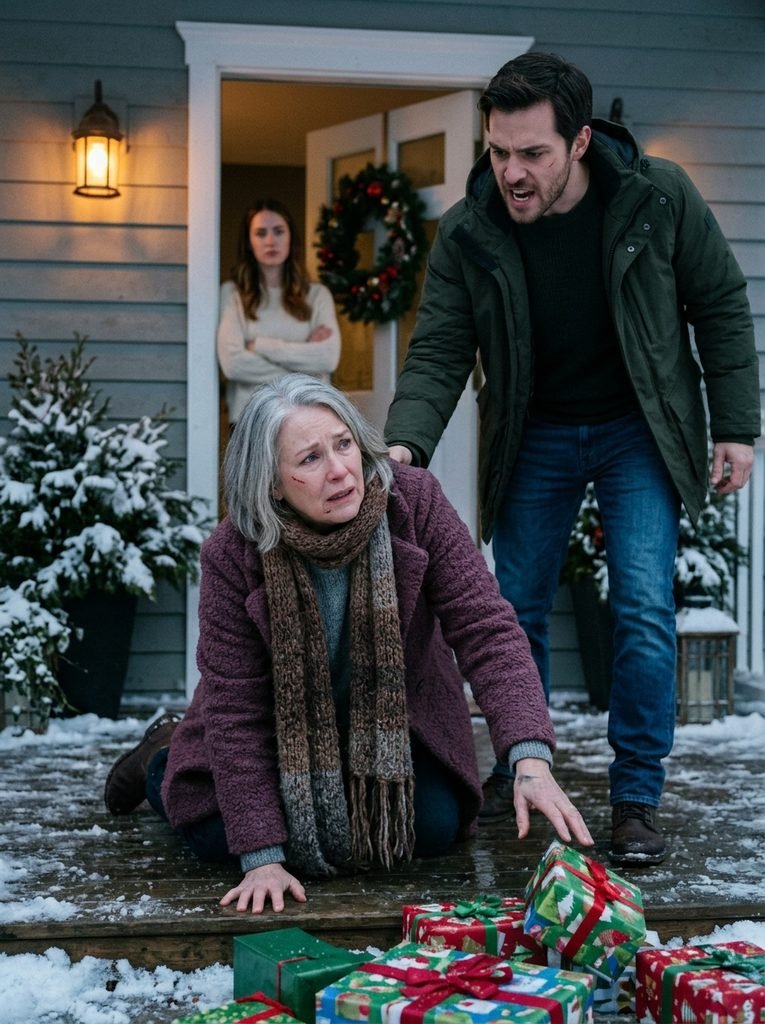
I thought of Brenda standing in the doorway, smiling while I picked up the presents from the wet driveway.
Perhaps her smile had not been triumph. Perhaps it had been fear.
“Why would Kenneth protect her?” I asked.
Mason looked ashamed.
“Because she’s pregnant.”
For several seconds, I could hear only the ticking clock above the stove.
“Pregnant?”
“Three months, maybe four. They haven’t told anyone.”
I leaned back in my chair.
My grandchildren were still young. Kenneth and Brenda had always spoken of having another child, but they had never mentioned one.
“Does Brenda know?”
“Yes.”
“Does Kenneth?”
“Yes.”
“And this has something to do with the missing money?”
“I don’t know. But Kenneth has been frantic about keeping the company alive. He says if the board removes him, Brenda will lose everything.”
I looked at the photograph of Kenneth and Charles.
The boy in the picture had no idea how many people would one day be depending on him. Or how easily love could become an excuse for dishonesty.
“Did Kenneth ask you to lie for him?” I asked.
Mason nodded.
“Last week. He wanted me to tell the auditors that I had approved several transfers.”
“Did you?”
“No.”
“Why didn’t you tell anyone?”
“Because I was scared.”
“Of what?”
“Of losing my brother.”
The words were quiet.
I understood then that Mason had not been defending Kenneth because he admired him. He had been defending him because he was afraid there would be nothing left between them if he stopped.
I reached across the table and touched his hand.
“You haven’t lost him yet.”
“He says he hates me.”
“He says many things when he feels cornered.”
Mason looked at me. “Are you going to destroy him?”
The question was so direct that I could not answer quickly.
“No,” I said at last. “I’m going to stop covering for him.”
“That could be the same thing.”
“It shouldn’t be.”
“But what if the company closes? What if people lose their jobs?”
“Then the truth must be handled carefully. That is why Mr. Abernathy and the board are involved. I’m not sending rumors to newspapers. I’m not trying to punish anyone.”
Mason’s eyes filled, though he looked away before the tears fell.
“Dad would have known what to do.”
“Your father would have wanted the truth.”
“Would he have wanted Kenneth to suffer?”
“No.”
“Then why did he leave you this?”
I looked at the envelope resting on the sideboard.
“Because he believed consequences could be kinder than rescue.”
Mason remained until dusk. Before he left, he stood in the hallway for a long time, studying the photograph of the two brothers as teenagers. Kenneth had one arm around Mason’s shoulders. Mason looked uncomfortable, but he was smiling.
“Do you still love him?” Mason asked.
“Of course.”
“Even after what he did?”
“Love isn’t approval.”
He nodded, though he seemed unsure whether he believed me.
“Will you tell him that?”
“If he listens.”
After Mason left, I made soup and ate alone at the kitchen table. At eight, Kenneth called again.
This time, I answered.
His breathing was uneven.
“Mom.”
“Where are you?”
“In the car outside your house.”
I rose and went to the window. His sedan was parked beneath the maple tree, headlights off.
“Come inside.”
He entered a few minutes later. His coat was damp, and his hair had fallen across his forehead. He looked older than he had on the porch, not powerful or angry, merely exhausted.
For a moment, neither of us spoke.
Then he said, “I never wanted this to happen.”
“What did you want?”
He stared at the floor.
“I wanted to be respected.”
“You had my respect.”
“I wanted Dad’s.”
“You had that too.”
“No,” he said. “I had his disappointment.”
I almost contradicted him. Then I remembered the frightened boy he had been at sixteen, standing beside a failed science project while Charles asked too many questions.
“Your father was demanding,” I said. “But he never gave up on you.”
“He gave you control of everything.”
“He gave me responsibility.”
“He made me beg for access to my own company.”
“Because you were taking risks.”
“I was trying to save it.”
“From what?”
Kenneth looked toward the fireplace.
“I made a bad investment.”
“That’s not all.”
“No.”
He sat down, his shoulders curved inward.
“The new product failed. We spent nearly two years developing it. The prototypes looked promising, but the testing exposed problems. If we stopped, we would lose millions. If we continued, we needed money.”
“And Victor Hale?”
“Knew investors.”
“Did he?”
“Knew people who knew investors.”
“Did he take the money?”
Kenneth shut his eyes.
“Some of it.”
“How much?”
“Enough.”
“And the rest?”
He didn’t answer.
I sat across from him.
“Are you protecting Brenda?”
His head lifted.
“Who told you?”
“Mason.”
Kenneth’s expression hardened, but the anger faded almost immediately.
“He had no right.”
“He was frightened. So were you.”
Kenneth rubbed his hands over his face.
“Brenda found out about the trust. She thought I had lied to her about our finances.”
“Had you?”
“I didn’t tell her everything.”
“That is not an answer.”
“No,” he whispered. “I hadn’t told her.”
“Why?”
“Because I thought I could fix it before she knew. I thought I could make the company profitable, take care of the children, and give her the life I promised.”
“You promised her a life built on money you didn’t yet have.”
“I promised her security.”
“And when you couldn’t provide it?”
“I panicked.”
The room seemed smaller.
“Did Brenda know about the false payments?”
“She knew about Victor. She didn’t know how much I had given him.”
“Did she arrange them?”
“No.”
“Did she pressure you?”
Kenneth looked at me with sudden anger.
“You think she’s the villain.”
“I think I don’t know her well enough to judge her.”
“She was scared.”
“So were you.”
“I had to make choices.”
“You had to tell the truth.”
He looked down.
“I know.”
That admission was the first honest thing he had said since entering the house.
I went to the sideboard and picked up the envelope.
Kenneth watched me.
“Is that the original?”
“Yes.”
“Mom, please don’t give it to them.”
“The board already has a copy.”
“You don’t understand. If they see the last page, they’ll remove me.”
“What is on the last page?”
He stood abruptly, then stopped himself.
“I don’t know.”
“Then why are you afraid?”
“Because Dad told me once that if you ever opened it, I would lose everything.”
“Did he?”
“He said I’d lose the company.”
“No. He said you would face the truth.”
Kenneth’s eyes reddened.
“Please. Let me fix this.”
“You’ve had twenty-three years.”
“I didn’t know.”
“You knew your father had conditions.”
“I thought they were symbolic.”
“You signed documents.”
“I was young.”
“You were thirty-two.”
“I was desperate to prove myself.”
“And now?”
He looked at the envelope.
“Now I’m desperate not to fail.”
For a moment, I saw the son I had raised beneath the frightened, proud man he had become.
I wanted to reach for him.
But comfort without accountability had created this moment.
“Tomorrow,” I said, “you will meet with the board. You will disclose every payment, every loan, and every promise you made to Victor Hale.”
He shook his head.
“They’ll destroy me.”
“No. They will decide what can be repaired.”
“And if they ask about you?”
“You will tell them the truth.”
“Mom—”
“I will not lie for you again.”
He turned away.
At the door, he stopped.
“Did Dad ever say he was proud of me?”
The question broke something inside me.
“Yes,” I said. “Often.”
“Why didn’t I hear him?”
“Because you were listening for something else.”
Kenneth bowed his head.
After he left, I stood alone in the doorway until the cold reached my feet.
Then I returned to the table and opened the envelope.
The letter was four pages long. I read it slowly, though I knew much of its contents from Mr. Abernathy’s explanation.
Charles wrote that Kenneth had the ability to lead but not yet the humility to serve. He wrote that ownership without restraint would become a weapon. He wrote that I must never use the trust to control our son or punish him.
Then I reached the final page.
My hands began to tremble.
Charles had added a paragraph I had never seen.
Eleanor, if Kenneth comes to you frightened, do not mistake fear for repentance. But if he comes to you honest, do not mistake accountability for abandonment.
Below that was a separate note, written in darker ink.
There is one matter I have not told you because I could not prove it. Someone inside the company has been sending copies of our private financial records to an outside party. If the trust is ever challenged, look first at the person who knew about the transfer before Kenneth did.
I read the sentence twice.
Then I noticed the name written in the margin.
Not Brenda.
Not Victor Hale.
Not Kenneth.
The name was Mason.
And beneath it, in Charles’s handwriting, were five words:
He believes he is helping.
-END OF PART 2, –PRESS NEX PART IN BOTTOM OF PAGE TO READ NEXT PART
PART 3: The Letter Behind His Father’s Name 029
The name seemed to darken the page.
Mason.
I sat beneath the yellow pool of the kitchen lamp, reading Charles’s note until the letters blurred.
He believes he is helping.
That was the trouble with Mason. He had spent his whole life trying to help without being seen doing it. He carried grocery bags for elderly neighbors, fixed broken hinges before anyone asked, and stood between Kenneth and every consequence he could soften.
But sending private financial records outside the company was not a small kindness.
I reached for the phone and called Mr. Abernathy.
He answered on the fourth ring.
“Eleanor?”
“I found another note.”
There was a pause. “The final page?”
“Yes.”
“Then Charles told you.”
“About Mason.”
The silence that followed felt different from the silence at his office. He had expected this.
“You knew?”
“Not everything.”
“You knew my son was involved?”
“I knew Charles suspected someone close to the family was sharing information. He mentioned Mason’s name, but he never had proof.”
“Why didn’t you tell me?”
“Because Charles asked me not to. He believed the suspicion might be wrong, and he didn’t want to place a burden on you that could damage your family without evidence.”
I looked at the photograph beside me. Charles was smiling in it, one hand resting on the back of my chair. We had taken it at our twenty-fifth anniversary dinner, before illness thinned his face and tiredness settled into his bones.
“He wrote that Mason believes he is helping.”
“That sounds like him.”
“What does it mean?”
“I don’t know.”
“You must have some idea.”
“I know Mason came to see Charles several times during the last year of his life. He was worried about Kenneth. He said his brother was making decisions that frightened him.”
“And Charles listened?”
“Your husband listened to everyone. That was one of his strengths.”
“And one of his weaknesses.”
Mr. Abernathy exhaled softly. “Perhaps.”
I stood and carried the letter to the living room. The old wooden drawer remained open, its contents disturbed after years of stillness.
“Did Mason have access to the records?”
“He worked in operations. He would have had access to some internal reports.”
“Could he have sent them to Victor Hale?”
“Possibly.”
“Why would he?”
“That is what you need to ask him.”
I closed my eyes.
“I already spoke with him today.”
“And?”
“He said he was afraid of losing Kenneth.”
“Then perhaps that is where you begin.”
“I don’t know how to ask my son whether he betrayed his brother.”
“Ask him whether he was trying to save him.”
The call ended a few minutes later, but the question remained.
I did not sleep. Near dawn, I made coffee and sat at the kitchen table with Charles’s letter in front of me. Outside, a pale snow had begun to fall, settling lightly on the porch where Kenneth had dropped the presents.
I thought of the two boys as they had been.
Kenneth had always run ahead. Mason had followed at a distance, carrying whatever Kenneth had forgotten.
When Kenneth built forts, Mason gathered the blankets. When Kenneth broke a window, Mason found the broom. When Kenneth was praised, Mason smiled as if the praise belonged to both of them.
Perhaps this was what Charles had seen.
At eight, I called Mason.
He answered sleepily.
“Mom?”
“Come over.”
The sleep vanished from his voice.
“Is something wrong?”
“I need to ask you about Victor Hale.”
He said nothing.
“Mom—”
“Come over, Mason.”
“I’m at the company.”
“Then leave.”
Another pause.
“I’ll be there in an hour.”
I spent the time preparing breakfast, though I knew neither of us would be hungry. The ordinary work steadied me. I sliced bread, set out eggs, and filled the kettle. By the time Mason arrived, snow had gathered along the edges of his coat.
He entered without removing it.
“You said Victor’s name.”
“Yes.”
His face had gone pale.
“What did Kenneth tell you?”
“Nothing. Charles left a note.”
That stopped him.
“What kind of note?”
“One that mentioned you.”
Mason lowered his eyes.
I pointed to the chair across from me. “Sit down.”
He did.
I placed the letter on the table, turned so the final paragraph faced him, and watched him read.
His shoulders sank before he reached the bottom.
“You knew,” I said.
“No.”
“You knew Charles suspected you.”
“Yes.”
“How long?”
“Since the day before he died.”
The answer came so quickly that I almost believed it was prepared.
“Did you send company records to Victor Hale?”
Mason rubbed his hands together.
“Not directly.”
“That is not an answer.”
“I sent information to someone who said he could help.”
“Who?”
“A consultant.”
“Victor Hale?”
“Yes.”
The kettle began to whistle behind me. Neither of us moved.
“What information?”
“Financial forecasts. Debt schedules. The development budget.”
“Private records.”
“I know.”
“Why?”
“Because Kenneth was going to ruin the company.”
His voice cracked on the last word.
I turned off the burner.
“You should have come to me.”
“I didn’t know you had control.”
“You knew I had been involved in the business.”
“Kenneth told us you had no real authority.”
“And you believed him?”
“I wanted to.”
The same words he had used the day before.
I sat across from him.
“Tell me everything.”
Mason stared at the letter.
“After Dad died, Kenneth began changing. Not all at once. He was grieving, and everyone excused him. He started taking risks because he wanted to prove he could run the company. At first, the risks were small. Then he borrowed money against contracts that weren’t finalized.”
“Why didn’t you tell Charles?”
“He knew some of it. They argued about it.”
“Charles told me.”
“Then you know Kenneth accused him of holding him back.”
“Yes.”
Mason’s fingers tightened around the edge of the paper.
“After Charles died, Kenneth became convinced Dad had hidden money from him. He said the trust was a trap. He said you were using it to keep him dependent.”
“That was untrue.”
“I know that now.”
“And then?”
“Kenneth found a way to access one of the restricted accounts. He didn’t take money exactly. He moved it temporarily.”
“To cover the failed investment?”
“Yes.”
“Did you know?”
“I discovered it when I was reconciling the operations budget. I asked him about it. He said the money would be returned before anyone noticed.”
“Was it?”
“No.”
I looked toward the window. Snow covered the maple branches, turning the street quiet.
“What did you do?”
“I called Dad’s old accountant.”
“Not Mr. Abernathy?”
“No. A man named Howard Pierce. He had worked with Dad before Margaret took over the financial department.”
“And what did he tell you?”
“That the transfer violated the trust conditions. He said if the board discovered it, Kenneth could lose executive authority.”
“So you went to Victor Hale.”
“I was desperate.”
“Why him?”
“He had approached Kenneth about investors. He said he could arrange emergency financing if he understood the company’s position.”
“Did you believe him?”
“I believed he was the only person willing to listen.”
Mason looked at me then.
“I thought if I showed him the numbers, he could help us refinance the debt. I sent him documents through an encrypted account. He promised everything would remain confidential.”
“Everything remained confidential?”
“No.”
“What happened?”
“Victor demanded more. He said the first documents weren’t enough to assess the risk. He wanted the trust agreement, board minutes, and the development contracts.”
“Did you send those too?”
“Some.”
My disappointment must have shown because he looked away.
“I didn’t give him the original trust documents. I copied the minutes and sent summaries of the contracts.”
“Summaries based on private records.”
“Yes.”
“Why didn’t you stop?”
“Because he arranged a meeting with two investors.”
“And did they provide financing?”
“No.”
“What did Victor do with the information?”
“I don’t know.”
“You do.”
Mason swallowed.
“He told me he could pressure Kenneth into accepting a restructuring plan. He said if Kenneth understood how exposed he was, he would stop making reckless decisions.”
“And instead?”
“Victor began threatening to reveal the trust to the board.”
“Threatening Kenneth?”
“Yes.”
“Did Kenneth know you had sent him the records?”
“No.”
“You let Victor frighten your brother while believing you were saving him.”
Mason’s face tightened.
“I know how it sounds.”
“It sounds like you made a private problem dangerous.”
“I was trying to protect everyone.”
“You were trying to protect Kenneth from the truth.”
“He would have collapsed.”
“He might have learned.”
“He didn’t listen to anyone.”
“Then you should have brought the matter to people who could make him listen.”
Mason stood and walked to the window.
“I was afraid.”
“Of Kenneth?”
“Of all of it. Of Dad being right. Of the company failing. Of being the brother who couldn’t fix anything.”
I softened despite myself.
“You were never responsible for fixing your brother.”
“I know that now.”
“Do you?”
He turned toward me.
“I stopped sending information to Victor six months ago.”
“Why?”
“Because I realized he wasn’t helping. He had started approaching suppliers and lenders, telling them the company was unstable. He was trying to force Kenneth into selling.”
“To whom?”
“I don’t know. A private investment group, I think.”
“And the payments to Victor?”
“Kenneth believed they were fees for securing financing. I knew some of them were buying silence.”
My stomach tightened.
“Who was Victor keeping silent about?”
Mason hesitated.
“Me.”
The room seemed to shift.
“He knew I had sent the records. He said if I told Kenneth or the board, he would make it look like I had stolen company property and sold it for personal gain.”
“Did you?”
“No.”
“But the records were sent from your account.”
“Yes.”
“Could he prove you benefited?”
“I didn’t benefit.”
“Did he have evidence?”
“Only the emails.”
“Why didn’t you come to me?”
“Because I thought I could solve it before anyone found out.”
I almost laughed, but there was nothing amusing in the repetition.
“You and Kenneth have more in common than you realize.”
He flinched.
“I know.”
The front door opened before I could say more.
Kenneth entered, followed by Margaret Lin and Mr. Abernathy. All three stopped when they saw Mason standing beside the window.
Kenneth looked from his brother to the letter on the table.
“What is this?”
Mason’s face drained of color.
Margaret closed the door behind them.
“The emergency board meeting begins in two hours,” she said. “We need clarity before then.”
Kenneth stared at Mason.
“What did you do?”
Mason opened his mouth, but no sound came.
I stepped between them—not to shield Mason, but to keep the conversation from becoming another exchange of accusations.
“Mason sent internal records to Victor Hale,” I said. “He believed Victor could help refinance the company’s debt.”
Kenneth looked stunned.
“You?”
“I was trying to help.”
“You gave him our contracts?”
“Not all of them.”
“You gave him the trust information.”
“I gave him summaries.”
“You gave him enough to threaten me.”
“I didn’t know he would do that.”
Kenneth laughed once, without humor.
“You always act like the good one.”
Mason absorbed the words silently.
Margaret spoke gently. “Mason, the board needs a complete account of what you sent and when.”
“I’ll provide it.”
“Today.”
“Yes.”
Kenneth turned toward me.
“You knew about this?”
“I found out this morning.”
“And you still brought him here?”
“I asked him to tell the truth.”
“He betrayed me.”
“So did you, when you hid the company’s condition from everyone.”
Kenneth’s anger faltered.
Mr. Abernathy placed a folder on the table.
“This is no longer only an ownership issue. The board must determine whether the company’s financial position was misrepresented to investors, employees, and creditors.”
Kenneth looked at the folder but did not touch it.
“Am I being removed?”
“Not yet,” Margaret said. “You are being asked to step aside temporarily while the review proceeds.”
“For how long?”
“Until the board understands what happened.”
“If I step aside, Victor will move.”
“Victor already moved,” she said. “We found evidence that he contacted two lenders using information that could only have come from the company.”
Kenneth looked at Mason.
Mason whispered, “I’m sorry.”
Kenneth turned away.
For several minutes, no one spoke. The snow tapped softly against the windows.
Then Kenneth said, “There’s something else.”
Margaret’s expression sharpened.
“What?”
Kenneth sat down heavily.
“The failed product wasn’t only a failed product.”
“What does that mean?” I asked.
He reached into his coat and removed a folded sheet of paper.
“I discovered two weeks ago that someone had altered the testing reports before they reached the board.”
Margaret took the paper.
“Why didn’t you tell us?”
“Because I thought it was an internal mistake.”
“Whose signature is on the altered approval?”
Margaret unfolded the page.
Her eyes moved across the document, then stopped.
“I didn’t sign this.”
“Neither did I,” Kenneth said.
Mr. Abernathy leaned over the table.
“Where did you get it?”
“From Victor.”
“Why would he have it?”
“Because he said he could prove the product was viable. He wanted more money to arrange a new investor.”
Margaret examined the signature line.
“The original approval would have been issued by the research director.”
“Who was that?” I asked.
“Dr. Alan Price,” she said.
I remembered the name. Charles had spoken of him often, usually with admiration.
“Is he still with the company?”
“No,” Kenneth said. “He resigned eight months ago.”
“Why?”
“He said he no longer trusted the executive office.”
Everyone looked at Mason.
He shook his head.
“I never altered a testing report.”
“No one accused you,” Margaret said.
“But I know who did.”
Kenneth’s head lifted.
“You do?”
Mason reached into his pocket and removed his phone.
“Before I came here, I received a message from Victor.”
He handed the phone to Mr. Abernathy.
The message contained a photograph of an email. The subject line read:
RE: Revised testing results—per executive instruction
The sender’s address belonged to someone inside the company.
Margaret read the name aloud.
“Howard Pierce.”
I felt a chill unrelated to the weather.
The accountant Mason had contacted—the man who had encouraged him to approach Victor—had not merely advised him. He had access to the financial records, knowledge of the trust, and a reason to make Kenneth appear reckless.
Mr. Abernathy looked at me.
“Howard knew about the transfer before Kenneth did.”
Charles’s note lay open beside my hand.
Look first at the person who knew about the transfer before Kenneth did.
Mason’s face had crumpled with realization.
“I trusted him.”
“You were not the only one,” Mr. Abernathy said.
Kenneth stared at the message.
“Why would Howard do this?”
Margaret’s voice was quiet.
“Because he was removed from the company after your father discovered irregularities in the old pension accounts.”
I looked at her.
“What kind of irregularities?”
She turned the phone toward me.
“Payments were redirected through an outside advisory firm twenty-four years ago.”
My breath caught.
“Twenty-four years?”
“Just before Charles created the trust,” Margaret said.
Mr. Abernathy slowly opened his folder.
“The firm was dissolved,” he said. “But the original records were never recovered.”
I looked again at Charles’s letter.
He had not created the trust only to restrain Kenneth.
He had created it after discovering that someone had already been stealing from the company—and that person had remained close enough to watch our family for more than two decades.
Kenneth rose.
“Where is Howard now?”
Margaret checked the message details.
“The email was sent from a private address.”
Mr. Abernathy took the phone from her.
“Not entirely private,” he said. “There is a location tag embedded in the photograph.”
He enlarged the image.
The address appeared beneath the message.
My heart began to pound.
It was not an office.
It was not Victor Hale’s address.
It was the small house on Willow Street where my sister Gertrude had lived since Charles died.
And beneath the address was a second line—an appointment scheduled for that evening in Howard Pierce’s name.
-END OF PART 3–PRESS NEX PART IN BOTTOM OF PAGE TO READ NEXT PART
PART 4 (THE END): The Letter Behind His Father’s Name 029
The address on the screen seemed to draw the warmth from the room.
Gertrude’s house on Willow Street stood only fifteen minutes away, a narrow brick home with blue shutters and a porch crowded by potted geraniums in summer. My sister had lived there since her divorce, and though we had never been especially close, she had always answered when I called.
Howard Pierce had an appointment there.
I looked at Gertrude’s name beneath the address and felt the old ache of family disappointment settle inside me.
“Does she know he’s coming?” I asked.
“We don’t know,” Mr. Abernathy said. “The appointment was created from Howard’s account. It may be a meeting, or simply a location connected to the message.”
Kenneth reached for his coat.
“I’m going there.”
Margaret caught his arm—not harshly, but firmly enough to stop him.
“You are not going alone.”
“I’m not asking permission.”
“And this is precisely why the board is asking you to step aside.”
His face tightened, but the anger did not rise as quickly as it might have before. He looked at the message again, then lowered his hand.
“I need to know whether my aunt is involved.”
“So do I,” I said.
Everyone turned toward me.
“I’ll come with you.”
Mr. Abernathy shook his head. “Eleanor, you shouldn’t be placed in the middle of this.”
“I have been in the middle of it for twenty-three years.”
He studied me, then nodded.
“Margaret and I will follow separately. We should not confront anyone without documenting what we find.”
“I’m not going there to confront Gertrude,” I said. “I’m going to ask her the truth.”
Kenneth looked at me.
“And if she lies?”
“Then we will know she is afraid.”
Mason rose from his chair.
“I’m coming too.”
Kenneth’s eyes moved toward him.
“You’ve done enough.”
Mason absorbed the words without protest.
“I know. But if Howard used information I gave him, I need to hear what he says.”
For a moment, I thought Kenneth would refuse. Instead, he looked toward the window.
“Fine.”
The journey to Willow Street passed in uneasy silence. Kenneth drove, gripping the steering wheel with both hands. Mason sat beside him, and I sat in the back, holding Charles’s letter inside my handbag.
Snow had stopped, leaving the roads wet and shining. The city seemed to have retreated into itself. Storefronts were dark, traffic sparse, and the bare trees along the sidewalks looked like thin black handwriting against the gray sky.
When we turned onto Willow Street, I saw Gertrude’s porch light glowing.
A second car was parked at the curb.
Howard Pierce stood beside it.
He was in his late seventies, tall and spare, with a wool coat buttoned to the throat. I remembered him from Charles’s office many years earlier. He had always seemed harmless—soft-spoken, courteous, and eager to make himself useful.
He was holding a leather briefcase.
Gertrude stood on the porch, one hand pressed against the doorframe.
She looked frightened.
Kenneth stopped the car.
Before he could open the door, I touched his shoulder.
“Let me speak first.”
He looked back at me. The boy who used to crawl into my bed during thunderstorms flickered across his face, followed by the man who had shoved me toward his steps.
“Please,” he said. “Don’t let me make this worse.”
It was the first time he had asked for help without pretending he did not need it.
I nodded.
We stepped out of the car. Mason followed. Howard saw us and stiffened.
Gertrude’s hand fell from the doorframe.
“Eleanor,” she said.
“Hello, Gertrude.”
Her gaze moved to Kenneth, then Mason.
“What are you doing here?”
“I could ask you the same.”
Howard took one step toward the car.
“This is not an appropriate way to conduct a business matter.”
“Then perhaps you should have arranged it at an office,” I replied.
His face remained composed, but his eyes shifted toward Gertrude.
“What business matter?” Kenneth asked.
Gertrude flinched.
I turned toward her.
“Did you invite Howard here?”
“Yes.”
“Why?”
She glanced at the briefcase.
“He said he had documents that belonged to Charles.”
Kenneth’s expression changed.
“What documents?”
Howard raised his chin.
“Old financial records. Nothing that concerns you.”
“That company belongs to me,” Kenneth said.
“Legally, that is still under review.”
“Howard,” I said, “what did you want from Gertrude?”
He looked at me with the mild disappointment of a man addressing someone unreasonable.
“Your sister contacted me several months ago. She was concerned about your behavior as trustee.”
I stared at Gertrude.
“You contacted him?”
She looked away.
“I was worried.”
“About what?”
“That you were keeping Kenneth from accessing his inheritance.”
“Did you know the trust conditions?”
“No.”
“Did you ask?”
Gertrude’s face tightened.
“You never explained anything to the family.”
“You never asked me.”
“Because Charles told us not to interfere.”
“Charles told you not to interfere with the company. That was not the same as telling you to believe every story Kenneth told.”
Kenneth stepped forward.
“Did you give Howard access to family records?”
Gertrude’s silence answered before she spoke.
“I showed him the papers you left at my house.”
My heart sank.
“What papers?”
“The copies of the trust summaries. The ones you kept in the blue folder.”
I remembered the folder. Months earlier, I had taken it to Gertrude’s house after she asked whether Charles had left me any financial instructions.
I had been tired and distracted. She had offered tea, and while I spoke about the burden of managing the trust, she had looked through the pages on the table.
“You copied them,” I said.
“I wanted to understand.”
“You gave them to Howard.”
“He said he could help me determine whether you were acting properly.”
Howard’s voice remained smooth.
“I was asked for an opinion. I provided one.”
“You provided private company documents to Victor Hale,” Mason said.
Howard looked at him.
“You sent them to Victor.”
Mason’s face went pale.
“You knew?”
“Of course I knew. You were never as careful as you imagined.”
Kenneth turned toward his brother.
“You said Howard only received summaries.”
“I didn’t know he had access to everything.”
Howard gave a small, humorless smile.
“Neither of you understood the scope of what was happening.”
“Then tell us,” I said.
He looked at me for a long moment.
“You want the truth? Your husband believed he could protect the company by creating a secret structure no one else understood. He left you in charge because he thought you would be loyal enough to keep it hidden.”
“I was loyal to him.”
“You were obedient.”
The word landed with deliberate cruelty, but it no longer had the power he expected. I had spent too many years mistaking silence for weakness.
“Why did you alter the testing reports?” I asked.
Howard’s expression changed.
So did Gertrude’s.
“I don’t know what you mean,” he said.
“You sent the altered approvals to Victor.”
“You have no proof.”
“Victor sent the message to Mason. Margaret has the original records.”
Howard glanced toward his car.
“Victor is not a credible source.”
“He is a source with evidence,” Mr. Abernathy said from behind us.
I had not heard the second car arrive. He and Margaret were crossing the street, carrying a slim document case.
Howard’s shoulders lowered by a fraction.
Margaret held up a folder.
“We recovered the original testing reports from the company archive. The signatures were copied. The approval dates were changed.
The alterations were made using credentials assigned to Howard Pierce.”
Gertrude looked at Howard.
“You said the records were legitimate.”
“I said the company was hiding information.”
“You told me Eleanor had stolen control from Kenneth.”
“I told you what I believed.”
“You told me,” she said, her voice trembling, “that if I helped you prove the trust was invalid, you would make sure I was protected financially.”
Howard’s face hardened.
“I said you would be compensated for your assistance.”
The words fell into the cold air.
I looked at my sister.
“How much?”
Gertrude pressed her lips together.
“Twenty thousand dollars.”
Kenneth let out a bitter breath.
“For what?”
“She wanted to help me,” Howard said. “She believed your mother was withholding assets from the family.”
Gertrude’s eyes filled.
“I believed what you told me.”
“You chose to believe it because it was easier than asking Eleanor.”
That was true, but truth did not make the betrayal painless.
I had spent years protecting the family from its secrets. Gertrude had spent months accepting someone else’s version of mine.
“Did you take the money?” I asked.
Her lips trembled.
“No.”
Howard turned sharply toward her.
“You agreed to the arrangement.”
“I changed my mind.”
“After receiving the first payment.”
My sister closed her eyes.
“You gave me five thousand dollars,” she whispered. “I returned it.”
“Not until after you copied the records.”
“I didn’t know what you were doing with them.”
“You knew enough.”
Kenneth looked at Howard.
“You used my aunt to get around the trust.”
“I used information that was offered to me.”
“And you used Mason.”
“Mason came to me willingly.”
Mason stood very still.
“I came because I thought you could help.”
“I could have.”
“You wanted the company.”
“I wanted to correct a structure that was damaging everyone involved.”
“By falsifying reports?”
Howard’s composure finally cracked.
“You think your father was some noble guardian? Charles discovered irregularities in the pension accounts and blamed me for all of them. He removed me, then built a private trust to keep control of the company after his death. He ruined my career.”
“Did you steal from the pension accounts?” Margaret asked.
Howard looked at her.
“Not in the way you mean.”
“Did you authorize payments to the advisory firm?”
“I approved legitimate consulting work.”
“Did the firm perform that work?”
He did not answer.
Mr. Abernathy opened his document case and removed a set of photocopies.
“These are the original bank records. The advisory firm was owned by Howard’s brother-in-law. The payments were transferred into a personal account six days after each invoice was paid.”
Gertrude covered her mouth.
Howard’s face had gone gray.
“The records were incomplete.”
“They are sufficient,” Mr. Abernathy said.
Kenneth stared at the papers.
“My father knew.”
“He suspected,” I said. “He could not prove everything before he died.”
“And then he created the trust.”
“To keep the company and its employees safe.”
Howard looked at me.
“Your husband was afraid of losing control.”
“Perhaps. But fear does not excuse fraud.”
His gaze shifted toward Kenneth.
“Your son was going to sell the company to the first person willing to fund him. I was trying to stop that.”
“By manipulating him,” I said.
“By forcing him to face reality.”
“That is not what you did. You gave him false hope, accepted money, and used his desperation to gain leverage.”
Howard’s mouth tightened.
“Everyone in this family wanted something.”
Gertrude lowered her eyes.
I did not deny it. Wanting something did not make us evil. But what we chose to do with that want mattered.
A car passed at the end of the street, tires hissing over the wet pavement.
Margaret stepped forward.
“Howard, the board has notified the authorities and our insurers. We are requesting that you surrender any company documents in your possession.”
He looked toward his briefcase.
“What happens to me?”
“The investigation will determine that.”
His expression sagged. For the first time, he seemed less like a mastermind and more like an old man who had mistaken resentment for justice until he could no longer tell them apart.
Gertrude began to cry silently.
I walked to her.
“You should have called me.”
“I know.”
“You should have asked.”
“I know.”
“You hurt me.”
“I know.”
The apology was not enough, but it was honest.
She reached for my hand, then stopped before touching it.
“I was jealous,” she said. “There. I said it.”
I waited.
“You had Charles’s trust. You had a role in the company. Everyone treated you as though you were the one who understood him best. I felt like the sister who had been left outside the important parts of your life.”
“I never meant to exclude you.”
“You didn’t have to mean it. You and Charles were always a team. I was never part of that.”
I understood more than I wanted to.
For years, I had assumed Gertrude’s silence meant indifference. Perhaps it had often meant hurt.
“I’m sorry,” I said.
Her eyes lifted.
“For what?”
“For not seeing that you felt alone.”
She nodded, crying harder now.
“I’m still angry with you.”
“You have a right to be.”
“And I’m ashamed.”
“You have a right to that too. But shame cannot be the only thing you carry.”
She looked toward Howard.
“What happens now?”
“The truth is documented. You must decide what you do with it.”
She nodded slowly.
Mason approached Howard.
“I need to know one thing,” he said. “Did you ever intend to help me?”
Howard studied him.
“At first.”
“Then when did that change?”
“When I realized you were willing to betray your brother but too afraid to replace him.”
Mason absorbed the words.
“I didn’t betray him because I wanted his place.”
“No. You betrayed him because you wanted to remain necessary.”
The remark struck with uncomfortable accuracy.
Mason looked down.
“I’ll tell the board everything.”
“You should,” Howard said. “They will need someone to blame.”
“I’m not asking them to excuse me.”
Howard’s expression shifted.
Perhaps he had expected anger, denial, or bargaining. He had not expected accountability.
Kenneth stood beside the car, staring at the snow gathered along the curb.
I went to him.
“Are you all right?”
“No.”
“That is an honest answer.”
He gave a strained smile.
“I keep thinking about all the years I blamed Dad.”
“You had reasons to feel hurt.”
“He didn’t trust me.”
“He trusted you enough to give you a chance. He did not trust your judgment enough to remove every safeguard.”
“I thought you were the safeguard.”
“I was the trustee.”
“I made you carry all of it.”
“Yes.”
“I’m sorry.”
The words were simple, but they were not offered in panic. He was not asking me to rescue him. He was admitting what he had done.
I reached for his hand.
He let me take it.
“I don’t know whether I can save the company,” he said.
“Perhaps you shouldn’t be the one to save it.”
His eyes searched my face.
“What does that mean?”
“It means the board may appoint an interim director. You may have to step aside. You may have to repay what you can, explain what happened, and rebuild your life around something other than ownership.”
“That sounds like losing everything.”
“It may feel that way.”
“What if I fail?”
“You have already failed in some ways.”
He flinched, but I continued.
“Failure is not the same as being finished.”
Snow began to fall again, light and steady.
Kenneth looked at our joined hands.
“Will you still be my mother if I lose the company?”
“I was your mother before you had a company.”
He closed his eyes.
“I don’t deserve you.”
“This is not about deserving me. It is about learning how to be my son without expecting me to protect you from every consequence.”
He nodded.
“I’ll try.”
“Not for the board.”
“For myself.”
“That is where you must begin.”
The board meeting lasted most of the afternoon. I attended with Mason, though I sat at the far end of the room and said little.
Kenneth disclosed the failed product, the loans, the payments to Victor, and his decision to conceal the trust’s restrictions from Brenda. Mason provided copies of
every document he had sent to Howard and Victor, along with a written statement accepting responsibility.
The board did not excuse either brother. But neither did they treat them as irredeemable.
Kenneth was suspended as chief executive pending a full audit. An interim director was appointed—Margaret Lin, who accepted the role only after insisting that employee pensions and the research division remain protected.
Mason resigned from operations and agreed to cooperate with the investigation. He would not receive severance beyond what was required by law, but Margaret
arranged for him to assist the auditors under supervision. He had useful knowledge, and she believed honest work could be the beginning of repair.
Victor Hale was later found to have taken money from several struggling businesses. Howard faced charges connected to the old pension accounts and the
falsified reports. Gertrude returned every dollar she had received and gave the board a complete account of her involvement.
It took months for the company’s position to stabilize.
The new product was discontinued, but the research team was not. Several employees had spent years developing a safer technology connected to the original work, and Margaret secured funding for them to continue independently.
Kenneth sold the house he had renovated for Brenda and moved with his family into a smaller one nearby. The sale did not cover every debt, but it covered enough
to begin repayment. He told Brenda the truth about the trust and the missing money.
She was furious.
Then she was frightened.
Then, after many difficult conversations, she chose to remain—not because she trusted him completely, but because he agreed to counseling, financial oversight, and a life built on facts rather than promises.
When I first visited, Brenda stood at the kitchen counter with one hand resting protectively over her growing stomach.
“I owe you an apology,” she said.
“Yes,” I replied.
She looked startled by my directness.
“I laughed when he pushed you out,” she continued. “I was angry and scared, and I thought you were trying to control him. I should have stopped him.”
“You should have.”
“I’m sorry.”
“I accept your apology. Trust will take longer.”
She nodded.
“That’s fair.”
The grandchildren came running from the living room then, wrapping their arms around my waist. I held them tightly, feeling the ache of all the days I had been told not to come.
Kenneth stood in the doorway, watching.
“Mom,” he said, “would you like to stay for dinner?”
It was an ordinary question.
It felt like a door opening.
“I’d like that.”
A year after the night on Willow Street, I returned to Mr. Abernathy’s office with Charles’s letter.
The trust had completed its term. The board had determined that Kenneth could retain his ownership stake, but he would never again control the company alone.
Margaret remained chief executive, and Kenneth served on a smaller advisory committee after completing the required financial and ethics training.
He disliked the restrictions.
He also understood why they existed.
Mason had found work with a nonprofit that helped small businesses recover from financial mismanagement. He said the work humbled him. I believed him.
Gertrude visited me every Sunday. We were not suddenly the sisters we might have been, but we had stopped pretending that old wounds did not exist. Sometimes we
talked about Charles. Sometimes we argued. Sometimes we sat together in silence, which now felt like companionship rather than punishment.
Mr. Abernathy placed the trust documents in a new file.
“Do you want to keep the original letter?” he asked.
“Yes.”
“Your husband would be pleased.”
“I don’t know about that.”
“You honored his instructions.”
“I also broke my promise.”
He looked at me over his spectacles.
“No. Charles asked you to protect the family, not to protect their illusions.”
I touched the envelope.
“For years, I thought the secret was the trust.”
“What was it?”
“That love can become harmful when it refuses to tell the truth.”
Mr. Abernathy smiled faintly.
“Your husband understood that.”
“I wish he had told me sooner.”
“He trusted you to discover it.”
Outside, spring had softened the city. Rain tapped gently against the windows, and somewhere below, a delivery truck rumbled over the street.
My phone vibrated.
A message from Kenneth appeared.
Dinner Sunday? The children want to show you their garden. I’ll cook.
I smiled.
Then another message followed.
I may need help with the recipe.
I typed back:
You may need patience more than help.
His reply came almost immediately.
I’m learning.
I slipped the phone into my handbag and looked once more at Charles’s handwriting.
The letter had been hidden for twenty-three years, but its meaning had never been about money, ownership, or revenge.
It had been about the difference between rescuing someone and standing beside them while they learned to stand on their own.
I had not destroyed my son when I opened the envelope.
I had finally stopped destroying myself to keep him comfortable.
And when I left the office, I carried Charles’s letter with me—not as a weapon, not as a secret, but as a reminder that families are not saved by silence.
They are saved when someone is brave enough to tell the truth, humble enough to accept its consequences, and loving enough to believe that accountability can still lead a person home.
- END OF PART 4 - LET SAY YES AND LIKE, SHARE THIS POST IN FACEBOOK SO THAT WE HAVE THE MOTIVATION TO SHARE MORE STORIES