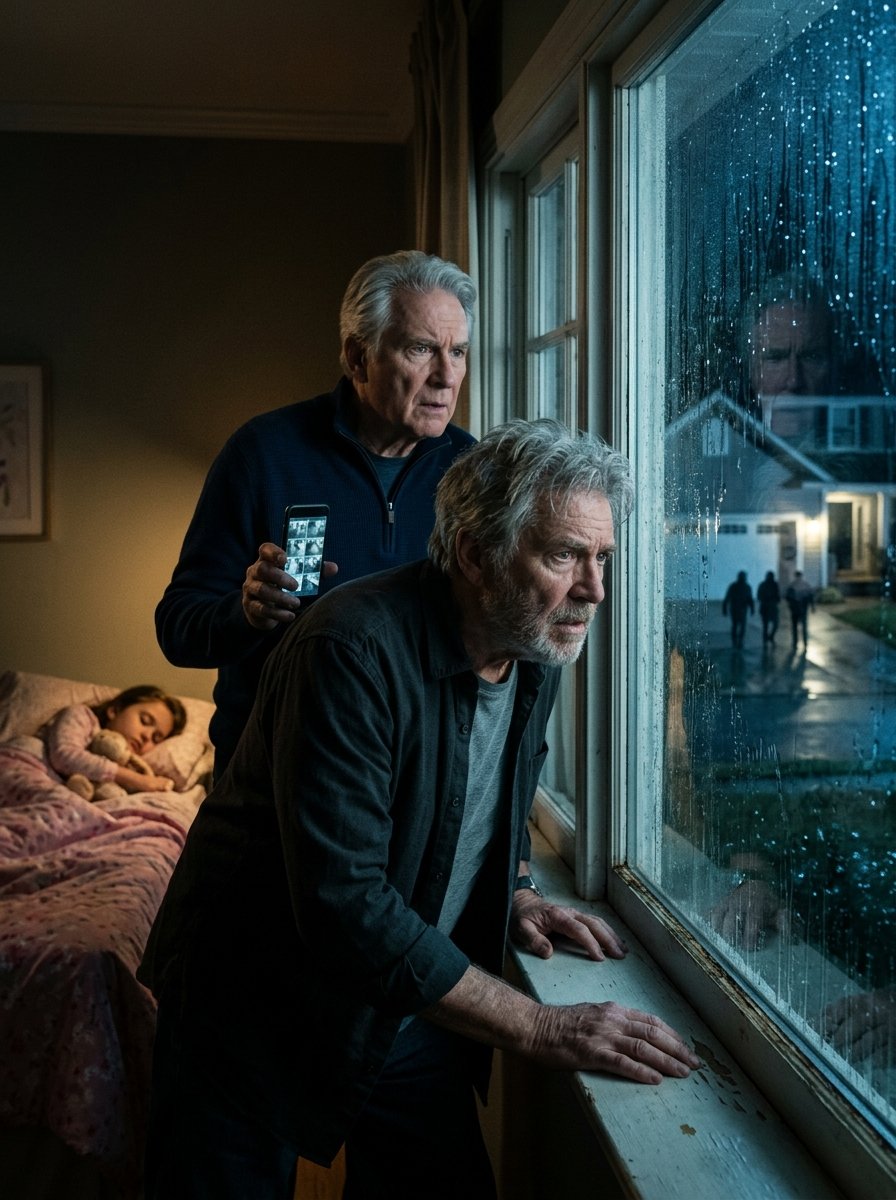
One stormy night, my neighbor knocked on my door and said, “At 10 tonight, carry your granddaughter over to my house.”
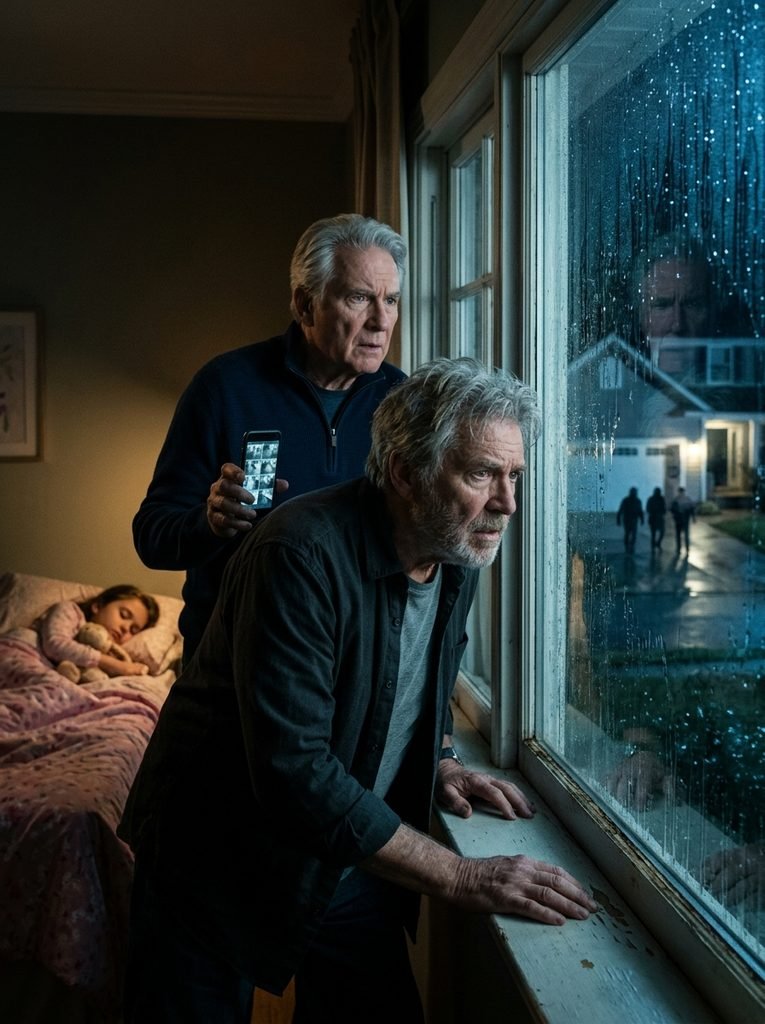
I asked, “Why?” He just said, “Trust me.” At 10, I carried her through the rain, and when he led me to his upstairs window… what I saw across the street left me speechless.
The knock came at 9:52 on a night when the rain was coming down so hard it had turned my back porch into a shallow river.
Clement Briggs was standing at my front door with water pouring off his jacket, his face carrying an expression I had never seen on him before, which, in 5 years of being his neighbor, meant something.
He said, “At 10:00 tonight, bring Cleo across to my place. Come through the side gate. Don’t use the porch light and don’t tell anyone.”
He paused.
“Trust me on this, Bert.”
I started to ask why.
He looked at me once, steady and direct. The way a man looks when he has already done the math and doesn’t have time to walk you through it.
“10:00,” he said, and turned back into the rain.
My name is Bert Wakefield. I’m 63 years old.
For 31 years, I worked as a high school principal in Chattanooga, Tennessee, which means I spent three decades inside a building full of people trying to get away with things.
And I like to think I got reasonably good at reading the difference between a person who was in trouble and a person who was making trouble.
I was wrong about that.
It took losing my daughter to understand how badly wrong I had been.
Kira was 36 when she died. She was a pediatric occupational therapist, the kind of person who spent her days helping children learn to hold pencils and button buttons and do the small physical things the rest of us take for granted.
She was killed by a hit-and-run driver on a Tuesday evening in March on the jogging path along the river she had used three times a week since she moved back to Chattanooga.
The driver was never found.
Cleo was five when it happened.
She is seven now.
She has Kira’s dark eyes and Kira’s habit of humming quietly while she reads. A small unconscious sound, like a radio playing in another room.
Some mornings, I stand in the kitchen doorway and listen to her do it at the breakfast table and have to turn back to the stove for a minute before I can trust my face.
Cleo’s father moved to Portland 2 years before the divorce was finalized. He has no parental rights and has not attempted contact.
Kira had named me as Cleo’s legal guardian in the event of her death, a formal arrangement drafted by her attorney and filed with the court.
I became Cleo’s guardian because Kira trusted me to be.
And that trust sits in my chest every morning when I get up and make her oatmeal.
Kira also left Cleo a trust fund, $1.6 million accumulated through her own savings and a life insurance policy her employer carried for clinical staff.
I am the name trustee.
I manage it according to the terms Kira set, which are documented, reviewed, and very specific about who may and may not have administrative access.
My son Grant is not on that list.
Grant is 43.
He is Kira’s older brother and Cleo’s uncle.
After Kira’s funeral, he and his wife Denise began visiting regularly.
They brought food, birthday presents for Cleo, gentle and persistent suggestions about how a 7-year-old needed more than one adult could offer.
I appreciated it.
A man raising a small child alone after the worst year of his life doesn’t turn down help without thinking twice.
What I turned down quietly and every time was the suggestion that Cleo might be better off living with them.
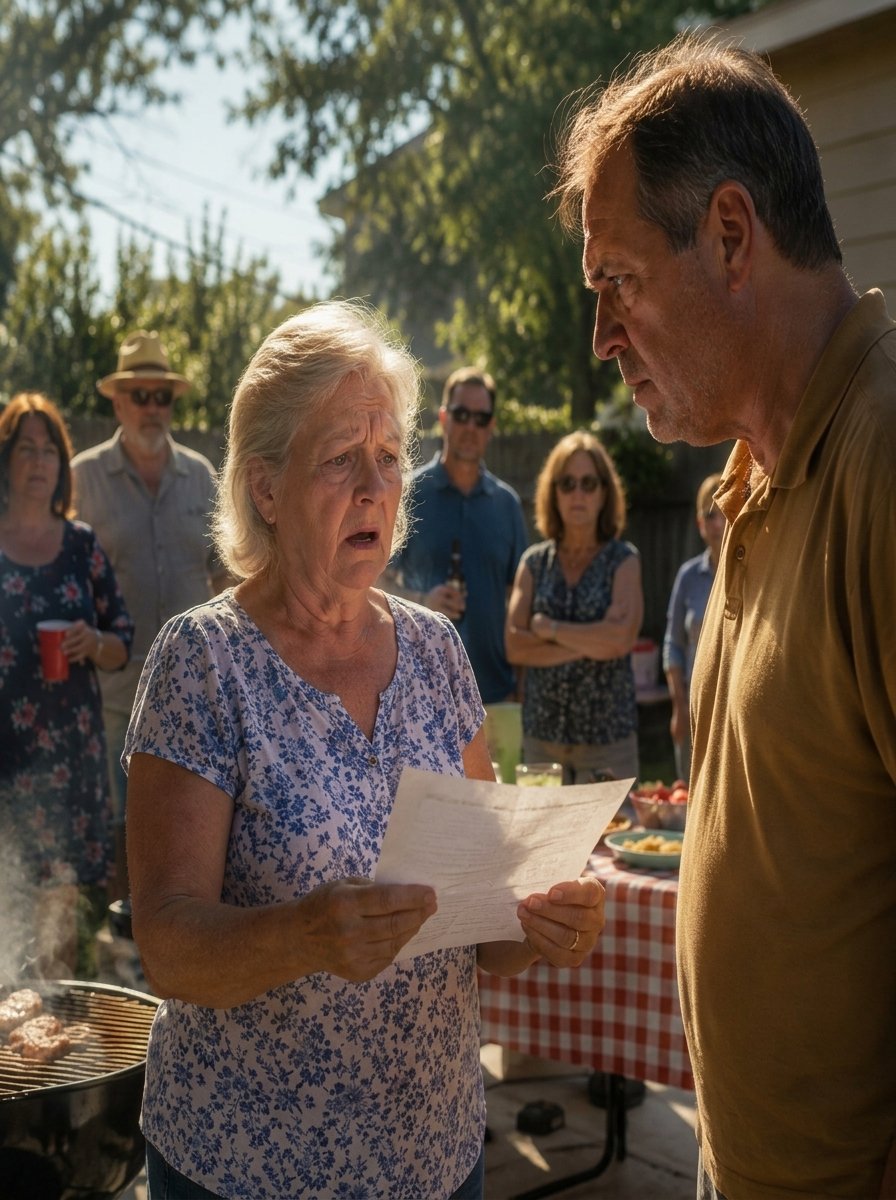
“She needs stability,” Grant said one evening in my kitchen, sitting across from me with both hands around a mug and his voice in that careful register I was only beginning to notice. “Two adults, a real routine. You’ve done an incredible job, Dad, but you’re not getting any younger, and Cleo deserves a plan.”
I told him Cleo had a plan.
She lived here in the house where her mother grew up, with the grandfather who fed her oatmeal and took her to soccer and helped her with her reading every evening.
That was the plan Kira had made, and I intended to honor it.
After he left that night, I stood at the kitchen window for a long time, thinking about the thing Grant had said to me the week after Kira’s funeral.
We had been standing in the driveway after the last of the guests left, and he had told me, voice low and heavy with grief, that Kira had been out that evening because I had texted her.
I stared at him.
“You asked her to stop by,” he said. “She mentioned it before she left. Said you needed her for something, paperwork about the house. She texted me on the way out the door.”
I had no memory of sending any such text, but grief does something to memory. Presses it soft, makes the edges uncertain, and I had been so hollowed out by loss that I couldn’t push back with confidence.
So, I carried it.
18 months of waking at 3:00 in the morning, asking myself what I had needed that was so urgent, it sent my daughter out on a dark road alone.
That guilt was a quiet stone in my chest.
I carried it around Cleo everyday, never let her see it, and went on making oatmeal and driving to soccer games and doing everything a man does when he is the last wall, standing between a child and an indifferent world.
The phone calls started about 2 months after Grant’s last visit.
Always after 9:30.
Always from numbers I didn’t recognize.
Never the same number twice.
They never left a message.
By mid August, I had 11 entries in the notepad I kept by the phone.
Clement Briggs noticed before I said a word.
He came to my door on a Wednesday evening in late August, hands in his jacket pockets, no particular expression.
He was 75 years old, a retired Army colonel who had lived directly across the street for 5 years.
We waved at each other across the lawn.
We had spoken maybe 30 times in all of that.
He was not warm exactly.
He was precise and unhurried.
The kind of man who says only what he means and nothing extra.
“You getting phone calls at night?” he said in place of hello.
I told him yes.
He listened, arms crossed, running a calculation behind his eyes he wasn’t ready to share yet.
I opened my notepad.
He reached into his jacket and placed a small spiral notebook on the kitchen table beside it.
He had been tracking a gray sedan parked at the end of my block.
Seven sightings over 6 weeks, always evenings.
He had the license plate written in neat small handwriting with dates and times beside each entry.
“6 weeks,” I said. “You’ve been watching for 6 weeks and you didn’t say anything?”
He looked at me directly.
“I had a feeling and a plate number. That’s not something you take to a man who just lost his daughter and say the street might not be safe.”
He pushed the notebook an inch closer to me.
“I needed to know more before I said anything.”
That kind of patient care looked like indifference from the outside.
It was the exact opposite.
“Who do you think wants to know your schedule?” he asked.
I thought about Grant’s last three visits.
The way each one pushed slightly further than the one before.
The warm, concerned voice asking whether I had really thought about what was best for everyone long term.
And I thought about something else.
Something I had set aside and almost lost.
The spare house key Kira had kept on her key ring.
After her death, going through her belongings, I had expected to find it.
I never did.
“Maybe,” I said carefully.
Clement folded his hands.
“Don’t call him. Don’t mention any of this. Can you do that?”
“Yes,” I said, though the word cost me something.
After he left, I sat alone at the kitchen table with both notepads side by side in front of me.
Outside, the summer evening was going dark.
My house looked back at me through the window the way a house does when you have begun to see it differently from the inside out.
Clement called 3 days later.
He had photographed someone in my backyard at 1:15 in the morning.
A figure near the back fence, phone raised horizontally, documenting the exterior of the house.
He had taken the picture from his upstairs window.
I was at his door before 8:30.
He set the phone on the table without a word.
The photograph was grainy but clear enough.
A woman near my back fence, her profile turned just enough to identify.
Cet of her jaw, the way she held her head.
“That’s Denise,” I said.
“I thought so.”
He kept his voice even.
“I wasn’t certain enough to say it over the phone.”
She was photographing my exterior gas meter and the window of the small bedroom upstairs where Cleo slept.
“She came twice,” Clement said, opening his notebook. “The gray sedan never appears on the same evening she does. They’re separating the surveillance deliberately. Two activities on separate schedules so no neighbor connects them.”
My throat felt like something was sitting on it.
I thought about every casserole, every birthday present, every patient and reasonable conversation about what was best for everyone long term.
I thought about the key I had never found.
“They’re not visiting,” I said.
My voice came out flat, the way a voice goes when what it is saying hasn’t fully arrived in the body yet.
“They’ve been circling.”
Clement folded his hands on the table.
“What does Grant gain if he takes over guardianship of Cleo?”
I had been circling that question for 2 weeks without letting myself look directly at it.
Now I looked.
“The trust,” I said. “Kira left Cleo $1.6 million. As legal guardian, Grant could petition the court to be named co-rustee. A creative accountant can move significant money through housing and education expenses without triggering automatic review.”
Clement exhaled slowly.
“How much does he owe?”
I didn’t know yet.
That answer would come from a direction neither of us expected.
But Clement’s instinct was right about the shape of the thing.
There was a deadline somewhere.
People don’t build something this carefully without a reason to be in a hurry.
[snorts]
I ordered a new camera system the following week.
Battery backup, cellular connection, automatic cloud upload to an account Grant had never heard of, with a password written on a piece of paper I kept folded in my wallet.
When my original system had gone dark 6 weeks earlier, I had assumed a power surge.
Now I understood what had actually happened.
Grant had found my circuit breaker panel and thrown the switch labeled security cameras, a label I had put there myself, which had made his job considerably easier.
He thought he had cut my eyes.
He had only made me install better ones.
Cleo told me about the medicine cabinet on a Thursday afternoon in early September.
She climbed onto the chair across from me at the kitchen table with an apple and said, “Papa, can I tell you something I wasn’t sure was important?”
“Tell me,” I said.
She set the apple down and leaned forward on her elbows.
“When Aunt Denise was here Sunday, she stopped in the bathroom before she got her glass of water. She took the pill bottles off the shelf and read the labels really carefully. She took pictures with her phone. Then she put them back and came out like nothing happened.”
Cleo’s brow creased.
“I didn’t say anything because I thought maybe she just wanted to know what medicine you take, but I keep thinking about it.”
The kitchen was very quiet around us.
“You did exactly right telling me,” I said. “Thank you, Cleo.”
She nodded, picked up her apple, and went upstairs to do her homework, calling back that she needed help with long division later.
I sat at the table after she was gone and looked at her halfeaten apple and thought about my daughter-in-law reading prescription labels in my bathroom while my granddaughter sat 10 ft away and watched every move without them ever noticing her.
They were already inside.
I did not sleep that night.
By 5:30, I was at the kitchen table with a yellow legal pad, writing down everything Cleo had told me, everything Clement had shown me, every visit and phone call and incident in precise order.
Then I called Clement.
Then I called an attorney named Susan Fraser, who had handled my own estate documents years before.
I told her I had concerns about the trustee arrangement and wanted to explore transferring the fund to an independent corporate trustee, one with no family connections and no pathway for a future guardian to claim co-rustee rights through family court.
She told me to come in Friday and bring the original trust documents.
I hung up and sat at my desk, feeling something I had not felt in weeks, the particular relief of having taken a step that cannot be undone.
The fabricated incident log turned up 3 days after Grant’s next visit.
He had come alone on a Saturday afternoon with sandwiches and an offer to check the gutters before winter.
He had been gone from the kitchen for 4 minutes to use the bathroom.
The new cameras had recorded him crouching behind the cleaning supplies under the sink for 22 seconds before he stood and walked back to the hallway.
I found the folded pages behind a bottle of floor cleaner.
Two pages, single spaced, formatted like dated journal entries.
The header read observed behavioral incidents B. Wakefield.
14 entries, June through September.
Each one clinical and precise.
July 3rd.
Unable to recall the name of Cleo’s pediatrician when directly asked, required several minutes and a phone search to retrieve the information.
August 11th.
Cleo found unsupervised in the front yard for an estimated 20 plus minutes while BW was asleep in the living room chair.
September 4th.
BW became agitated during a routine phone conversation, accused caller of trying to confuse him, ended call abruptly.
I read through all 14.
Not one had happened.
I could account for every date.
July 3rd, I had been at Cleo’s pediatric checkup and had spoken with the doctor by name for 20 minutes.
August 11th, Cleo had been in the front yard with her friend from two houses down while I watched from the window.
September 4th, I had not spoken on the phone that evening at all.
They had been inventing this one entry at a time in precise clinical language designed to sound like the private notes of a concerned family member documenting a slow and steady decline.
I photographed every line of both pages.
Then I folded them exactly as I found them and put them back behind the floor cleaner, exactly where Grant had left them.
I sent the photographs to Clement that evening.
I sent them to Susan Fraser in the morning.
Grant came back 2 weeks later alone to check on those gutters he had mentioned.
He was gone 6 minutes to use the bathroom.
The new camera caught him opening the breaker panel in the utility closet, locating the switch labeled security cameras, and flipping it.
43 seconds, start to finish, clean and practiced.
He had done it before, and he expected it to work the same way it always had.
He left at 2:30.
Before his car turned the corner, I had the footage on my phone.
I sent the file to Clement and to Susan Fraser with a single line.
He thinks the cameras are dead.
He does not know they run on separate power.
Susan’s reply came at 7 the following morning.
Received significant.
Continue documenting.
Trust transfer documents will be ready by the end of next week.
Three weeks later, I sat across from her desk and signed the transfer papers.
The fund moved to an independent corporate trustee, a firm in Nashville with no family connections and a mandate to administer solely according to Kira’s original terms.
Under this structure, no guardianship arrangement, no family court order, no creative petition would give Grant or Denise a pathway to that money.
It would be managed by professionals bound by fiduciary duty.
Any attempt to redirect funds would be reviewed against Kira’s intent before a single dollar moved.
“Done,” Susan said.
The rain started around 7 that evening.
It came in sideways and turned the gutters into rivers and rattled the window panes in the way that makes an old house sound like it has opinions.
Cleo fell asleep against my shoulder during a nature documentary.
I carried her upstairs, tucked her in, and came back down to the kitchen.
I poured a glass of water and stood at the window looking at the street, and I thought about a gray sedan I had watched pass slowly by my driveway 2 weeks earlier.
I had told myself it was a neighbor coming home late.
The knock came at 9:52.
Clement stood on my porch in a soaked jacket, water running off the bill of his cap, carrying an expression I had never seen on him before.
Not alarm exactly.
The particular controlled urgency of a man who has assessed a situation and concluded that time is the primary constraint.
“At 10:00 tonight,” he said without any greeting, “bring Cleo across to my place. Come through the side gate. Don’t use the porch light and don’t call anyone. Something is going to happen at this house tonight. I don’t know all of it, but I know enough. And I know I am not willing to let you or that little girl be inside these walls when it does.”
He held my gaze.
“Can you do that?”
My mouth had gone dry.
“Yes,” I said. “Yes.”
“Good.”
He turned and walked back out into the rain.
I stood in the open doorway after he was gone with the cold, wet air moving over my face.
And I felt something happen inside my chest that was not quite fear and not quite certainty, but somewhere between them, the feeling of a structure finally revealing the full extent of its damage.
I went upstairs.
Cleo was deeply asleep with one arm thrown over the edge of the mattress.
I touched her shoulder gently.
“Cleo, wake up, sweetheart.”
She surfaced slowly, blinking up at me with those dark eyes.
“Papa, what’s wrong?”
“Nothing’s wrong,” I said, and I made my voice as steady as I have ever made anything in my life. “We’re going to have a sleepover at Mr. Clemens tonight, right now. It’ll be fun.”
She blinked.
“It’s raining.”
“I know. We’ll go fast.”
I helped her into her shoes, wrapped her in my rain jacket because it was the first thing I grabbed, and lifted her against my chest.
She was heavier than she used to be.
I noticed that in the particular way you notice things in moments of high clarity, sharply and with a pang because it means time has been passing whether you wanted it to or not.
“Papa,” she said into my shoulder as I carried her down the stairs. “Is Mr. Clement okay?”
“Mr. Clemen is completely fine,” I said. “He just wants company tonight.”
“Okay,” she said, in the tone of a child who suspects there is more to a story but has decided to accept the version she’s been given.
I did not turn on the porch light.
I went out the front door into the rain, pulled it shut behind me, and moved as quickly as I could across the street with Cleo against my chest, the rain coming down hard enough that I was soaked to my collar by the time I reached Clement’s side gate.
It was unlocked as he had promised.
I let myself in, found the stairs in the dark, and carried Cleo up to the room at the end of the hallway where he had laid out a blanket on the narrow guest bed.
I settled her down, and she curled immediately onto her side and was asleep again in under a minute.
Clement was waiting in the doorway of his bedroom, which faced the street.
Every light in the house was off.
“Come here,” he said quietly. “Stay back from the glass.”
From the edge of the window frame, I looked out across the rain-dark street at my house.
Porch light off exactly as I had left it.
The living room dark.
The kitchen dark.
Exactly the way it would look at 10:00 at night if a man and a small child were asleep inside.
“How long?” I asked.
“20 minutes,” Clement said. “Maybe less.”
At 10:14, the back door of my house opened.
Three people walked in.
Grant went first.
Denise followed.
The third person came in last, moving differently from either of them, purposeful and forwardleaning, carrying a large bag, the walk of someone who knows exactly which direction they are headed.
“They used a key,” I said.
My voice came out strange, flat and distant, like it belonged to someone standing slightly behind me.
“He didn’t force it.”
Clement was at my shoulder.
“The spare key.”
He’s had it since Kira died.
I thought about going through her belongings in the weeks after her death, looking for that key, assuming it had gotten lost in the chaos of grief.
It had not been lost.
It had been taken.
On my phone screen, four camera feeds, green, all recording.
Grant moving through the kitchen.
Denise going directly to the cabinet above the counter, removing empty liquor bottles from a bag she had brought, setting them around the chair at the head of the table.
My chair.
The one Cleo always approached from the left side when she wanted to lean against my arm.
Denise stepped back and tilted her head the way a person assesses something they have been visualizing for a long time.
The third person went down to the basement.
I switched to the basement camera.
He crouched beside the furnace with his bag open and began tampering with the heating and safety equipment.
I had walked into enough incident sites in my career as a principle to understand that whatever he was doing could make the house dangerously unsafe.
A 63-year-old man with a mild cardiac condition.
A 7-year-old girl in an upstairs bedroom.
“Clement,” I said, and my voice went somewhere I hadn’t planned for it to go. “They need to get here now.”
He was already speaking to the dispatcher.
“Three individuals inside a residential property, one interfering with the heating system, potential carbon monoxide exposure, need units immediately.”
He gave the address twice and looked at me.
“8 minutes. Coming dark.”
I pressed both hands flat on the window sill and counted.
On the kitchen camera, Denise stepped back and photographed the staged scene from three different angles.
Grant moved to the bathroom and began pulling prescription bottles from the medicine cabinet, arranging them on the counter in a scattered way that would look like careless disarray in a photograph.
Then photographed each arrangement from multiple angles.
They were building the scene.
They would leave.
Then hours later, a welfare check requested by a concerned family member who had been documenting a pattern of cognitive decline for months.
Authorities would arrive and find exactly what they had been told to expect.
“Papa.”
Cleo was in the doorway in her socks, holding the stuffed rabbit she slept with, her face in the low street light, doing what children’s faces do when they have woken up and understood that something important has happened.
I crossed to her in three steps and crouched down to her level and took both her hands.
“Everything is fine,” I said. “I need you to go back to bed and stay there until I come get you. Can you do that for me?”
She looked at my face for a long moment with those dark eyes, Kira’s eyes, and decided the way children decide whether the adult in front of them is telling the truth about the things that matter.
“Okay, Papa,” she said.
She went back down the hall, and I heard the guest bed creek as she climbed in.
I turned back to the window.
6 minutes felt like the longest thing I have ever lived through.
I stood at that windowsill with both hands pressed flat on the wood, and I counted them like each one was the last I might be given.
The first cruiser appeared at the far end of the street, moving dark, no headlights.
A second behind it.
A third cutting in from the opposite direction, sealing off the block.
They spread across my lawn with a coordination that told me Clement had given the dispatcher enough for them to treat this as a contained scene and not a routine call.
They went in the back.
Three people came out my back door.
Grant first, hands behind his back, an officer at his arm.
He walked with his head slightly down and his shoulders in the particular position of someone who has just understood that the version of events he had been operating under no longer applies.
Denise came out second, talking fast, her head turning toward the officer beside her, the rapid urgent movement of someone trying to explain something.
The officer was not responding.
That is standard procedure during an arrest.
The third man came out last between two officers, his large bag carried separately by a third.
I knew him.
His name was Leroy Stains.
He had been a facilities contractor at the high school where I was principal for 9 years.
I had terminated his contract after an audit found he had been billing the district for maintenance hours that had never been performed.
He had filed a grievance and lost.
He was an HVAC technician.
He knew exactly how a residential heating system worked.
Grant had found someone with a specific reason to dislike me.
Someone who knew furnaces.
“Clement,” I said.
My legs stopped holding me up the same way they had been, and I sat down on the edge of the guest bed with both elbows on my knees and my face in my hands.
I was not crying.
I was doing something adjacent to crying that involved my eyes burning and my throat seizing and my chest making a series of movements that had no precise name.
Cleo was in the doorway again.
She had her rabbit pressed against her chest with both arms and her face was very still.
I lifted my head and looked at her.
“Come here, bug,” I said.
She crossed the room and climbed onto the bed beside me and pressed herself against my side with a seven-year-old’s complete physical confidence.
I put my arm around her and held on.
“Are those police cars?” she asked, looking toward the window.
“Yes.”
[snorts]
“At our house?”
“Yes.”
She thought about that for a moment.
Her body was warm and solid against mine.
“Did something bad happened?”
I pressed my cheek against the top of her head and felt something move through me that was too large and too complicated for any single word I had available.
“Something bad was going to happen,” I said. “But it didn’t. Mr. Clement made sure it didn’t.”
She turned and looked across me at Clement, who was still standing at the window with his phone in his hand and the rainlight moving across his face.
“Thank you, Mr. Clement,” she said with the grave and complete sincerity that children use when they mean more than they know how to say.
Clement looked at her.
Something shifted in his face that I had not seen there before.
A softening around the eyes, brief and quickly controlled, the expression of a man who is not accustomed to being thanked by seven-year-olds and does not entirely know what to do with it.
“You’re welcome, Cleo,” he said.
Then he turned back to the window.
“Bert, there’s an officer crossing the street.”
I stood up, kissed the top of Cleo’s head, and told her to stay with Clement.
Then I went downstairs to open the front door and start telling the truth.
Detective Lina Hicks called me 2 days after the arrest and asked me to come in.
She met me in the lobby of the precinct with coffee already poured and walked me back to a room that smelled like old paper and burned grounds.
The third man, she said, was Leroy Stains.
He had activated a small digital recorder before entering my property.
He wanted leverage in case Grant and Denise didn’t pay him the $18,000 they had promised.
What he created instead was a complete evidentiary record of the conspiracy.
She played me a section, audio from the basement, voices bleeding through the floor above.
Grant’s voice stripped of the warmth I was used to.
“How much longer does he need down there?”
Denise’s voice closer, crisp and certain.
“Let him work. Stop hovering.”
A pause.
Then Denise again, quieter but clear.
“12 hours from now, we call in the welfare check. Social services shows up, finds the house, finds him and the girl sick in bed. We arrive right after. We’re the heroes. The concerned family who finally acted.”
Then Grant’s voice carrying something I had never heard in it before.
The specific discomfort of a man who has agreed to something and is only now locating the edge of what he agreed to.
“And if it goes past sick?”
Then Denise’s voice, flat and certain.
“Then it goes past sick. He has a heart condition. These things happen. That’s the point.”
Hicks stopped the playback.
The room was very quiet.
My hands were flat on the table, and I kept them there.
“There’s one more thing,” she said. “From Leroy Stains’s testimony. He has information about when Grant first approached him. And there is something in that account about your daughter’s death that I need to tell you directly.”
She held my gaze.
“You did not text Kira the evening she died. Your carrier records confirm no outgoing message was sent from your number to hers in the 24 hours before the accident.”
The room tilted in a way I felt in my chest.
“Grant called her,” Hicks said.
She turned a folder toward me.
11 calls in the 2 hours before she was killed.
6 weeks before her death, Kira had discovered he had forged her signature on a property refinancing document.
She had confronted him.
She told him she was going to an attorney the following week.
He spent that entire evening calling her, asking her to bring him the documents, telling her he had a way to make it right, telling her it had to be that night.
She finally agreed to come.
The number sat on the page in black ink.
“The accident was real,” Hicks said carefully. “Black ice on a curve. There is no evidence of direct causation. But Grant knew the road conditions that night. He knew the route she would take, and he kept calling until she agreed to come.”
She paused.
“And then the next morning, he came to you and set down the reason she was out. In your hands, in her name.”
My throat closed completely.
“He handed me her death,” I said. “Set it down in my chest and walked away.”
Hicks put one hand briefly over mine.
“You did not cause your daughter’s death,” she said. “Whatever you have been carrying for the past 18 months, let that part go. It was not true.”
I looked at the phone records on the table for a long moment.
Then I breathed through what came next until I could speak again.
I went to see Grant once before the hearing.
I sat down in the visitation booth and looked at him through the glass.
He was wearing the facility uniform and the change in him since the arrest was visible.
The way confinement makes changes visible, not dramatic, but definitive.
He said he needed me to know that Denise had driven most of it.
The plan, the documentation, the whole structure.
That he had gone along because he was in a financial hole and she had a way out and he had been too weak to say no.
I reached into my jacket and unfolded the loan document against the glass.
Kira’s signature forged, her handwriting in the margin beside it, his name, one word.
“She knew,” I said. “She had the document. She wrote your name next to it, and she was on her way to do something about it when you called her 11 times and pulled her out into the night.”
I kept my voice completely steady.
“And the next morning, you stood in my driveway and handed me the reason she was out that evening. You put it in my hands, and I carried it for 18 months.”
Grant’s color changed.
“I didn’t know the road was going to be that bad,” he said. “I wasn’t trying to.”
“I know that,” I said. “But she’s dead, Grant. She’s dead, and you took what you did and you put it on me. And then you spent those same 18 months building a case to take her daughter and get to her money. Your sister’s child.”
His jaw moved.
Nothing came out.
“She protected Cleo from you before she died. She excluded you by name from that trust in her own handwriting on a document filed with the court. She saw you clearly. She loved you enough not to say it out loud. I wasn’t as clear as she was. That’s on me.”
I set the handset down and stood up.
His hand came up and pressed flat against the glass, raw and unplanned, a gesture from somewhere beneath conscious control.
I looked at his hand.
I looked at his face.
Then I picked up my jacket and walked out of that visitation room without looking back.
The door closed behind me with the soft certain sound of something that does not need to be said twice.
Clement was in the parking lot with the engine running.
I got in and closed the door.
“Take me home,” I said. “I want to see Cleo.”
He put the car in gear and pulled out of the lot.
Neither of us said another word the entire drive, and for once, that was exactly right.
The hearing was on a Tuesday in November.
I sat in the second row with my hands folded and my back straight.
Clement was to my left.
Cleo was at school.
I had told her I had an appointment downtown and that afterward I was taking her to the diner on Market Street for grilled cheese, and she had accepted this with the focused enthusiasm of a child who has strong opinions about grilled cheese and limited interest in the administrative details of adult life.
The prosecutor laid the case out in sequence.
The fabricated incident log filmed being planted by my own security camera.
The forged signature on the refinancing document with Kira’s name on it.
11 calls to a woman on a road she had driven a hundred times.
Leroy Stains’ recording of Denise’s voice saying, “Then it goes past sick,” in my kitchen while he worked in the basement below her feet.
Hearing it assembled in order from the outside was different from having lived it one piece at a time.
It was patient and structural and devastating in the way that documented truth always is when it finally has a room large enough to fill.
Grant took a plea.
14 years, eligible for parole review after nine, conspiracy to commit fraud, criminal forgery in the first degree, child endangerment, conspiracy to commit burglary.
Denise took 11.
The three additional years reflected her role as the architect of the dossier and the author of the welfare call statement recovered from her laptop.
Leroy received a reduced charge in exchange for full cooperation.
When the judge asked if I wished to speak, I stood.
“Your honor,” I said, “Grant Wakefield is my son. I raised him for 43 years. I believed through everything that he was present in my life the way family is meant to be present. His sister understood who he was before I did. She wrote it down and left instructions to protect her daughter. And she was right. I am asking this court to honor what she could not finish and to make certain he never has access to her daughter or her daughter’s future through any door that remains open after today.”
The gavl came down.
On the courthouse steps, Susan Fraser appeared at my shoulder.
“The trust transfer completed yesterday,” she said. “Fully finalized. No pathway exists for Grant or Denise under any future circumstance.”
She squeezed my hand once.
“Kira’s instructions are honored.”
I stood there in the November cold and felt something turn over in my chest.
Not triumph.
Nothing as loud as that.
A lock closing on a door that needed to stay shut.
Clement appeared beside me with his collar up against the wind.
“Let’s go get Cleo,” I said.
He nodded, and we walked to the car.
I went to the cemetery that evening after dinner.
I left Cleo with Clement.
She had taken to spending mornings at his house with a naturalness that would have been touching under different circumstances, and drove out to the section under the old oaks where Kira was buried.
The ground was hard with early frost.
My breath made small clouds in the dark.
I stood there the way I used to stand in her bedroom doorway when she was small, just to confirm she was there and breathing.
“It’s done,” I told her. “Cleo’s safe. The money’s safe. Grant can’t reach either of them.”
I pressed my gloved hand flat against the top of the headstone.
“You knew who he was. You protected her before you were gone. And I’m sorry it took me so long to catch up.
I’m sorry I believed what he told me in your driveway. I’m sorry I carried that in your name for 18 months. You didn’t deserve to have that attached to your death.”
The November wind moved through the bare oaks around me.
I stayed until I was finished, which took longer than I expected and less time than I feared.
When I got back to Clemens, Cleo was at the kitchen table showing him a drawing she had made of a tree she had noticed on the way to school, explaining very specifically which birds lived in which branches, and why each one had chosen that particular branch over the others.
Clement was listening with the focused attention he brought to everything, asking two precise questions that made her sit up straighter and explain herself more carefully, the way good questions always do.
I stood in the doorway for a moment and watched them and felt something settle in my chest that I recognized after a moment as something I had not felt in a very long time.
Not happiness exactly.
More like the feeling of a house that has been through something and is still standing.
All the windows intact.
Foundation solid underfoot.
I drove us home through the November dark with the heater running and Cleo in the back seat humming quietly to herself the way she did when she was content.
That small unconscious sound, like a radio playing in another room.
Kira’s sound, her mother’s sound, passed down without either of them knowing it had been passed.
I pulled into the driveway and sat for a moment with the engine off.
Upstairs, four cameras were recording everything that moved.
The back door had new deadbolts on both sides.
Kira’s photograph was on the hallway wall, the one where she was laughing at something off camera, her dark eyes catching the afternoon light.
All of it was still standing.
We were going to be fine.
I had promised Cleo that in Clement’s bedroom doorway on a rainy night when she had asked me with those serious dark eyes if everything was going to be okay.
I had told her yes and not yet known for certain that it was true.
Now I knew it completely.
I used to believe that family meant you were safe by default, that the people who shared your name were on your side because that was simply the nature of things.
I know better now.
Family is a choice.
Some people make it and some people don’t.
And the ones who don’t will often look identical to the ones who do for a very long time.
What saved us wasn’t a lock or a camera or a courtroom, though all of those things mattered.
What saved us was an old man across the street who kept a notebook for months and said nothing until he was certain.
And a 7-year-old girl who paid attention at exactly the right moment and trusted me enough to say so.
I carry that.
Every morning I get up and make her oatmeal.
Every evening I help her with her homework at the kitchen table and listen to her hum.
Every time I pass Laura’s photograph in the hallway and feel the particular weight of what a daughter leaves behind when she is gone too soon and was right about everything.
Some things you carry because they were given to you without your consent.
Some things you carry because they are worth carrying.