My sister got a luxury watch for her birthday. Dad said, “You deserve the best!” I opened my gift: a secondhand toaster. Mom laughed, “Now you can learn to cook!” My sister rolled her eyes. I quietly packed my things and left. A week later, my parents called in shock. “Why haven’t you come home?!”
My name is Lucas. I’m 24. And this story begins on the night of my sister’s birthday. The night I realized that the people I called family had never really seen me as one of their own.
It’s funny how one small moment, one gift wrapped in shiny paper, can crack open years of buried tension. But that’s exactly what happened.
My sister Emma had always been the golden child. She was 2 years younger than me. And from the time we were little, she got the spotlight.
Straight A’s. She got a brand new phone, lead role in a school play, a necklace.
When I brought home my first job offer out of college, my dad said, “Well, that’s what’s expected, isn’t it?”
No congratulations, no pat on the back, just expectation.
I told myself it didn’t matter, that I’d get my recognition in time. I just had to work harder, prove myself. But deep down, it wore me thin.
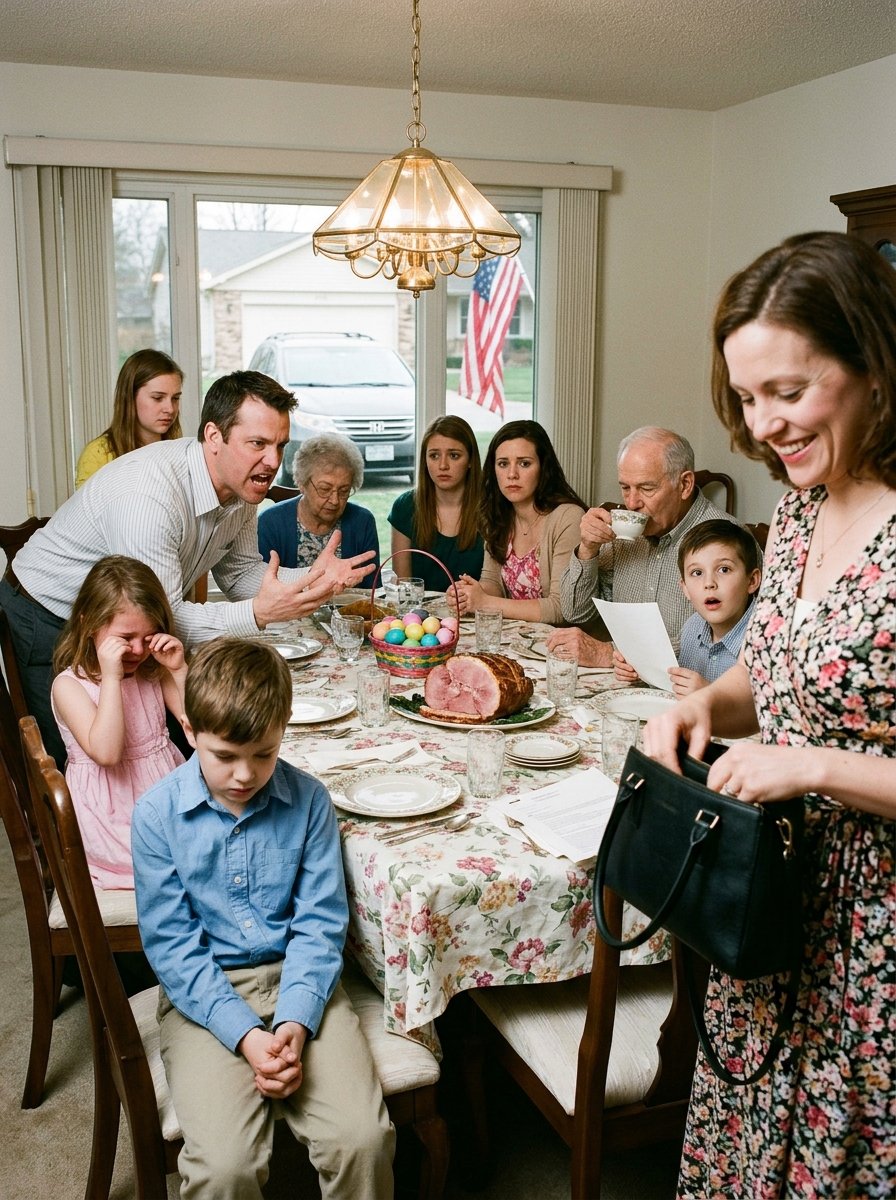
So, there we were at the dinner table. Emma’s birthday cake sat in the middle, decorated with golden candles. The whole family crowded around her, singing with their voices high and proud.
I clapped along, smiling, even though I knew how this would go. I’d seen it play out before.
My dad reached into his pocket, pulled out a long, slender box, and handed it to her with that warm, proud grin he reserved only for her. She tore it open and gasped.
A luxury watch, shimmering, expensive, the kind of gift you only see in store windows and wonder who has the money to buy.
“You deserve the best, Emma,” Dad said.
The words cut sharper than I let on.
Then came my turn. Mom slid a medium-sized box across the table to me, smirking like she was in on some private joke. I opened it slowly, hoping maybe, just maybe, this time would be different.
But inside was a secondhand toaster. Not even new, not even in its original box.
I blinked at it, confused.
Mom chuckled and said, “Now you can finally learn to cook something other than noodles.”
Emma rolled her eyes and snickered. “Perfect for you.”
Everyone laughed except me.
I smiled politely, but inside I felt like the floor was slipping out from under me. I wanted to speak up, to ask why they thought this was funny, why I was always the punchline. But every time I tried before, I was told I was too sensitive, that I couldn’t take a joke.
So instead, I excused myself early, said I had work the next morning, and carried the toaster up to my room like a trophy of humiliation.
I sat on the edge of my bed, staring at it.
A watch for Emma, a toaster for me.
The metaphor was too obvious to ignore.
Lying there that night, I thought back on every moment I’d been brushed aside. The soccer games where Dad missed my goals but made every one of Emma’s dance recital. The time I saved up for months to buy my own laptop, while Emma got hers handed to her because she needed it for school. The countless weekends I was told to mow the lawn while Emma was excused because she’s a girl.
It all piled up until I could barely breathe under the weight of it.
The next morning, I didn’t go to work.
I packed my things quietly. Clothes, my laptop, the few books I loved, the sketch pad I never showed anyone.
I didn’t slam doors. Didn’t leave a note.
I just walked out with a duffel bag over my shoulder.
I rented a small room across town with the savings I had. No one noticed I was gone at first, or if they did, they didn’t care enough to call.
That hurt more than the toaster.
It wasn’t until a week later that my phone started buzzing non-stop. Calls from Mom, missed ones from Dad. Messages piling in.
“Where are you?”
“Why haven’t you come home?”
“This isn’t funny, Lucas.”
Their sudden concern felt hollow, almost performative.
Where was this urgency when I was sitting right there in their house, invisible? Where was it when I needed their approval, their pride, their love?
I stared at my screen, debating whether to answer, my chest tight with a mix of anger and sadness. For the first time, I wasn’t sure if I even wanted to go back.
But deep down, I knew this wasn’t just about me leaving quietly. Something had shifted, and I could feel it in my bones. This was just the beginning of something much bigger.
And as my phone buzzed on the nightstand, lighting up the dark room, I realized the balance of power was about to change.
That’s when the real story began.
I didn’t respond to their calls right away. Instead, I let the phone buzz until the battery drained, the screen fading to black like the last thread connecting me to them.
For a few days, I lived in silence. The quiet of my rented room both comforting and suffocating. No laughter downstairs. No footsteps pacing the hallway. Just me, my thoughts, and the occasional hum of the refrigerator in the shared kitchen.
I thought maybe, just maybe, they’d forget about me for a while, but I should have known better.
My absence wasn’t a concern because they missed me. It was a problem because it disrupted their routine.
The first real attempt to pull me back came from my mother. She showed up at my workplace completely unannounced, carrying a bag of homemade cookies as if sugar could patch over years of neglect.
I saw her through the glass doors before she saw me. She looked around expectant, like she was entering enemy territory.
My coworker whispered, “Hey, Lucas, someone’s here for you.”
I wanted to duck out, but I walked over anyway.
“Lucas,” she said, plastering on that smile she wore whenever she wanted something. “We’ve been worried sick. You didn’t even tell us you were leaving. That’s not fair.”
Not fair.
The words made me want to laugh.
I stood there, arms crossed, letting her ramble.
“Your sister has been so upset. She keeps saying it’s her fault, that maybe the toaster joke went too far. You know how she is. She never means anything by it. She’s just spirited.”
Spirited.
That was Mom’s favorite excuse for Emma.
When Emma mocked me, she was spirited. When she broke my phone once in a tantrum, she was expressive. But when I so much as sighed too loud, I was ungrateful.
I told Mom calmly, “I’m fine where I am.”
That should have been the end of it.
But she leaned in, lowering her voice like she was bargaining.
“Look, your father is stressed. We can’t keep worrying about you like this. Just come home. You know Emma’s birthday celebration isn’t over yet. We’re planning a dinner this weekend with extended family. Everyone will be there. It would be embarrassing if you don’t show.”
There it was.
The real reason.
Not love. Not concern. Embarrassment.
She cared about appearances, about whispers from aunts and uncles, about maintaining the family image of perfection.
I told her I was busy.
She frowned, shoved the bag of cookies into my hands, and left without another word.
That weekend, I didn’t go.
But I did check Emma’s social media. Photos from the dinner flooded my feed. Emma sitting in the center, watch glimmering on her wrist. Plates of expensive food spread across the table. Dad with his arm around her, raising a glass.
Caption: celebrating our star.
My stomach turned.
I recognized the restaurant. It was one I had always wanted to try but had been told too pricey. Whenever I suggested it, they had no problem paying when it was for her.
A few days later, Dad called me directly. I answered this time, more out of curiosity than anything.
His tone was sharp, clipped.
“Lucas, enough of this nonsense. Your mother tells me you’ve been sulking. You need to stop acting like a child and come home. Family doesn’t turn its back on family.”
I almost choked at the irony.
Family doesn’t turn its back.
What have they been doing to me all these years?
I stayed quiet, listening.
He continued, “Do you realize how difficult you’re making things? Emma is starting her internship soon. She needs stability at home. She looks up to you whether you believe it or not. Stop being selfish.”
Selfish.
That word rang in my ears long after the call ended.
I was selfish for leaving, selfish for wanting respect, selfish for refusing to play the role of the invisible son who clapped while his sister shined.
My anger simmered, but underneath it was something colder.
Resolve.
Over the next couple of weeks, the tension grew sharper.
Emma texted me once, “Seriously, Lucas, grow up. You’re making everyone miserable.”
I didn’t reply.
My aunt called me, her voice syrupy sweet, trying to lure me back with promises of family unity.
Even my grandmother, who usually stayed out of conflicts, sent me a short message.
“Your parents are older now. Don’t give them grief.”
No one asked how I was doing. No one asked what I wanted.
It was always about them, their peace, their pride, their golden child.
But the real breaking point came one Saturday evening when Mom called again. This time not to coax, but to scold.
“Lucas, your sister had a breakdown today. She says she can’t enjoy anything knowing you’re out there sulking. Do you want her to be miserable? Is that your goal?”
Her voice was trembling, but not with concern for me, with anger at how my absence cast a shadow over Emma’s joy.
That night, I sat in my little rented room, staring at the toaster I had brought with me almost out of spite. It sat on the counter, dented and uneven, a reminder of everything I’d walked away from.
I realized that to them, I wasn’t a son or a brother. I was a placeholder, someone to fill in the gaps of their perfect family picture when needed, but otherwise invisible.
And for the first time, I wondered if I stopped playing that role entirely, what would happen to their carefully constructed world?
That question stuck with me.
And deep down, I already knew the answer.
It happened on a Sunday afternoon. One of those slow gray days where the air feels heavy and restless.
I was at my rented room, halfway through making a simple dinner, when my phone lit up with a video notification.
It was from Emma.
She had posted another one of her endless social media stories. Normally, I wouldn’t have bothered watching, but something about the thumbnail caught my eye.
My room.
I tapped it open, and my stomach sank.
The video showed Emma standing in my old bedroom back at the house, the walls behind her stripped bare. She grinned into the camera, panning to show off the space.
“Finally turned this wasted room into something useful,” she said with a laugh.
The camera swung around to reveal the furniture gone, my shelves empty. In their place stood racks of clothes, shopping bags piled high, and a vanity table under the window.
My room, my sanctuary, my last shred of space in that house, had been gutted and transformed into her walk-in closet.
The comments underneath were full of her friends gushing.
“OMG, queen, you deserve it.”
“That’s what big sis’s rooms are for, lol.”
I stared at the screen, my food burning on the stove, smoke curling up as if echoing the rage that rose in me.
My chest tightened until I had to sit down.
They hadn’t even told me. No call, no message, just a casual takeover, broadcast to the world like my existence had been nothing more than an inconvenience.
I called my mom immediately, hands shaking.
She answered on the second ring, her voice bright.
“Lucas. Finally. I was hoping you’d call.”
“What is this?” I demanded. “Emma turned my room into her closet without asking. Without even telling me.”
There was a pause, then a sigh. The kind of sigh parents give when they think you’re being unreasonable.
“Lucas, you weren’t using it. You left. You made it clear you didn’t want to be part of this family anymore. Emma needed the space. She has a lot going on with her internship and her new responsibilities. She deserves a proper setup.”
“I lived there my whole life,” I shot back. “That was my room. My things.”
“Oh, don’t be dramatic,” she said. “We boxed up your stuff. It’s in the garage. You can come get it whenever you feel like being mature.”
Mature.
They had erased me from the house, handed my space to Emma like it was nothing, and I was the immature one.
I could barely breathe.
“So, you just decided I don’t matter anymore?” I said quietly.
“Don’t twist my words, Lucas,” she snapped. “You’re the one who left. Actions have consequences.”
Her words hit harder than I expected.
It wasn’t just about the room. It was about what it symbolized.
I was disposable, replaceable, not even worth a phone call before they stripped away the last trace of me.
When I hung up, I sat in silence.
The burned food still smoking, the cheap toaster sitting on the counter like a cruel joke.
My hands clenched into fists.
For years, I had swallowed the favoritism, the mockery, the endless justifications for why Emma’s needs mattered more than mine.
But this, this was different.
This wasn’t favoritism.
This was eraser.
Later that night, I got another message, this time from Emma herself.
A photo of her posing in front of her new closet, luxury watch glittering on her wrist, with the caption, “Out with the old, in with the new.”
That was the moment something in me broke.
The last thread of loyalty, of hope that maybe things could change, snapped clean.
I realized they hadn’t just overlooked me.
They had cast me aside.
And I knew, sitting there in the dim light of my rented room, that I could never go back.
But more than that, I felt something else stirring beneath the hurt and betrayal, a cold, deliberate determination.
They had taken everything from me. But in doing so, they had given me something far more dangerous in return: the will to take control of the story they thought they’d written for me.
The night after Emma’s smug photo, I couldn’t sleep.
I lay awake in the stiff bed of my rented room, staring at the ceiling, my chest heavy with a mix of grief and fury.
It wasn’t just about the room. It was about the years of dismissal that led up to this final act.
That bedroom had been the only space that was mine in a house where I had never been seen. Now it was racks of Emma’s clothes, her vanity mirror, her perfume bottles.
I felt like a ghost who’d been erased from his own home.
The next morning, I dragged myself to the garage of their house to collect my things.
I almost didn’t go, but I couldn’t stand the thought of my books or my sketches molding in a damp box.
When I arrived, the driveway was empty.
No one home.
For a moment, I stood there staring at the front door I’d walked through thousands of times, realizing I no longer had the right to.
My key was useless now.
The garage door groaned open, and there they were.
Four cardboard boxes shoved into a corner, half crushed under a stack of old holiday decorations.
My name was scrolled on one in marker, already fading.
I pulled the first box open.
Clothes stuffed carelessly inside, wrinkled and smelling of dust.
My college notes bent, water stained.
A framed photo of me from graduation with the glass cracked, as if no one had bothered to wrap it.
My sketch pad was there, too. Pages torn at the edges.
I flipped it open, my drawing smeared from something damp that had spilled across them.
It felt like a funeral, like I was standing over the wreckage of my own life, boxed up and discarded.
I carried the boxes to my car one by one, each trip heavier than the last.
With every step, I thought about how easily they had decided I was replaceable. About how Emma was probably upstairs right now, twirling in her new closet, laughing with friends about how dramatic I was.
By the time I loaded the last box, my hands were shaking, my throat tight.
That night, back in my rented room, I sat surrounded by those boxes.
I pulled out the toaster, set it on the counter, and just stared at it until the sun dipped below the skyline.
I thought about throwing it out, smashing it against the wall, but I didn’t.
Instead, I left it there, a reminder.
The days that followed were harder than I expected.
I worked my shifts, went through the motions, but there was a hollow ache in me that no distraction could fill.
I felt untethered, like a balloon cut loose from its string.
Every time my phone buzzed, I flinched.
Sometimes it was them. Mom calling again. Dad sending a clipped message about how I needed to come to my senses.
Other times it was extended family trying to guilt me back.
“Your sister didn’t mean it.”
“Family fights aren’t worth this much drama.”
“You’re hurting your parents.”
No one asked what they had done to me.
No one wondered what it cost me to keep swallowing their favoritism year after year.
The weight of it pressed down until even getting out of bed felt impossible.
I remember one morning sitting at the edge of the mattress, staring at the boxes piled in the corner.
The cracked graduation photo leaned sideways, my smile behind the shattered glass.
I thought for a moment that maybe they were right, maybe I was selfish, maybe I was overreacting.
The thought twisted in me like a knife, but then my eyes landed on my sketch pad.
The smeared drawings, the evidence that no one had cared enough to protect the things I valued.
I picked it up, flipping through the ruined pages, and something inside me shifted.
No, I wasn’t overreacting.
I had been patient, too patient.
I had given them years of chances, and they had shown me again and again exactly where I stood.
I started walking more late at night when the city was quiet.
I’d wander the streets, hands in my pockets, thinking about the years I had wasted waiting for their approval.
The cool air cleared my head, and with every step I felt something building inside me.
Not rage, but clarity.
If I couldn’t go back, if I couldn’t ever have the family I deserved, then I needed to build something else.
A life that wasn’t chained to their approval, a version of myself that wasn’t the invisible son.
It wouldn’t be easy.
I had little money, no real support system, and a mountain of self-doubt pressing on me.
But as I stood under the yellow glow of the street lights one night, I made a quiet promise to myself.
I would not let their eraser be the end of my story.
I didn’t know how yet. I didn’t know when.
But one thing was certain.
Emma and my parents had underestimated me.
And one day, they would regret it.
The first steps were small, almost invisible to anyone but me.
I forced myself into a routine.
Wake up early. Make a real breakfast instead of grabbing whatever was cheap. Take a walk before work and spend an hour each night sketching, even if my drawings came out stiff.
At first, it felt forced, like I was pretending to be someone else.
But slowly, the rhythm began to steady me.
The hollow ache in my chest dulled, and for the first time in years, I started to feel like I was living for myself, not as a shadow orbiting Emma.
My job wasn’t glamorous.
I worked at a mid-size logistics company, mostly handling shipments and customer calls, but I threw myself into it.
I stayed late, learned systems no one else wanted to touch, and asked questions until I understood every detail.
My supervisor noticed.
Within months, I was given responsibilities far above my title.
It wasn’t flashy, but it was progress.
I also started freelancing on the side.
A friend from college reached out after seeing some of my sketches online. She needed a logo for her small business and remembered I used to doodle in class.
That one project turned into three, then five.
Soon, I was building a portfolio, taking on clients, and earning money from something that had always been dismissed as a hobby.
Every time someone paid me for my work, it felt like a validation my family had never given me.
The shift wasn’t just financial, it was internal.
I stopped checking Emma’s posts, stopped waiting for apologies that would never come.
My rented room slowly transformed into something that felt like mine.
I hung up prints of my drawings, invested in a sturdy desk, and even bought myself a new toaster, not secondhand, but brand new, with a sleek design that made me smile every time I used it.
Months passed, and the calls from my parents became less frequent.
When they did come, they carried a different tone, less anger, more urgency.
Mom’s voice sounded thinner, her words carefully chosen.
“We haven’t seen you in so long, Lucas. The house feels empty without you.”
Dad tried to slip in jabs.
“You’ve proven your point now. Stop being stubborn.”
But even he sounded less certain than before.
It was as if my absence had carved a hole they couldn’t patch over with Emma sparkle.
Emma herself only reached out once in the form of a curt, “You’re still mad about the room? Seriously?”
I didn’t reply.
For the first time, I realized I didn’t need to.
My silence was louder than any argument.
The real turning point came when my manager called me into his office one Friday afternoon.
He closed the door, smiled, and slid a paper across the desk.
A promotion.
Not just a raise, but a position that came with authority.
I’d be leading a small team, overseeing projects instead of just handling scraps.
“You’ve earned this,” he said simply.
That night, I sat in my room staring at the letter of promotion.
I thought about Dad’s voice telling me I was selfish. About Mom laughing as I unwrapped that toaster. About Emma rolling her eyes.
And I realized something vital.
I didn’t need them anymore.
The independence seeped into every corner of my life.
I upgraded my living situation, moving from the rented room into a modest one-bedroom apartment with sunlight pouring through the windows.
It wasn’t much, but it was mine.
I filled it with things I chose. Plants, art supplies, a couch I bought with my own money.
Each purchase felt like a brick in the foundation of a new life.
I wasn’t rich. I wasn’t famous, but I was stable, stronger than I had ever been under their roof.
And for the first time, when I thought of Emma’s watch or my parents’ endless favoritism, it didn’t sting.
It fueled me.
But the universe has a way of circling back.
Success doesn’t go unnoticed, especially by people who once dismissed you.
It started with subtle hints from relatives, comments about how I seemed to be doing well for myself.
Then came the questions about whether I’d be home for the holidays.
My absence had turned from an annoyance into a wound they couldn’t quite hide.
And then one evening, my phone lit up with a call I didn’t expect.
My father’s number.
I almost let it go to voicemail, but something in me told me to answer.
His voice was different this time.
Quieter, calculated.
“Lucas,” he said, “we need to talk. Your sister’s going through a rough patch. She needs help, and you’re in a position to do something about it.”
I leaned back in my chair, promotion letter still pinned to my fridge, and felt a strange calm settle over me.
After everything they’d done, after erasing me, after replacing me, they were coming back asking.
And for the first time, the power wasn’t in their hands anymore.
It was in mine.
I didn’t give my father an answer that night.
Instead, I let him speak, his words carefully measured, almost rehearsed.
He explained that Emma’s internship, the one she had been flaunting online, hadn’t gone the way she planned.
She had missed deadlines, clashed with her supervisor, and was on the verge of losing the opportunity.
“She just needs some guidance,” he said. “You’re good with this kind of thing. You could help her get back on track.”
I listened in silence, biting back the urge to laugh.
Guidance?
Me?
The same son they mocked with a secondhand toaster was now suddenly capable enough to salvage their golden child’s reputation.
I could almost hear the irony echoing through the phone.
Instead of agreeing, I asked questions.
Calm, deliberate questions that made him stumble.
“Why didn’t she reach out herself?”
“What exactly went wrong?”
“Why is this my responsibility?”
Dad faltered, then admitted, “Your sister doesn’t like asking for help. She thinks, well, she thinks you owe her.”
I ended the call politely, promising to think about it.
But inside, something had shifted.
For the first time, my parents needed me.
Not just as background support, not as the butt of a joke, but as the only one who could fix a problem they couldn’t.
That realization was intoxicating.
Over the next weeks, I leaned into my new role at work.
Leading a team wasn’t easy, but it forced me to sharpen skills I hadn’t known I had.
Delegating, negotiating, problem solving under pressure.
I built relationships with clients, earned the respect of my colleagues, and gained a quiet confidence that made me stand taller.
Every small win reminded me that I had something my family couldn’t take away.
Capability.
Meanwhile, my freelance art business was picking up speed.
Word spread, and soon I had steady clients.
I reinvested in better equipment, updated my portfolio, and even launched a simple website to showcase my work.
Opportunities trickled in.
Small commissions at first, then larger projects.
For the first time, I wasn’t just surviving.
I was building.
But the real turning point came by accident.
A colleague invited me to a networking event, one of those stuffy gatherings where people in suits traded business cards and forced smiles.
I almost skipped it, but I went anyway.
There, I met a man named Richard, an operations manager at a large firm that occasionally partnered with the company Emma had interned for.
Over drinks, he let slip that Emma’s reputation had already taken a hit.
“Smart girl, but entitled. Acts like the rules don’t apply to her. Word travels fast in these circles.”
I listened carefully, nodding while a thought bloomed in my mind.
My family’s perfect image of Emma, their star child, was beginning to crack.
And I, of all people, was standing in a position where I could see those cracks widening.
When I got home that night, I couldn’t stop thinking about it.
For years, they had dismissed me, erased me, and poured everything into Emma.
And now, here I was, stronger, independent, and connected in ways they didn’t even know.
They still saw me as the boy with the toaster.
But I was quietly becoming someone else, someone who could shape outcomes, someone who could decide whether to extend a hand or let the house of cards fall.
The calls from my parents continued.
Mom’s tone had shifted entirely now.
Gone was the scolding, replaced with something closer to pleading.
“Lucas, honey, your sister just needs a second chance. You’ve always been so dependable. Don’t hold grudges.”
Each time I gave vague answers, I let them stew in uncertainty.
It was like holding a mirror to all the years they had kept me waiting for scraps of approval.
I started journaling. Two, writing down every slight, every memory of favoritism, every moment they dismissed me.
Not because I needed the reminders, but because I was preparing.
I didn’t know how or when, but I knew one thing for certain.
When the time came, I wanted the story of my family’s cruelty etched clearly in my mind.
And then, as if fate wanted to underline my new position, Richard from the networking event reached out again.
His company was expanding and they needed someone with my skill set to consult on a project, a side gig, higher pay than my current salary, and most importantly, it came with influence.
Influence in the very circles Emma had failed to impress.
As I signed the paperwork for that contract, I realized something chilling.
The power dynamic had flipped.
I wasn’t the invisible son anymore.
I was the one holding the strings, and they didn’t even know it.
When the opportunity finally came, I didn’t rush it.
Revenge, I realized, wasn’t about dramatic outbursts or shouting matches.
It was about patience, precision, and letting the other side walk straight into the trap they had built for themselves.
It began with another call from my father.
This time, his voice didn’t carry the sharpness it once did.
It was almost meek, a strange thing to hear from a man who had spent years barking orders at me.
“Lucas,” he said, “Emma’s internship, it’s officially gone. She burned too many bridges, but there’s still hope. There’s a position opening with one of your contacts. You could put in a good word. Just talk to someone. That’s all we’re asking.”
I almost smiled.
They had no idea I already knew.
No idea that through my new contract, I was working shoulder-to-shoulder with people in the very network Emma had alienated.
My father thought he was asking for a small favor.
What he was really doing was placing Emma’s future squarely in my hands.
I told him I’d see what I could do, keeping my tone neutral.
He seemed relieved, as though he’d finally broken through my stubbornness.
But when I hung up, I sat back in my chair, staring at the ceiling, and felt the cold clarity settle over me.
This was it.
Years of being overlooked, erased, dismissed, all leading to this moment where they needed me, and I could decide their fate.
Over the next few weeks, I positioned myself carefully.
I didn’t sabotage Emma directly.
I didn’t need to.
Instead, I made sure the truth traveled.
In meetings, I let Richard and others share their stories of Emma’s entitlement, her disregard for rules, her tantrums in the office.
I didn’t defend her, didn’t downplay anything.
I simply let the narrative breathe, knowing that reputations are fragile in those circles.
At the same time, I built mine stronger.
I delivered on every project, stayed reliable, and quietly became known as someone who got things done without ego.
Word spreads fast, and I made sure it spread in the right direction.
By the time Emma’s name came up in conversation, people already had their opinions formed.
All I had to do was shrug and say, “Yeah, that sounds like her.”
And the damage deepened.
Meanwhile, at home, my parents clung tighter to their delusions.
Mom called more often, her voice laced with desperation.
“Lucas, she’s struggling. She needs your help more than ever. You’ve always been the responsible one.”
She didn’t realize how much those words revealed.
Responsible when it was convenient.
Invisible when it wasn’t.
One night, Emma herself finally reached out.
The text was short, but it said everything.
“I know you’re connected now. Just help me, please.”
I stared at the message for a long time, remembering the photo she sent of herself in my old room.
The caption, “Out with the old, in with the new.”
I remembered her rolling her eyes at me, mocking me in front of our parents, never once standing up for me.
And now she wanted me to save her.
I crafted my reply carefully.
“I’ll think about it.”
That was all.
And then I left her hanging the same way they had left me hanging for years.
The silence was its own weapon.
Every day I didn’t reply, I knew the anxiety was eating at her, at them.
They had lived their lives confident in Emma’s safety net, in the certainty that someone would always fix things for her.
And now the one person who could fix it had stepped aside.
Weeks later, Richard casually mentioned over coffee, “Funny thing, your sister’s name came up again. People are saying she might have to leave the city if she wants another shot. Her reputation here’s pretty much done.”
He said it without malice, just matter of fact.
I nodded, sipping my coffee, and felt a quiet satisfaction bloom in my chest.
Back home, the calls turned frantic.
Dad left voicemail after voicemail.
His tone no longer commanding, but begging.
“Lucas, we can’t do this without you. You don’t understand what’s at stake.”
Mom cried on the line.
“Please, she’s your sister. Don’t let her throw her life away.”
But I did understand.
I understood perfectly.
For years, they had handed Emma the world while giving me scraps.
They had laughed as I opened a secondhand toaster while she unwrapped luxury.
They had erased me from my own home, turned my space into her closet, and told me I was selfish for leaving.
Now, their golden child was crumbling, and the only lifeline was the son they had dismissed.
And I wasn’t reaching for her hand.
I didn’t need to lift a finger.
The beauty of it was that my revenge wasn’t loud.
It was silent, calm, deliberate.
All I did was let the truth breathe.
Let the world see Emma for who she was.
And as I sat in my apartment, surrounded by the life I was building for myself, I realized that silence was louder than any outburst could ever be.
The fallout came faster than even I expected.
By the end of the season, Emma’s name was like smoke in the air.
Once noticeable, now dispersed, clinging only in whispers of failure.
The company she had once bragged about working for quietly blacklisted her, and the ripple effect spread.
Other firms heard the stories.
She sent out applications, but the callbacks never came.
Doors that had always swung open for her were suddenly sealed shut.
My parents, once so smug and confident in their perfect daughter, began unraveling under the weight of her collapse.
Mom called me sobbing one evening, her voice jagged.
“She’s talking about moving back home. She feels like her life is over. Don’t you see what’s happening, Lucas? She needs you.”
The desperation in her tone was thick.
But what struck me most was that she still framed it around Emma.
Not once did she acknowledge what I had endured.
It was still about their golden child.
Dad followed soon after, but his voice carried something I had never heard before.
Defeat.
“Lucas,” he said, pausing like the word itself was hard to swallow. “I may not have been fair to you, but this, this is family. You can’t abandon her.”
I let the silence stretch, savoring it before replying evenly.
“Funny, that’s exactly what you did to me.”
And then I hung up.
Emma herself was the last to break.
She showed up outside my apartment one night, her face pale, makeup smudged, clutching her designer purse like it was the last symbol of who she thought she was.
When I opened the door, she tried to smile, but her voice cracked.
“Lucas, I made mistakes. I know I hurt you, but I can’t fix this without you. Please.”
For a moment, I looked at her.
Not the sister who had mocked me, not the girl with the luxury watch who rolled her eyes at my humiliation, but just a person stripped bare of her armor.
And then I remembered the video she had posted, standing in my old room, laughing as she called it her closet.
“Out with the old, in with the new.”
I stepped aside just enough to make her think I’d let her in.
But instead, I handed her something small.
The secondhand toaster.
The same one she had mocked months ago, the same one that had started it all.
I placed it gently in her hands.
Her expression crumpled as if she didn’t understand, as if the weight of the object was heavier than its dented frame.
She looked up at me, eyes wide, searching for mercy.
“There’s nothing I can do for you,” I said quietly. “This is all you ever thought I was worth. Now you can live with it.”
And before she could respond, I closed the door.
On the other side, I heard her muffled sobs, then footsteps retreating down the hall.
For the first time in my life, I didn’t feel like the invisible son.
I felt seen, not by them, but by myself.
I had built a life that was mine alone, and their downfall wasn’t my burden anymore.
I walked back to my desk, glanced at the promotion letter, still pinned on my fridge, and sat down to sketch under the warm glow of my lamp.
My pencil moved steadily across the page, and a calm settled in my chest.
Out with the old, in with the new.
Only this time it wasn’t Emma’s story.
It was mine.
If you came here from Facebook because of this story, please go back to the Facebook post, hit Like, and leave exactly the word “Respect” in the comments to support the storyteller. That small action means more than you might think, and it gives the writer real motivation to keep bringing you more stories like this.
Disclaimer: This story is fictional and created for entertainment purposes only. Any names, characters, places, or events are fictitious or used fictitiously. No real person or organization is intended to be portrayed.