Every summer from age seven, my parents sent me to work on Grandpa’s Kansas farm while taking my little sister to Disney World, Hawaii, and Europe. For eleven years, Grandpa gave me one stamped brass washer each August and took me to the courthouse, but never explained what they meant.
At twenty-three, when Mom tried to sell his 640-acre farm for $4.8 million, she threw a title report across the kitchen table and said, “The title company says you own the house.”
Every summer my parents dumped me on my grandpa’s farm so they could take my sister to Paris, Maui, and Disney World. They called it free childcare. What they didn’t know was that every single August grandpa was quietly paying me in land and they only found out the day they tried to sell the farm out from under him. My name is Cal.
I am 23 years old and there is a dented red coffee can sitting on the top shelf of my kitchen right now with 11 brass washers inside it. Not coins, washers. The flat round hardware store kind you slide onto a bolt before you tighten the nut. Each one has a number stamped into it with a steel punch set and each number is slightly crooked because the man who stamped them had arthritis in both thumbs.
For most of my childhood I thought those washers were a joke, a goofy little ritual between me and an old man who didn’t know how to say goodbye at the end of the summer.
I found out 3 months ago sitting across a conference table from my screaming mother that those 11 washers were worth more than the house I grew up in, more than my dad’s boat, more than every vacation my family ever took without me added together and doubled. I want to tell this in order because the order is the whole point.
So I am going to start with a pillowcase. The first summer it happened I was 7. My mother didn’t own a suitcase small enough for a kid and she wasn’t about to buy one for a trip she kept calling just a couple of weeks. So she stuffed my clothes into a pillowcase with cartoon race cars on it and tied the top in a knot.
My dad tossed it into the back of his truck like a sack of mulch. My little sister Paige, who was 5, was standing in the driveway in a brand new sun hat with a ribbon on it because that afternoon they were driving to the airport to fly to Orlando. I remember asking if I could have a sun hat too. My mom laughed and said, “Where you’re going, buddy, you’ll want a real hat.”
And that was the first time I understood I was not going to Orlando. My parents are Rick and Donna. They live in a cul-de-sac outside Kansas City in a two-story house with a front room nobody is allowed to sit in. My dad manages a car dealership.
He is the kind of man who calls waiters boss and calls his wife the boss and calls me pal when he can’t remember what we were talking about. My mom does payroll for a hospital system and she runs our family exactly the same way she runs payroll. Everything is scheduled, everything is categorized, and everything has a cost. I figured out pretty young which column I was in.
Grandpa Walt is my mother’s father. He owns 640 acres of wheat, milo, and pasture in central Kansas, about 3 hours west of us on a dirt road that doesn’t have a name, just a number. My mom grew up out there and left the day after her high school graduation, and from what I could tell, she had spent the next 20 years making sure nobody at her country club ever found out she used to drive a grain truck.
She did not like going back. She would pull into the yard, leave the engine running, hand me the pillowcase, and say, “Mind your grandpa. Don’t make me get a phone call.” Then she would stand on the porch with her father for about 4 minutes, both of them with their arms folded the exact same way, and then she would leave.
That first night, Grandpa Walt walked me upstairs to a bedroom with a slanted ceiling and a quilt that smelled like cedar. He was enormous to me back then, wide as a door, hands like baseball mitts, a sunburned neck that looked like old saddle leather. He pointed at the window and said, “Sun comes up at 6:00, so do we.” Then he turned off the light and left.
That was our entire first conversation. Now, before anybody pictures some mean old man working a little boy to death, I need to be fair to him. He worked me hard. At 7:00, I was hauling 5-gallon buckets half full of water to the bottle calves.
At 10:00, I could drive the old Ford tractor in a straight line across a field. At 12:00, I was running the grain cart beside the combine during wheat harvest with grandpa on the radio telling me to slow down every 40 seconds. But he never once asked me to do something he wasn’t doing right beside me. If I was sweating, he was sweating.
If I was eating dinner at 9:00 at night, so was he. And every Friday evening after supper, he would sit at the kitchen table, pull out a pocket notebook with a rubber band around it, write something down in pencil, and slide a $5 bill across the table to me. The first time it happened, I looked at that $5 bill like it was an insult. I was 7, but I knew what a video game cost.
“That’s it?” I asked. Grandpa Walt didn’t even look up from his notebook. “That’s pocket money,” he said.
“The real pay comes in August.” I had no idea what that meant. I assumed it meant a bigger $5 bill. Then August came.
On the last night of that first summer, the night before my mom was supposed to pick me up, Grandpa Walt walked me out to his shop, a big metal building that smelled like grease and diesel and old dog. He opened a drawer full of hardware, picked out a single brass washer about the size of a quarter, set it on his anvil, and stamped a number into it with a hammer and a little steel punch. Then he handed it to me, still warm.
“One for the can,” he said. He gave me an empty red coffee can to keep it in. I asked him what the number meant. He said, “It means you earned it.”
I asked what I was supposed to do with a washer. He said, “Keep it. Don’t lose it. Don’t show your mother.”
I thought it was the dumbest payday in the history of the world. I kept it anyway. The next morning, my mom pulled into the yard in a brand-new SUV with a lei still hanging from the rearview mirror, because a couple of weeks in Orlando had somehow turned into an entire summer that ended in Hawaii. Paige was asleep in the backseat with a stuffed dolphin.
Nobody asked me how my summer was. I put the coffee can under my seat and didn’t say a word about it, which, looking back, was the smartest thing I did for the next 16 years. Before continuing, if you want to listen while driving, working, or just chilling, we’re also on Spotify. Make sure to follow us there.
It’ll really motivate us. Now, back to the story. I am going to move quickly through the middle summers, because there were 11 of them, and the pattern isn’t complicated.
Summer two, my family went to San Diego. Paige came home with a magnet shaped like a sea lion and stuck it on the fridge. Summer three, they did a cruise to Mexico, another magnet.
Summer four, Yellowstone and a magnet shaped like a bison. By the time I was 11, the entire front of our refrigerator was covered in souvenir magnets from places I had never been, and every single September, I would stand in that kitchen, sunburned and 20 lb of muscle heavier than when I left, and count them. I wasn’t in a single one of those trips. I was the reason they could take them.
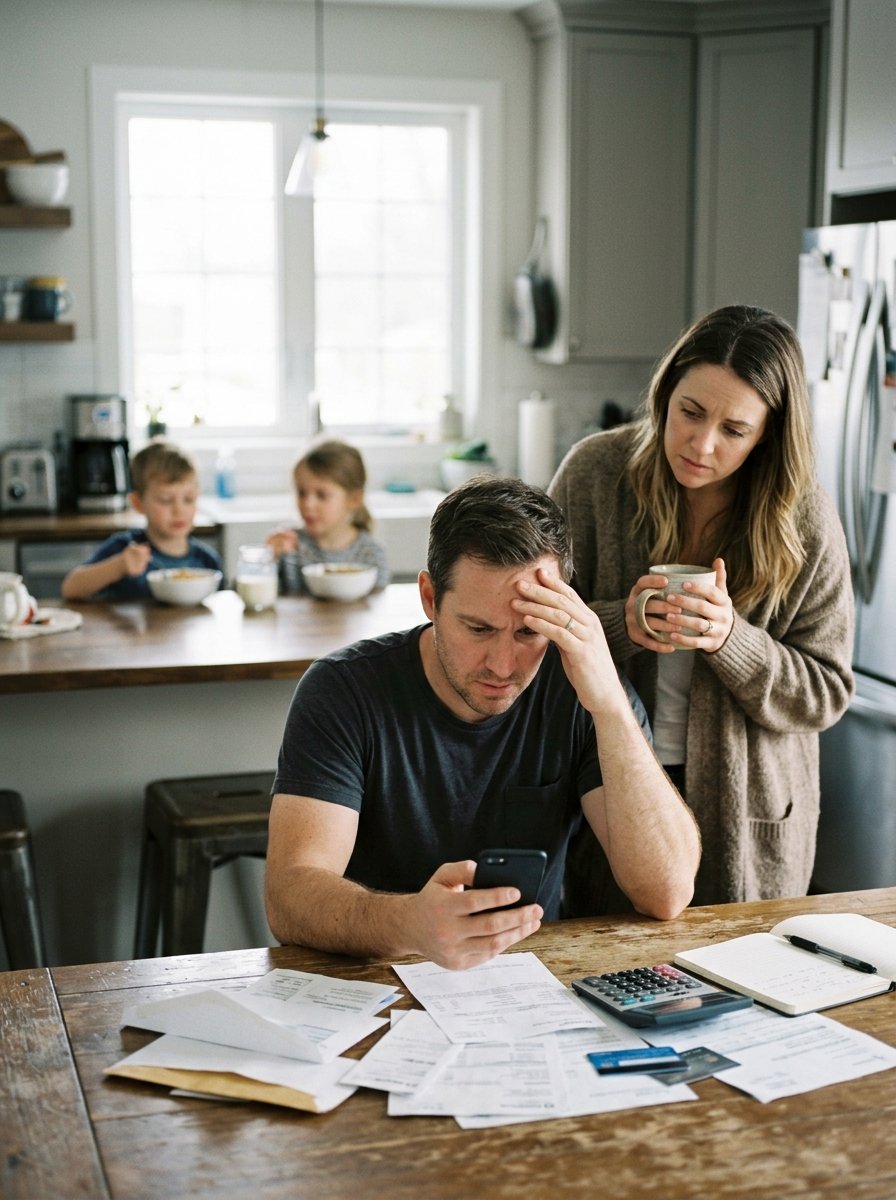
I didn’t understand that part until much later, but my mother did the math long before I did. A kid home over the summer costs money. Camps cost money. Sitters cost money.
Taking a fourth person to Maui costs a lot of money. A kid on his grandpa’s farm costs exactly nothing. And as a bonus, the old man gets free labor and stops calling to complain that nobody visits him. In her head, it was the most efficient arrangement in the world.
Summer five, I turned 11 in the spring and Paige turned nine in June. She had her birthday party at a resort in the Ozarks with a lazy river and a swim-up snack bar. I found out because Grandpa Walt had an old laptop that he only used for checking wheat futures and the weather radar. And one night after supper, I logged into my mom’s Facebook because she had never once changed her password.
And there it was, a whole album, 30 kids, a three-tier cake with a mermaid tail on top, a banner that said our girl is nine. And then the last photo, the big group shot by the pool. My mom, my dad, Paige, both sets of my dad’s cousins, my mom’s best friend from work, and my aunt Rhonda, who lived in Denver and who I hadn’t seen in two years. Everybody was in that photo.
Everybody was smiling. There was one empty pool chair at the end of the row, and I remember staring at that empty chair for a really long time, trying to decide if it was supposed to be mine or if I was just making that up. Grandpa Walt came in to check on me. He stood behind me for a while and looked at the screen.
He didn’t say anything. He just reached over my shoulder, closed the laptop very gently, and said, “Storm’s coming in. Help me get the equipment under cover.” We spent the next two hours in the dark and the wind pulling tarps over hay bales and backing machinery into the shop.
And by the time we were done, I was too tired to be sad. I think that was the point. When we came back inside, soaked to the bone, he made two mugs of hot chocolate from a packet, which I had never once seen him do, and he set one in front of me without a word.
Summer six, Cancun. That was also the summer of the creek. I was 12. It rained for four days straight in late May, and on the fourth night, a heifer calved out in the far pasture, and the calf slid down the bank into the creek bottom.
We went out with flashlights at midnight. The water was up to my waist and moving fast, and the calf was wedged against a cottonwood root, bawling with its head barely above the current. Grandpa couldn’t get down the bank with his knees, so he tied a lariat around my waist, dug his boot heels into the mud, and lowered me in. I got my arms around that calf and held on while he hauled us both up the bank hand over hand in the pouring rain.
When we got to the top, he sat down in the mud breathing hard and for a second I thought he was going to yell at me for something. Instead, he put his hand on the back of my neck, held it there and said, “That’s a good hand.” Then he took out the little notebook right there in the rain and wrote something in it. I asked him later what he wrote.
He said, “Overtime.” Summer 7 was when I was 13 and that was the year I finally asked. I had been thinking about it since Christmas. I practiced in the bathroom mirror.
At dinner in early May, my hands shaking under the table, I said, “Can I go with you guys this year, wherever you’re going?” My dad laughed. Not a mean laugh. That was the worst part.
He laughed like I had said something cute. My mom set her fork down and gave me the voice she uses on hospital employees who are asking why their direct deposit is late. “Sweetheart, you love the farm and your grandpa needs you. He’s 72 years old.
He can’t do harvest alone. Paige could come to the farm,” I said, “or we could hire somebody.” “Grandpa says the Rucker’s boy works harvest for cash. Paige is allergic to hay,” my mom said, the way somebody else might say Paige is allergic to bee stings and carries an EpiPen.
Paige was, technically, mildly allergic to hay. She sneezed. That was the allergy. She took a children’s Claritin and she was fine.
Do you want your sister in the emergency room so you can go to the beach?” my mom asked. “I didn’t say she had to touch the hay,” I said. “Cal,” my dad said, and his voice dropped down into the tone he uses on customers who want to walk away from a deal. You know how many kids would kill to have a real job at your age?
Fresh air, real work. You’re going to thank us someday.” They went to Italy. Paige brought home a magnet shaped like the Leaning Tower of Pisa.
At the end of that summer, out in the shop, Grandpa Walt stamped my seventh washer. I was old enough by then to be a little embarrassed by the whole ritual, but I watched him do it anyway, the hammer coming down twice, very carefully, on each number. When he handed it to me, I said, “Grandpa, what do these numbers actually mean?” He took his cap off and wiped his forehead with the back of his wrist.
“They mean what I said they meant,” he said. “You earned it.” “Earned what?” “You’ll find out when it matters.”
Then he put his cap back on and went to check the water tank. That was the closest he ever came to explaining it, and I let it go because I was 13, and I figured the washers were like the $5 bills, something small that made an old man feel good about working his grandson all summer. There was one other thing I noticed that year, though, and I’m only bringing it up now because of how it ended.
Every August, on the day before I left, Grandpa Walt would put on his good shirt, the pearl snap one he wore to church, and drive me into town. We’d get pie at the cafe on Main Street, and then he would say he had paperwork at the courthouse, and he would walk me into the county building with him. There was a lady behind a counter on the second floor named Miss Opal, who had glasses on a beaded chain, and who always gave me a peppermint.
Grandpa would hand her a big envelope. She would stamp things. Sometimes he’d have me sign my name on a line at the bottom of a page, and he’d say, “Practice your signature. It’s going to matter someday.”
And I’d sign it in my big loopy kid handwriting. I thought it was some kind of farm program thing, crop insurance, something with the co-op. I signed my name on that line every August from the time I was 7 years old, and I never once read what I was signing. I want to be very clear about that because later on, my mother would accuse me of knowing.
I didn’t. I was a kid eating free peppermints. Summer 8, I was 14. My parents had promised to sign me up for driver’s ed.
They forgot. They were busy planning a trip to Costa Rica. So, Grandpa Walt taught me to drive on the section roads behind the farm in a 1994 Chevy pickup with a column shifter and no air conditioning. The first afternoon, I put it straight into the ditch beside the Rucker’s wheat field.
Grandpa didn’t yell. He got out, looked at the tires buried in the mud, sighed through his nose, and walked a mile and a half to get Hollis Rucker and his tractor. Hollis pulled us out laughing so hard he had to stop twice to wipe his eyes. That same week, a woman at the feed store looked at me, looked at Grandpa, and asked if I was his boy.
Grandpa said, “Near enough,” and paid for the mineral tubs. I thought about that for the entire drive home. Near enough. My own father had never once said anything like that about me in public.
My dad introduced me to his co-workers as the farm kid, like it was a hobby I had picked up on my own. Summer nine, I was 15, and I asked one last time. This time it was Disney World, which was the one place Paige had been begging to go back to since she was five. I didn’t even want to go to Disney World.
I just wanted to be asked. “It’s a four-person suite,” my mom said, scrolling on her phone. I looked around the table, Mom, Dad, Paige, me. “There’s four of us,” I said.
“Paige is bringing Kenzie,” my mom said, without looking up. Kenzie was Paige’s best friend from dance. Her parents are getting divorced. She’s had a really hard year.
It would be cruel to take this away from her. I didn’t argue. I went upstairs and packed my own bag. I didn’t use the pillowcase anymore, but I still had it.
I’d kept it in the back of my closet for eight years. That ninth summer was when Grandpa Walt started talking, not a lot, just in pieces, late at night on the porch, after the notebook was put away and the bugs were loud enough to drown out the highway. One night, out of nowhere, he said, “Your mother hated it out here.” “Why?”
I asked. answer for a long time. A coyote yipped somewhere off toward the creek. “I worked her like a hand,” he finally said, “never paid her like one, never told her she was good at it, either. She was, though, best I ever had, before you.”
Then he stood up, stretched his back until it cracked, and went to bed. I lay awake that night for a long time thinking about my mother at 15, driving a grain truck in the dark, and about how she’d never once in my whole life said a single word about it. Summer 10, I was 16, and I quietly stopped asking to go anywhere.
Summer 11, I was 17, and it was the last one, although I didn’t know that yet. That was the summer of the hailstorm. In the middle of June, two weeks before wheat harvest, a storm rolled in from the southwest that turned the whole sky green. Grandpa Walt and I stood on the porch and watched it come, and he didn’t say a word, and I knew enough by then to know what that silence meant.
It hailed for 11 minutes, stones the size of golf balls. When it stopped, we walked out into the north field, and the wheat was lying flat on the ground like somebody had taken a rolling pin to it. 40% of the crop gone. Grandpa knelt down, picked up a broken head of wheat, and rolled it between his fingers for a long time.
Then he stood up and said, “Well, insurance will cover some. We’ll cut what’s standing.” We cut what was standing. We worked 20-hour days for 9 days straight.
I drove the grain cart until I was seeing double, and on the last night, at 2:00 in the morning, sitting on the tailgate of the truck eating cold sandwiches, he said, “You did a man’s work this year, a good man’s.” It was the most he had ever said to me about anything. I didn’t know what to say back, so I said, “You too,” which was a stupid thing to say, and he laughed, a real laugh.
I’d heard him laugh maybe five times in 11 years. That August, he stamped my 11th washer. He took longer than usual. He held it in his palm for a minute before he gave it to me, and he said, “That’s the last one.”
I said, “Why? I can come back next summer.” He just shook his head and said, “Next summer you’ll have your own life to start. That’s the last one, and it’s the big one.
Keep the can somewhere safe.” The courthouse trip that year was different, too. Miss Opal came out from behind her counter and shook my hand, which she had never done before. There was another man there, in a sport coat, with a briefcase.
Grandpa introduced him as Mr. Barlow, his lawyer. I signed three pages instead of one. Mr. Barlow notarized something. When we walked out, Grandpa stood on the courthouse steps and looked out at Main Street for a long time, and then he said, “That’s done, then,” and we went and got pie. I went home to Kansas City that September for my senior year of high school, and here is the thing nobody in my family knew about me.
I was good at school, really good. Grandpa didn’t care about much, but he cared about grades, and he had a rule that report cards got read out loud at the kitchen table. I had taken every advanced class my high school offered, and I had spent two winters studying for the ACT on his old laptop after chores. That fall, I got into Kansas State University’s agriculture program with a partial scholarship.
I was the first person in my family to get into a four-year school on anything other than a payment plan. I told my parents at dinner. I had the acceptance letter printed out. My dad said, “K-State, huh?
Good for you, pal,” and went back to his phone. My mom said, “That’s wonderful,” the same way you’d say it when a co-worker tells you they got a good parking spot. Then she said, “We’ll have to talk about money, though.” We did not talk about money until March.
In March, I asked about the deposit for the dorm. It was due in 2 weeks. It was $400. My mom sat me down at the kitchen table and folded her hands, and I knew from the folded hands that it was going to be bad.
“Cal,” she said, “there isn’t really a college fund, not the way you’re thinking.” I said, “What do you mean? Grandpa sends you a check for it every Christmas. I’ve seen the envelopes, because I had.”
Every single Christmas since I was 7, a card came from Grandpa Walt with a check inside made out to my mother, and on the memo line, in his big block letters, it said “Cal school.” I had seen it with my own eyes at least six times. My mom didn’t even blink. “Those checks went into the family account,” she said.
“We have a lot of expenses, sweetheart. Paige’s dance company is very expensive. Competition season, the costumes, the travel, and we had the roof done.” “Ugh, that was my money,” I said.
“It was family money,” she said. “And frankly, you’re 18 now, and you have a scholarship, and you’re very independent. You’ll figure it out. Your father worked his way through school.”
My father had not worked his way through school. My father had dropped out of a community college after one semester to sell Hondas. I didn’t say that, though, because Paige walked into the kitchen right then, and she was holding a printed brochure, a glossy one. It said, “Summer Dance Intensive, London and Paris, 6 weeks.”
My mom’s face lit up like a Christmas tree. “Oh, honey, did you show your brother?” she said. “Paige got accepted to the international program. We’re all going over with her in June.
Dad’s already booked the flights.” Paige looked at me, and she looked at my face, and something in her expression flickered, just for a second, like she knew. Then she looked at my mom and smiled and said, “It’s really competitive.” And the moment was gone.
I asked one question, just one. I said, “How much is the program?” My mom didn’t answer. My dad did, because my dad can never resist saying a big number out loud.
“11 grand, plus flights,” he said proudly. “But you only get one shot at something like this, pal.” I sat there doing the math in my head. 11 Christmas checks.
I had seen the amounts on some of them. They added up to more than 11 grand, a lot more. My mother took the money my grandfather sent for my education and spent it on a roof, a dance company, and 6 weeks in Paris for my sister. And then she told me I was very independent.
I walked upstairs. I didn’t slam the door. I want people to know that because when my mom tells this story, she says I stormed off. I didn’t storm anywhere.
I walked upstairs, sat down on my bed, and stared at the wall, and I felt this incredibly strange calm come over me. It was the same feeling I used to get out in the pasture when we’d been looking for a calf for 3 hours in the rain, and then finally you see it standing in the creek bottom, perfectly fine. The searching is over. Now it’s just a job.
Graduation was in May. My parents came, technically. They sat in the bleachers for the first 40 minutes, and then my dad got a call from the dealership and walked out, and my mom left at the intermission to pick Paige up from rehearsal. When they called my name, the only person in that entire gymnasium who stood up and clapped was a 77-year-old man in a pearl snap shirt and his good boots who had driven 3 hours that morning and was sitting alone in the top row because his knees wouldn’t take the stairs back down until everyone else had gone.
Grandpa Walt didn’t say anything about my parents leaving. He just shook my hand on the gym floor, held onto it for a while, and said, “Proud of you.” Then he handed me an envelope. Inside was a check for $400 with dorm written on the memo line and a second check for a lot more than that with Cal School, again, written on the memo line.
Again, that one word did something to me that I can’t really explain. He knew. He had always known where those Christmas checks went. I said, “Grandpa, you don’t have to.”
He said, “I know I don’t. Cash it this time. Your own name’s on it.” And then he said the thing I’ve thought about every day since.
He said, “Don’t go back to that house this summer if you don’t want to. Room’s still yours.” I didn’t go back. My parents flew to London on June 9th.
I drove my stuff to the farm on June 10th in a used Ford Ranger I had bought with my own money from the feed store job I’d worked senior year. Nobody at home asked where I was going. I left a note on the fridge under the Leaning Tower of Pisa magnet. It said, “At Grandpa’s, then college.
Don’t worry about it.” Nobody called about the note. My mom texted me about 3 weeks later from Paris to ask if I knew where the spare garage remote was. That was it.
That was the whole conversation. The next 4 and 1/2 years were quiet, and I’m not going to pretend they weren’t because the quiet is the point. I went to K-State in the fall. I lived in the cheapest dorm on campus, then a basement apartment with two guys from the rodeo team who never washed a single dish.
I worked mornings at the university’s research farm feeding cattle, which meant I was getting up at 5:00 a.m. again, and the guys I worked with couldn’t understand why I never complained about it. Every single Sunday night at exactly 7:00, I called Grandpa Walt. He’d tell me the wheat price and the rain total and whatever Hollis Rucker had broken that week. I’d tell him about soil chemistry and crop rotation and the professor who’d never actually driven a combine.
We never talked about my mother, not once. Every Christmas break, every spring break, every summer, I went to the farm. I drove the grain cart every harvest through all 4 years of college. Grandpa started letting me make decisions which field to plant to milo, when to sell, whether to rent the south quarter to the Ruckers.
Around my junior year, he stopped asking me what I thought and started telling Hollis, “Ask Cal.” I didn’t realize how big that was until much later. My parents, as far as I could tell, didn’t think about me much. My mom sent a birthday card every November with a $25 gift card to a chain restaurant that didn’t have a location within 90 miles of campus.
My dad liked one of my Facebook posts once. It was a picture of a sunset over a wheat field and he commented, “Looking good, pal.” And that was the entire extent of our relationship for 2 years. I heard about their vacations from Paige’s Instagram, which I checked more than I want to admit.
Iceland, Greece, a Christmas trip to Switzerland where Paige posted 41 photos of herself in a white ski jacket. Once, during my second winter at school, Grandpa paused on the phone in the middle of telling me about a busted hydraulic line and said, “Your mother called.” I said, “What did she want?” He said, “Asked if you were still alive.”
“What’d you tell her?” “Told her you were alive and doing fine and she could call you herself.” She didn’t. Once, during my sophomore year, he drove 3 hours to Manhattan without telling me, just to see the research farm where I worked.
He stood at the edge of the feedlot with his cane for 45 minutes watching me run the feed truck, and then he walked over and told the farm manager, a man with a PhD and 20 years of experience, that his bunks were set too high and the steers were wasting feed. The farm manager looked at the bunks for a long time, then looked at Grandpa, and then went and got a wrench. Grandpa took me to a steakhouse afterward and didn’t mention it once, but he ordered dessert, which he never did.
And when the waitress asked what the occasion was, he pointed his fork at me and said, “Him.” I graduated from K-State in May of last year with a degree in agronomy. Grandpa Walt came to that one, too. He was 81 by then, and he needed a cane, and he grumbled through the whole ceremony about how long it was.
But when they called my name, he stood up, cane and all, in a stadium full of people, and he didn’t sit back down until I’d walked all the way across the stage. My parents didn’t come. They said they were sorry, but it was the same weekend as Paige’s sorority formal, and they had already put down a deposit on the hotel. After graduation, I took a job as a field agronomist with a farm co-op about an hour and a half from Grandpa’s place.
I rented a little house in a town of 800 people. I drove out to the farm every weekend, sometimes twice. That was my life. It was quiet, and it was good, and I was happier than I had ever been.
Then, on the second Tuesday in March this year, at 6:40 in the morning, my phone rang. It was Hollis Rucker. Hollis never called me. Hollis texted, and only with one-word texts, usually “Rain” or “Cattle out.”
I picked up, and before I could say anything, he said, “Cal, your grandpa fell in the barn. I found him this morning. Ambulance took him to Salina. It’s his hip.
He was laying there all night, son.” I don’t remember the drive. I remember that I made it to the hospital in Salina in a little over an hour, which should not have been possible. I remember running across the parking lot, and I remember coming around the corner into the surgical waiting room and stopping dead because sitting in two plastic chairs by the window, drinking coffee, were my parents.
I hadn’t seen my mother’s face in person in almost 5 years. She looked exactly the same. Same blonde highlights, same quilted vest. She was holding a manila folder in her lap.
My dad stood up first, and he did the thing he does. He started to go for the big handshake, the dealership handshake, and then he remembered where he was and turned it into this awkward half hug where he patted my back three times like he was burping a baby. “Look who it is,” he said. “Look at you.
You got big, pal.” My mom stayed sitting. She looked me up and down, my co-op jacket, my work boots, and said, “How did you get here so fast?” Not hi.
Not how have you been? How did you get here so fast? “Hollis called me,” I said. “Where is he?”
“In surgery,” she said. “Broken hip. He’s 82, Cal. He was on the floor of that barn for 9 hours.
The doctor says he was confused when they brought him in. He didn’t know what day it was.” “He’d been lying on a concrete floor for 9 hours,” I said. “I wouldn’t know what day it was, either.”
She ignored that. She opened the manila folder. I saw the top page before she could angle it away from me. It said durable power of attorney, and it had my grandfather’s signature at the bottom, and the date on it was from 2009.
17 years old. “Your grandfather signed this when your grandma died,” my mom said, very calmly. “It gives me authority over his financial affairs if he can’t manage them himself, which clearly he can’t anymore. He can’t live alone out there.
He’s going to need assisted living, and that is extremely expensive.” I said, “He just went into surgery an hour ago.” “And somebody has to be practical,” she said. My dad nodded along like a bobblehead.
Grandpa Walt came out of surgery around noon. They let me see him at 2:00. He looked small in that hospital bed, which I had never once thought was possible. There were tubes in his arm and an oxygen line in his nose and a bruise on the side of his face the size of my palm, but his eyes were open and they were clear.
And when I walked in, he looked right at me and said, in a voice like a gravel road, “Who’s feeding the cattle?” I laughed so hard I almost cried. “Hollis did this morning,” I said. “I’ll do tonight.”
“Check the heifer in the east pen,” he said. “The red one. She’s close.” “I’ll check her.”
He closed his eyes. “Good,” he said. Then, without opening his eyes, “Your mother’s here.” “I saw she bring a folder?”
I didn’t say anything for a second. “Yeah,” I said. “She brought a folder.” The corner of his mouth went up just a little.
“Course she did,” he said, and he went to sleep. I went to the farm that night and fed the cattle. The red heifer calved at 3:00 in the morning, a bull calf, no trouble. I slept on the couch in the living room because I couldn’t make myself go upstairs to my room.
Over the next 5 days, I drove to Salina every afternoon after work, sat with Grandpa, and drove back to do evening chores. And over those same 5 days, my parents were busy. I found out how busy on day four when I drove into the yard after work and found a white SUV with a logo on the door parked next to the machine shed. Two men in quarter-zip pullovers were walking the north field with a tablet and a measuring wheel.
The logo on the truck said Prairie Sun Renewables. I walked out there and asked them what they were doing. One of them, a friendly guy named Lyle with very white teeth, shook my hand and said, “Site assessment, just a preliminary walk. The family’s very motivated.”
“What family?” I said. “Donna and Rick,” Lyle said, checking his tablet. “They signed a letter of intent on Thursday.
Full section, 640 acres for the solar array. It’s a great site, flat, good transmission access. Your folks are going to do very well.” I asked to see the letter of intent.
Lyle hesitated, and then, because he thought I was family and on the same team, he showed me on his tablet. My mother had signed it as Donna Kessler Haynes, attorney in fact for Walter Kessler. Purchase price, subject to title review and due diligence, just over $4.8 million. I stood there in the north field, the same field the hail had flattened when I was 17, and read that number three times.
Then I thanked Lyle very politely and walked back to the house. That night I called my mother for the first time in almost 5 years. She picked up on the second ring. “I was going to tell you,” she said, before I’d even spoken.
“When?” I said. “After it closed?” “He’s been out of surgery for 4 days.
He asked me about a heifer. He knows exactly where he is. Cal, you don’t understand the financial situation,” she said in her hospital payroll voice. “Assisted living is 9,000 a month.
He has no liquid savings. Everything he has is tied up in that dirt. Selling it is how we take care of him. I’m not the villain here.
Did you ask him? I said. Did you ask him if he wanted to sell? There was a pause.
He’s not in a position to make that decision, she said. And I have the paperwork that says I am. Then she said the thing that told me exactly what was going on. She said, your father and I have been carrying a lot, Cal.
You don’t know what it costs to run a household. We put down a deposit on a lake house at the Lake of the Ozarks back in January. It’s non-refundable. The timing on this is actually a blessing.
A blessing? Her father on the floor of a barn for 9 hours was a blessing because it lined up with the closing date on a lake house. I hung up. I didn’t yell.
I just pressed the button. Paige showed up on day five. She was 21 now, a senior at a big university in Texas, and she pulled into the dirt yard in a little white crossover with a sorority license plate frame, wearing spotless white sneakers and holding two iced coffees. She stood next to her car looking at the cattle pens like they might explode.
Hey, she said. Hey, I said. I was covered in mud from fixing a waterer. She walked over very carefully, stepping around every puddle, and held out one of the coffees.
I took it. We stood there for a minute listening to the cattle bawl. I didn’t even know you lived out here, she said finally. Mom said you moved to Wichita.
Then she said Topeka. I don’t think she actually knew. I live an hour and a half away, I said. I’m out here every weekend.
I have been for five years. She nodded slowly, like she was writing it down in her head. We sat on the tailgate of my truck. She had a little bottle of allergy pills sticking out of the pocket of her jacket.
I noticed she kept sneezing, and I noticed she didn’t leave. After a while she said, can I tell you something really embarrassing? Sure. Every summer when I asked why you weren’t coming, Mom said you didn’t want to.
She said you begged to go to Grandpa’s. She said you hated airplanes and hated the beach and you thought our trips were stupid. She said you liked Grandpa better than us. I turned and looked at her.
She said that? For years, Paige said. Her eyes were getting wet and she wiped them with the back of her wrist, exactly the way Grandpa does. I was so jealous of you, Cal.
I thought you had this whole secret cool life out here and you didn’t want me in it. I used to cry on the plane. I didn’t know what to say to that, so I said nothing for a long time. Then she said the second thing, and her voice got very small.
I found out about the checks, she said, the Christmas ones, last year. I was doing mom’s taxes on her laptop because she asked me to help, and there was a folder, a spreadsheet. It was labeled Cal School, and it was every check grandpa ever sent, 11 of them, $44,000, and there was a column next to it where she’d written what she spent each one on. She swallowed.
One of them was my London program. I looked at my little sister sitting on the tailgate of my truck in her white sneakers, sneezing into her sleeve, crying about and something in my chest that had been clenched for about 16 years let go a little bit. Do you want to see a calf? I said.
She absolutely did not want to see a calf, but she came anyway. She stood in the doorway of the barn with her jacket sleeve over her nose, and the little bull calf from the red heifer wobbled over to the gate and licked her white sneaker, and Paige let out this high-pitched shriek, and then started laughing so hard she had to sit down on a hay bale, which, given the allergies, was a choice. That was the afternoon the title company called my mother.
I found out about it the way I found out about everything that week. I came in from evening chores, and my parents’ SUV was parked crooked in the yard, almost touching the porch steps. The kitchen light was on. My mother was sitting at grandpa Walt’s kitchen table, the same scarred wooden table where he had slid me a $5 bill every Friday for 11 years, with a stack of papers spread out in front of her.
My dad was standing behind her chair with his arms crossed and his face the color of a brick. Paige was standing in the hallway doorway, very still. My mom didn’t say hello. She picked up the top page and threw it across the table at me.
It slid off the edge and onto the floor. I picked it up. What? she said, is that? It was a preliminary title commitment from a title company in Salinas, prepared for Prairie Sun Renewables.
Attached to it was a plat map of the full section, all 640 acres, divided into tracts with numbers printed in each one. A big chunk along the west side, about 200 acres of pasture, was labeled with grandpa’s name, Walter Kessler. Everything else, the north Field, the creek bottom, the home quarter with the house and the barns and the machine shed and the grain bins, the road frontage, the
only legal access to the county road, and the one piece of the entire section that touched the high voltage transmission line that made it worth anything to a solar company was labeled with a different name, Calvin W.
Haynes, 440 acres, my name. The title company says you own it, my mom said. Her voice was shaking. They say you own the house.
They say you own the road access. They say that over 11 years my father deeded 440 acres to you, one piece at a time, and every single deed was recorded at the county courthouse. She slammed her palm flat on the table so hard the salt shaker fell over. Prairie Sun says they can’t put a solar farm on 200 acres of landlocked pasture with no road and no transmission line.
They’re pulling the letter of intent. I looked down at the plat map. I looked at the track numbers, and I felt the floor tilt a little under my boots because I recognized them. Tract one, tract two, tract three, all the way up to tract 11.
I didn’t know, I said. Don’t you dare, my mom said. I genuinely didn’t know, I said. My voice was very steady, which surprised me.
Oh, come on, my dad said, and he took a step forward. You disappear for 5 years. You don’t call your own mother, and the minute the old man can’t get out of bed, you’re sitting on half the farm. You expect us to believe that?
I didn’t disappear, I said. I was here every weekend, every harvest, every Christmas. You just never came. He’s a confused old man, my mother said, and she stood up now, and her voice cracked right down the middle.
And you were out here alone with him every single summer for 11 years. Whatever you told him, whatever you got him to sign, I will take this to a judge, Cal. I already filed. There’s an emergency hearing for conservatorship on Monday.
I will prove he wasn’t competent, and every single one of those deeds goes away. Mom, I said. I didn’t raise my voice. I didn’t need to.
You sent me here. The kitchen went completely silent. The only sound was the old refrigerator humming in the corner, and Paige breathing in the hallway. I didn’t say anything else.
I put the plat map down on the table. I walked across the kitchen, past my father, pulled a chair over to the cabinet above the refrigerator, and reached up onto the top shelf where I had kept it every single summer since I was seven, back behind the flour and the cast iron pan, the red coffee can. I set it down in the middle of the kitchen table, right on top of the title report.
I took the lid off, and I poured 11 brass washers out onto the plat map. They rolled and spun and settled, and the kitchen light caught the stamped numbers. I picked up the first one, the one that was still a little brighter than the others because I had held it in my hand almost every night that first summer. I had always thought the stamp on it said T140.
I had always thought it was gibberish. I set it down on the plat map on top of tract one, 40 acres. Then I picked up the second one, T235. I set it on tract two, 35 acres.
I kept going. My dad stopped breathing. My mother sat back down very slowly without seeming to know she was doing it. Paige came in from the hallway and stood beside me.
One by one, I laid those washers across that map. T3, T4, T 5. Summer after summer, each one creeping a little closer to the house. The north field, the creek bottom, the pasture where we’d pulled the calf out of the creek in the rain, the field the hail flattened.
Then I picked up the last one, the 11th, the one he’d held in his palm for a long time before he gave it to me, the one he said was the big one. It didn’t say T11, it said home. I set it down on top of the farmhouse. Nobody said anything for what felt like a full minute.
My mother stared at that washer. I watched her read the word home once, and then I watched her eyes go back and read it again, like the second time it might say something different. My dad was the one who broke the silence. “Washers,” he said, in this hollow voice.
“He paid you in washers.” “No,” Paige said quietly from beside me. “He paid him in land. The washers were the receipts.”
My mother looked up at me then, and for one second, I saw something in her face that wasn’t anger. It looked a lot like fear. Then it was gone, and she gathered up the papers on the table, put them back in her manila folder, and said, “We’ll see what the judge says on Monday.” And she walked out.
My dad followed her. Paige didn’t. She stayed at the farm that night, in the guest room, and at about 11:00 she knocked on the living room door where I was lying on the couch staring at the ceiling, and she said, “Cal, what does T stand for?” I said, “Tracked.”
She said, “No, I know. I mean, why didn’t he ever just tell you?” I thought about it for a long time. Then I said, “Because I would have told somebody.
I was a kid, and the only person I had to tell was Mom.” The next morning at 7:00, a dusty Buick pulled into the yard and a man in a sport coat with a briefcase got out. He was older and grayer than I remembered, but I knew him immediately. Mr. Barlow, Grandpa’s lawyer, the man who had notarized three pages on the courthouse steps when I was 17. He shook my hand on the porch and said, “Your grandfather called me from the hospital last night.
Had a nurse dial,” he said, and I’m quoting him exactly, “Donna found the deeds. Go show the boy the file.” We sat down at the kitchen table, the washers still lying across the placemat where I’d left them, and Mr. Barlow opened his briefcase and took out a thick accordion folder with my name written on the tab in my grandfather’s block capitals. Inside were 11 recorded warranty deeds, one for every summer, each one signed by Walter Kessler, notarized, and stamped by the county register of deeds with a little round seal and Miss Opal’s initials.
And clipped to each deed was a single page I recognized immediately because I had signed every one of them. “Acceptance of conveyance,” Mr. Barlow said, tapping the first one. “In Kansas, a gift of real estate to a minor is perfectly valid. The deed passes title, but your grandfather was careful.
He wanted no argument ever that you didn’t accept the gift. So every August, you signed an acceptance in front of a notary at the courthouse. Every single one is recorded.” He laid them out in a row.
I saw my handwriting grow up across 11 pages, the big loopy 7-year-old letters, the cramped 12-year-old ones, the almost adult signature at 17. Then Mr. Barlow took out a 12th document. “And this,” he said, “is the one your mother is going to have a very hard time with on Monday.”
It was a revocation of durable power of attorney signed by my grandfather, notarized by Mr. Barlow, dated the same August afternoon as my last courthouse trip when I was 17, recorded with the county, and according to the green certified mail receipt stapled to the back, mailed to Donna Kessler Haynes at her home address in Kansas City.
Return receipt signed by D. Haynes. She knew, I said. She’s known for 6 years that this power of attorney was revoked.
She signed for the letter, Mr. Barlow said, very carefully. What she knew is a question for the judge. Then he pulled out one more thing, a thin envelope with photocopies of 11 canceled checks, front and back, everyone made out to my mother. Everyone with Cal School on the memo line.
Everyone endorsed and deposited into a joint account in my parents’ names. He kept copies, Mr. Barlow said. He always kept copies. He told me once that your mother was the best bookkeeper he ever met, and that’s exactly why he kept copies.
On Sunday afternoon, the day before the hearing, I drove to Salina to sit with Grandpa, and when I got off the elevator on his floor, one of the nurses, a tall woman named Bev, who had taken a liking to him because he called her ma’am, stopped me at the station. She said, very quietly, “Your mother was here this morning with a notary.”
My stomach dropped. Bev said my mother had walked in with a stranger carrying a stamp and a stack of papers, and asked for privacy so her father could sign a few things for his care.
Bev said Grandpa had looked at the papers, looked at the notary, looked at my mother, and then pressed the call button, and asked Bev to please escort his daughter and her friend out of the room because he was tired, and he didn’t sign anything he hadn’t read with his own lawyer.
Bev had written the whole thing down in his chart with the time, because that’s what good nurses do. When I walked into the room, Grandpa was sitting up eating green Jell-O with a plastic spoon like nothing had happened.
Bev told you, he said. She told me, I said. You okay? He put the spoon down.
He looked out the window at the parking lot for a while. She cried, he said finally. Your mother, in the hallway. I could hear it.
He was quiet again. She used to cry like that in the grain truck when she was your sister’s age. Thought I couldn’t hear her over the engine. I could.
I never once went over there. I didn’t know what to say to that, so I just sat down in the chair next to him, and he picked the Jell-O back up, and after a while he said, “Red heifer’s calf nursing all right?” I said, “Yes.” He said, “Good.”
And we sat there and watched the parking lot together until visiting hours ended. The hearing was Monday morning at 9:00 in a small courtroom on the second floor of the county building, one floor up from Miss Opal’s counter. My parents had hired a lawyer from Kansas City who wore a very expensive suit and kept checking his watch. My mother sat at the petitioner’s table with her manila folder.
My dad sat behind her in the gallery jiggling his knee. Paige sat beside me on our side of the room, which I don’t think my mother noticed until the judge walked in. Then they wheeled in my grandfather. He was in a hospital wheelchair, 8 days out of hip surgery, with a nurse from Salina beside him and a blanket over his knees.
He was wearing the pearl snap shirt. I found out later he’d made Hollis drive to the farm and get it because he was not going to court in a hospital gown. The judge was a woman in her 60s named Judge Thornberry, who had grown up two counties over and who I found out later had bought a pickup from my father’s dealership once and had not enjoyed the experience. My parents’ lawyer went first.
He said my grandfather was 82 years old, had been found confused on a barn floor, and was clearly no longer able to manage his own affairs. He said my mother held a valid durable power of attorney and had acted in good faith to secure his long-term care. He said a vulnerable elderly man had been isolated on a remote farm for over a decade with a single grandson who now conveniently owned most of it.
He said the word undue influence four times. He did a very good job. If I hadn’t known the truth, I might have believed him. Then Judge Thornberry asked Mr. Barlow if he had anything. Mr. Barlow stood up very slowly and said, “Just a few documents, Your Honor.”
He handed up the 11 deeds, then the 11 acceptances, then the court-appointed physician’s evaluation, which had been done at the hospital the previous Friday, and which stated in plain language that Walter Kessler was alert, fully oriented, and in possession of his decision-making capacity, and that his brief confusion upon admission was consistent with dehydration and 9 hours of exposure, not cognitive decline. Then he handed up the revocation of the power of attorney and the certified mail receipt signed D. Haynes.
Judge Thornberry read the revocation twice. Then she looked over her glasses at my mother’s lawyer and said, “Council, your client signed a letter of intent to sell 640 acres of land as attorney in fact under a power of attorney that was revoked and recorded 6 years ago and for which she signed a certified mail receipt.” My parents’ lawyer turned around and looked at my mother.
It was the first time I had ever seen a lawyer look surprised. My mother didn’t say anything. Her face had gone completely white and 440 of those acres, Judge Thornberry continued, “flipping through the deeds, were not your client’s fathers to sell in the first place. They’ve been titled in the grandson’s name by recorded deed since 2010.
The last one was recorded when he was 17. Is that right, Mr. Barlow?” “That’s right, Your Honor.” “Mr. Kessler,” the judge said, turning to my grandfather, “I’d like to hear from you directly if you’re able.”
Grandpa Walt sat up a little straighter in his wheelchair. His voice was rough, but it was perfectly clear and in that quiet courtroom it carried all the way to the back wall. “I’m able,” he said. “Did you intend to give your grandson that land?”
“Every acre,” he said. “Why?” My grandfather was quiet for a moment. Then he turned his head and looked at my mother, not at the judge, at my mother.
“Because he worked for it,” he said. “11 summers, sunup to dark, never once complained, and he had plenty to complain about. I worked his mother just as hard when she was a girl. I never paid her a dime, never told her she was good.
She was. She was the best I ever had.” He stopped and took a breath and his voice caught on something. “I got it wrong with her.
I wasn’t going to get it wrong twice. When she started dropping that boy off every summer like a sack of feed, I figured the Lord was giving me a second chance to do it right. So I paid him in the only thing I had that nobody could take back from him.” Nobody in that courtroom moved.
My mother was staring at her father like she had never seen him before. Her mouth was open slightly. Her hands were flat on the Manila folder and they were shaking. Judge Thornberry let the silence sit for a long moment.
Then she asked my grandfather one more question. “Do you want to sell your farm, Mr. Kessler?” “No, ma’am,” Grandpa Walt said. “I want to go home.
Got a heifer due.” Somebody in the back courtroom laughed. I think it was Hollis. Judge Thornberry denied the petition for conservatorship from the bench.
She found that my grandfather had full capacity and that there was no evidence whatsoever of undue influence, noting for the record that the deeds had been prepared by independent counsel, executed before a notary, and recorded over a period of 11 years beginning when the supposed influencer was 7 years old. She ruled that the 2009 power of attorney had been validly revoked, that any document my mother had signed under it was void, and she ordered my parents to pay my grandfather’s attorney’s fees for the hearing.
Then she held up the envelope of canceled checks, looked at my parents’ lawyer, and said, “I’m not ruling on these today, but I’d strongly suggest your clients have a conversation with you about them before Mr. Barlow files something that I will have to rule on.” Prairie Sun Renewables formally withdrew the letter of intent that afternoon. Lyle sent me a very polite email apologizing for any confusion.
The lake house deposit, the non-refundable one my parents had put down in January, counting on a farm that was never theirs to sell, was forfeited when the closing date came and went, $40,000. Two weeks later, a cashier’s check arrived at Mr. Barlow’s office, made out to Calvin W. Haynes for $44,000. There was no note with it.
On the memo line, in my mother’s perfect, careful handwriting, it said, “Cal School.” We brought Grandpa Walt home to the farm on a Thursday. Paige drove behind us the whole way in her little white crossover. That evening, he made me push his wheelchair out to the east pen so he could see the red heifer’s calf, and then out to the machine shop, where he pointed at the hardware drawer and told me to open it.
In the very back there was a single brass washer I’d never seen before, blank. He held out his hand and I put it in his palm, and he looked over at Paige, standing in the shop doorway in her white sneakers with a bandana over her nose, and then he looked back at me and said, “Sun comes up at 6:00. You think she’s any good?” I looked at my sister, “Only one way to find out,” I said.
Grandpa Walt closed his hand around the washer, and for the first time in my entire life, I watched him smile all the way.
Disclaimer: This story is fictional and created for entertainment purposes only. Any names, characters, places, or events are fictitious or used fictitiously. No real person or organization is intended to be portrayed.