My 72-Year-Old Mother Tore Up My Mortgage Papers at the Bank. I Told Her to Stay Out of My Marriage.
My 72-Year-Old Mother Tore Up My Mortgage Papers at the Bank. I Told Her to Stay Out of My Marriage.
Chapter 1 — The Papers My Mother Destroyed
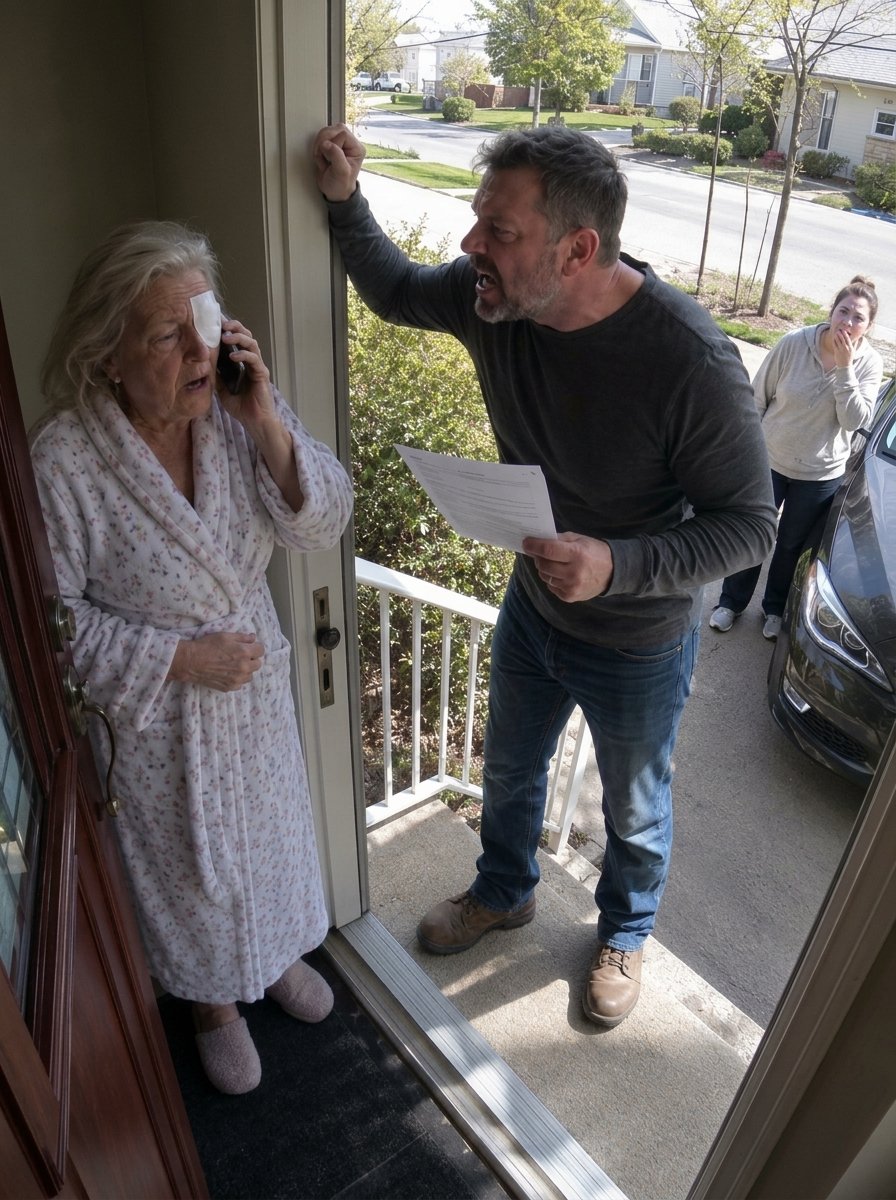
My seventy-two-year-old mother snatched the mortgage papers out of my hands and tore them in half inside a crowded bank.
I was forty-one, six months into my second marriage, and finally buying the home I’d dreamed about after losing almost everything in my first divorce. I told her she had no right to destroy the future I’d worked so hard to rebuild.
Then the loan officer turned another copy toward me and asked why my husband’s construction company was borrowing $220,000 against the house my father had left me.
I remember staring at her.
“What?”
Across the table, my husband, Russell, shifted in his chair.
“Laura, it’s just how we structured the financing.”
But the loan officer wasn’t looking at him.
She was looking at me.
And my mother was standing beside the conference table, clutching two torn pieces of paper with trembling hands.
Five minutes earlier, I’d been happy.
Actually happy.
We were sitting inside a glass-walled conference room at a neighborhood bank. Outside, customers were waiting in line, a teller was counting cash, and someone was trying to quiet a toddler near the entrance.
Russell had squeezed my knee beneath the table.
“Almost there,” he’d whispered.
We’d been talking about a four-bedroom house on a quiet street with mature maple trees and a kitchen big enough for the dining table I’d always wanted.
At forty-one, I wasn’t expecting fairy tales.
I’d already lived through one marriage that ended with a lawyer explaining how little money I had left.
But Russell was different.
At least, that’s what I’d believed.
He owned a home renovation company, remembered my favorite coffee, and never made me feel like the baggage from my first marriage was too heavy.
When we’d started discussing a bigger house, he’d told me we could use the equity in the smaller home I’d inherited from Dad to help finance the purchase.
The arrangement sounded complicated, but Russell had handled business loans for years.
He said it was a temporary bridge.
And I trusted him.
My mother didn’t.
Edith Walker had been suspicious of the financing from the first time Russell mentioned it.
She’d asked about interest rates, repayment schedules, and why a couple with two steady incomes needed to borrow against a house that was already paid off.
Russell had answered every question politely.
Eventually, his answers grew shorter.
That morning, Mom had insisted on coming to the bank.
I agreed because I thought seeing the process would finally reassure her.
Instead, she looked increasingly agitated as Natalie, the loan officer, arranged the documents.
“Laura,” Mom said when I picked up the pen, “please read that first page.”
“I have read the information Russell gave me.”
“Not the information Russell gave you. That.”
I glanced down.
There were paragraphs of legal language, numbers, and boxes for signatures.
“Mom, Natalie is going to explain everything.”
“Then let her.”
Russell sighed.
“Edith, we’ve been through this.”
“No,” Mom said. “You’ve been through it. My daughter hasn’t.”
I felt my cheeks getting hot.
We’d already had this argument at my kitchen table. Twice.
“Mom, please.”
She leaned forward.
Her eyes fixed on something near the top of the page.
Then she reached across the table.
Before I could stop her, she snatched the documents from my hands and ripped them down the middle.
The sound was shockingly loud.
“Edith!” Russell shouted.
Mom ripped them again.
I stood so quickly my chair scraped the floor.
“Are you out of your mind?”
Through the glass, several people turned toward us.
Natalie rose halfway from her chair.
“Mrs. Walker, please—”
Mom dropped the pieces onto the table.
“Don’t sign it, Laura.”
I could barely look at her.
“You’ve embarrassed me enough.”
“I know you’re angry.”
“Angry? You just destroyed legal paperwork in front of my husband and the bank!”
“Then ask them to print another copy.”
Russell stepped between us.
“That’s enough. Edith, you need to leave.”
Mom didn’t move.
I looked at her and said something I would regret for a long time.
“You don’t get to run my marriage because Dad isn’t here anymore.”
Her expression changed.
Not dramatically.
She simply went very still.
“Laura,” Russell said quietly.
But I wasn’t finished.
“I’m forty-one. I’ve worked hard to get here, and I’m not letting you ruin another relationship because you can’t stop worrying about what happened with my first husband.”
Mom looked down at the table.
“All right,” she said.
She picked up her purse.
That should have ended it.
Natalie could have printed another set, Mom could have gone home, and I could have signed.
Instead, Natalie put her hand over the fresh stack of documents she’d pulled from her folder.
“Mrs. Bennett, before we continue, I need to clarify something.”
Russell sat down.
“Natalie, I think we’ve already covered—”
“I’m speaking to Laura.”
He stopped.
Natalie turned the first page toward me.
“Do you understand that the borrower on this loan is Westbrook Renovations LLC?”
I looked at the printed company name.
“That’s Russell’s business.”
“Yes.”
“But we’re borrowing the money to purchase a house.”
Natalie glanced at Russell.
Then she looked back at me.
“This is a commercial loan. The stated purpose is refinancing existing business obligations and providing additional working capital.”
I read the words twice.
“Where does it say we’re purchasing a house?”
Natalie didn’t answer immediately.
She turned another page.
“It doesn’t identify a residential purchase.”
Russell reached for my hand.
“Laura, sweetheart, I can explain.”
I pulled my hand away.
Because suddenly, my mother’s questions didn’t sound unreasonable.
They sounded like questions I should have asked myself.
And the paperwork in front of me wasn’t about buying our future home.
It was about borrowing money against the only home I already owned.
Chapter 2 — The House My Father Left Me
“Nobody is signing anything today,” I told Natalie.
Russell stared at me.
“Laura, don’t make a decision while you’re upset.”
“I’m not making a decision. I’m asking for time to understand what I’m signing.”
Natalie nodded.
“That’s entirely reasonable.”
Russell rubbed his forehead.
“We could lose the financing.”
“Then we’ll lose it.”
He looked genuinely shocked.
My mother was still standing beside the door.
I couldn’t bring myself to look directly at her.
“Mom, I’ll call you later.”
She nodded and left.
For several seconds, nobody spoke.
Then I asked Natalie to email me the complete documents.
“Of course,” she said. “And I want to be clear about something. You aren’t the business borrower, but your property would secure the loan. There’s also a guaranty document that requires your signature.”
“A guaranty?”
Russell leaned forward.
“We talked about this.”
“We talked about using the house temporarily.”
“That’s what this does.”
Natalie kept her voice calm.
“The mortgage would give the bank a security interest in your property. The guaranty addresses additional obligations under the loan. You should review both before deciding whether to sign.”
I felt foolish asking the next question.
“If Russell’s company couldn’t repay it, could I lose my house?”
“Default could put the property at risk, yes.”
My stomach tightened.
Russell immediately said, “Which isn’t going to happen.”
Natalie didn’t agree with him.
She simply gathered the damaged papers and told us she’d place the signing on hold.
Russell barely spoke during the drive home.
I stared out the passenger window at familiar houses, gas stations, and a grocery store where I’d shopped for almost ten years.
The streets looked the same.
Everything else felt different.
My father had left me a three-bedroom ranch house with a narrow front porch and a crooked maple tree beside the driveway.
It wasn’t fancy.
The upstairs bathroom was too small, the kitchen cabinets were old, and every winter I had to put a towel against the back door to keep out the draft.
But the house was paid off.
Dad and Mom had bought it when I was little. Years later, they’d moved into a smaller place and kept the old house as a rental.
When Dad died six years ago, he left it to me.
At the time, I was still married to my first husband.
That marriage had already started coming apart.
My ex had a gift for turning financial disasters into temporary setbacks.
There was always a better job coming, a business opportunity about to pay off, or a bill that could wait until next month.
By the time we divorced, almost all our savings were gone.
I spent months untangling accounts, negotiating payments, and trying not to cry whenever I opened the mail.
The house Dad left me was the reason I didn’t have to start over in a rental I couldn’t afford.
After the divorce, I moved into it with two suitcases, a folding chair, and a mattress I’d bought on clearance.
My mother came over the first night.
She brought chicken soup and a bag of groceries.
She didn’t tell me she’d warned me about my ex.
She didn’t say I should have listened.
She washed the dishes and stayed until I fell asleep.
For months, I hated that house.
It reminded me of everything I’d lost.
Then I painted the kitchen.
I bought a real sofa.
I planted roses along the front walk.
Slowly, it became mine.
When Russell came into my life two years ago, he loved the house too.
Or seemed to.
On our third date, he helped me carry a bookcase up the porch steps.
A few months later, when Mom’s basement flooded during a storm, he showed up with a shop vacuum and spent half a Saturday cleaning up water.
He never asked for anything.
Mom had liked him.
She’d told me once, “That man seems to understand what showing up means.”
So when Russell proposed, she hugged him.
At our wedding, she even danced with him.
The arguments started only when we began discussing the new house.
Russell said our home was too small for the future we wanted.
He needed space for a proper office. I wanted a kitchen with room for family dinners and a guest bedroom where Mom could stay when she visited.
We found a beautiful house listed for $560,000.
Russell said using the equity in my existing house was the smartest way to move quickly.
Mom disagreed.
“Why not sell the old house first?” she’d asked.
Russell explained that we’d lose our chance to buy if we waited.
“We’ll put the right financing in place and move the money around once the purchase closes,” he said.
It sounded reasonable.
At least until today.
When we pulled into our driveway, Russell turned off the engine.
“Your mother crossed a line.”
“She did.”
“She humiliated us.”
“I know.”
He waited.
I looked at him.
“But she wasn’t the one who told me that paperwork was for buying another house.”
He exhaled sharply.
“It’s part of the same plan, Laura.”
“Then why didn’t you explain it?”
“Because business financing isn’t the same as a regular mortgage. I didn’t want to bury you in details that would only make you nervous.”
I stared at him.
“You didn’t want to make me nervous about risking my house?”
His jaw tightened.
“That’s not what I said.”
He went inside before I answered.
I stayed in the car.
Ten minutes later, my phone chimed.
Natalie had emailed the loan documents.
I opened the attachment.
The first page named Westbrook Renovations LLC as the borrower.
The amount was $220,000.
The security documents listed my house.
Then I found the section describing how the money would be used.
Refinancing of existing business indebtedness and general working capital.
I searched the document for the address of the new house.
Nothing.
I searched for the seller’s name.
Nothing.
I searched for anything about a residential purchase.
There wasn’t a single reference.
I sat in my driveway until the sun started disappearing behind the neighbor’s garage.
Then I went inside to ask my husband a question.
Chapter 3 — The Loan Wasn’t for Our New House
Russell was chopping vegetables when I walked into the kitchen.
He’d changed into a gray T-shirt and put music on.
For a moment, the scene was painfully ordinary.
The man I’d married was making dinner.
The man I’d married had also spent the last month asking me to sign away the security of the one asset I owned outright.
“Can we talk?” I asked.
He turned down the music.
“Of course.”
I placed my phone beside the cutting board.
“There’s nothing in these documents about buying the new house.”
He glanced at the screen.
“I explained that at the bank.”
“No. You said it was part of the plan.”
“Because it is.”
“Then explain the plan to me now.”
He set the knife down.
“Westbrook can borrow the money using the property as collateral. The business has some short-term obligations to clear. Once that’s handled, we’ll be in a better position to purchase.”
I waited.
“Purchase what?”
“Our house.”
“When?”
“As soon as everything settles.”
“What does that mean?”
He rubbed his face.
“Laura, you’re asking questions that don’t have simple answers.”
“Then give me complicated ones.”
He looked up sharply.
I’d never spoken to him that way.
Neither of us seemed to know what to do with it.
Finally, he said, “The company has receivables coming in. Once those payments arrive, I can move funds where we need them.”
“So we’re borrowing $220,000 against my home to put money into your company first?”
“Temporarily.”
“And then what? We take out another mortgage to buy the new house?”
“We have options.”
“Which options?”
Russell pushed the cutting board away.
“You’re making this sound like I haven’t thought it through.”
“Then show me what you’ve thought through.”
He stared at me for several seconds.
“Do you trust me?”
There it was.
The question he’d been asking in different ways for weeks.
Every time I’d asked about interest or repayment, he’d reminded me that he managed loans and contracts for a living.
Every time Mom raised a concern, he’d said marriage required trust.
I’d agreed because I didn’t want my first marriage to turn me into someone who questioned every dollar.
Now I wasn’t sure which frightened me more.
The possibility that Russell was hiding something, or the possibility that I’d been ignoring it.
“I love you,” I said. “But that’s not an answer.”
He looked wounded.
“I would never put you in a position where you could lose your home.”
“You were asking me to put it up as collateral.”
“For a loan I intend to pay back.”
“And if you can’t?”
“I can.”
“You can’t promise that.”
He took a breath.
“Look, the bank approved the financing. They wouldn’t do that if they thought the company was going under.”
I almost accepted that.
Then I remembered Natalie’s face when I’d asked whether I could lose my house.
She hadn’t reassured me.
She’d explained the risk.
I picked up my phone.
“Show me the purchase agreement.”
Russell frowned.
“What?”
“The house we want. You said the seller accepted our offer. Show me the contract.”
“It’s with Valerie.”
“Then forward me her email.”
He looked toward the window.
“She’s still finalizing a few details.”
“You told me it was accepted.”
“It was verbally accepted.”
“By whom?”
“Laura.”
“By whom, Russell?”
He raised his voice.
“Why are you interrogating me?”
The word stung.
I hadn’t raised my voice once.
“I’m trying to understand why we’re borrowing against my house when you can’t show me an agreement to buy the new one.”
He stepped away from the counter.
“I had everything lined up until your mother made a scene.”
“No. She made a scene because she didn’t like the paperwork. You still haven’t explained the paperwork.”
“Fine.”
He picked up his keys.
“Call Valerie yourself.”
“That’s what I’m going to do.”
He stood near the back door for a moment.
I thought he might apologize.
Instead, he said, “I really hope you understand how much damage this kind of suspicion can do to a marriage.”
Then he left.
I heard his truck start.
I stood alone in the kitchen, looking at the half-cut vegetables.
For the first time since meeting Russell, I didn’t know where he’d gone.
I knew I could call him.
I also knew he’d probably say he needed time to cool off.
So I didn’t.
I emailed Natalie instead.
I confirmed that I wanted the loan signing stopped and would not authorize any use of my property as collateral.
She replied that the signing was on hold and no loan funds would be disbursed under the unsigned documents.
Then I found Valerie’s number.
It was too late to call, so I sent a message.
Hi, Valerie. This is Laura Bennett. Can you send me our accepted offer and the purchase timeline for the Maple Ridge property? I’d like to review everything myself.
I put down my phone.
Twenty minutes later, Valerie replied.
Hi, Laura! Happy to help. Just checking—which accepted offer are you referring to?
I stared at the message.
Then I typed:
The one Russell submitted for the house on Maple Ridge Lane.
Three dots appeared.
Disappeared.
Appeared again.
Finally, her response arrived.
Laura, I think there’s been a misunderstanding. We never submitted an offer on that house.
Chapter 4 — There Was Never an Offer
I called Valerie at eight the next morning.
She answered before the second ring.
“Laura? I’m glad you called.”
“Russell told me the seller accepted our offer.”
There was a short silence.
“Do you have something in writing from him?”
“No.”
“Okay.”
That one word frightened me more than anything else she could have said.
“Valerie, did we offer to buy that house or not?”
“No. We discussed a possible offer. I prepared a draft for you to review, but I never received authorization to submit it.”
I gripped the edge of the kitchen counter.
“We went through that house twice.”
“I know.”
“Russell said you were waiting on financing.”
“He told me you were sorting out your financing, yes.”
“But he told me the seller had accepted our price.”
“I’m sorry, Laura. That didn’t happen.”
I closed my eyes.
For almost three weeks, I’d been imagining our new living room.
I’d measured the wall where my bookcase would go.
I’d even bought a set of curtains on sale.
Russell had laughed when I brought them home.
“You’re getting ahead of yourself,” he’d said.
I’d thought he was teasing.
“Is the house still available?” I asked.
Valerie hesitated.
“The seller accepted another buyer’s offer yesterday.”
I pressed my palm against my forehead.
There was no house waiting for us.
No purchase agreement.
No deadline that required me to sign documents at the bank yesterday.
“Laura?” Valerie asked. “Are you okay?”
“I don’t know.”
“Would you like me to call Russell?”
“No. Please don’t.”
Another silence.
Then Valerie asked, “Did you put any money into an escrow account?”
My throat tightened.
“Russell said he was handling the deposit.”
“Was it sent to a title company?”
“I transferred eighteen thousand six hundred dollars into our joint account.”
Valerie spoke carefully.
“That’s not the same as an escrow deposit. We never opened a transaction for that property.”
I sat down at the kitchen table.
Three weeks earlier, Russell had asked me to move my home savings into our joint account so the money would be ready when the purchase went through.
I’d saved $18,600 over four years.
Not because I had a particularly high salary.
I managed operations at a medical office, and I was careful.
I drove a car that was almost eleven years old.
I brought lunch to work.
I made extra contributions to my savings whenever I could.
Russell earned more than I did when business was good, but the money had been mine before we married.
When he asked me to transfer it, I hesitated.
He’d smiled and said, “We’re building something together now.”
So I’d done it.
A week later, I asked whether the deposit was handled.
He told me it was.
Now I opened our joint checking account on my phone.
The balance was $412.77.
My heart began pounding.
I scrolled through the transactions.
Mortgage payment on Russell’s truck.
Groceries.
Utilities.
Restaurant charge.
Then I found it.
An outgoing transfer dated two days after I’d moved my savings.
$18,600.00
Recipient: Westbrook Renovations LLC.
I stared at the screen until the numbers blurred.
Then I opened the confirmation details.
It was a transfer from our joint account to Russell’s business account.
Not a deposit for a house.
Not money sitting safely in escrow.
My entire savings contribution had gone into his company.
I took screenshots.
Then I checked our messages.
Three days after the transfer, I’d texted Russell:
Did everything go okay with the deposit?
His reply was still there.
All handled, babe. One less thing to worry about.
My stomach turned.
I thought about the bank.
About my mother’s hands shaking as she tore those papers.
About the way I’d yelled at her in front of strangers.
I’d spent all night telling myself Russell had simply explained a complicated financial arrangement badly.
But he hadn’t just left out a detail.
He’d told me we had a house under contract when we didn’t.
He’d told me my money was being used for a deposit when it wasn’t.
And he’d asked me to risk the home I’d inherited to borrow another $220,000 for his company.
I heard a key turn in the front door.
Russell came inside carrying two cups of coffee and a paper bag from my favorite bakery.
He smiled when he saw me.
“Morning. I got your usual.”
He put the bag on the counter.
Then he noticed my face.
“What’s wrong?”
I turned my phone toward him.
“Where is my eighteen thousand six hundred dollars?”
His smile disappeared.
He looked at the transaction.
For one long moment, he said nothing.
Then he put down the coffee and closed his eyes.
And I knew, before he spoke, that this was not going to be another misunderstanding.
To be continued; tap the blue “NEXT” button to read the next chapter.👇