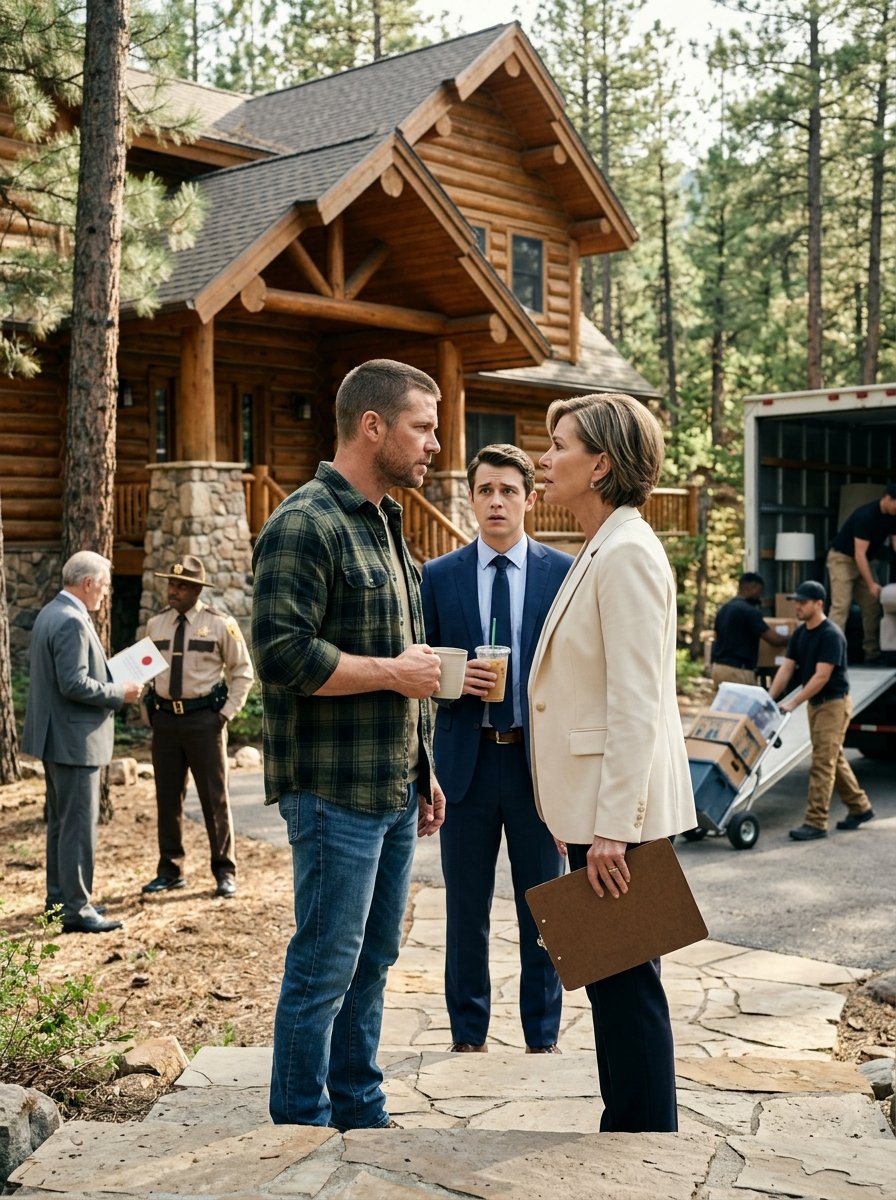
My mom smiled and said, “we forged the will to give your brother the $2.5m estate; be out by friday”; she looked incredibly pleased, so i just replied, “sure thing, you’ll both be in prison by then.”
I always thought family were the people who would stab you in the back with a very small knife—just enough to hurt you, enough to keep you in your place, but never quite enough to destroy you. I was wrong.
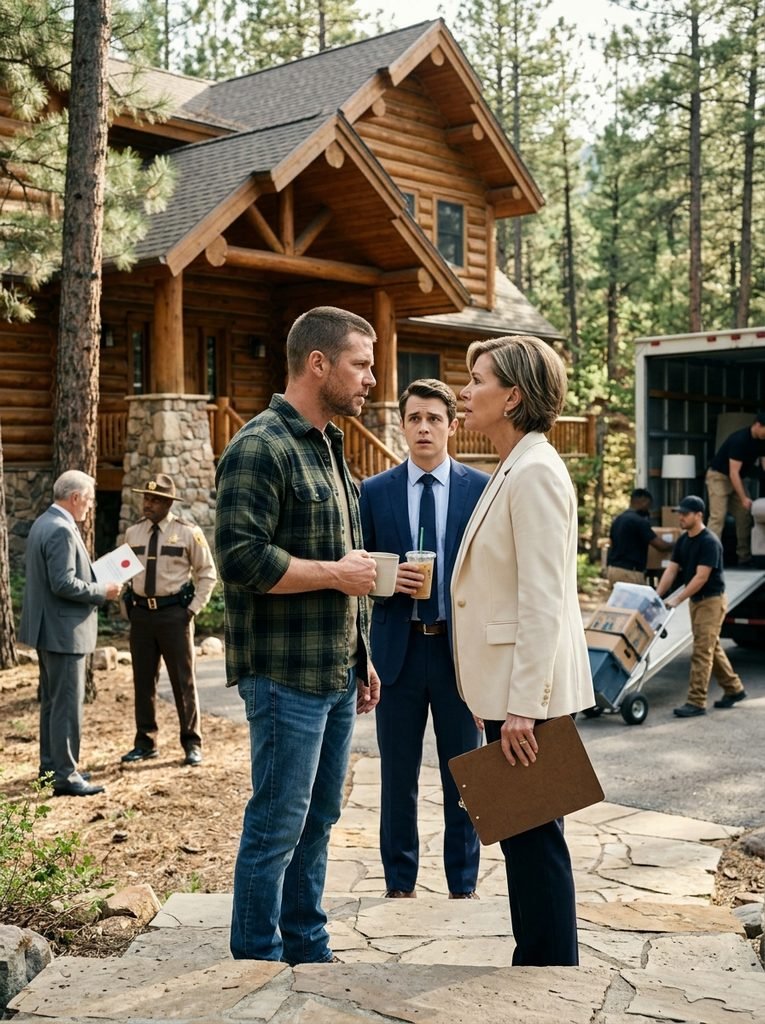
That Friday afternoon, my mother and brother showed up at the timber lodge I had inherited, a massive moving truck parked aggressively across my gravel driveway. My mother stepped out, smiled brightly, and said, “We forged the will to give your brother the $2.5 million estate. You need to be out by Friday.”
She looked incredibly pleased with herself, standing there as though she had just won the lottery. I looked right back at her, let out a slow breath, and replied, “Sure thing. You’ll both be in prison by then.”
They thought I was joking. They really did. I could see it in the way my brother, Corbin, leaned against the hood of his expensive imported car, crossed his arms over his tailored suit jacket, and let out a sharp, mocking laugh. He looked at me the way he always had, as though I were something he had scraped off the bottom of his shoe.
I was thirty-two years old, and for my entire life, I had been the invisible son: the one who did the dirty work, the one who stayed quiet, the one expected to swallow every insult, every slight, and every unfair demand for the sake of family peace. I worked as a heavy equipment logistics coordinator, which meant my days were filled with diesel fuel, muddy boots, endless spreadsheets, and eighty-hour workweeks managing massive transport trucks.
It was a grueling, exhausting life, but it was honest. To my family, though, it was just dirty blue-collar work, something to be mildly embarrassed about at dinner parties.
Corbin, on the other hand, was the golden child. He managed a chain of high-end fitness equipment stores, selling treadmills to rich people while wearing $3,000 watches he had bought on credit. He was twenty-nine, flashy, smooth-talking, and completely hollow inside.
My mother, Marin, worshiped the ground he walked on. To her, Corbin was the shining star of the family, the successful businessman, the handsome charmer who could do no wrong. And me? I was just Lachlan. Good old reliable, boring Lachlan—the guy you called when your car broke down, but not the guy you invited to the celebration dinner.
I stood on the wide wooden porch of the sprawling fifty-acre estate my grandfather had left me. Behind me, the massive timber lodge rose from solid oak and stone, surrounded by towering pines, with a commercial equipment yard stretching out in back. It was a beautiful, historic property.
It was my grandfather’s life’s work. Now these two parasites were standing in my driveway, holding a piece of paper they claimed was a new deed and acting as though they owned the place.
Corbin smirked, took off his designer sunglasses, and pointed them at me. “Come on, man,” he said, his voice dripping with the fake, condescending sympathy he always used. “Let’s be real. You don’t need a place like this. You live in your work boots. What are you going to do with fifty acres? Park your dirty trucks on the lawn? I can actually develop this land. Make it profitable. Mom and I handled the paperwork. We fixed the mistake Grandpa made. Don’t make this harder than it needs to be. Just pack your bags, brother.”
I didn’t scream. I didn’t yell. A younger version of me might have lost his temper, might have tried to argue logic with people who spoke only the language of greed. Instead, I stood there, feeling the cool afternoon breeze brush against my face, watching the smug satisfaction radiate from my own mother. She honestly believed I would fold. She thought I was the same broken, obedient workhorse I had been my whole life.
She had no idea I had spent the last two years preparing for this exact moment. They thought they had trapped me, but the truth was that they had walked straight into the jaws of a trap I had set long before they even knew there was a war.
“Are you really going to try this?” I asked quietly. “Do you know what you’re doing?”
Before I tell you about the moment I watched their world burn to ashes, you need to understand how we got there. You need to understand why I felt absolutely no guilt about what I was about to do to my own flesh and blood. If you have ever been the scapegoat in your family, subscribe to the channel, because what comes next is going to feel incredibly satisfying.
My memory is like a museum of pain, and every exhibit features my mother and brother. I remember being twenty-four, working double shifts at the freight yard and sleeping four hours a night, trying to save enough for my first decent used car. Corbin had just graduated from college and decided he deserved a monthlong vacation in Europe to “find himself.” He maxed out a credit card in my mother’s name. The bill was $12,000.
When the collection agencies started calling, my mother came to my cramped apartment in tears. She told me she would lose her house if she didn’t pay it. She begged me to help the family, so I emptied my savings account and gave her the money. Corbin never thanked me. He brought me back a cheap plastic keychain from Paris.
Then there was my twenty-eighth birthday. I spent it sitting in the cab of a broken-down transport truck on the side of a freezing highway, eating a cold turkey sandwich and waiting for a tow. When I checked my phone, I saw my mother’s social media posts. She had taken Corbin to a five-star resort to celebrate his hitting his monthly sales quota at the gym equipment store.
There was a photo of them clinking champagne glasses beneath the caption, “Celebrating my only true success story.” I hadn’t received a single birthday text. Not a phone call. Nothing.
But all of it—the money, the neglect, the blatant favoritism—paled in comparison to the way they treated my grandfather. Grandpa was a tough, hardworking man who had built a timber and logistics business from the ground up. He and I understood each other. We spoke the same language of hard work and early mornings. When he got sick, really sick, the rest of the family suddenly vanished.
My father, Thaddius, was a retired hardware store manager who spent his days avoiding conflict and playing golf. He never visited his own father. My mother claimed she was simply too sensitive to see Grandpa in a hospital bed. Corbin said the smell of sickness gave him anxiety. So it fell to me.
For two solid years, while working my demanding logistics job, I was Grandpa’s sole caretaker. I drove him to every chemotherapy appointment. I sat with him through the nausea and the pain. I managed his medications, bathed him when he couldn’t stand, and held his hand through the long, terrifying nights. I watched a strong, proud man slowly fade away, and it broke my heart into a million pieces.
During those two years, Corbin visited exactly twice, both times on major holidays. He would walk into the timber lodge wearing expensive cologne that made Grandpa cough, take a quick selfie holding the old man’s hand, post it online with a long paragraph about family love, and leave after thirty minutes. My mother would carefully smooth the creases from Corbin’s blazer before they left, fawning over how handsome he looked. Then she would glance at my oil-stained work jacket, wrinkle her nose in disgust, and tell me to wash my hands before I touched anything in the house.
I swallowed my anger and did the work. I took care of the man who meant the world to me. In his final days, Grandpa pulled me close, his breathing shallow, and told me he saw everything. He saw who showed up. He saw who cared. He told me he had made arrangements, and he made me promise him one thing.
“Don’t let them take what you built, Lachlan,” he whispered, his grip surprisingly strong for a dying man. “They’ll try. They’re vultures. Promise me you’ll be a wolf.”
I promised him. When he passed away, the vultures started circling immediately. They thought the old man had forgotten to write a will. They thought the estate would fall into their laps by default. They were already spending the money in their heads, but they were in for a rude awakening. Sometimes I wondered whether they had ever really looked at me and seen a person, or whether I had always been nothing more than an obstacle in their way.
The reading of the will took place in the lodge’s grand mahogany study. The air was thick with tension and the smell of old paper. My mother sat perfectly straight in a black dress that looked better suited to a cocktail party than a period of mourning. Corbin sat beside her, checking his phone and looking completely bored. My uncle Alistair—Grandpa’s younger brother and the timber yard’s former foreman—stood in the corner. He was a gruff, silent man who had watched my grandfather’s decline with the same quiet fury I had.
The estate lawyer, an older gentleman who had known our family for decades, cleared his throat and began to read. He skipped the pleasantries and went straight to the numbers. The liquid assets, savings, and investments totaled a staggering $2.5 million. Corbin dropped his phone. My mother gasped, her eyes widening with undisguised greed. Two and a half million dollars, plus the lodge, the fifty acres, and the commercial equipment yard. It was a fortune none of them had anticipated.
Then the lawyer read the next line. “I leave the entirety of my estate, both physical properties and liquid assets, solely and exclusively to my grandson, Lachlan.”
The silence that followed was so heavy it felt as though someone had sucked all the air out of the room. I didn’t look at them. I kept my eyes fixed on the lawyer’s desk and waited. Then the explosion came.
“What?” my mother shrieked, her voice cracking as her poised facade shattered. “That’s a mistake. That has to be a mistake. Thaddius is his son. Corbin is his grandson. He can’t just leave everything to the truck driver.”
She actually pointed a shaking finger at me. Corbin stood, his face flushing dark red. “This is insane. The old man was heavily medicated at the end. His mind was gone. Lachlan obviously manipulated him. He probably held a pen to his hand.”
My jaw clenched. I wanted to stand and shout about the endless nights I had spent cleaning up vomit while Corbin drank at VIP clubs. I wanted to scream about the $12,000 I had sacrificed. Before I could speak, though, Uncle Alistair stepped forward, his heavy boots thudding against the hardwood floor.
“Shut your mouth, Corbin,” he barked, his voice rough as gravel. “I was here. I saw who changed his sheets. I saw who carried him to the bathroom. You didn’t even know his favorite chair. He left it to the only real man in this room. You want to talk about his mind being gone? His mind was sharper than yours will ever be.”
My mother turned her venomous gaze on Alistair, but he didn’t flinch. Then she turned to me. The look she gave me was something I would never forget. It wasn’t disappointment. It wasn’t hurt. It was pure, unfiltered hatred—the look of a predator that had just realized someone had stolen its kill.
“You manipulated him, Lachlan,” she hissed, her voice trembling with cold fury. “You played the loyal servant just to steal from your own family. You’re a disgusting, greedy little boy. We won’t let this stand. We’ll contest this. We’ll fight you for every single penny.”
I finally looked her in the eye. My voice was calm, almost dead. “Contest it, Mom. Try.”
They stormed out, slamming the door hard enough for the sound to echo through the lodge. The lawyer sighed as he packed his briefcase. “They’re going to cause trouble, Lachlan,” he warned softly. “People lose their minds when they see two and a half million dollars. You need to be careful.”
I thanked him and walked onto the porch. My mother’s car sped down the long driveway, kicking up a cloud of dust. The war had been declared. The lines were drawn. As I watched them leave, a strange sense of clarity washed over me. The hatred in her eyes had told me everything I needed to know. The only question was whether she would stop at a simple legal dispute or cross lines that could never be uncrossed.
For the first few weeks after the will was read, things were strangely quiet—the kind of quiet that makes the hairs on the back of your neck stand up. My mother didn’t call. Corbin didn’t text. I continued working my logistics job, managing heavy transport routes during the day and coming home to the massive, empty lodge at night. But I kept my eyes open. Grandpa had taught me to always watch the perimeter.
My vigilance paid off on a Tuesday afternoon. I had finished my shift early and was driving my pickup back up the mountain road toward the estate. As I approached the main gate, I noticed a sleek silver sedan parked near the property line. It wasn’t Corbin’s car. I parked some distance away and walked quietly through the trees. Through the branches, I saw Corbin standing beside the fence with a man I recognized immediately: Harlo.
He was a notorious commercial land broker in our county, famous for buying old family farms, paving them over, and building massive strip malls. He was a shark in a cheap suit. Corbin was pointing toward my grandfather’s equipment yard, making sweeping gestures with his hands. Harlo nodded enthusiastically and took notes on a tablet.
I couldn’t hear what they were saying, but I didn’t need to. The math was simple. Corbin was broke, drowning in credit card debt to maintain his fake millionaire lifestyle. Harlo had deep pockets and wanted fifty acres of prime real estate. My brother was promising him land he didn’t own.
Later that night, my phone buzzed with a text from Corbin. “Hey, bro. Hope you’re doing well. The gym is hosting a big executive retreat next month. Any chance I could rent out the lodge for a weekend? Happy to pay you a few hundred bucks for the trouble. Let me know.”
I stared at the screen and almost laughed out loud. He was trying to get access to the property so Harlo could conduct a formal appraisal. They were measuring my home for a coffin. I didn’t reply. Instead, I called a number Uncle Alistair had given me. It belonged to a man named Gideon.
Gideon was not a warm person. He was a forensic auditor and corporate attorney who specialized in protecting massive wealth from greedy relatives. When I walked into his downtown office the next morning, he didn’t offer me coffee. He simply pointed to a chair and said, “Tell me the numbers, and tell me the threat.”
I laid out everything: the $2.5 million, the fifty-acre estate, Harlo the land broker, and my absolute certainty that my family would try to steal it. Gideon reviewed the will, his eyes scanning the documents like a machine.
“If they contest the will in probate court, they’ll drag this out for years and drain your assets in legal fees,” he said, his voice completely monotone. “We don’t do probate battles. We bypass them entirely. We’re going to establish an irrevocable trust.”
Over the next week, Gideon orchestrated a masterpiece of financial and legal engineering. We created a trust entity with a completely unrelated corporate name. I transferred the title to the lodge, the fifty acres, the equipment yard, and every penny of the $2.5 million directly into the trust. I appointed myself its anonymous managing trustee. Legally speaking, Lachlan no longer owned anything. The trust owned it all.
I even moved the property taxes and utility bills under the trust’s corporate tax ID. It cost me a substantial amount in legal fees, but it was worth every cent. I was building an invisible fortress. When it was done, Gideon handed me a thick leather binder.
“If anyone tries to claim this property or transfer the title without this specific trust seal and my personal authorization, they aren’t merely committing a civil error,” he explained coldly. “They’re committing felony fraud against a protected financial entity.”
I drove home that night with a profound sense of security. I had locked the doors, barred the windows, and armed the alarms. All I had to do now was wait and see whether my family was stupid enough to try to break in. I wondered just how far their desperation would push them.
A month later, the illusion of peace shattered when I received a frantic call from Aunt Opal, my mother’s sister. Opal was the family’s central broadcasting station, a woman who thrived on drama and gossip.
“Lachlan!” she practically yelled into the phone. “You’re twenty minutes late. Your mother is going to be furious. We’re all waiting in the private dining room at the country club.”
I paused, wiping grease from my hands with a rag. I was at the transport yard, halfway through a shift. “What are you talking about, Aunt Opal? No one invited me to dinner.”
“Oh, stop playing dumb, Lachlan,” she scolded. “The family meeting to celebrate the compromise. Your mother told us you finally came to your senses and agreed to split the estate with Corbin so he can expand his gym franchise. We’re all here to toast the new business venture. Hurry up and get here.”
She hung up before I could answer. I stood in the noisy logistics yard, diesel engines roaring around me, and felt a cold wave of realization wash over me. A compromise. My mother had gathered the entire extended family—all the aunts, uncles, and cousins—to publicly announce a deal that had never existed. It was a classic manipulation tactic: force a public narrative so hard that the victim feels too much pressure to contradict it. She was trying to corner me with social obligation.
I didn’t return to work. I washed my hands, climbed into my truck, and drove straight to the country club. When I walked into the private dining room in my work boots, jeans, and faded flannel shirt, the contrast between me and the people in suits and cocktail dresses was jarring. My mother stood at the head of a long table, holding a glass of wine. She was in the middle of a speech.
“And we’re just so proud of Lachlan for doing the right thing,” she was saying, her voice carrying through the quiet room. “Family always comes first. By splitting the two-and-a-half-million-dollar inheritance, Corbin can secure the commercial loan he needs. And Lachlan—well, Lachlan can continue doing his little trucking routes without the burden of managing a massive estate. It’s a win for everyone.”
The room erupted in polite applause. Corbin sat beside her, beaming as he accepted handshakes from our cousins. Then someone noticed me standing in the doorway. The applause slowly died, and every face turned toward me.
My mother’s smile faltered for a fraction of a second before she recovered and rushed toward me with open arms. “Lachlan, you made it! We were just celebrating your generous decision.”
She leaned in to hug me, but when she was close enough, her voice dropped to a harsh, venomous whisper only I could hear. “Smile and nod, you ungrateful brat. Don’t embarrass me in front of the family. You’re a truck driver. You don’t need a mansion. Let your brother have what he deserves.”
Then she pulled back, beaming for her audience. “Come, sit down. Tell everyone how excited you are.”
I looked around the room. Aunt Opal was nodding approvingly. My father looked away, refusing to meet my eyes. Corbin raised his glass toward me with that unbearable, mocking smirk. They really thought it would work. They thought public pressure would break me.
I didn’t scream or cause a scene. I looked at my mother, then at Corbin, and gave them a small, icy smile. Without saying a word, I turned and walked out. I let them sit in the awkward, deafening silence. I let them explain my departure however they wanted, because in that moment, the last shred of familial guilt I had left evaporated. The gloves were officially off. I could only wonder what desperate move they would make once they realized their little public relations stunt had failed.
My silent exit from the country club sent my mother into a spiral of panic. Her public narrative had collapsed. The family was asking questions she couldn’t answer, and Corbin’s deadline with Harlo was closing in. Desperation breeds stupidity, and my family was about to prove just how stupid they could be.
Two days later, my phone buzzed with an urgent email notification from the county’s automated property records system. Gideon had arranged for any inquiry or attempted filing involving my grandfather’s old deed to trigger an immediate alert. When I opened the email, my blood ran cold, followed instantly by a surge of adrenaline.
Someone had submitted a deed transfer request to the county clerk’s office. The document purported to transfer the entire fifty-acre estate and lodge directly into Corbin’s name. I forwarded the alert to Gideon immediately. Ten minutes later, my phone rang.
“It’s a forged power of attorney,” Gideon said, his voice flat and entirely unsurprised. “They used an old copy of your grandfather’s will, the one from before he updated it, and attached a newly drafted power of attorney. It claims your mother, as the direct next of kin, has the legal authority to execute the transfer on behalf of the deceased. They had it stamped by a notary public.”
“A fake notary?” I asked, tightening my grip on the steering wheel.
“No,” Gideon replied. “A real notary. Probably someone Corbin knows through his shady real estate circles. Someone willing to stamp a document without verifying the legal authority behind it. It’s incredibly reckless. They filed through an online portal, hoping the county clerk would rubber-stamp it without checking the history.”
“Can they take the house?” I asked.
Gideon gave a rare, dry chuckle. “Lachlan, they can’t take a house you don’t legally own. They’re trying to transfer a deed that was nullified the moment we moved the property into the irrevocable trust. The county system automatically flagged their submission as a conflict of ownership. The transfer is frozen. More importantly, by submitting a forged legal document to a government agency with the intent to steal property worth two and a half million dollars, they’ve just committed a massive felony.”
“So what do we do?” I asked, a dangerous smile spreading across my face.
“We do nothing,” Gideon instructed. “We let them think it worked. The county portal takes about forty-eight hours to officially reject a fraudulent claim. For the next two days, their dashboard will show ‘Pending Approval.’ In their minds, they’ve won. Let them act on that false confidence. When they make their move, we trap them.”
And make their move they did. They didn’t even wait for official confirmation. The very next morning, Corbin posted a major update on social media: a picture of himself standing in front of my grandfather’s timber lodge in a custom suit. The caption read, “Big moves happening. The next chapter begins today. Finally taking what’s ours.”
They thought I was weak. They thought I was stupid. They thought they had successfully stolen my inheritance with a fraudulent stamp and a forged signature. They had no idea they were walking blindly into an electric fence.
I spent that evening making exactly two calls. The first was to Gideon, telling him to meet me at the property Friday morning. The second was to the local sheriff’s department, requesting an officer to be on standby for a potential trespassing and fraud situation. The stage was set. The trap was armed. All I had to do was wait for the rats to walk in.
If you want to see how this family’s arrogant plan blows up in their faces, please like this video and subscribe to Revenge Silent. Leave a comment with the name of the city you’re watching from. Every comment helps the video reach more viewers, and I appreciate it.
Friday morning arrived with a crisp, cool breeze that rustled the towering pines surrounding my grandfather’s estate. I stood on the wide wooden porch with a steaming mug of black coffee, watching the long gravel driveway. I didn’t have to wait long. At nine o’clock, the heavy crunch of tires on gravel broke the property’s stillness.
A massive white moving truck pulled in, taking up half the driveway, followed closely by Corbin’s silver imported sedan. They drove in like conquering royalty returning to claim their castle. As I watched them park, my heart began to beat a little faster—not from fear, but from pure, unadulterated anticipation. The trap was about to snap shut.
Corbin got out first. He wore a ridiculously expensive tailored navy suit, the kind you wore when you wanted to look as though you owned the world while secretly drowning in credit card debt. In one hand, he held a premium iced coffee, condensation dripping down the plastic cup. He took a long sip and looked up at the solid oak lodge with a sickeningly greedy smirk.
My mother stepped out of the passenger side carrying a clipboard, as though she were managing a massive construction project. She immediately began pointing at the porch and giving loud directions to the two burly movers climbing down from the truck.
“Bring the dollies up the front steps,” she ordered, her voice shrill and commanding. “We need the living room cleared out first. Everything goes into storage. I want this place completely empty by tomorrow afternoon.”
I set my mug on the wooden railing. The soft clink of ceramic drew their attention. My mother looked up, saw me standing there, and gave me that bright, venomous smile. I’ve already told you about this moment, but standing inside it was something else entirely.
“We forged the will to give your brother the two-and-a-half-million-dollar estate,” she said. “You need to be out by Friday.”
She looked incredibly pleased, as if she were holding a winning lottery ticket. I simply replied, “Sure thing. You’ll both be in prison by then.”
Corbin let out a loud, theatrical laugh and shook his head. He took another sip of iced coffee before walking toward the porch steps. “Come on, Lachlan. Stop being dramatic. The paperwork is filed. The county approved it. You’re trespassing on my property right now. Grab your duffel bags and get back in your dirty truck. Don’t make us call the police.”
I didn’t move. I looked past him toward the lodge’s heavy front door. Right on cue, it opened, and Gideon stepped onto the porch. He wore a charcoal-gray three-piece suit that looked sharper than anything Corbin could afford and carried a thick leather briefcase. Beside him stood a uniformed sheriff’s deputy, a serious-looking man with his thumbs resting on his duty belt.
The moment they stepped into the morning light, the atmosphere changed. The movers froze halfway up the walkway, instantly sensing that they had wandered into a legal minefield. Corbin stopped dead. His arrogant smirk vanished, replaced by sheer confusion. The plastic cup in his hand began to tremble.
“What is this?” he demanded, his voice losing its confident edge. “Who are you?”
Gideon didn’t smile. He walked slowly to the edge of the porch, opened his briefcase, and removed a stack of heavily stamped documents. “I’m the legal representative and lead auditor for the holding trust that owns this estate,” he said. His voice was cold and flat, carrying the absolute authority of the law. “You submitted a deed transfer request to the county clerk three days ago, claiming ownership of this property based on an outdated will and a fabricated power of attorney.”
My mother stepped forward, her face turning pale. “That’s a lie!” she shouted, though her voice trembled. “The will is real. I’m his mother. I have the right to transfer it.”
Gideon adjusted his glasses and looked down at her as though she were an insect. “Madam, this property and its associated two and a half million dollars in liquid assets do not belong to your son. They don’t belong to Lachlan, either. They belong to an irrevocable trust established weeks ago. You attempted to transfer a deed that was already legally protected under corporate trust law.”
He held up a sheet bearing a bright red seal. “By submitting a forged legal document to a government agency with the intent to steal an asset valued at more than two million dollars, you have committed felony fraud.”
I watched Corbin’s face. The color drained from his cheeks so quickly that he looked like a ghost. His eyes moved from the paperwork to the deputy and finally to me. In that split second, he realized he wasn’t the smartest man in the room. He realized he was the prey.
The deputy stepped forward. “You folks need to get off this property immediately,” he said firmly. “The county prosecutor’s office has been notified of the fraudulent filing. If you take one more step toward this house, you’ll be arrested for criminal trespassing. Now turn around and leave.”
The movers didn’t need to be told twice. They practically sprinted to their truck, fired up the engine, and reversed down the driveway in a cloud of dust. Corbin remained frozen, his mouth opening and closing like a fish suffocating on dry land. The iced coffee slipped from his numb fingers, hit the gravel, and spilled brown liquid across the stones. He looked completely broken.
My mother didn’t say a word as she dragged her shell-shocked golden child back to his car. They drove away in total silence. It was a complete and humiliating defeat, and I honestly thought it would be the end. I thought walking straight into a felony fraud accusation would scare them enough to make them return to their lives, hide in shame, and leave me to the peace I had earned.
I had severely underestimated my mother’s entitlement. A week later, a thick, expensive-looking envelope arrived in my mailbox. It was a certified letter from a downtown law firm. I sat at the heavy oak dining table—the same table where my grandfather used to eat breakfast—and tore it open.
Inside was a formal legal demand sent on my mother’s behalf. As I read it, a cold, hard knot of anger tightened in my chest. The letter was a masterpiece of delusion. Her attorney claimed that my actions, specifically establishing a secret trust and humiliating her in front of law enforcement, had caused her severe emotional distress. She argued that, as a direct descendant, she had a moral, familial, and ethical right to a portion of the estate, regardless of what the will said.
She demanded immediate compensation for the mental anguish caused by my cruel exclusion of my own family. Then came the list: $150,000 in cash, transferred immediately to her account; joint ownership of the timber lodge so she could use it for family holidays; and a monthly allowance of $2,000 to maintain her standard of living.
I read the letter three times. My hands began to shake, not from fear, but from a fury so deep and intense that I could barely breathe. She was trying to extort me. She had tried to steal the estate with forged documents, gotten caught, and was now billing me for the emotional trauma of failing to rob me. The audacity was staggering. This wasn’t even a business dispute anymore. It was an insult to my intelligence and to my grandfather’s memory.
The phrase that made my blood boil was “familial obligation.” She dared to use those words. Where had her familial obligation been while I worked eighty hours a week? Where had it been when she took $12,000 from me to pay Corbin’s debts? Where had it been when my grandfather was dying and she couldn’t even be bothered to bring him a glass of water?
I didn’t call Gideon immediately. I needed to calm down first. I walked onto the back porch and looked across the sprawling timber yard. I remembered sitting on that very porch with Grandpa years earlier, repairing an old chainsaw with grease up to our elbows. He had looked at me, wiped his brow, and said something that stayed with me forever.
“Lachlan, don’t judge people by what they say in a moment of panic. Judge them by what they do when they think you’re trapped. If someone shows you they’re a snake, don’t try to put a leash on it. Cut off its head.”
He had been right. I had tried to defend myself. I had built a wall and hoped to keep them outside it, but snakes would always find a way to slither over the wall. The time for defense was over. It was time to go on the offensive.
I took my phone from my pocket, photographed the demand letter, and sent the image to Gideon with a brief message. I told him to draft a permanent cease-and-desist notice against my mother and Corbin. I told him to include the threat of a restraining order. Most importantly, I told him to stop holding back the county prosecutor. I wanted the fraud charges pushed through.
A few hours later, Gideon called. “The cease-and-desist is being delivered by courier right now,” he reported. “But there’s something else you need to know. Your mother isn’t only attacking you through lawyers. She’s attacking your reputation. I’ve been monitoring public social media channels. Your family is getting very vocal.”
I thanked him and hung up. Then I opened the social media apps I rarely used and saw that he was right. My mother had realized her legal extortion attempt might fail, so she had moved on to her backup plan. She was trying to destroy the only thing I had left within that family: my good name. I wondered how far she was willing to go to make me the villain.
The smear campaign was swift, brutal, and highly coordinated. My mother had enlisted Aunt Opal, the undisputed queen of family gossip. Within twenty-four hours, they had called, texted, or messaged nearly every relative in our extended family. The lies were so toxic, so completely fabricated, that they took my breath away.
According to Aunt Opal’s dramatic Facebook posts and my mother’s tearful phone calls, I was a master manipulator. They claimed I had emotionally abused Grandpa during his final months. They told our cousins that I had systematically isolated him and refused to let them visit, which was why they were never at the lodge. The most disgusting lie came when my mother told Uncle Alistair’s children that I had forcibly medicated Grandpa with heavy sedatives just before the lawyer arrived, tricking him into signing the new will while he was barely conscious.
Messages began arriving from distant cousins. Some were confused and wanted to know whether the rumors were true. Others were openly hostile, calling me a monster and a thief. My own family—people I had known my entire life—were turning against me because they were too lazy to question a manipulative woman’s tears.
The isolation was profound. This was what narcissists did when they could no longer control you: they tried to control how other people saw you. They used people like Aunt Opal to do their dirty work, creating an echo chamber of lies until the victim was completely alienated. They wanted me to feel so alone, so hated, and so exhausted that I would hand over the $150,000 just to make the nightmare stop.
But I wasn’t their quiet, obedient workhorse anymore. I was the wolf Grandpa had told me to be. I spent an entire Saturday in his study, seated at his heavy desk, gathering every piece of evidence I had accumulated over the previous two months.
I scanned the $12,000 credit card bill from five years earlier. I scanned the forged power of attorney bearing Corbin’s signature. I scanned the county clerk’s automated rejection notice citing fraud. I took screenshots of Corbin’s arrogant social media post claiming he was taking the house, and of the text messages in which my mother admitted she wanted the money. Finally, I scanned the ridiculous demand letter from her lawyer asking for $150,000 for emotional distress.
I compiled everything into a twenty-page PDF. The evidence was massive and undeniable. I added no emotional commentary and wrote no long, pleading letter begging anyone to believe me. Instead, I wrote a short, cold introduction.
“To the family: Recently, a narrative has been pushed that I manipulated our grandfather and stole this estate. I don’t deal in gossip. I deal in facts. Attached is the legal documentation of my mother and brother attempting to commit felony property fraud against a protected trust. Also attached is the extortion letter they sent when their crime failed. Read the documents. Look at the signatures. If you still want to believe their lies after seeing the truth, don’t ever contact me again.”
I attached the PDF to an email and copied twenty-seven relatives—aunts, uncles, cousins, everyone. Then I hit Send, turned off my phone, poured myself a glass of water, and waited for the explosion. I wondered whether the truth would be enough to shatter the illusion my mother had spent her entire life building.
When I turned my phone back on the next morning, it practically melted under the flood of notifications. The fallout from that twenty-page document had been catastrophic for my mother’s carefully crafted public image. Dozens of texts poured in. Uncle Alistair had forwarded my email to his entire side of the family with one message: “I told you the boy was innocent. Shame on all of you.”
Cousins who had accused me of being a monster now sent long, rambling apologies, claiming they had been blinded by Aunt Opal’s lies. Even Aunt Opal sent a frantic, backpedaling message insisting my mother had tricked her and that she had no idea the paperwork was forged. I didn’t answer a single apology. I had drawn my line in the sand.
Clearing my name with the family was only phase one. Now it was time for phase two. It was time to deal with the golden child.
Corbin worked as a regional manager for a massive commercial real estate and luxury fitness firm. He and his shady land broker friend, Harlo, operated under the umbrella of a highly regulated corporate entity. Firms like that survived on their public reputations. They boasted about ethics, transparency, and strict legal compliance. They absolutely did not tolerate employees committing felony real estate fraud in their spare time.
I sat back down at my computer and found the direct email address for the regional ethics and compliance board at Corbin’s company. I drafted an anonymous tip. I left out my name but attached the same PDF dossier I had sent to the family. I specifically highlighted the forged power of attorney, the fraudulent notary stamp, and Corbin’s attempt to illegally transfer a $2.5 million commercial estate using his industry connections.
Then I clicked Send. I thought a corporate investigation would take weeks, perhaps months. I was wrong. When a company sees an employee committing blatant, documented felony fraud, it can move with terrifying speed.
Three days later, on a Wednesday afternoon, my phone began to ring. It was Corbin. I let it go to voicemail. Two minutes later, he called again, and then again. He called fifteen times in thirty minutes. He was panicking. On the sixteenth call, I finally pressed the green button and lifted the phone to my ear. I didn’t say hello. I listened to his ragged, hyperventilating breathing.
“Lachlan,” he gasped. His voice sounded shattered, stripped of the arrogant, mocking tone he had used his entire life. “Lachlan, please. You have to tell them it was a misunderstanding. You have to call my corporate office. They fired me. They didn’t even let me pack my desk. Security escorted me out of the building in front of my entire sales team.”
He was crying. Actual, genuine tears. The golden child was sobbing into the phone.
“They’re reporting me to the state real estate board,” he choked out, his voice cracking. “They’re revoking my commercial sales license. My company accounts are frozen. I have nothing. Lachlan, I have a seventy-thousand-dollar car loan and thirty thousand in credit card debt. I’m ruined. Please, you have to tell them we were just negotiating. Please, brother.”
I stood in the lodge’s massive, quiet living room and looked at the beautiful stone fireplace my grandfather had built with his own hands. I thought about the cold turkey sandwich on the side of the highway. I thought about the $12,000 Corbin had taken from me. For a few more seconds, I let his sobs echo through the speaker.
Then I spoke, my voice calm, steady, and utterly devoid of mercy. “I told you to be realistic, Corbin.”
I hung up and blocked his number permanently. He had built his life on an illusion, treating everyone around him like stepping-stones. Now that illusion had shattered, and he was finally hitting the ground. But there was still the mastermind behind it all. There was still my mother.
The destruction of Corbin’s career was the domino that brought the whole house of cards down. The corporate compliance board at his former company did exactly what it was legally obligated to do and handed the evidence of the forged title transfer to state authorities. Because Corbin had used his professional credentials to facilitate the fraudulent notary stamp, the matter escalated from a family dispute to commercial fraud.
Two weeks after our phone call, the inevitable happened. A sheriff’s deputy—the same man who had stood on my porch—knocked on the door of my parents’ suburban home. Corbin was served with a criminal subpoena. He was officially being charged with attempted property fraud and submitting falsified documents to a government agency.
He wasn’t going to a maximum-security prison for twenty years, but he faced massive fines, years of strict probation, hundreds of hours of community service, and a permanent felony record that would ensure he could never work in real estate or finance again. His life, as he knew it, was over.
The shock wave from that subpoena finally broke my mother. All her life, Marin had lived for appearances. She thrived on being the respectable, successful matriarch. She needed the country club dinners, the perfect photographs, and the envy of her sisters. Now she was the mother of a disgraced, unemployed felon. The family gossip had turned completely against her. Aunt Opal and the others stopped returning her calls. She was isolated, drowning in the very public humiliation she had tried to force onto me.
The final victory arrived in the mail. It came in a thin, standard envelope from the same downtown law firm that had tried to extort me a month earlier. The tone of this letter was entirely different. It was a brief, legally binding notice of withdrawal.
Her attorney formally stated that Marin was dropping all claims to the estate, withdrawing her demand for $150,000, and renouncing any future disputes regarding my grandfather’s will. At the bottom of the page, in plain text, was a request for no further contact between the parties.
She had surrendered completely and unconditionally. She knew that if she pushed even an inch further, Gideon would unleash a civil lawsuit that would bankrupt whatever retirement savings she and my father had left. She was trapped in a prison of her own making, forced to live with the knowledge that the quiet, dirty truck driver she had despised all his life was the one who had defeated her.
Uncle Alistair told me she rarely left the house anymore. He had seen her at the grocery store once, and he said she looked ten years older. Her shoulders were slumped, her eyes constantly darting around as though she feared someone was whispering about her. When he walked past, her lips trembled, but she said nothing. She lowered her eyes to the floor and pushed her cart away.
The golden child was a convicted fraudster working for minimum wage at a hardware store to pay his legal debts. The toxic mother was a social pariah, living in silence and shame. And me? What happened to the invisible son?
Six months have passed since the dust finally settled. I’m sitting in my grandfather’s heavy leather armchair in the study of the timber lodge. Evening sunlight pours through the tall windows, casting a warm golden glow across the hardwood floors. A fire crackles softly in the stone fireplace. The house is quiet, peaceful, and entirely mine.
I didn’t quit my job as a logistics coordinator. I like the work, the routine, and the people. But I don’t work eighty hours a week anymore. The trust manages the investments, and that financial security has given me something I never had before: freedom. The freedom to breathe. The freedom to rest. Most importantly, the freedom to choose who gets to be part of my life.
When I look back at everything that happened, I don’t feel guilty. I don’t feel regret. I feel an overwhelming sense of relief. For my entire life, I had been conditioned to believe that family loyalty meant setting myself on fire to keep everyone else warm. I had been taught that standing up for myself was selfish and that tolerating abuse was a virtue. Before he died, my grandfather taught me the truth.
Toxicity is toxicity, even when it shares your DNA. Blood makes you related, but loyalty, respect, and basic human decency are what make you family. I protected my grandfather’s legacy. I protected my future. Corbin lost his career because he chose greed over hard work. My mother lost her family because she chose manipulation over love. They destroyed their own lives. All I did was hold up a mirror and let the world see who they really were. I stopped being their victim and, in doing so, became the author of my own life.
But dealing with a toxic family is never entirely over. Just yesterday, my phone buzzed with a text from Aunt Opal.
“Lachlan, Thanksgiving is coming up. Your mother is severely depressed. She cries every day because she misses you. She’s begging for forgiveness. Can we just put the past behind us and have a family dinner? Please be the bigger person.”
I stared at the message for a long time. I thought about the forged documents, the smear campaign, and the extortion letter. Now my aunt was telling me that my mother missed me and begging me to forgive her so the family could reunite for Thanksgiving.
So I want to ask you a question. Am I being too cruel by changing my phone number and banning them from my life forever, or should I give them one last chance to apologize?
Thank you for listening to my story today on Revenge Silent. If it gave you a sense of satisfaction, please like the video, subscribe to Revenge Silent, and leave your thoughts in the comments below. I’ll see you in the next video.