My In-Laws Called My Wife “My Problem” When She Was Stranded in the Snow, Then Their Mortgage Company Called
The text from my brother-in-law came in ninety seconds after I sent mine.
I was sitting in my truck on the third level of the parking garage downtown, engine running, heater blasting on my hands. I’d just typed the most reasonable message I’ve ever sent to anyone.
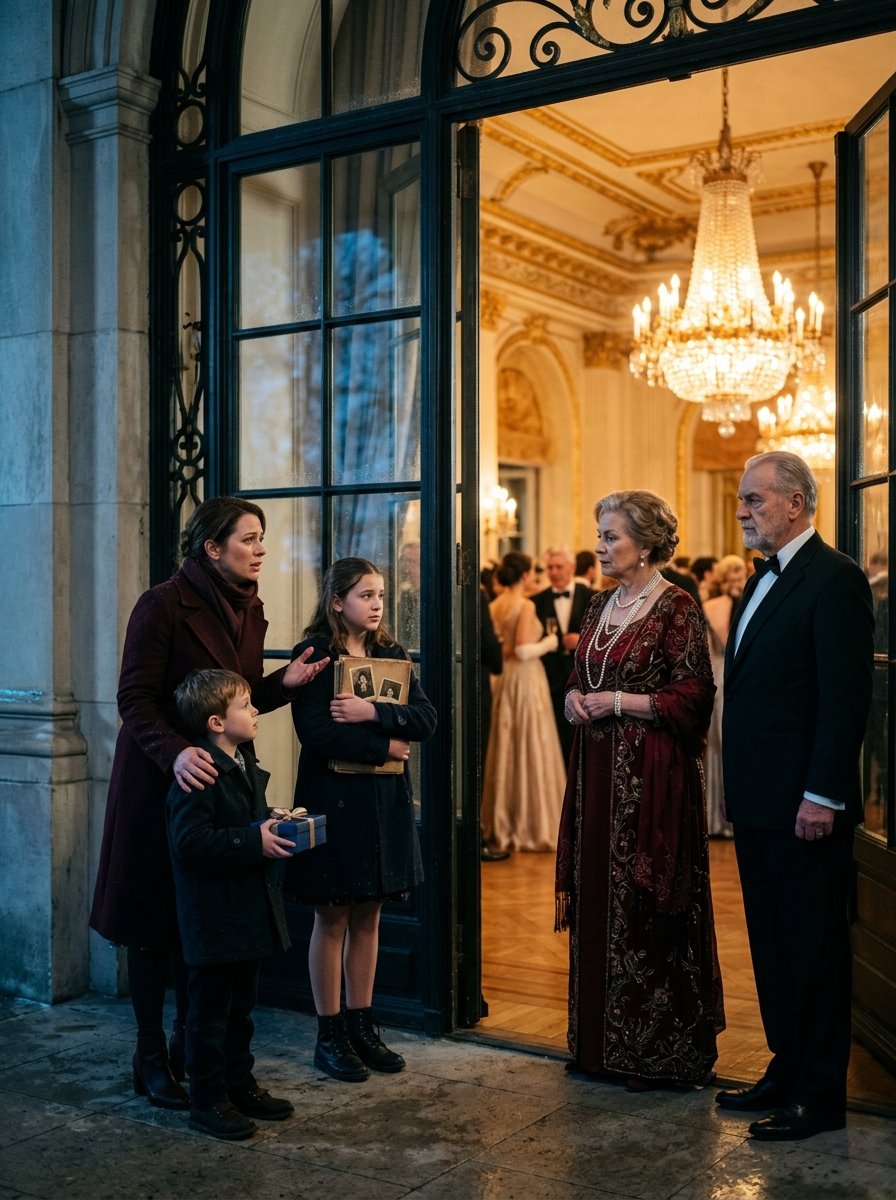
“Hey, Nat’s car broke down on Route 9 near the Sunoco. It’s freezing. Can someone pick her up while I go get Ellie from daycare?”
I sent it to the family group chat. Glenn, my father-in-law. Donna, my mother-in-law. Kyle, my wife’s younger brother. They all lived twelve minutes from that Sunoco station. Kyle lived in his parents’ basement, so same distance.
I wasn’t asking for a kidney. I was asking someone to drive twelve minutes to pick up their daughter and sister, who was sitting in a dead car in single-digit weather after a twelve-hour shift.
My phone buzzed.
Kyle: “She married you, bro. She’s your problem now.”
I read it three times. The heater was blowing right on my hands, and I couldn’t feel them.
Then the little typing bubble popped up under Donna’s name, and I let out a breath. Okay, I thought. Here it comes. Donna’s going to shut this down. She’s going to tell Kyle to knock it off and say she’s grabbing her coat.
Donna sent a thumbs-up emoji.
Not to my message. To Kyle’s.
Glenn didn’t respond at all. I found out later he’d read it. He told Natalie he hadn’t seen it in time, which was interesting, because his read receipts were on.
I sat in that parking garage and felt something shift inside me. It wasn’t anger, exactly. It was quieter than that, and more permanent. I’m a structural engineer, and the best way I can describe it is the moment a load-bearing wall finally cracks after years of invisible stress. When you see that crack, you know the structure is compromised. You don’t add more weight. You start planning what has to come down before it all comes down on its own.
I typed back one message.
“Understood. Remember that.”
Then I called my buddy Marcus, who lives ten minutes from Route 9.
“Marcus, I need a favor. Nat’s stuck by the Sunoco. Car’s dead. No heat.”
“Say less,” he said. I heard his keys jingle before he even hung up.
He had her in his truck with the heat cranked within fifteen minutes. I made it to the daycare with two minutes to spare. Ellie was the last baby in the room, sitting on the teacher’s lap, chewing on a plastic giraffe. When she saw me, she kicked her little legs like I’d just come home from war.
That night, after Ellie was asleep and Natalie had showered and was curled up on the couch under two blankets, she looked up at me.
“What did you mean,” she asked, “by ‘Remember that’?”
I kissed her forehead. “Nothing. Just tired.”
I wasn’t tired. I was more awake than I’d been in a long time.
After she fell asleep on my shoulder, I gently shifted her onto a pillow, picked up my phone, and opened my banking app. For the first time in fourteen months, I really looked at the automatic payment I’d set up.
Recipient: Lakeshore Home Loans. Amount: $2,400.00. Frequency: monthly, on the 28th.
Fourteen consecutive payments.
The mortgage on Glenn and Donna Aldridge’s house.
The house where Kyle had just typed “She’s your problem now” from the basement I was paying for.
I need to give you some context, because without it you’ll think I’m the bad guy. Honestly, for a while, I thought I was too.
My name is Brandon Mercer. I’m thirty-three. I’ve been married to Natalie for four years, and we have a nine-month-old daughter named Ellie. She is, without exaggeration, the best thing that’s ever happened to either of us.
Nat’s a pediatric nurse. She works twelve-hour shifts at the children’s hospital and comes home with stories that would break your heart, then gets up the next morning and does it again. I design parking structures and office buildings for an engineering firm downtown.
We’re not rich. We’re comfortable. We planned carefully, saved aggressively, and built a life that works. We bought our house in 2021 with a thirty-year fixed mortgage at 3.1 percent, which I still think about with the warm feeling some people get from old love songs. We have an emergency fund. We have a 529 plan for Ellie that Nat’s coworkers chip into on her birthday instead of buying toys. Nobody handed us anything.
Natalie’s family is a different story.
The Aldridges are the kind of family that looks great from the outside. Big Thanksgiving dinners. Matching Christmas pajamas on Instagram. A family group chat full of heart emojis and pictures of casseroles.
Her dad, Glenn, is a retired union electrician, sixty-one, with a pension from his local and hands like baseball mitts. Her mom, Donna, works part-time in the office at their church, answering phones and running the bulletin. Her brother, Kyle, is twenty-seven, sells cars at a dealership on the bypass, and lives in their basement.
On paper, a solid middle-class family.
Here’s what the picture doesn’t show.
About fourteen months before that snowstorm, Natalie came home from a phone call with her mother and sat down on the edge of our bed without taking her coat off.
“Mom’s scared,” she said. “Really scared.”
A couple of years earlier, Glenn had refinanced the house to consolidate some debt: a truck loan, two credit cards, and a home improvement loan from when they redid the kitchen. The new payment came out higher than he expected once the escrow for taxes and insurance went up. They’d fallen three months behind. Nobody in the family knew except Donna, and she only told Natalie because a letter had come from Lakeshore Home Loans with the words “Notice of Intent” in bold at the top.
“If they don’t catch up, they could start foreclosure,” Nat said. Her voice cracked on the word. “Brandon, that’s the house I grew up in.”
I didn’t hesitate.
“I’ll cover it,” I said. “Until they get back on their feet.”
She stared at me. “It’s twenty-four hundred a month.”
“I know what it is.”
I opened a separate checking account at our credit union, the one I use for budgeting buckets, and set up an automatic payment straight to Lakeshore on the 28th of every month. Donna gave me the loan number. Glenn negotiated a repayment plan with Lakeshore for the three missed payments, using his tax refund and some money from his union annuity.
But the monthly payment, the big one, the one that kept the roof over their heads, came from me.
Glenn knew I was “helping a little,” as he put it. What he didn’t know, what none of them knew except Donna in the vaguest way, was that I was covering the entire payment, every single month. Glenn’s pension was going to utilities, car insurance, groceries, and his Friday fish fry at the VFW.
The mortgage was me.
It didn’t stop with the mortgage.
Last summer, Kyle called me and said he needed $3,800 for a certification course that would get him out of car sales and into finance. A real career, he said. A real future. He talked about it for twenty minutes. I sent him the money that afternoon.
He never took the course. I know because I asked him about it at Thanksgiving, and he changed the subject so fast you’d think I’d asked about his browser history.
He did text me later that night, though.
“Bro, I’ll get you back. Things are just tight.”
That was seven months before the snowstorm. I never got a dime.
In April, Donna’s transmission went out on her Buick. The shop quoted $1,900. I paid it over the phone with my credit card while she stood at the counter. Later, she told Natalie I should have taken it to her friend Darlene’s son’s shop instead, because they would have done it cheaper.
That was the thank-you.
I didn’t do any of it for credit. I did it because Natalie loves them, because Ellie deserved grandparents who weren’t losing their home, and because I thought that’s what you do when you marry into a family.
At least, that’s what I thought then.
I want to be clear about something. I never kept a running tally to use against anyone. But I’m an engineer, and I keep records of everything: receipts, texts, bank statements, screenshots. It’s just how my brain works. If I can’t measure it, I don’t trust it.
Natalie used to tease me about it. She’d find a folder labeled “Water Heater Warranty 2022” in my desk and hold it up like evidence at a trial. “Who are you?” she’d laugh.
Now she calls it the smartest thing I’ve ever done.
The next morning, after the snowstorm, I made Ellie her bottle, kissed Nat goodbye, and drove to work like nothing had happened.
I’m good at that. Growing up the way I did, you learn to carry weight without letting anyone see you sweat. My dad was a roofer, and he died of a heart attack on a job site when I was sixteen. My Uncle Ray raised me after that. Ray taught me one rule I’ve never forgotten.
“Don’t tell people what you’re going to do. Just do it. Then let them figure out what happened.”
I didn’t talk to the Aldridges for three days after the group text. I didn’t answer anything.
On Thursday, Donna texted Natalie asking if she could bring Ellie over on Saturday because she’d bought her a new outfit and wanted to take pictures.
No mention of the snowstorm. No mention of leaving her daughter on the side of the road in nine-degree weather.
Just: “Can you bring Ellie by around 2? I got her the cutest little sweater set!”
Natalie had already called her mother the night of the storm. She told me about it while we did the dishes. She’d asked Donna, flat out, why nobody had come.
Donna’s answer was, “Oh, honey, we knew Brandon would handle it. He always does.”
Natalie hung up without saying goodbye. For her, that’s basically screaming into a megaphone.
But here’s the thing about my wife. She’s kind in a way that makes her vulnerable. She was trained her whole life to smooth things over, to be the peacemaker, to accept crumbs from her family and call them cake. By Friday, she was already starting to explain it away.
“Kyle’s just immature. Mom probably didn’t mean it how it sounded. Dad really might not have seen the text.”
I didn’t push back. I didn’t need to.
I’d already made a phone call that morning.
Carla Espinosa had been my accountant for six years. She did my taxes and some light financial planning, and she was the one who’d helped me set up the separate account for the Aldridge mortgage payments in the first place. She’s meticulous and she’s direct. She once told a client who was hiding income from his wife that she would resign before she helped him lie.
I like Carla a lot.
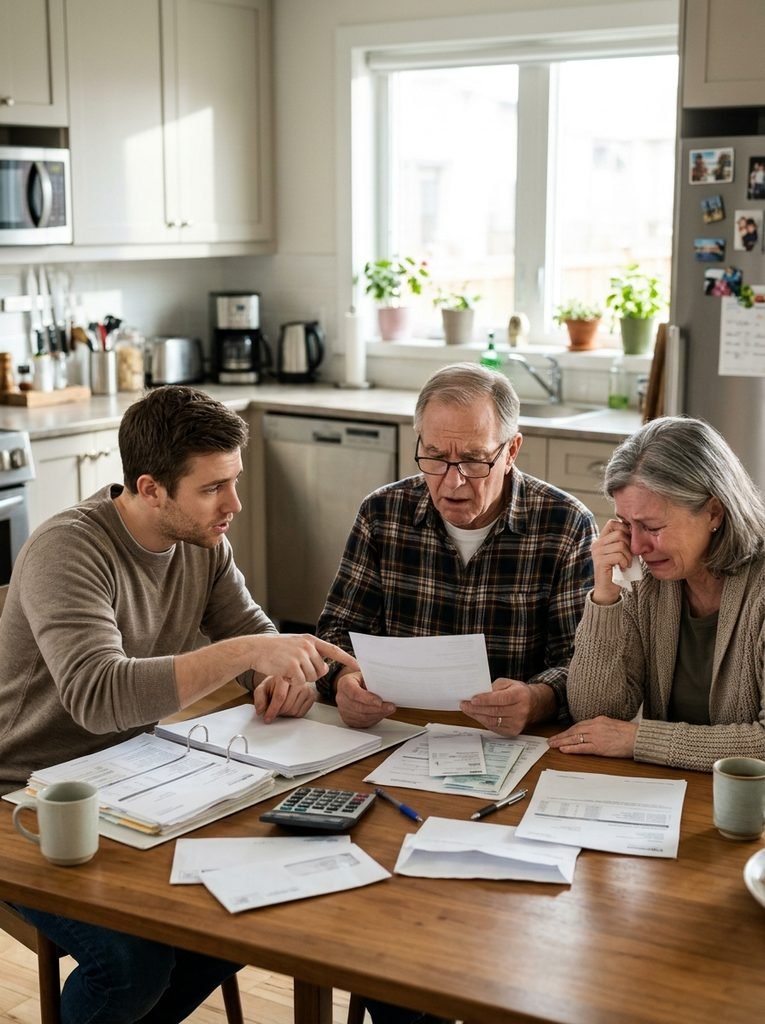
Her office is above a dentist in a strip mall off the highway. It smells like burnt coffee and printer toner. I sat across her desk that Friday afternoon and told her everything: the mortgage, Kyle’s loan, Donna’s transmission, the grocery runs, the holidays, and the steady drip of money that had been flowing from my house to the Aldridge house for over a year.
Then I showed her the screenshot of the group chat.
Carla read it. She took off her glasses and rubbed the bridge of her nose.
“Brandon. How much are we talking? Total.”
“I figure around thirty-eight thousand,” I said.
She opened her laptop and pulled up the transaction exports I’d forwarded her that morning. She didn’t say a word for fifteen minutes. All I could hear was her clicking and, downstairs, a dentist’s drill whining through the floor.
Finally, she looked up.
“You’re short.”
“How short?”
“You’re closer to forty-three.” She turned the screen toward me. “You forgot the two transfers you sent Glenn in November, when he said his pension check was delayed. That’s another $2,200. And there’s a charge on your Visa from August for $780 at an auto repair shop on Fifth Street.”
Kyle’s brakes. I’d completely forgotten. He’d called me from the dealership parking lot saying his brakes were grinding metal on metal and he couldn’t afford the repair. I drove over on my lunch break, handed the guy my card, and Kyle clapped me on the back.
“Thanks, bro. I owe you one.”
As if all the other ones didn’t exist.
Carla ran the numbers again out loud. “Mortgage, fourteen payments, $33,600. Kyle’s loan, $3,800. Transmission, $1,900. Pension transfers, $2,200. Brakes, $780. Groceries and holiday spending I can trace, about $1,240. That’s $43,520.” She looked at me over the top of the laptop. “In fourteen months. To people who left your wife in a snowbank.”
“She wasn’t in a snowbank,” I said. “She was on the shoulder near a gas station.”
“Brandon,” Carla said. “I know.”
She leaned back in her chair. “There’s a tax side to this too, by the way. Not a problem, just something you should know. What you paid on that mortgage counts as gifts to Glenn and Donna. There’s an annual exclusion per person per year. You’re under it, split between the two of them, so you don’t owe anything and there’s no gift tax return to worry about. But it’s on record. Every dollar. In your name.”
“Good,” I said. “I want it on record.”
She studied me for a moment. “What do you want to do?”
“I’m not sure yet. But I want everything documented. Every payment, every transfer, every text, every receipt.”
“I can have a full accounting by Wednesday.”
I stood up to leave, and she said something that’s stuck with me ever since.
“You know, most people in your situation would have stopped after the first month. The fact that you kept going tells me you’re either very generous or very bad at boundaries.” She put her glasses back on. “I’m guessing both.”
She wasn’t wrong.
That Saturday, Natalie took Ellie to her parents’ house for the sweater pictures. I stayed home and told Nat I had project files to review, which was true. I also had a spreadsheet open on my second monitor, organizing every financial interaction I’d ever had with her family by date, amount, and recipient.
When Natalie came home three hours later, she was quiet. Not angry. Confused quiet.
She put Ellie down for her nap, then came into my office and sat on the arm of my chair.
“Something weird happened,” she said.
“Weird how?”
“I was in the kitchen with Mom, and Kyle’s girlfriend, Megan, was there too. Megan said something about how nice it must be that I don’t have to worry about money, since Brandon makes good money.” Nat twisted her wedding ring around her finger. “And Mom laughed and said, ‘Well, Natalie’s the one who keeps that household running. Brandon just writes the checks.’”
I didn’t say anything for a second. “What did you say?”
“Nothing. I was too surprised. But then Kyle walked in, and Megan said it again, kind of joking. And Kyle goes, ‘Yeah, Brandon’s got it easy. Nat does all the real work. He just shows up.’”
I leaned back slowly. “And your dad?”
“Sitting right there at the table. Reading the paper. Didn’t say a word.”
There it was. The second thing.
The first was leaving Natalie in the cold. The second was the story they’d been telling about me. It wasn’t just that I was an outsider. It was that I was a passenger, that Natalie carried me while I coasted along. In their version, I wasn’t generous. I barely contributed.
And there was a third thing. Nat almost didn’t tell me.
“And Brandon,” she said, “there’s something else. Megan asked Mom about the house. Like, whether Kyle was going to stay in the basement forever. And Mom said, ‘Oh, he’ll get the house someday anyway. It’s all in the will. Natalie married well, so she’s taken care of.’”
I turned my chair to face her.
“They left the house to Kyle?”
“I guess so. They had wills done a couple of years ago at some lawyer’s office by the courthouse. I never asked. I didn’t think it was my business.” She laughed, but there was nothing funny in it. “I guess I’m taken care of.”
I sat there doing the math. I couldn’t help it.
Fourteen months of $2,400 payments, every one of them paying down the principal and interest on a house that, according to Donna, was legally going to Kyle. Kyle, who’d told me my wife was my problem. Kyle, who owed me $3,800 for a course he never took.
I wasn’t just paying their mortgage. I was building Kyle’s inheritance with my daughter’s college money.
That night, after Natalie went to bed, I called Uncle Ray.
Ray picked up on the second ring. He’s seventy-one and still answers the phone like someone might be calling with a job.
“It’s me,” I said.
“What did they do now?”
I told him everything: the snowstorm, the group text, Kyle’s message, Donna’s thumbs-up, Glenn’s silence. The story they’d built about me. The will. The $43,520 I’d poured into a family that described me as a guy who just shows up.
Ray was quiet for a long time. I could hear his old TV in the background, some western with gunshots and horses.
“Your dad would’ve stopped that check after the first phone call,” he finally said.
“I know.”
“But you’re not your dad. You plan first. That’s fine. Just don’t plan so long you forget to act.”
“I won’t.”
“How much is that mortgage thing a month?”
“Twenty-four hundred.”
Ray let out a long, low whistle. “And they think the pension covers it?”
“They’ve never looked closely enough to notice.”
“Boy,” Ray said, and I could hear him shaking his head. “When that well runs dry, they’re going to find out real fast where the water was coming from.”
I told him I needed a couple of weeks. He told me to take whatever I needed, but to make sure Natalie was with me before I did anything.
“She is,” I said.
“Good. Because this is going to get loud.”
I want to say something about the Aldridges before I go on.
They’re not evil. I want to be clear about that, because I know how these stories usually go online. The villain does villain things, the hero gets revenge, and everyone claps.
That’s not what this is.
Glenn and Donna aren’t monsters. They’re people who got so used to being taken care of that they forgot what it looks like when someone is doing the taking care of. Kyle is a different story. Kyle is selfish the way some people are when nobody has ever told them no.
But Glenn and Donna really believe that what I gave them is just what family does, and that it flows in one direction because that’s the natural order. The son-in-law provides. Everybody else receives. End of transaction.
The two weeks after that call with Ray were some of the most normal-looking weeks of my life.
I went to work. I picked up Ellie from daycare. I made dinner on the nights Natalie worked late. I texted Donna happy birthday on the 17th. I even reacted to Kyle’s Instagram story about a truck he was test-driving at the dealership. Just a fire emoji. It cost me nothing.
Behind the scenes, I was doing three things.
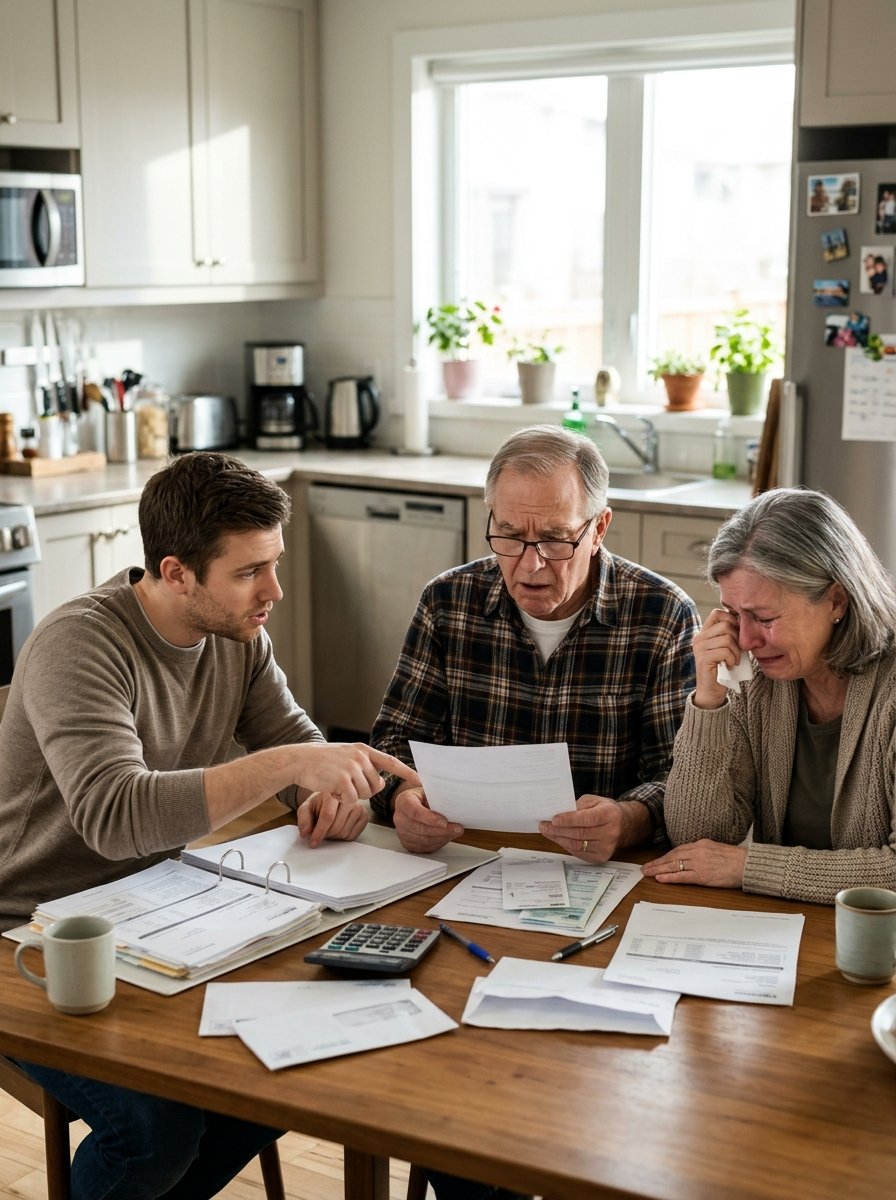
First, Carla finished the accounting. She printed it on a single sheet of paper, organized by category, with a total at the bottom in bold: $43,520. She put it in a manila folder with copies of every bank statement, every Venmo confirmation, every Lakeshore payment receipt, and every text where someone had asked for money or thanked me for it. That included Kyle’s “Bro, I’ll get you back. Things are just tight,” which Carla had highlighted in yellow.
“That text matters,” she said, tapping it. “That’s him acknowledging the debt in writing. I’m not a lawyer, but if it ever came to small claims, that’s what you’d want.”
The folder was half an inch thick.
“You want me to hold on to this?” she asked.
“For now,” I said. “I won’t need it right away. I just need it to exist.”
Second, I had a long conversation with Natalie. Not about what I was planning. About how she felt.
This mattered. I wasn’t going to make a move that would blow up her family without knowing she was with me. Not in theory. Actually with me.
We were on the couch after Ellie went down. I turned off the TV.
“Nat, I need to ask you something, and I need you to be honest. Not diplomatic. Honest.”
She gave me the look nurses get when they know something’s about to hurt.
“How do you feel about the way your family treats me?”
She didn’t answer right away. She pulled her knees up, wrapped her arms around them, and stared at the blank TV screen.
“I feel ashamed,” she said quietly. “I’ve felt ashamed for a while. I just didn’t want to say it out loud, because saying it makes it real. And if it’s real, then I have to do something about it, and I don’t know what to do. They’re my parents, Brandon.”
“I know.”
“But what Kyle said in that text. And Mom with the thumbs-up. And the way they talk about you when you’re not there. And now the will.” She wiped her eyes with the heel of her hand. “You’ve given them everything. Everything. And they act like you owe them more.”
I told her what I was thinking. Not the details yet, just the shape of it. I was going to stop the financial support, all of it. Not as punishment. As reality. I was going to let them see what their life looked like without money they didn’t even know was coming from me.
“They’re going to lose the house,” she whispered.
“No, they won’t,” I said. “They’ll have options. They’ve owned that house for twenty-eight years. Your dad told me the county reassessed it last year at around two hundred and eighty thousand, and they only owe about one-sixty on it. That’s real equity. He can talk to a bank about a home equity line, or refinance into something he can actually afford. But he’s going to have to handle it himself. And he’s going to have to know that the reason he has to handle it is that I’ve been holding it up this whole time.”
Natalie sat with that for a long time.
Then she said, “Okay.”
“Okay, you understand? Or okay, you’re with me?”
“Both.” She turned to face me. “But Brandon, when this blows up, I need you to let me handle my parents. Not because I don’t trust you. Because if it comes from you, they’ll just say you turned me against them. If it comes from me, they can’t hide from it.”
Smart woman I married.
The third thing I did was call the credit union.
I spoke with a member services rep named Teresa, who sounded like she’d been doing this since before online banking existed. I asked how to cancel a recurring payment to a mortgage servicer.
“Easy,” she said. “You can cancel it yourself online, or I can do it for you right now. As long as you cancel before it sends, the payment just won’t go out. The servicer will see that the scheduled payment didn’t come through.”
“And they’ll notify the borrower?”
“Oh, they’ll notify the borrower,” Teresa said dryly. “Believe me.”
I didn’t pull the trigger yet. I just confirmed it could be done.
Then something happened that almost made me change my mind.
Almost.
Glenn called me on a Tuesday evening. He sounded cheerful, which was rare. Glenn usually communicates in grunts and nods, like a man who was told sometime in the 1980s that real men don’t talk about feelings and took it extremely literally.
“Brandon. Hey. Listen. Donna and I got our thirty-fifth anniversary coming up in April. We’re thinking about a party at the VFW hall. Nothing too fancy. But we want to make it special.”
“That sounds nice, Glenn.”
“Here’s the thing. Hall rental’s eight hundred. Catering’d be another twelve, thirteen hundred. Plus decorations and all that. Donna’s got her heart set on a photo booth.”
I waited.
“We were thinking maybe you could help out with the costs. You know. Pitch in. It’d mean a lot to Donna.”
Pitch in. Like I’d be tossing a twenty into a jar.
I knew what “pitch in” meant in Aldridge language. It meant pay for the whole thing.
I let the silence go just long enough to mean something.
“Sure, Glenn. Let’s talk numbers.”
He sounded relieved. “Great. Great. I’ll have Donna put together a list.”
“Sounds good. And Glenn? Let’s sit down in person. I’d actually love to go over everything. All of it.”
“All of what?”
“Everything I’ve been helping with. Just so we’re all on the same page.”
He laughed, a little nervously. “Sure, sure. Whatever you need.”
I hung up and looked at the calendar on the wall of my office. The next mortgage draft was set for February 28th. The anniversary party was in April. By the time they wanted to talk about the party budget, they’d already know the truth about the mortgage.
On the night of February 26th, after Natalie and Ellie were asleep, I opened my laptop and logged into the banking portal. I pulled up the recurring payment.
Lakeshore Home Loans. $2,400.00. Next payment: February 28.
Fourteen months. The invisible foundation under a family that thought the house held itself up.
I looked at the framed photo on my desk. Natalie in a hospital bed holding Ellie the day she was born. Glenn and Donna standing behind her, beaming. Kyle off to the side, grinning, giving the camera a thumbs-up.
A thumbs-up.
I clicked Cancel Recurring Payment.
The screen asked if I was sure. It said this would stop all future scheduled payments to this payee.
I clicked Yes.
A green confirmation box popped up with a reference number. I wrote the number on a sticky note and stuck it inside Carla’s folder.
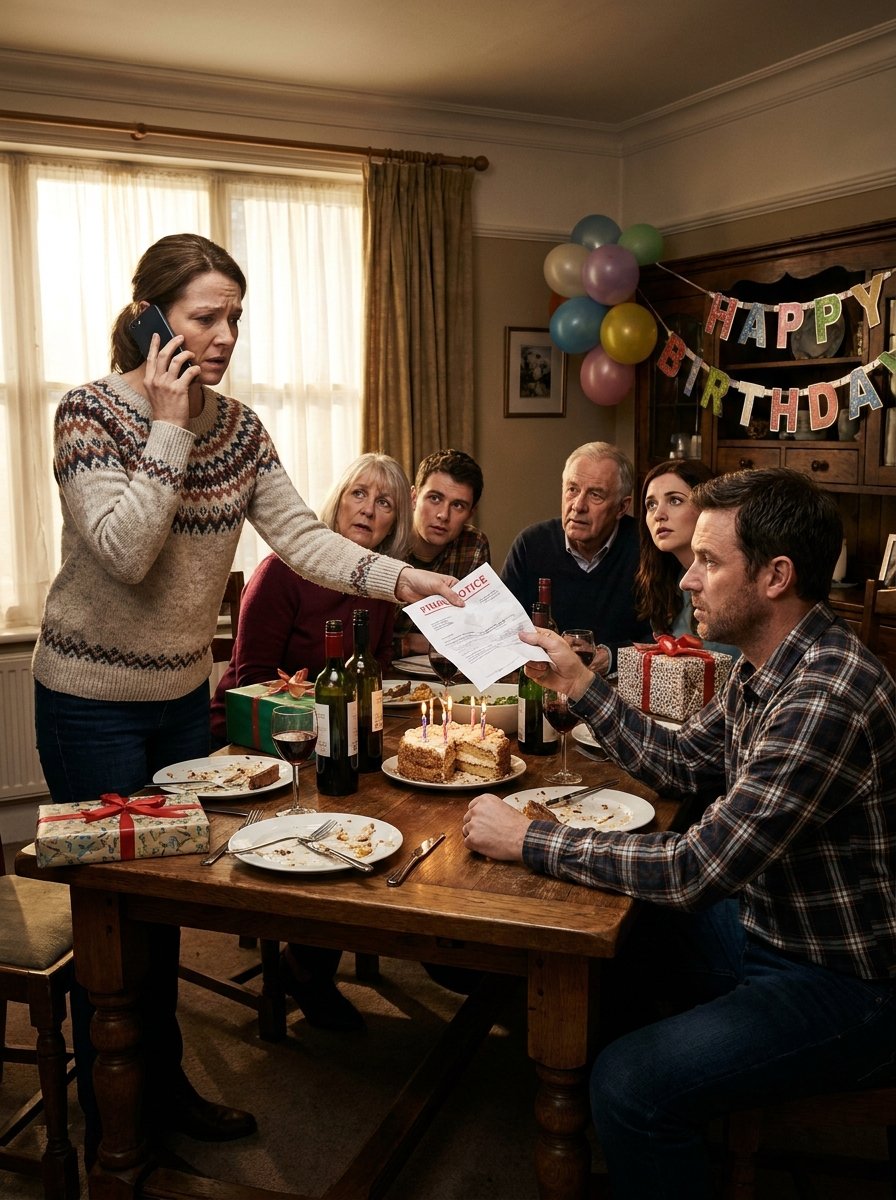
The Aldridges, meanwhile, were texting about the anniversary party. Donna’s guest list was up to forty-five people. The photo booth was booked. They were picking out the cake.
They had no idea what was coming.
February 28th came and went.
For about thirty-six hours, nothing happened.
I want to be honest about those thirty-six hours. They were hard. Not because I doubted what I’d done, but because I kept imagining Donna’s face when she found out. I kept picturing Glenn at his kitchen table trying to figure out how his mortgage payment had just vanished.
These are flawed people, but they aren’t strangers. I’ve eaten Donna’s pot roast. I’ve watched Glenn, on his hands and knees on our living room rug, teach Ellie how to wave bye-bye. The way they treated me didn’t erase the fact that they were human beings who were about to have a very bad night.
Natalie could tell something was coming. She didn’t ask me directly. She just looked at me across the dinner table with an expression that said, “I know you did it, and I’m ready.”
We’d agreed: she would handle the family, and I would handle the facts. A clean division of labor.
On March 1st, around noon, Natalie’s phone buzzed. A text from her mom.
“Honey, call me when you can? Dad’s dealing with something with the mortgage. He’s all worked up.”
Natalie showed me the text. I nodded. She slid her phone into her back pocket and went back to feeding Ellie mashed sweet potatoes.
She didn’t call back for hours.
Around ten that night, Ellie was asleep and the house was quiet. Natalie sat at the kitchen table with a mug of chamomile tea that had gone cold. She picked up her phone, looked at me, and dialed her dad’s cell. She put it on speaker. I stood in the doorway to the living room, just out of sight.
The clock on the microwave said 10:17 p.m.
Glenn answered on the first ring. He didn’t say hello.
“Nat. Why was our mortgage payment reversed?”
His voice was rough and tight, like he’d been yelling at somebody all day and had run out of people.
“What do you mean, Dad?”
“Lakeshore sent us an email this morning. Then a letter in the online thing. Payment not received. Then I called and sat on hold for an hour and forty minutes, and some kid in a call center tells me the automatic payment on our loan was canceled from the sending account. Canceled. I never canceled anything. I think it’s a bank error. I think somebody hacked something.”
In the background, I heard Donna. “Glenn, tell her what they said about the late fee.”
“They said if it’s not paid by the 15th, there’s a late charge. And if we go past thirty days, it gets reported to the credit bureaus.” Glenn’s voice dropped. “Nat, we just got caught back up from last time. I can’t have that on my credit again. I can’t.”
Natalie took a slow breath.
“Did you call your bank, Dad?”
“I called everybody. My bank says the payment wasn’t even coming out of my account. It was coming from some other account. Some credit union routing number I don’t recognize.”
Natalie paused. Perfectly timed.
“That’s strange.”
“It’s more than strange, Natalie!” That was Donna, close to the phone now. “If someone else was making that payment and they stopped, your father needs to know who it was. Why aren’t you more upset about this?”
Natalie set her mug down on the table very gently.
“Mom,” she said. “Who do you think was making that payment?”
Silence on the other end of the line.
I could practically hear the gears grinding in Donna’s head. It was the sound of something she’d known in a vague, comfortable way for over a year suddenly getting very sharp.
“Are you telling me…” Donna started.
“I’m not telling you anything. I’m asking you a question. Who do you think has been paying Dad’s mortgage for the last fourteen months?”
More silence. Then, very quietly: “Brandon?”
“Twenty-four hundred dollars a month,” Natalie said. “Every single month since the December before last. Fourteen payments. Thirty-three thousand, six hundred dollars.”
Nobody said anything for a long time. When Glenn finally spoke, he sounded like a man who’d just stepped onto a stair that wasn’t there.
“That’s not possible. My pension—”
“Your pension pays your utilities, Dad. And your car insurance, and the groceries, and the VFW. It never paid the mortgage. Not once since the refinance.”
“Donna?” Glenn said. “Donna, did you know this?”
Donna’s voice came out small. “I knew he was helping. I thought it was a few hundred here and there. I never looked.”
“You told Natalie,” Glenn said slowly. “When we were behind. You called her.”
“I was scared, Glenn.”
“Why didn’t he tell us?” Donna asked, turning back to the phone. “Why didn’t Brandon tell us it was the whole thing?”
“He told you he was helping,” Natalie said. “You just never asked how much. Nobody ever asked. And honestly, Mom, after February 11th, he has every right to stop.”
“February 11th? What happened February—”
“The snowstorm, Mom. When my car died on Route 9. When Brandon texted the group chat asking someone to come get me because he had to get the baby. When Kyle said I was Brandon’s problem now, and you sent a thumbs-up.”
“I didn’t mean it like that, honey, I just—”
“You meant it exactly like that. And Dad read the message and didn’t answer at all.” Natalie’s voice was steady, but her hand was shaking on the table. “My husband asked for one thing. One. And not a single person in my family could be bothered to drive twelve minutes.”
I heard Donna start to cry. Not the polite sniffling she does in church when the pastor tells a sad story. Real tears, the kind that come when you realize you’ve been caught being exactly the person you didn’t want to believe you were.
“And Mom,” Natalie said. “There’s more. Brandon lent Kyle $3,800 last summer for a course he never took. He paid $1,900 for your transmission. He paid for Kyle’s brakes. He sent Dad $2,200 in November when the pension check was late. He bought groceries. He covered Christmas. Altogether, it’s over forty-three thousand dollars. And the whole time, you and Kyle have been telling people that Brandon barely contributes and that I’m the one carrying our house.”
“Who told you that?”
“Megan said it right in front of me last Saturday. Kyle agreed with her. You laughed.” Natalie swallowed. “And then you told her Kyle’s getting the house anyway because I married well.”
The line went dead quiet.
“Glenn,” Donna said, and her voice changed completely.
Donna never calls him Glenn. It’s always “your father” with the kids, or “honey” to his face. Hearing his name stopped him cold. I heard a chair scrape.
“It’s not a bank error. It’s Brandon. And it’s us. It’s been us this whole time.”
Pages:
Glenn was quiet for a long time.
When he spoke again, his voice was rough. “Is Brandon there?”
Natalie looked at me through the doorway. I shook my head.
“No,” she said. “This is between us right now.”
Glenn cleared his throat the way he does when he’s embarrassed but doesn’t have the words for it. “I need to talk to him.”
“Not yet. First, you need to talk to Kyle. Kyle’s the one who told everybody my husband was a freeloader while my husband was paying for the roof over Kyle’s bed. Kyle said I was his problem. And Mom agreed. In writing.”
I heard Glenn stand up. Then his voice, aimed away from the phone, louder than I’d ever heard it.
“Kyle! Get up here! Now!”
From somewhere far off in the house, Kyle’s voice floated up the basement stairs, muffled and annoyed. “What? I’m in the middle of a game.”
“I said NOW!”
Natalie looked at me again. I gave her a small nod. She was doing it exactly right.
“Mom. Dad. I’m going to hang up now,” she said. “When you’re ready to have a real conversation, a real one, not one where you explain why you didn’t mean what you obviously meant, you can call us. Both of us.”
She hung up.
Then she slid off her chair and sat down on the kitchen floor next to Ellie’s high chair and let out a breath she seemed to have been holding for years.
“How was that?” she asked.
“Perfect.”
“I feel like I’m going to throw up.”
“That’s normal.”
She laughed. It wasn’t a happy laugh. It was the kind that comes after you’ve done something terrifying and found out you’re still alive on the other side.
My phone buzzed on the counter. A text from Glenn.
“Brandon, we need to talk. Call me.”
The timestamp said 10:31 p.m. Fourteen minutes after he’d answered that call and asked his daughter why the mortgage had been reversed. Fourteen minutes for a man to find out that the house he’d been standing in had been held up by somebody else’s hands.
I turned the phone face down on the counter and went upstairs to check on my daughter.
Glenn could wait. He’d gone fourteen months without knowing the truth. One more night wouldn’t hurt him.
I didn’t call him that night, or the next morning. I let three days go by.
During those three days, my phone lit up like a pinball machine. Glenn called four times. Donna sent two long texts. The first one started, “Brandon, I had no idea how much you were doing for us,” and ended, “Please call Glenn. He isn’t sleeping.”
The second one was shorter. “We are so sorry. Please call.”
Kyle texted once.
“Bro, we need to talk.”
I left them all on read.
On the second day, Natalie got a call from her dad while she was on her lunch break at the hospital. She came home that night and sat on the edge of the tub while I gave Ellie her bath.
“He was crying,” she said. “My dad. I’ve never heard him cry before. Not when Grandma died. Not when he retired. Not ever.” She trailed her fingers in the bathwater. “He kept saying he didn’t know. He said he logged into the Lakeshore account last night for the first time in two years, and he saw all the payments with your name on them. Fourteen of them. He said he just sat there looking at the screen until Mom made him go to bed.”
“Do you believe him?”
“I do,” she said. “He’s proud and he’s stubborn, and he doesn’t look at things he doesn’t want to see. But he’s not a liar.” She looked at me. “He also said one more thing. He said he’s going to call the lawyer about the will.”
On the morning of the fourth day, I drove to the Aldridge house alone.
Natalie offered to come, but I told her this first conversation needed to be just me and her parents. She agreed.
When I pulled into the driveway, Glenn was sitting on the front porch in his Carhartt coat, hands jammed in his pockets, breath fogging in the cold. He looked like he’d aged five years in four days.
He stood up when he saw my truck but didn’t come down the steps. He just waited.
I walked up and stopped at the bottom of the stairs. We looked at each other for a moment.
“Come inside,” he said.
The kitchen smelled like coffee. Three mugs were on the table, the good ones with the gold rims Donna only uses at Christmas. Donna was standing by the counter, and I could tell she’d been crying not long before. She didn’t try to hug me, which was the right call.
“Sit down, honey,” she said. “Please.”
I sat. Glenn sat across from me. After a moment, Donna sat too.
Glenn spoke first.
“I owe you an apology. A real one. Not the kind where I make excuses.”
“Okay.”
“I didn’t know you were paying the whole mortgage. I should have known. It’s my house and my responsibility, and I should’ve been checking that account, and I didn’t. And when Donna told me…” He stopped, pressed his lips together, and stared at the table. “I felt like a man who’d been standing in a house somebody else was holding up. And I never even had the decency to say thank you.”
I nodded. “What about February 11th?”
Glenn closed his eyes. “The text.”
“The text. Your daughter was stranded in a snowstorm. I asked for help. Kyle told me she was my problem. Donna agreed. You said nothing.”
“I saw it,” he said. “I saw it and I didn’t know what to say, so I didn’t say anything. That’s what I do. I don’t say anything, and I tell myself it’s because I’m staying out of it.” He finally looked up at me. “But really it’s because I’m a coward.”
I didn’t expect that word from him. Coward. Glenn Aldridge, union electrician for thirty-four years, a man who once rewired a whole commercial building by himself over one weekend, calling himself a coward at his own kitchen table.
It landed hard.
Donna spoke next. “I need to explain the thumbs-up.”
“You don’t have to.”
“I do. I wasn’t agreeing with Kyle. I just reacted. I just tapped the thing without thinking.”
“Donna,” I said, as gently as I could, “with respect, that’s exactly the problem. You weren’t thinking. None of you were. That’s been the pattern for fourteen months. I write the checks. I cover the costs. I show up. And nobody thinks about what any of it means.”
She nodded slowly. “You’re right.”
“And then I find out through Kyle’s girlfriend that the story you’ve been telling is that I barely contribute. That Natalie carries our house. That I just write checks.” I took a breath. “And that the house I’ve been paying for is going to Kyle in your will, because Natalie ‘married well.’”
Donna’s face went white. She looked at Glenn.
Glenn reached into the pocket of his flannel shirt and pulled out a folded business card. He set it on the table and slid it toward me.
It said Thomas Haverford, Attorney at Law, Estate Planning and Probate, with an address two blocks from the county courthouse.
“We had those wills done in 2022,” Glenn said. “Kyle was living downstairs, and Natalie had just married you, and Donna said, ‘Well, Natalie’s set.’ And I didn’t argue, because I never argue.” He tapped the card. “I called Haverford yesterday. We’ve got an appointment on the 14th. House gets split down the middle between both kids. Equal. Like it should’ve been from the start.”
I looked at the card for a long moment.
“That’s your decision, Glenn,” I said. “Not mine. I didn’t come here for that.”
“I know you didn’t,” he said. “That’s why I’m doing it.”
I let the silence sit for a while. Then I said what I’d come to say.
“I’m not here to punish you. I don’t want you to lose this house. I don’t want Ellie growing up without her grandparents. But I’m done being the invisible foundation of this family. So here’s what happens next.”
I took Carla’s folder out of my bag and set it on the table between the coffee mugs.
Glenn opened it. I watched him read the first page, the single sheet with the categories and the total at the bottom. His hands shook a little.
“Forty-three thousand, five hundred twenty dollars,” I said. “That’s what I’ve put into this family since I started helping. I’m not asking for it back. Consider it a gift. The IRS already does. But the giving is over.”
Glenn looked up. “The mortgage.”
“You’ll need to handle it. Talk to the credit union or your bank about a home equity line. You’ve got the value in the house. Or refinance into a payment you can actually carry.” I tapped the folder. “Carla, my accountant, put her card in there. She said she’d sit down with you for an hour, no charge, and go over your budget if you want. I’d take her up on it. She’s tough, but she’s honest.”
“And March?” Donna asked quietly. “The payment that didn’t go through?”
“The servicer gives you until the 15th before there’s a late fee. Thirty days before it hits your credit.” I looked at Glenn. “You’ve got time. Barely. But you’ve got time. I’m not going to make it go away. That part’s yours now.”
Glenn nodded slowly. “And Kyle?”
“Kyle owes me $3,800. He admitted it in writing.” I flipped to the page with the yellow highlighting and turned it toward them. “Bro, I’ll get you back. Things are just tight.” I want it back. Not tomorrow. He can do installments, but he pays every cent. And he stops telling people I’m a freeloader. Because the next time somebody repeats that to Natalie, she won’t be the only one making phone calls.”
“I’ll talk to him,” Glenn said.
“You already should have.”
He flinched, but he didn’t argue.
As if on cue, the basement door creaked open, and Kyle came up the stairs in sweatpants and a dealership polo. He stopped dead when he saw me.
For a long second, nobody said anything.
“Hey, bro,” Kyle said finally. His voice was smaller than I’d ever heard it.
“Kyle.”
He looked at the folder on the table. He looked at his father. Then he looked at the floor.
“Dad says I got to sign something,” he mumbled.
Glenn pushed a single typed page across the table. It was a simple repayment agreement: $3,800 owed to Brandon Mercer, $200 a month starting April 1st, until paid in full. Glenn had typed it himself the night before on Donna’s church office computer.
“Tomorrow,” Glenn told his son, “you’re going to the bank with me, and you’re going to sign that in front of the notary. And you’re going to say thank you to the man who paid for your brakes.”
Kyle swallowed. He didn’t look at me.
“Thanks for the brakes,” he said to the floor.
It wasn’t an apology. But it was a start.
Kyle went back downstairs. We sat there a while longer. Donna refilled the coffee. Glenn kept flipping through the folder, page by page, statement by statement, like he was trying to understand how all of this had happened in his own house without him seeing it.
Eventually he closed it and slid it back toward me.
“Keep it,” I said. “That’s your copy.”
I stood up to leave. Glenn stood too.
“Brandon.”
“Yeah?”
“I was wrong. About all of it. I know saying that doesn’t fix anything. But I want you to know I see it now. What you did for us. What we did to you.” His voice caught. “I see it.”
I looked at him for a long moment. Then I held out my hand.
He shook it. His grip was firm, but his eyes were red.
Donna walked me to the door. She put her hand on my arm.
“You’re a good man,” she said. “We didn’t deserve what you gave us. But I hope we get the chance to deserve it from here on.”
“That’s up to you,” I said.
Then I drove home to my wife and my daughter.
It’s been about four months now.
Here’s where things stand.
Glenn and Donna sat down with Carla for an hour the following week. Carla told me afterward, in her blunt way, that Glenn took notes on a yellow legal pad “like a man studying for a test he’d already failed once,” and that Donna cried twice and then asked very good questions.
With Carla’s help, Glenn went to the credit union and applied for a home equity line of credit. The appraiser came out in mid-March and valued the house at $287,000. With about $160,000 left on the mortgage, they had plenty of room. Glenn used part of the line to make the March payment before the 15th. No late fee. Nothing on his credit.
He’s carrying the mortgage himself now. It’s tight. He picked up part-time work with his old union local, consulting on electrical code compliance for new construction. Twenty hours a week. Donna says it’s good for him. He comes home tired and talks at dinner about breaker panels and inspectors, and she says it’s the most he’s talked in years.
Glenn and Donna kept their appointment with Thomas Haverford on the 14th. The new wills split the house equally between Natalie and Kyle. Glenn called Natalie from the parking lot afterward.
“It’s done,” he said. “Should’ve been that way from the start.”
Natalie cried in the hospital break room. She told me later it wasn’t about the house. It was about her dad finally saying it out loud.
Kyle signed the repayment agreement in front of the notary at Glenn’s bank the next morning. Glenn stood next to him the whole time. Kyle has paid back $800 of the $3,800 so far, $200 on the 1st of every month, on time, every time. Each payment shows up in my account with the memo line “brakes + course.” I think it’s his idea of a joke. I’ve decided to let him have it.
He also moved out of the basement. Not voluntarily. Glenn told him that if he was old enough to call another man’s wife “your problem,” he was old enough to pay his own rent. Kyle’s splitting a two-bedroom apartment with a coworker from the dealership for $640 a month. Last I heard, he signed up for the finance certification course again. He paid for it himself this time.
He hasn’t apologized to me directly. But he’s civil. He texted me happy Father’s Day. I’ll take it.
Donna fixed the story. I know because Natalie’s cousin Rachel called her in April and said, “I had no idea Brandon was doing all that. Your mom told everybody at Easter. She stood up at the table and just said it.”
I didn’t need a public announcement. But it mattered to Natalie, so it matters to me.
The anniversary party happened, by the way.
It was scaled way back. Donna planned it herself. They rented the small room at the VFW for $250 instead of the big hall for $800. Potluck instead of catering. No photo booth. Donna made her pot roast in three slow cookers, and somebody’s aunt brought a sheet cake from the grocery store with “35 Years” written in blue icing that was already sliding a little.
It was one of the nicest parties I’ve ever been to.
Natalie and I brought Ellie in a little yellow dress. Kyle showed up with Megan and actually helped set up the folding chairs.
Near the end of the night, Glenn tapped a fork against his plastic cup and stood up. Glenn does not make speeches. The room went quiet out of pure shock.
He thanked everyone for coming. He thanked Donna for putting up with him for thirty-five years, and everybody laughed. Then he looked across the room at me.
“And I want to thank my son-in-law, Brandon,” he said. His voice wobbled. “Who showed more loyalty to this family than we had any right to expect. He carried us when we didn’t even know we were being carried.” He cleared his throat. “We’re still learning how to earn it.”
He sat down fast, like he was afraid of what else might come out.
Natalie squeezed my hand under the table so hard I thought she’d break my fingers.
Pages:
Things aren’t perfect. I want to be honest about that.
Donna still has her moments. Last month she suggested, very sweetly, that maybe Natalie should cut back to part-time “now that the baby’s here,” and Natalie gave her a look that could have stripped paint. Kyle is still Kyle. Glenn and I don’t have long heart-to-hearts. Mostly we stand in his garage, and he shows me a tool he bought, and I nod, and we both understand that’s as close to a hug as we’re going to get.
But the foundation is different now.
It’s honest. It’s load-bearing in a way it never was before, because now everybody knows exactly what they’re standing on, and who put it there.
Carla called me in May to close out the file.
“For the record,” she said, “you’re the first client I’ve had who spent forty-three thousand dollars on in-laws and came out the other side with a better relationship with them.”
“Is that a compliment?”
“It’s an observation,” she said. “But yes. It’s also a compliment.” Then, after a pause: “Now please, for the love of God, put that money into Ellie’s 529.”
I did. I took the $2,400 that used to go to Lakeshore Home Loans on the 28th of every month and set up a new automatic transfer. Same amount, same date, different destination: half into Ellie’s 529 plan and half into our own savings.
Natalie watched me do it on the laptop at the kitchen table. When I clicked Confirm, she leaned over and kissed the side of my head.
“Remember that,” she said softly.
I laughed so hard I had to put the laptop down.
Last week, Ellie took her first steps.
It was a Sunday evening. She was standing at the coffee table, holding on with both chubby hands, the way she’d been doing for weeks. Then she let go. She wobbled across the living room rug, four, five, six shaky steps, and grabbed onto my knee and looked up at me with a huge, drooly grin, like she’d just won the Olympics.
Natalie was recording on her phone, crying and laughing at the same time. Glenn and Donna were on FaceTime on the iPad propped against the lamp, cheering so loud that Ellie startled and sat down hard on her diaper.
Then Glenn’s voice came through the little speaker, rough and proud.
“That’s it, sweetheart. That’s it. You stand on your own two feet.”
I picked up my daughter and held her up to the camera so her grandpa could see her face.
For the first time in a long time, it felt like family. Real family. The kind where everyone carries their own weight, and nobody has to hold up the whole house alone in the dark.
That’s where I’ll leave it.
If you’re out there quietly holding up somebody else’s house while they tell everyone the foundation built itself, stop. Let them feel the ground shake.
You’d be amazed how fast people learn to stand on their own two feet.