On Mother’s Day, my husband raised his glass: “Here’s to the woman this whole family has to put up with.” My kids burst out laughing.
I stood up. “Keep laughing, because starting today, you won’t have to put up with me anymore.”
They even applauded as I walked out. Five days later: sixty-three missed calls. The last message made me smile.
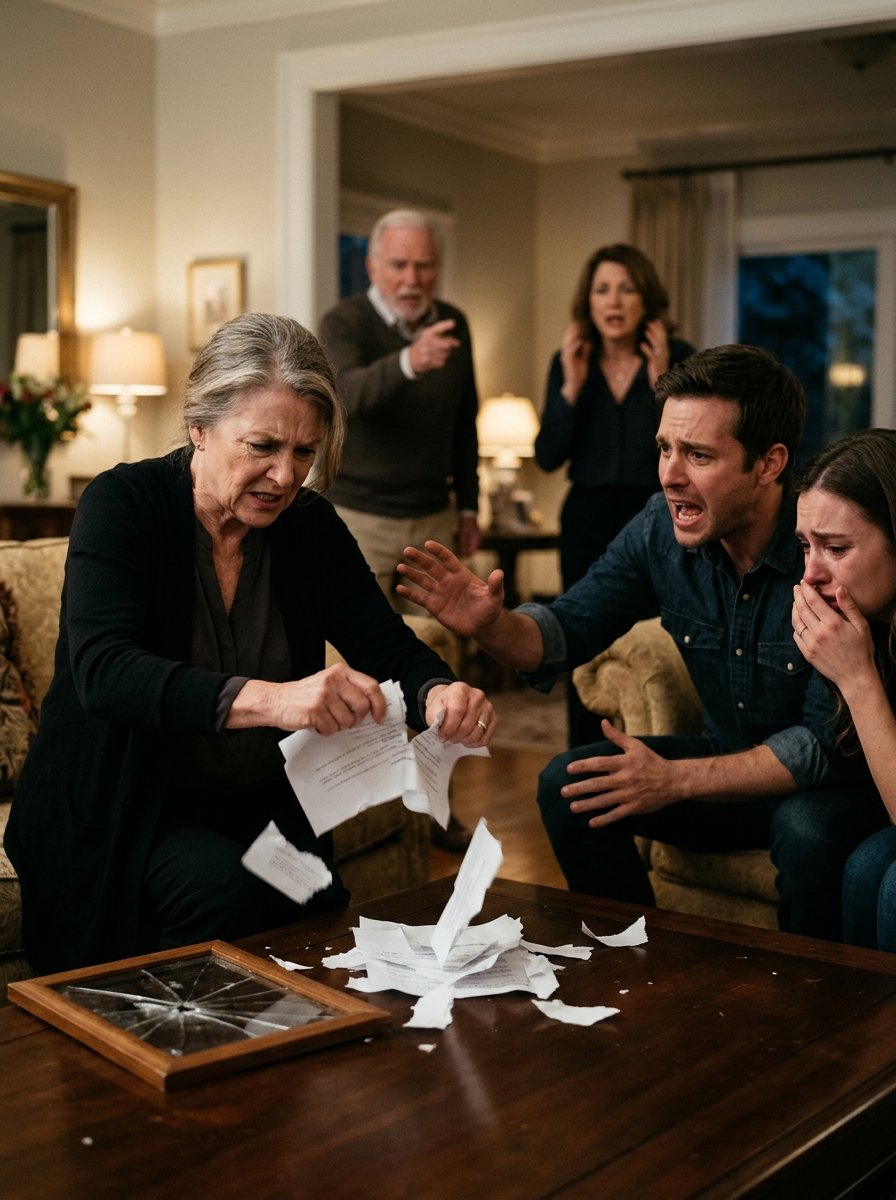
On Mother’s Day, my husband stood at the head of our dining table, lifted his glass, and smiled like he was about to say something sweet. Instead, he said, “Here’s to the woman this whole family has to put up with.”
My son laughed first, then my daughter. Even my husband’s grin widened when he saw I wasn’t smiling.
I set down my fork and looked at all of them.
“Keep laughing,” I said, “because starting today, you won’t have to put up with me anymore.”
My son actually clapped.
That was the moment I knew I was done.
My name is Linda Mercer. I’m sixty-two years old, and I had been married to Gary for thirty-nine years by then. We lived outside Columbus, Ohio, in the same brick house where we raised our children. I had spent most of my
adult life making sure everyone else had what they needed before I asked myself the same question.
That Mother’s Day started the way so many of them had, with me working.
The Saturday before, I drove to Kroger with a handwritten list tucked in my purse. Gary liked ham with a brown sugar glaze. Jason liked the cheesy potatoes I only made on holidays. Emily had texted asking whether I could do the strawberry pretzel salad because Sophie loved it. I bought my own Mother’s Day flowers.
By Saturday evening, the refrigerator was packed. The dining room was clean. I had vacuumed the stairs, wiped fingerprints off the glass door, set out the good serving dishes, and laid fresh towels in the downstairs bathroom
because Gary’s mother had taught me years ago that guests always noticed bathrooms.
Gary spent most of Saturday watching baseball and asking what time everyone was coming.
Sunday morning, he disappeared for twenty minutes and came back with a supermarket bouquet and a card. He kissed my cheek. “Happy Mother’s Day, honey.” I thanked him, and I meant it. That was the strange thing. I wasn’t angry yet.
Jason arrived around 11:00 with his wife Megan and their little girl. Emily came ten minutes later with Sophie and her younger brother. The house filled up fast with voices, shoes by the door, coffee cups, and people asking where things were.
“Mom, do you have any sparkling water?”
“Mom, where’s the hot sauce?”
“Mom, did you get the rolls Jason likes?”
I answered every question without thinking. That was how trained I had become.
By noon, I had refilled drinks twice, warmed Jason’s plate because he had taken a phone call, cut meat for one of the grandchildren, found Gary’s reading glasses under a newspaper, and reminded him that his refill was due
Monday. Nobody was cruel. They were simply too comfortable. When people are comfortable receiving from you, they can stop seeing the giving.
We had just started dessert when Gary leaned back in his chair with his bourbon and said, “I think I should make a toast.” Jason grinned. Emily raised her coffee cup. I remember thinking, well, at least this part might be nice.
Gary stood. He looked around the table with that easy smile people always liked about him. Then he lifted his glass toward me.
“Here’s to the woman this whole family has to put up with.”
Jason burst out laughing. Emily laughed, too. Megan smiled, then glanced at me.
Gary kept going. “Our family parole officer. She knows every appointment, every bill, every birthday, every prescription. God help you if you forget something Linda already reminded you about twice.”
Jason slapped the table. “Dad deserves a medal.”
More laughter. Even the grandchildren giggled because the adults were laughing.
I sat there with my napkin in my lap and waited. I waited for Gary to look at my face and realize he had gone too far. I waited for Jason to say, “Come on, Dad.” I waited for Emily to notice I hadn’t laughed once. Nobody did.
Something inside me became very still. I thought about the ham cooling on the table, the grocery receipt in my purse, the dessert Emily had requested, the flowers I had bought for myself. And suddenly, I understood that this
wasn’t really about one bad joke. It was about how natural it had become to make me useful first and human second.
I placed my fork beside my plate. The room slowly quieted. I looked at Gary, then Jason, then Emily.
“Keep laughing,” I said calmly. “Because starting today, you won’t have to put up with me anymore.”
Gary blinked. Jason leaned back, amused. “Oh, come on, Mom.” Then he clapped twice. Gary laughed again.
That hurt more than the toast.
I stood, took my purse from the chair by the kitchen doorway, and walked out. No one followed me.
When I reached my car, my hands were shaking so badly, I dropped my keys between the seat and the console. I sat there for nearly ten minutes before I could drive. I didn’t cry right away. Instead, I opened the calendar on my
phone. Monday, Sophie’s orthodontist appointment. Tuesday, pickup for Jason’s daughter. Wednesday, Gary’s
prescription refill. Thursday, Emily’s car insurance contribution. Friday, vendor paperwork for Gary’s HVAC company. Then I kept scrolling. School pickups, doctor appointments, birthday reminders, grocery deliveries, paperwork, bills, things that belonged to five different adults somehow lived inside my calendar.
I called my friend Denise. She answered on the second ring. “Linda?” I must have sounded different because she didn’t bother with small talk. “Is the guest room free?” I asked.
There was a pause. “How long?”
I stared at the house through my windshield. “I don’t know yet.”
That night, sitting at Denise’s kitchen table, I opened a yellow legal pad and drew a line down the middle. On the left, I wrote things I am responsible for. On the right, things they decided I was responsible for. The second
column filled three pages. At the bottom, I wrote one final sentence. Starting tomorrow, I stopped confusing the two.
Then I opened my laptop and sent three emails. One to Emily, one to Jason, and one to Gary’s company. By breakfast the next morning, one of those emails had already started a chain reaction I never saw coming.
By 8:30 Monday morning, Gary had called me four times. I didn’t answer. The first voicemail was irritated. “Linda, whatever this is, it’s gone far enough. Come home.” The second sounded less certain. “Where did you
put the Patterson contract file?” The third was shorter. “Call me.” By the fourth, he had stopped pretending this was just about our marriage. “I need the login for the vendor portal.”
I was sitting at Denise’s kitchen table drinking coffee from a mug that said World’s Okayest Aunt when my phone buzzed again. Denise looked over the top of her reading glasses. “You going to answer?”
“No.”
“Good.” She went back to the newspaper.
Denise and I had been friends for more than twenty years. She had worked at a bank until retirement and had the useful habit of seeing through emotional nonsense faster than anyone I knew. The night before, I had told her everything. Not just the toast. Everything that came before it.
When I retired three years earlier from a medical billing office, I imagined something very different. I thought I would finally take the watercolor class I had talked about for years. I thought Gary and I might take short trips, nothing extravagant. Maybe Nashville, maybe Lake Erie in the fall. I thought retirement meant having time that belonged to me. Instead, everybody seemed to notice I was free.
Emily’s divorce had been rough. Her ex-husband moved two hours away, and for a while, she genuinely needed help with the children. I started picking up Sophie from school twice a week, then three times. Then whenever Emily had a late meeting.
Jason worked in construction sales, and his commissions dropped badly. One year, he and Megan were struggling with daycare costs. I told them I could help for a few months. A few months became most of a year.
Gary had always hated paperwork. His HVAC company had grown from one truck to a dozen employees over the years, but he still operated like a man who believed filing cabinets were some kind of personal insult. At first,
I only helped with simple things. A customer invoice, an insurance renewal, a question from the accountant. Then someone discovered I was good at keeping things organized. That someone was Gary. Soon, I was handling
vendor certificates, service agreements, payroll questions, overdue accounts, employee paperwork, and whatever else landed on my dining room table. Gary liked to joke with his employees that I needed something to keep me busy. I used to laugh, too.
Sitting in Denise’s kitchen that Monday morning, I finally heard how insulting that sounded.
Denise folded the newspaper. “How much of this did they actually ask you to do?”
“Some of it. And the rest, I saw something needed doing.”
“So you did it.”
“Yes.”
“And then they stopped noticing.”
I looked down at my coffee. Denise nodded slowly. “A favor with no end date eventually becomes a job.”
That sentence stayed with me.
I didn’t want to punish innocent people. I wasn’t going to leave a child stranded at school or sabotage Gary’s business. So I handled everything carefully. The email to Emily said I would no longer be available for automatic
school pickups or weekday child care unless we arranged it in advance. I gave her the full week schedule so she could make other plans. The email to Jason said the same thing. I also told both of them that beginning that
month, I would no longer be paying routine expenses from my personal account. No more daycare help, no extracurricular fees, no subscriptions, no “Mom, can you cover this until Friday?”
The money I had been using came from an inheritance my mother left me. I had never thought of it as leverage. I had thought of it as family money because I loved my family. Apparently, I had been the only one thinking about where it came from.
The third email went to Gary and his office manager, Sheila. I kept it professional. Effective immediately, I would no longer provide unpaid administrative work for Mercer Heating and Air. I attached a handoff document
listing upcoming deadlines, insurance renewal, payroll dates, a commercial service contract, three customer accounts requiring follow-up. Nothing hidden, nothing deleted. Every password I had used for company systems had already been stored in the office password manager. I was simply stepping away.
At 10:15, Emily called. I answered because I knew Sophie had an orthodontist appointment that afternoon.
“Mom, did you forget Sophie’s appointment?”
“No.”
There was silence. “Well, you usually remind me.”
“I know.”
Another pause. Then irritation entered her voice. “So you’re just going to let me miss it?”
I kept my voice calm. “Emily, Sophie has a mother.”
She exhaled sharply. “That’s not fair.”
“What isn’t?”
“You know how busy I am.”
“I do.”
“And you know I rely on you.”
“I know that, too.”
She hung up.
For years, I would have called back immediately. I would have apologized. I would have found a way to make her feel better about being angry with me. This time, I put the phone down.
At noon, Gary texted. Enough with the drama. Twenty minutes later: Seriously, call me. Then: Where is the compliance certificate for Greenfield Properties?
I stared at the message. That deadline was highlighted in the handoff document. I did not answer.
At 2:30, Sheila called. I almost let it go to voicemail. Then I picked up. “Hi, Sheila.”
Her voice dropped immediately. “Linda, I hate calling you at home.”
“I’m not home.”
She hesitated. “I know.” That told me Gary had been talking. She continued. “We have an issue with Greenfield. They need updated proof of insurance and the service documentation by Thursday.”
“It’s in the handoff.”
“I saw it.”
“Did Gary?”
Another pause. “I forwarded it to him, and he said you’d cool off.”
I closed my eyes. “Forward it again.”
“Linda—”
“After that, it’s his company.”
She was quiet for a moment. Then she said softly, “I understand.”
Tuesday morning, my phone rang from a number I didn’t recognize. I ignored it. It called again and again. On the fourth call, I answered. A man introduced himself as Mark Collins from Greenfield Properties, one of Gary’s largest commercial clients. He sounded polite but uncomfortable.
“Mrs. Mercer, I’m sorry to bother you personally.”
“That’s all right.”
“I’m trying to clear up something before we make a decision on our renewal.”
I sat straighter. “What do you need?”
He hesitated. “Well, your husband said there was an unexpected disruption in the office because you left without turning over some critical paperwork.”
For a few seconds, I said nothing. Then Mark added quietly, “Mrs. Mercer, I think you should know exactly what your husband told us yesterday.”
For a moment, all I could hear was Denise’s old kitchen clock ticking behind me. Then I said, “Go ahead.”
Mark Collins cleared his throat. “Gary told us you left unexpectedly and that some of the documentation we needed was tied up because of that.”
I looked at the laptop sitting open in front of me. The handoff email was still there. Date, time, attachment, every deadline spelled out clearly. “I didn’t leave anything tied up,” I said. “I sent a complete handoff Sunday night.”
Mark was quiet. Then he asked, “Do you still have it?”
“Yes.”
“I’m not trying to get between you and your husband.”
“I understand.”
“But I need to know whether the delay is actually an access problem or a management problem.”
That sentence told me more than he probably meant it to. “It’s a management problem,” I said. I forwarded him the email. Nothing else. No commentary, no accusation, just the facts.
A few minutes later, Mark replied, “Received. Thank you.” That was all.
Denise watched me close the laptop. “You okay?”
“I’m not sure.”
“You angry?”
“Yes.”
“Going to call Gary?”
“No.”
She smiled faintly. “Good.”
I wasn’t interested in having another argument where Gary could raise his voice until the original issue disappeared. If he wanted to tell people I had abandoned his business, I was going to let the paper trail speak for me.
Meanwhile, life outside Gary’s office kept moving. And for the first time, I wasn’t moving it for everyone else.
Emily called Wednesday morning because Sophie needed to be picked up after an early dismissal. “I have a meeting at 2. I’m sorry, Mom. Can you just get her this once?”
“No.”
The silence on the line felt heavy. “You’re really doing this?”
“Yes.”
“I thought this was about Dad.”
“It started with Dad.”
She didn’t like that answer. Neither did Jason when he called later. His daughter’s daycare had charged a late fee because he had forgotten a payment date I usually reminded him about.
“Mom, this is getting ridiculous.”
“What is?”
“You know what.”
“No, Jason. Say it.”
He sighed. “You’re making everybody’s life harder to prove a point.”
I leaned back in Denise’s chair. “I’m not making your life harder. I’m just not making it easier for you.”
That ended the call.
By Thursday, Gary’s texts had changed tone. At first, they had been annoyed, then demanding. Now they were frantic. Call me. Greenfield is threatening to pull the renewal. This is serious. Then: You know how much that account is worth?
Yes, I did. Roughly thirty-eight thousand dollars a year in service revenue. Not enough to destroy Mercer Heating and Air, but enough to sting, especially because Greenfield managed several condominium properties and had been with Gary for years.
The problem wasn’t just the insurance document. Gary had also missed their request for updated pricing on a new service term. I had flagged both things in the handoff. He had ignored them because he thought I would come back.
Late Thursday afternoon, Sheila called me. Her voice sounded tired. “We lost Greenfield.”
I closed my eyes. “I’m sorry.”
“I know.”
“Did the paperwork go in eventually?”
“But too late. And the pricing response was late, too.”
I rubbed my forehead. For years, I would have felt compelled to fix it, call the client, explain, apologize, negotiate, anything to protect Gary from the consequences. Instead, I asked, “What did he say?”
She gave a humorless little laugh. “You really want to know?”
“Yes.”
“He said, if you hadn’t pulled this stunt, none of it would have happened.”
There it was. Not his missed deadline, not his ignored email, not his refusal to hire help. Me. Still me.
I thanked Sheila and hung up.
Friday morning, I finally took my phone off silent. The screen lit up with notifications. Sixty-three missed calls. Seventeen from Gary, twenty-one from Emily, eleven from Jason, several from Megan, two from Sheila, the rest from relatives I barely spoke to, which told me Gary had started recruiting people.
I made coffee and sat down. Then I listened.
Gary first: “You’ve made your point. Now come home.” Then: “Do you understand what this has cost us?”
Emily: “Mom, I’m exhausted. I can’t keep rearranging work like this.”
Jason: “This has gone far enough.”
Then my sister-in-law: “Linda, marriages survive worse than a bad joke. Don’t blow up your family over pride.”
That one almost made me laugh. Nobody seemed interested in what had happened, only in restoring the system.
Then I reached the final voicemail. It was Sophie. Her voice was softer than everyone else’s. “Grandma.” A pause. “Mom says everybody’s mad at you.” Another pause. “But I think they’re mad because they didn’t know how much you did.”
I pressed the phone tighter to my ear. I knew my eyes filled. “I’m sorry nobody said thank you on Mother’s Day.” Then she whispered, “I love you. You don’t have to call back.”
I covered my mouth and, for the first time all week, I smiled. Because hers was the only message that wanted nothing from me. No ride, no payment, no paperwork, no apology. Just me.
That changed something. I no longer wanted everyone to suffer. I wanted the truth said out loud.
That afternoon, Sheila sent me a screenshot from the company group chat. Gary had scheduled a staff meeting for Monday morning. The message said he planned to explain the Greenfield loss and the unexpected administrative disruption that caused it.
I read it twice. Denise looked over. “What is it?”
I handed her the phone. She read the message, then looked at me. “What are you going to do?”
I closed my laptop. “I’m going to let him tell his version first.”
Monday morning, I walked into Mercer Heating and Air carrying one thin folder. Gary was standing at the front of the room. He saw me and, for the first time all week, he stopped talking. The room went quiet enough that I could hear the hum of the vending machine in the hallway.
Mercer Heating and Air wasn’t a huge company. Gary had built it slowly over the years, from one truck and a garage full of tools to a business with around a dozen employees. Most of them knew me. Some had eaten at our table. Some had called me directly when they couldn’t find a form or needed help with a customer account. A few had probably assumed I was officially part of the company.
That morning, I took a seat in the back and placed my folder on my lap. Gary stared at me for a second too long. Then he cleared his throat. “As I was saying, we’ve had a rough week.” Nobody spoke. Gary shifted his weight. “We lost the Greenfield account after an unexpected administrative disruption at home.”
There it was. Careful wording. Just vague enough to sound reasonable. Just specific enough that everyone knew who he meant.
Gary kept going. “Linda handled some of those things. And unfortunately, she stopped without much notice.”
Sheila looked down at the conference table. I waited. Gary started talking about tightening procedures and making sure the company was never that dependent on one person again.
That was when I raised my hand. A couple of employees turned toward me. Gary stopped. “What?”
I kept my voice level. “Would you like me to show them the notice?”
His jaw tightened. “Linda, this isn’t the time.”
“I think it is.”
He looked around the room. “This is a company meeting.”
“I know.”
I stood and opened the folder. Inside were copies of exactly three pages. My Sunday night email, the handoff attachment, and the Greenfield section with the deadline highlighted. I didn’t make a speech. I just read the date
and time. “Sunday, 8:42 p.m. Effective immediately, I am no longer available for unpaid administrative work.” Then I read the relevant handoff lines. “Greenfield Properties. Updated proof of insurance and service documentation due Thursday. Pricing response pending. Follow up no later than Tuesday.”
I set one copy in front of Gary, one in front of Sheila. Then I looked around the room. “I didn’t abandon this company. I stopped volunteering at it.”
Nobody moved. One of the technicians, Ron, frowned. “You weren’t on payroll?”
Gary said nothing. Ron looked at me. “I thought you worked here part-time.”
“I didn’t.”
Sheila finally spoke. “Linda handled a lot of administrative work.”
Gary shot her a look. She didn’t back down. “I told you months ago we needed another office person.”
The silence changed. It wasn’t dramatic. Nobody gasped. Nobody cheered for me. But Gary’s version of events had collapsed in front of the people whose respect mattered to him.
I turned back to him. “The Greenfield account wasn’t lost because I left without notice. You had the deadline. You had the paperwork. You chose not to deal with it.”
Gary’s face reddened. “That’s enough.”
I nodded. “It is.” I closed the folder. “I came because you were using my silence to blame me.” Then I sat down.
Gary finished the meeting badly. He stumbled through the rest of his notes, announced that he would be hiring administrative help immediately, and dismissed everyone ten minutes early. As people filed out, nobody said much. That made it worse for him. Ron gave me a small nod. Sheila squeezed my shoulder.
Gary waited until the room was empty. Then he shut the door. “Was that really necessary?”
I looked at him. “Was blaming me necessary?”
“I wasn’t blaming you.”
“You said I left without notice.”
“You did leave.”
“I left you. I did not hide your files.”
He dragged a hand over his face. “You embarrassed me in front of my employees.”
“No, Gary. I corrected you in front of the people you misled.”
He looked away. For thirty-nine years, I had softened things for him, covered awkward moments, explained forgotten details, made sure he never looked as unprepared as he sometimes was. That morning, I simply stopped protecting him from the truth.
By lunchtime, Gary sent a companywide email. He acknowledged that I had provided proper written notice and that the missed renewal was a management failure. He also announced that the company would hire an experienced operations administrator.
Greenfield did not come back. That mattered. The thirty-eight-thousand-dollar account was gone. No miracle, no second chance because Gary learned a lesson. Actions had consequences even when the person causing them was your husband.
That evening, I asked Jason, Emily, and Gary to meet me at the house. I didn’t cook. That alone seemed to unsettle everyone. We sat around the same table where the Mother’s Day toast had happened. This time, there was only coffee.
I brought another folder. Jason stared at it. “What now?”
I opened it. “I wanted to understand what I had actually been doing.” I had tracked an average month. Child care, school pickups, errands, appointments, Gary’s business paperwork, shopping, family scheduling, emergency availability. It added up to somewhere between ninety-six and one hundred and ten hours.
Then I showed them the money. Daycare help, insurance, sports fees, groceries, subscriptions, car repairs, thousands of dollars over the past year, most from the inheritance my mother left me.
Jason leaned back. “Nobody asked you to do all that.”
I looked at him. “You’re right.” That shut him up. “I volunteered. That part belongs to me. But somewhere along the way, my help became your expectation.”
Gary crossed his arms. “So now you’re keeping score.”
I held his gaze. “I started keeping score five days ago. Before that, I was too busy doing it.”
Emily looked down. I asked one question. “Who cooked the Mother’s Day meal?” No answer. “Who bought the groceries?” Silence. “Who cleaned the house before everyone arrived?” Emily’s eyes filled.
I looked at all three of them. “I worked all weekend so my family could celebrate me by laughing at me.”
Nobody defended the joke this time.
Then I laid out the boundaries. No automatic babysitting. No unpaid work at Gary’s company. No routine bills for adult children. No default holiday hosting. No fixing emergencies created by someone else’s poor planning.
Emily wiped her cheek. Gary finally asked, “Are you coming home?”
I looked at him. “Not yet.”
He stared at me like that possibility had never occurred to him. Jason stood abruptly. “This is unbelievable.” He grabbed his jacket and left.
But before midnight, someone in his own house told him exactly what I had done for him that he never knew about. And this time, he couldn’t blame me.
Pages:
4
Jason’s wife called me the next morning. “Mom.” Megan had called me Mom for years. Hearing it now made my chest tighten. “Hi, honey.”
There was a pause. “I told Jason.”
I knew immediately what she meant. “About what?”
“About the daycare and the transmission.”
I closed my eyes. Several years earlier, Jason had gone through a brutal stretch at work. Two large construction projects had been delayed. His commissions dropped. And he and Megan were barely keeping up with daycare. They never asked me directly for a long-term rescue. I just started helping. At first, it was one payment, then another. Later, when Jason’s truck transmission failed, I covered part of the repair so he wouldn’t miss work. I never told him the full amount. I didn’t want him to feel ashamed.
Apparently, Megan thought he knew. He thought she had handled more of it than she had. Between the two of them, neither realized how often I had quietly filled the gaps.
“How did he take it?” I asked.
Megan let out a slow breath. “Not well.”
I almost smiled. Then she added, “I told him something I probably should have said a long time ago.”
“What?”
“That you protected his pride. And he laughed while his father humiliated yours.”
I sat very still. “That’s a hard sentence.”
“He needed a hard sentence.”
Jason showed up at Denise’s house that afternoon. No flowers, no gift bag, no dramatic apology speech. Just my son standing on the porch with his hands shoved into his jacket pockets.
Denise looked at me. “Want me to stay?”
“No.”
She disappeared toward the back bedroom.
Jason came inside. For a while, neither of us said anything. Then he sat across from me. “I was cruel.” Not insensitive. Not kidding. Cruel. That mattered.
I waited. He looked down at his hands. “I laughed because Dad laughed.” I said nothing. He shook his head. “I’m thirty-five years old. That’s a pathetic excuse.”
“Yes.”
He looked up. I think he expected me to soften it. I didn’t. He nodded slowly. “I know.”
Then he told me what Megan had said about the daycare, about the transmission, about how much I had covered without making him feel small. “I didn’t know.”
“I know.”
“Why didn’t you tell me?”
“Because you were already embarrassed.”
His face changed. I continued. “You were working hard. You had a wife and a little girl. I thought helping quietly was kinder.”
He swallowed. “And I turned around and treated you like a joke.”
I didn’t answer right away. Finally, I said, “Yes.”
Jason wiped a hand over his face. “I’m sorry.”
This time, I believed him. Not because he looked miserable, because he wasn’t asking me to make his guilt disappear. That was new.
Then came the question I knew was underneath everything else. “Are you still going to be part of Lily’s life?”
I stared at him. “Jason, I stopped being free child care. I did not stop being her grandmother.”
His shoulders dropped. I added, “Grandmother is a relationship. Free child care is a job.”
For the first time since Mother’s Day, he gave a small, embarrassed laugh. “Yeah, I guess I deserved that.”
“You did.”
Emily’s apology came later. It was different. She cried almost immediately. “I really did need you after the divorce.”
“I know.”
“That’s what I keep telling myself.”
“You did need me.”
She looked confused. I continued. “The problem wasn’t that you needed help. The problem was that we never noticed when the emergency ended.”
That landed. She admitted she had gotten into the habit of calling me before trying to solve anything herself. Pickup problem. Call Mom. Late meeting. Call Mom. School holiday. Call Mom. She had started treating my availability like electricity. Something that should simply be there when she flipped the switch.
We agreed on something practical. Every other Sunday afternoon, I would take Sophie and her brother. Not because Emily needed coverage, because I wanted time with my grandchildren. If I had plans, we would move it. No guilt, no assumptions. It felt almost embarrassingly simple.
Gary was harder. That did not surprise me. For nearly forty years, he had been the person most accustomed to me smoothing out his life.
When he finally came to Denise’s house, he brought one of my suitcases. For a second, I thought he expected me to pack up and go home with him. Instead, he set it by the door. “You left some things you might need.” That was better than roses.
We sat on Denise’s porch. Gary looked older than he had a week earlier. He told me the company was interviewing administrative candidates. He told me losing Greenfield had hurt. He told me the employees were still talking about the meeting. I listened. Then I realized something. He was still talking about consequences. His consequences. The lost account, the embarrassment, the extra payroll expense.
Finally, I interrupted him. “Gary.” He stopped. “You’re still telling me what my leaving cost you.”
His face tightened. “That’s not what I’m doing.”
“It is.”
He looked away. I asked the question that had been sitting inside me for days. “Do you miss me or do you miss what I did for you?”
He opened his mouth, then closed it. For once, Gary Mercer had no quick answer.
I stood. “Don’t answer because you think you know what I want to hear.”
“Linda, I mean it.”
He looked at me. “When you know the difference, call me.”
He left without arguing.
That evening, I expected to feel empty. Instead, I felt strangely light.
The next morning, I enrolled in the watercolor class I had postponed three times. A week later, I drove to Cincinnati to spend the night with an old friend. I did not cook Gary meals before I left. I did not remind anyone where I was going. I bought myself a set of brushes that cost more than I normally would have spent. The old me would have looked at the price and thought of whose bill I could help pay instead. This time, I bought them.
Meanwhile, Gary hired an operations administrator, a real one, with a salary, benefits, and an actual job title. A few weeks later, he called me not to ask when I was coming home. Not to ask where something was. He simply said, “Would you meet me for coffee?”
We chose the diner where we used to eat when we were newly married. When I sat down across from him, Gary wrapped both hands around his mug. Then he finally answered my question.
Gary looked down at his coffee for a long time before he spoke. Then he said, “At first, I missed what you did.”
I had expected an apology, maybe a speech, maybe some version of I miss my wife. Instead, he gave me the one answer I had not prepared myself for, and somehow, because it was honest, I trusted it more.
He rubbed his thumb along the edge of the mug. “When you left, I was angry. I thought you were punishing me.” I said nothing. “I hated not knowing where things were. I hated having to explain myself at work. I hated that the kids were calling me asking what was going on.” He gave a small bitter laugh. “I really hated writing a paycheck to someone for work you used to do for free.”
That almost made me smile. Almost.
Gary looked up. “I’m not proud of that.”
“You shouldn’t be.”
“I know.”
He nodded. The waitress came by and topped off our coffee. Neither of us spoke until she walked away.
Gary continued. “The first week, all I wanted was for everything to go back to normal.”
There was that word again. Normal. The word people use when what they really mean is comfortable.
“For me,” he said. “Not for you.”
I felt something in my chest loosen. He had finally understood that part.
“The new administrator started last week.”
“How is she?”
“Annoyingly competent.”
I laughed despite myself. Gary smiled for half a second, then turned serious again. “She found three things I should have been tracking months ago. Nothing terrible, just things you always handled before I even knew they existed.”
“That sounds familiar.”
“It does now.”
He looked toward the window. “And once she started doing the office work, the panic stopped.” I waited. “I learned the prescription system. I figured out the utility accounts. I even did laundry.”
“Congratulations.”
“I turned two white undershirts pink.”
“That sounds more believable.”
He laughed, but this time I laughed, too. Then his expression changed. “After a while, there wasn’t anything left for me to blame you for.”
That sentence hit harder than I expected.
Gary leaned forward. “The house still worked. The business still worked. The kids figured their own stuff out.” He paused. “But you were still gone.” I looked at him. “That’s when I understood the difference.” His voice was quieter now. “I stopped needing you to fix everything.” He swallowed. “And I still wanted you there.”
For a few seconds, I couldn’t speak. That was the answer I had wanted. Not because it was romantic. Because he had arrived at it the hard way.
He went on. “I also owe you something more specific.” I waited. Gary sat back. “I made my wife the punchline in front of our children because I thought I was being funny.” He did not say I had misunderstood. He did not say everyone was drinking. He did not say it was only a joke. He looked directly at me. “I humiliated you.”
My eyes burned. He continued. “And Jason and Emily laughed because I taught them over a lot of years that making fun of you was harmless.”
That part hurt, but it also mattered.
“I’m sorry,” he said. Not dramatic, not polished, just tired and sincere.
I looked down at the table. “Thank you.”
Gary did not ask whether that meant I was coming home. That was another change. Instead, he said, “I apologized to the employees.”
“I know.”
“Sheila told you?”
“No. Jason did.”
He nodded. “I also talked to Jason and Emily.”
“What did you say?”
“That I helped create the habit of treating you like the family manager instead of a person.” He sighed. “Jason didn’t enjoy hearing that.”
“I’m sure.”
“Neither did I.”
We sat there for another hour, not solving forty years of marriage, just talking. That afternoon did not magically restore everything. I did not pack my suitcase and go home.
Instead, Gary and I started doing something we had not done in years. We spent time together without needing anything from each other. Coffee one week, dinner the next. A walk through Franklin Park Conservatory on a rainy afternoon, a movie where Gary bought the popcorn and did not ask me to hold his wallet, his glasses, or his phone.
There were still awkward moments. Once while we were having lunch, he asked, “Did you remember to call the dentist?” I just looked at him. He froze. Then he said, “Never mind. I’ll call.” I smiled. Progress.
Eventually, I went home, but not to the same arrangement. Gary kept the operations administrator. That was non-negotiable. At home, we divided responsibilities more clearly. He handled his prescriptions, his appointments, and most of his own laundry. We alternated grocery shopping. I stopped being the default keeper of every family calendar. My inheritance stayed mine. If Jason or Emily needed financial help, they could ask. I could say yes. I could say no. Either answer had to be respected. Holiday hosting started rotating. Child care became something Emily and Jason requested instead of assumed.
The biggest rule was also the simplest. If someone was the subject of a joke and they were not laughing, the joke stopped.
The family did not transform overnight. Jason still occasionally called and started with, “Mom, can you just—” then caught himself. Emily once texted me about an emergency school pickup, then followed it with, “If you already have plans, don’t change them. I’ll figure it out.” That one nearly made me cry.
Pages:
6
Nearly a year passed. Mother’s Day approached again.
A few days before, Gary asked what I wanted to do. “Nothing big,” I said. He nodded. “Good.” I narrowed my eyes. “Good?” He smiled. “Because you’re not doing anything.” That made me suspicious.
On Mother’s Day morning, I woke to voices downstairs, cabinet doors, someone dropping something metal, Jason saying a word I hoped the grandchildren had not heard. Then I smelled coffee.
I walked toward the kitchen. For one second, I was back at that table a year earlier. Gary turned. He had a coffee mug in his hand, and then he raised it. For one brief second, my whole body tightened.
Gary stood in our kitchen with a coffee mug raised in his hand, and I was back at that Mother’s Day table a year earlier. The laughter, Jason clapping, my purse in my hand. The feeling that thirty-nine years of being useful had somehow become something everyone was entitled to joke about.
Gary saw my face change. His smile faded. Then he said very gently, “Relax. I learned my lesson.”
Jason was standing at the stove with a spatula in one hand. “Barely,” he said. Smoke curled from a skillet. Emily laughed.
I looked around the kitchen. There were pancakes on the counter. Some were golden. Some looked like roofing shingles. Emily was cutting strawberries. Sophie and her little brother were arguing over where to put a vase of flowers. Megan was setting out plates.
Nobody had asked me to bring anything. Nobody had asked me where the syrup was. Nobody had asked whether I had remembered somebody’s medication, appointment, bill, or schedule. I was just standing there. That almost felt stranger than the toast.
Gary lifted his mug again. This time, his voice was quiet. “Here’s to Linda.” The room settled. He looked at me. “The woman we’re lucky enough to have in this family.” Then he added, “And the woman none of us is entitled to.”
No punchline, no grin, waiting for everyone to laugh at my expense. Just the truth.
Jason pointed the spatula at me. “And nobody lets Mom touch the dishes.” I stared at him. He lifted both hands. “I’m serious. I already ruined breakfast. I can ruin cleanup, too.”
I laughed. And that mattered more than I can explain because this time I was part of the joke, not the target of it.
I sat down at the kitchen table. Gary brought me coffee. Emily put a plate in front of me. Jason served the least burned pancakes.
For years, I had thought love looked like being the first person up and the last person to sit down. That morning, love looked like letting other people struggle with a skillet while I drank coffee.
Sophie sat beside me. “Grandma, Dad burned the first batch.”
“I heard.”
“He said the pan was defective.”
From across the kitchen, Jason said, “It was suspiciously aggressive.”
Sophie rolled her eyes. “He burned them.”
“I believe you.”
Everyone laughed. So did Jason. That was the difference.
A little later, Emily sat beside me while the others cleaned. She leaned close. “Can I ask you something?”
I smiled. “You just did.”
She gave me a look. “Very funny. What do you need next Saturday? I have that work conference downtown. Would you want the kids for a few hours?”
The old answer rose automatically. Of course. Then I remembered. Saturday morning was my watercolor class. A year earlier, I would have cancelled without thinking. I would have told myself I could paint another day.
I looked at Emily. “I can’t Saturday morning.”
She nodded immediately. “Okay.” No disappointment, no sigh, no guilt.
Then I said, “I’m free Sunday afternoon if that helps.”
Her face brightened. “That would be perfect.”
And that was it. A problem discussed between two adults. No emergency, no resentment, no invisible obligation.
Later, Sophie handed me a folded piece of construction paper. The front was covered in crooked flowers and glitter. Inside, she had written, “Grandma, thank you for being my grandma. You don’t have to do anything else.”
I read it twice, then a third time. My throat tightened.
Sophie watched me carefully. “Do you like it?”
I pulled her close. “I love it.”
She hugged me back. I thought about the voicemail she had left one year earlier. The only message out of sixty-three that had asked nothing from me. That little girl had understood something the adults had missed. She loved me for being there, not for what I could fix, not for what I could pay, not for what I could remember, just for being her grandmother.
The family was better now, not perfect. Gary still forgot things. Jason still occasionally started a request with, “Mom, could you just—” and then stopped himself. Emily still had bad weeks when she leaned on me more than usual. And I still had to catch myself sometimes. That was my part in all of this. For years, I had rushed in before anyone had a chance to struggle. I had called it love. Sometimes it was. Sometimes it was fear. Fear that saying no would make me selfish. Fear that being less useful would make me less needed. Fear that if I stopped doing everything, people might discover they could live without me.
What I learned was simpler than that. People can live without you solving everything for them. That does not mean they can replace you.
After breakfast, Gary and Jason cleaned the kitchen. I did not inspect their work. That may have been my greatest act of growth.
I took my coffee onto the back porch. The spring air was cool. A few minutes later, my phone buzzed. One
message. I glanced down. It was from Sophie. She was sitting ten feet away inside the kitchen. The text read, “Best Mother’s Day ever. Also, Dad burned the pancakes.”
I looked through the window. Jason was scraping a blackened pancake off the bottom of a pan while Sophie laughed at him. Jason looked at her and started laughing too.
I smiled.
A year earlier, sixty-three missed calls had taught my family what happened when I stopped carrying everything. This year, one silly message was enough.
That afternoon, I saved Sophie’s message, just like the year before. And once again, the last message made me smile.
Pages: