My family treated me like a failure for years. I wasn’t invited to holidays, I was the joke at every wedding toast. Then at Christmas dinner, I casually mentioned my $140M fortune. My uncle dropped his fork. My mom asked if I was joking. I wasn’t.
I was 29 the year everything changed. But the story doesn’t start there. It starts much earlier.
Back when I was just the family disappointment. My name’s Eric, and if you ask my mom, she’d probably still tell you I never quite figured things out. That was her way of saying I didn’t follow the family blueprint.
My older brother, Brian, went to law school like dad always wanted. My cousin Amber married a real estate developer and popped out three kids before 30. Me?
I dropped out of college at 21, moved to a one-bedroom apartment above a laundromat, and started tinkering with code while delivering food to stay afloat. To them, that was failure. To me, it was freedom.
Growing up, I was the quiet one. I never really fit into the loud, overachieving chaos that was my family. Thanksgiving dinners were like corporate networking events with mashed potatoes.
Everyone was either pitching some new business or bragging about their latest career milestone. I remember one year, maybe 2018, my aunt Sharon announced her daughter had made partner at a Manhattan firm. The applause lasted a full minute.
Then it was my turn. I had just launched my third app and was getting decent traction. But the moment I opened my mouth, someone, I think my cousin Taylor, made a joke about me still living off ramen and a dream.
Everyone laughed. Even my mom gave a tight smile and whispered, “You should have stayed in school.” That’s kind of how it always went.
I was tolerated at best, humored at worst. Never invited to speak at weddings, never asked to be a godparent, rarely remembered on birthdays.
I didn’t make a scene about it. I just slowly started stepping back. First, I skipped Easter. Then, it was 4th of July.
Eventually, I stopped getting invited altogether. Apparently, “If you don’t show up, don’t expect an invite” became the new family motto.
The last wedding I went to, Bryant’s, was the tipping point for me. During his best man’s speech, one of his college buddies made a crack about how Brian was the successful son.
“And thank God he didn’t end up coding in his pajamas.”
I felt my stomach drop. Everyone turned to look at me and laughed. Even my dad, my own dad.
I left before the cake was served. Nobody called to ask why.
To be fair, I wasn’t doing too hot back then. The app one was working on had flopped. My startup had lost its only investor and I was bouncing between freelance gigs just to cover rent.
But something about that night, sitting in my rusted Civic, watching raindrops race down the windshield while inside they toasted to my brother’s perfect life, ignited something in me.
I made a quiet promise that I wouldn’t show my face again until I had something real. Not just an idea or a pitch or a hope, but something they couldn’t laugh off.
So, I disappeared.
Not in the literal sense, but in the way that makes people forget you ever mattered. I stopped checking the family group chat. I muted every birthday reminder.
I moved to a different city, got a new number, and poured myself into work. I rented a tiny office space with no windows and lived off microwaved lentils and bad coffee.
Days blurred into nights, and I barely saw anyone who wasn’t involved in my startup. I made mistakes, tons of them.
But I also learned learned how to hire, how to scale, how to talk to investors without sounding desperate. I failed more times than I can count. But each failure sharpened me.
By the time I turned 27, I had launched a product that actually stuck. It wasn’t flashy, just a back-end optimization tool for e-commerce platforms.
But it worked, and people were willing to pay for it. A lot of people.
I still remember the day we closed our series of funding. $18 million at a $90 million valuation.
I didn’t tell anyone in my family. Not a word.
The thing about money is it doesn’t change you as much as it exposes what you’ve been hiding. I didn’t buy a mansion or a sports car. I kept living small.
I invested smart, took on a few quiet partners, and let the product grow. The number in my bank account ballooned while my contact with my family remained non-existent.
I told myself it didn’t matter, that I didn’t care, that I’d made peace with the fact that they’d never really seen me.
But then last year, around early December, I got a call from my cousin Hannah, the only one who’d ever treated me like a human being.
She was hosting Christmas that year and said she missed me. Said everyone had been wondering how I was, that maybe it was time to come home for the holidays.
I almost said no. I had every reason to, but something about her voice, it cracked a little when she said, “It’s not the same without you.”
So, I agreed, told her I’d think about it. Then, I booked a flight, pulled my one decent blazer from the back of the closet, and decided I’d show up.
Not to flaunt, not to prove anything, just to see how it would feel to stand in that room again, to eat overcooked turkey and pretend like we were all one big, happy family.
Spoiler. I shouldn’t have expected anything different.
When I walked through the door on Christmas Eve, the first thing I saw was my mom blinking like she couldn’t believe it was me.
“Eric,” she said, blinking. “You actually came?”
Before I could respond, Brian walked by, drinking hand, and said, “Wow, who let the underachiever in?”
They laughed again just like they always had. I smiled and said nothing. I wasn’t going to start anything.
But that was the moment I knew nothing had changed.
To them, I was still the joke, still the failed startup guy, still the family embarrassment.
What they didn’t know, what none of them knew, was that in the past 2 years, I’d sold my company to a private equity firm for just north of $140 million.
I’d stayed on as a strategic adviser. I had equity in three other companies. I had a beach house I never visited and a portfolio that could buy this entire house twice over.
But sure, let’s keep pretending I’m the disappointment.
Dinner was chaos as always. Kids running around, uncles shouting over each other, the same stories recycled like bad sitcom reruns.
I mostly kept quiet, sipped my wine, and nodded at the appropriate moments. Every now and then, someone would ask what I’d been up to, but it always came with that same sarcastic tone, like they were bracing for another sob story.
I just said, “Working.” And left it at that.
Then dessert rolled around. We were seated at the big table, the one reserved for adults, and the conversation shifted to real estate.
Brian was bragging about the new investment property he’d picked up in Florida. My mom gushed about how proud she was.
My uncle asked how I was doing.
I said, “Fine.”
He smirked. “Still chasing the dream?”
I don’t know what came over me. Maybe it was the wine. Maybe it was years of holding my tongue.
But I just smiled, set down my fork, and said casually, “It’s going well. I cashed out earlier this year. Sold the company.”
My mom blinked.
“Oh, that that little app thing.”
“Yeah,” I said. “Got a decent deal. Walked away with about $140 million.”
There was a silence so thick you could cut it with a butter knife.
Then my uncle dropped his fork. My mom looked at me, eyes wide.
“You’re joking.”
I looked her dead in the eye and said, “I’m not.”
And that’s where everything started to shift.
You could feel it like a storm cloud had rolled in and sucked the oxygen out of the room. The same people who had laughed at me, ignored me, forgotten I existed, suddenly couldn’t look away.
But that’s not the part that gets interesting.
What happened next? What they said, what they asked, how quickly they turned. That’s where the Rayall story begins.
My mom stared at me like I’d spoken in another language. Her fork hovered in midair, a sliver of cherry pie dangling off the edge.
Everyone else had gone completely silent. The clinking of silverware, the background murmur of the kids at the smaller table, the hum of Christmas music from the Bluetooth speaker, it all just stopped.
Brian chuckled first, a short, disbelieving laugh like I’d made some elaborate joke no one else got.
“Okay, come on,” he said, grinning around the table. “What, did you win the lottery?”
“No lottery,” I said, still calm, still measured. “Built something, sold it.”
I didn’t elaborate. I didn’t need to.
My uncle, still wideeyed, leaned in.
“Wait, you’re serious?”
I nodded.
And then the question started. Rapid fire. Chaotic.
“What kind of company was it again?”
“You sold it for how much?”
“Wait, what do you even do?”
“Did you have partners?”
“Is it in the news?”
“Can we look it up?”
My mom hadn’t said a word yet. Her hand was now trembling slightly as she set her fork down.
Then she finally asked quietly, “And you didn’t tell us.”
That was rich.
I kept my voice even. “You didn’t really ask.”
She flinched a little at that. But then, as if regrouping, she narrowed her eyes and said, “Well, we’ve always cared. We’ve always wanted to know how you were doing.”
Brian laughed again. Sharper this time.
“Sure. That’s why we invite him to every single family gathering, right?”
“Brian,” Hannah said, shooting him a look.
But he wasn’t done.
“Come on. Eric ghosts the family for 3 years. Doesn’t show up to anyone’s wedding, never replies to texts, and now he wants a pat on the back because he made some cash.”
And there it was.
I felt the heat rising to my face, but I kept my tone flat.
“I didn’t come here for a pat on the back.”
“Then why now?” Brian pressed, raising his voice. “Why show up after all this time? Just to drop that number on the table like some flex. You think we’re all going to kiss your feet now?”
“I came because Hannah asked me to,” I said simply. “I didn’t plan to say anything. You brought it up.”
He leaned back in his chair and scoffed. “Right.”
No one defended me. Not my mom, not my dad, not any of the aunts or uncles who used to pinch my cheeks and say I was such a smart little boy.
The same people who’d laughed at every failed attempt I’d made in my 20s now didn’t know what to do with me.
And that would have been fine, awkward, uncomfortable, but manageable if that had been the end of it.
But it wasn’t.
Later that evening, while most of the family moved to the living room to open presents and watch Home Alone for the thousandth time, my mom pulled me aside into the kitchen.
Her tone was low and tight, her smile forced.
“Eric,” she said. “You know I’m proud of you. I really am. I always knew you’d land on your feet.”
I raised an eyebrow. “Did you?”
She didn’t answer that.
Instead, she looked around to make sure no one was within earshot, then leaned in a little closer.
“Listen, I hate to ask this. I really do, but your cousin Taylor’s going through a rough patch. Her husband got laid off. They might lose the house.”
I knew where this was going.
“She’s too proud to say anything. But if there’s anything you can do, just to help them get through the next few months.”
I paused, not because I didn’t want to help, but because of what she hadn’t said.
No apology, no acknowledgement of the years I was ignored, no recognition of the jokes or the absence of invitations.
Just this.
You have money. They need money. Fix it.
“I’ll think about it,” I said.
Her face tightened just slightly.
“Eric, it would really mean a lot to the family.”
“I said I’d think about it.”
She gave me a cool smile like I’d said the wrong thing. Then she turned and walked away.
That was the first crack.
Over the next week, things got weirder. I flew back to my apartment, a sleek, minimal pin house I’d never posted online, and tried to move on.
But suddenly, I was getting calls from people I hadn’t heard from in years.
My cousin Amber sent a long message about how we’d grown apart, but she’d love to reconnect. My uncle emailed me a pitch deck for a real estate startup he wanted to get off the ground.
Brian, of all people, texted me to say we should grab a beer soon, just like old times.
I didn’t respond to any of them, except for Hannah.
She sent a short message.
“Hey, sorry about Christmas. That wasn’t cool. I’m glad you came.”
I told her I appreciated that.
A few days later, I got a call from my dad. That was unusual. He rarely reached out.
Even growing up, he was more of a presence than a participant. At every school recital or baseball game, he’d be the one with arms crossed, checking his watch.
When I dropped out of college, he didn’t yell. He just said, “You’ll regret this.” And went back to reading the paper.
So, when he called, I expected something serious.
“Eric,” he said, his voice gruff but oddly formal. “Your mother told me what you said at dinner.”
Here we go.
“She also mentioned you didn’t offer to help your cousin.”
I closed my eyes and leaned back in my chair.
“Dad, you’ve done well. I’m glad, but being successful means stepping up when your family needs you.”
“Where was that energy when I needed help?” I asked. “When I was struggling to make rent. When I was in the hospital with stress migraines and couldn’t afford medication.”
There was a pause.
“That was different.”
“How?”
“You were chasing a fantasy.”
“No,” I said, voice firm. “I was building something, and you all made sure I knew just how little you believed in me.”
Another silence.
Then, in a low voice, he said, “It’s not about the past. It’s about now.”
I hung up, and that’s when I realized something.
They didn’t actually care that I’d succeeded. They only cared that I’d succeeded without them.
I tried to let it go. I tried to keep my distance, but they didn’t make it easy.
A week later, I got a notification that someone had tried to access my old Facebook account. Then I started getting tagged in vague posts by family members.
Things like, “Money changes people.”
Or, “Funny how some folks forget who was there for them when they were nothing.”
I blocked them.
Then the final straw.
One afternoon, Henna called me frantic. She just left a brunch with our aunt Sharon and a few cousins.
Apparently, the family was planning something behind my back.
“They’re going to host a family intervention,” she said. “They want to talk some sense into you.”
“About what?”
“About your attitude, your ego, the fact that you’re too good for everyone now. Sharon literally said he needs to be reminded where he came from.”
I stared at the wall, heart thuting.
“You’re kidding.”
“I wish I was. They’re planning it next month. Uncle Rob offered his lake house. They think if they get you isolated, they can pressure you into helping the family.”
I couldn’t believe it.
No, I could believe it.
That’s what made it worse.
After everything, after all the years I’d been cast out, mocked, ignored, now they wanted to pull me back in just to squeeze me dry.
That’s when something in me snapped.
Not in a dramatic way. Not with shouting or rage, but in a cold, calculated click of finality.
I told Hannah, “Thanks for the heads up.”
“What are you going to do?”
I didn’t answer right away. I was already planning because if they wanted to remind me where I came from, then maybe it was time I reminded them who they had made me become.
I didn’t sleep much after that call with Hannah. I laid in bed staring at the ceiling, my chest buzzing with a strange mix of anger and clarity.
You’d think that after cashing out at $140 million, the opinions of a few relatives wouldn’t matter.
But the truth is, family wounds don’t heal with money. If anything, wealth makes the scars easier to see.
The silence at dinner tables, the eye rolls, the whispered jokes. They weren’t memories anymore. They were weights pulling me down even in the highest moments of my life.
The thing that hurt the most, it wasn’t the betrayal. It wasn’t the greed or the gossip or the fake apologies wrapped in manipulation.
It was how quickly they shifted roles the second they thought I was worth something again.
No remorse, no reflection, just opportunism.
I wasn’t a person to them.
I was a bank.
For the next week, I barely left my place. Not because I was hiding, just because I didn’t want to pretend anymore.
I canceled a meeting with a potential partner. I turned down a dinner invite from a VC friend. I even left a few emails unanswered.
I just needed to sit with everything. Let the fog settle.
I kept replaying things in my head. The wedding toast where Brian made me the punchline. The Christmas when I wasn’t even invited.
The year I was recovering from burnout, completely alone, and no one checked in. Not once, not even my mom.
Especially not my mom.
I realized something that week, something I’d avoided facing for years.
I had spent so much of my life trying to prove myself to people who had already decided I wasn’t worth the effort.
Every new app, every business pitch, every overnight grind session, it was always secretly for them, for their approval.
For that moment when they’d finally say, “You made it, Eric. We were wrong.”
But they didn’t want me to make it. Not really, because me winning meant they had to admit they were wrong.
That they had been cruel. That they had treated me like a burden when I was just a kid trying to figure things out.
And so, finally, at 29 years old, I let go.
I stopped trying to earn something that was never going to be given. I deleted the group chat. I blocked every cousin who had messaged me since Christmas.
I archived every email with a subject line that included, “Hey, cousin or quick question.”
And then I packed a bag, grabbed my laptop, and flew to Lisbon.
I’d never been before. Didn’t know anyone there.
That was the point.
The Airbnb was small but clean, tucked into a quiet alleyway with a view of red tiled rooftops and crumbling stone.
I worked during the mornings, walked for hours in the afternoons, and read in the evenings while sipping strong black coffee on the balcony.
It was the first time in a long time that I didn’t feel the need to perform.
I wasn’t the family disappointment. I wasn’t the surprise millionaire.
I was just me in the quiet.
I found something I hadn’t realized I was missing.
My own voice.
I started journaling, not in the cheesy self-help way, but just to process things. The first entry was a list of all the times I had felt small growing up.
The second was a letter I’d never sent to my mother.
By the fifth entry, I wasn’t writing about them anymore. I was writing about the future.
It was subtle at first, but the fog started lifting.
One morning, I woke up with an idea for a new product, something simple, elegant, and incredibly useful for small business owners.
A tool that could save them time and money without requiring a tech background.
I sketched it out on a napkin, then started building a prototype over the next few weeks.
I wasn’t in a rush. There was no investor pressure, no looming rent, just curiosity, passion.
By the time I left Lisbon 2 months later, I had a working beta and a team of three remote freelancers helping me refine it.
I named the product Torch because it was designed to help people find their way through operational darkness. Not everything needs a clever acronym.
I launched Torch quietly.
No press release, no splashy campaign, just a simple landing page and a few cold emails to small business forums and community newsletters.
Within 6 weeks, we had 3,000 users. By the third month, we were profitable.
But here’s the crazy part.
I didn’t feel the need to tell anyone. No social media posts, no humble brags.
I didn’t even put it on my LinkedIn.
It was mine.
Just mine.
And for the first time in years, I felt free.
One morning while checking support tickets, I got a notification from my bank. A wire transfer had cleared.
It was an automatic investment payout mid7 figures.
I stared at the number for a while, then closed the tab and went back to answering a user’s question about integrating Torch with QuickBooks.
That’s when I knew I’d healed.
Not because I had money, but because the money didn’t define me anymore.
And then one day, an email landed in my inbox.
Subject line: Eric, please call me.
It was from my mom.
I stared at it for a long time. Then I opened it.
Eric, I know you don’t want to hear from me right now, and I probably deserve that, but things are complicated, and I really need to talk to you.
It’s about the family. It’s important.
Please just call me, even if it’s just once.
Mom.
There was no I’m sorry. No mention of anything specific.
Just that generic phrase.
It’s about the family.
I didn’t call her right away.
Instead, I called Hannah.
She answered on the first ring.
“Hey,” I said.
She sounded surprised. “Eric, you okay?”
“I’m fine. Just got an email from mom.”
A pause.
“I was wondering when that would happen.”
“What’s going on?”
Hannah hesitated.
“I didn’t want to be the one to tell you, but Brian’s in trouble. Big trouble.”
I sat down.
“What kind of trouble? Financial? Legal?”
“Both. He tried to invest in some private crypto fund. Really shady stuff. Used a ton of leveraged loans. It crashed hard. He’s bankrupt. Might lose the house.”
I didn’t say anything.
“And now,” Hannah continued, “the family’s freaking out. Sharon’s blaming your parents for letting Brian get too arrogant. Your dad’s talking about dipping into their retirement. And, well, they think you’re the solution.”
I closed my eyes.
Of course they did.
“Do they know how bad it is?” I asked.
“They know, but they also know you can fix it.”
“I’m not his bailout plan.”
“I know,” she said gently. “But they don’t.”
I didn’t call my mom back that night.
I needed time to think because while I had moved on from needing their approval, I hadn’t moved on from the pain.
And now they were clawing their way back.
Not out of love or regret, but out of desperation.
That was the moment I realized something deeper.
They didn’t just want my money.
They wanted my silence.
They wanted to bury the years of mistreatment under a fresh layer of family loyalty. They wanted to pretend the past didn’t happen as long as I could fix the future.
And maybe I could, but I wasn’t going to do it quietly.
Not this time.
When I finally replied to my mom’s email, I kept it short.
Just one sentence.
Let’s talk in person.
I sent it at 11:49 p.m., knowing she’d be awake.
Sure enough, she replied within 10 minutes.
Of course, we’re always here. Maybe dinner this weekend.
We, right?
The same we who forgot my birthday. Three years in a row.
The Wii who used my name as a punchline while I scraped together freelance contracts to survive.
The Wii who now saw me as their last hope of plugging the hole in their sinking ship.
I booked a flight for Friday and called Hannah.
“Are you sure?” she asked. “You’re walking into a lion’s den.”
“I’m not walking in empty-handed.”
I didn’t tell her everything. Not yet.
But I needed someone on the inside, someone I could trust.
Hannah was the only person in my family who had ever shown genuine kindness without expecting anything in return.
She was quiet like me, always a little on the fringes of the family chaos. A good listener, smart, observant.
She’d seen the cracks in our family long before I did.
When I dropped out of college, she was the one who snuck me a care package with instant coffee, ramen, and a little card that said, “Keep building.”
I told her to keep her ears open, that I might need her help soon.
She didn’t ask questions, just said, “Got it.”
By the time my flight landed, I already had a plan.
Not to humiliate them.
Not to scream or gloat or demand apologies I’d never get.
That would be too easy and frankly too small.
What I wanted was bigger than that.
I wanted the truth to come out.
I wanted them to see in full clarity who they really were.
I wanted them to feel the weight of every moment they made me feel invisible.
But I wasn’t going to do it with rage.
I was going to do it with precision.
Friday night, I pulled up to the house I hadn’t stepped foot in since the last holiday I was invited to.
Same sighting, same creaky porch light, same overgrown hydrangeas mom used to brag about in her Christmas cards.
My dad answered the door.
He looked older, tired.
His eyes flicked up to mine, cautious and guarded.
“Eric,” he said, nodding once like we were strangers meeting at a conference.
“Dad.”
He stepped aside, letting me in.
The living room looked exactly the same, except now there were subtle signs of stress.
A pile of unpaid bills hidden under a glossy real simple magazine. A chipped corner on the coffee table that had been taped instead of replaced.
A half full glass of wine sitting next to an open laptop with bank statements still visible on the screen.
My mom appeared from the kitchen.
She smiled too quickly.
“There you are,” she said, pulling me into an awkward hug. “We were just saying how nice it would be to have you home again.”
Home.
The words sat heavy in my chest.
We sat down. She brought tea.
No one said anything for a few minutes.
Then my dad cleared his throat.
“So, thank you for coming. We weren’t sure if you’d respond.”
“I almost didn’t.”
He nodded like he expected that.
My mom gave a soft sigh.
“Eric, we know things haven’t always been perfect between you and the family.”
That was her version of an apology.
“But we’re hoping we can start fresh,” she continued. “There’s just been a lot going on lately. You’ve probably heard.”
“Brian,” I said.
They exchanged a look.
“He’s made some poor decisions,” my dad said, choosing his words carefully. “He’s facing a difficult time, and the thing is, we’ve all been trying to support him as best we can.”
“And now you want me to do the same.”
They didn’t answer.
“I get it,” I said, setting down my tea. “You think I’m rich, so I’m the solution.”
My mom’s mouth tightened.
“It’s not like that.”
“No?” I asked. “Because you didn’t care where I was 3 years ago. Now suddenly, I’m a family priority.”
“That’s not fair,” she said.
“No,” I replied. “It’s not.”
The silence that followed was long and brittle.
Then my dad leaned in.
“We don’t want a hand out. Just alone. Something to help get Brian back on his feet. Maybe keep the house until things stabilize.”
I took a breath and met their eyes.
“I’ll consider it,” I said. “But on one condition.”
They perked up.
“I want the entire family to meet next weekend. Everyone, one dinner. I’ll cover it.”
My mom blinked.
“Why?”
“I want to talk to all of you at once.”
My dad looked suspicious.
“What are you planning?”
“Nothing dramatic,” I said. “Just a conversation about the past and the future.”
They hesitated.
Then my mom nodded.
“Okay.”
I smiled.
“Good. I’ll reserve the venue.”
That night, I checked into a hotel and pulled out my laptop.
Operation began.
Step one, I hired a private videographer. Discreet, professional, not for anything public, just documentation.
I wanted a full recording of what was going to happen. I had a feeling I’d want to watch it again someday.
Step two, I booked a private dining room at a high-end restaurant in the city. Not too flashy, intimate, controlled.
Step three, I contacted Hannah.
“You’re really doing this?” she asked when I told her.
“I need your help. Two things.”
“Name it.”
“First, I need you to convince them all to show up. Everyone, use whatever angle works. Free dinner, a surprise, family reconciliation, doesn’t matter.”
She laughed.
“I’m on it. What’s the second thing?”
“I need a full rundown of every time they’ve talked about me behind my back. Every joke, every insult, especially from Brian, Sharon, and Taylor.”
There was a pause.
“Are you sure you want to dig that up?”
“I need it,” I said. “I need to remind myself I’m not overreacting.”
She sighed.
“Okay, I’ll make notes.”
Over the next few days, I stayed quiet.
Let the wheels turn.
Let them start believing something soft and sentimental was about to happen.
The emails started trickling in.
Amber: So excited to see you. Been too long.
Taylor: Glad you’re back. We all make mistakes, right?
Uncle Rob: Good on you for stepping up. Shows real growth.
They had no idea.
And Brian, he didn’t reach out at all.
Not a word, not a text, not a question.
That told me everything.
On the morning of the dinner, I met with the restaurant staff, reviewed the seating chart, checked the audio equipment.
The cameras were hidden but positioned well. One behind a framed painting, another in a bookshelf.
One small mic clipped beneath the centerpiece.
I didn’t want confrontation.
I wanted clarity.
I didn’t want vengeance.
I wanted recognition.
By 6:30 p.m., they started arriving.
Brian walked in with his usual arrogance. His wife clinging to his arm like a decorative accessory.
Sharon followed, eyes scanning the room like she was about to judge a wedding venue.
My mom floated around pretending to play hostess.
My dad stood stiffly in the corner trying to act like he was the one paying for all this.
I wore a dark gray suit, tailored, subtle.
I didn’t want to look like money.
I wanted to look like control.
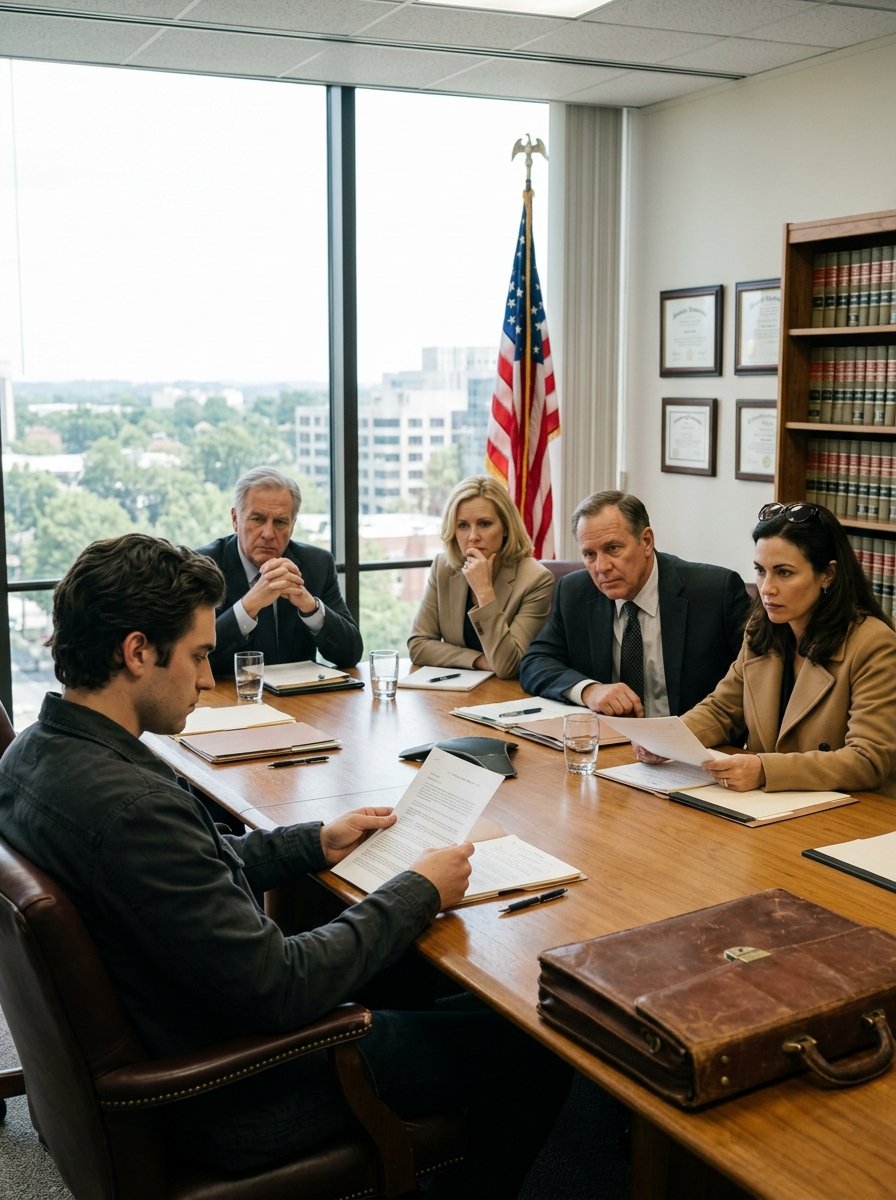
At 7:05, everyone was seated.
17 people all staring at me.
“Eric,” my mom said, raising her glass. “Would you like to say a few words before dinner?”
I smiled.
“As a matter of fact, yes, I would.”
I stood, cleared my throat, and looked around the room.
“Thanks for coming,” I began. “It’s been a long time. I appreciate you all being here.”
Polite smiles, nods.
“I wanted to have this dinner,” I continued. “Because for years, I thought I was the problem. I thought I was the broken one, the dropout, the failure, the disappointment.”
No one moved.
“I missed birthdays, holidays. I wasn’t invited to weddings. And when I was, I became the joke. And I accepted it. I thought, maybe I deserve this. Maybe if I just work harder, succeed more, I’ll earn my way back in.”
Now, some of them shifted in their seats.
“But that’s not how family should work,” I said, voice still calm. “Love isn’t conditional on success. Respect isn’t something you give only when someone becomes useful.”
Brian rolled his eyes.
And so I said, looking straight at him.
“When I see people in this room now reaching out, asking for favors, calling me after years of silence, it tells me one thing.”
I paused.
“You didn’t change your minds about me. You just changed your math.”
Gasps.
A few heads turned.
“This isn’t revenge,” I said. “This is closure. I’m not here to punish anyone. I’m here to say this. I see you. I see who you really are. And I’m done pretending otherwise.”
I sat down.
Silence, the kind that makes your ears ringing.
And just when it seemed no one would speak, Brian slammed his hand on the table and stood up.
“Are you serious right now?”
I looked up at him.
“You think you’re better than us? Because you got lucky.”
That’s when I saw it.
Panic.
Not just anger. Not just pride, but fear.
Because he realized I wasn’t here to save him.
Brian’s words hung in the air, loud and brittle.
“You think you’re better than us? Because you got lucky.”
I didn’t flinch. I didn’t raise my voice.
I just looked him in the eye and said, “No, Brian. I know I’m better than you. Not because I made money, but because I never kicked you while you were down.”
That silenced him completely.
For a second, I saw something behind his eyes. Some flicker of recognition or shame. Or maybe just fear.
But then it disappeared behind the usual smuggness.
He laughed once, sharp and hollow, then muttered something under his breath and sat down, jaw clenched, eyes burning.
My mom tried to smooth it over with a nervous chuckle.
“All right, well, maybe we all got off on the wrong foot tonight. Let’s just—”
“No,” I said, cutting her off. Calm, steady. “We’re not brushing this under the rug. Not this time.”
The table went quiet again.
You could hear the slow drip of water from the wine cooler in the corner.
I leaned forward, resting my forearms on the table, and turned to face the room.
“You all wanted something from me. Let’s not pretend otherwise. My success didn’t bring you pride. It brought you discomfort. Because it came without your permission, without your support.”
Uncle Rob opened his mouth, but I raised a hand.
“Let me finish.”
He closed it.
“Some of you asked for money. Others assumed I’d offer it. None of you apologized. Not one of you picked up the phone in the last 3 years just to say I’m sorry for how we treated you. You just waited until I was worth something.”
Now there were frowns, guilt in some eyes, defensiveness, and others, but no denials.
“I was invited here under the guise of family. But this isn’t family. This is opportunism. And I wanted to see it in the light.”
I pulled out a folder from under my chair and set it on the table.
Thick labeled.
Everyone stared.
“These,” I said, “are notes. Emails, messages, all from you over the years. Things you said about me when you thought I wasn’t listening.”
I looked directly at Sharon.
“You once told Amber that I’d end up back at home, mooching off my parents by 30.”
Sharon stiffened, red creeping into her face.
I turned to Taylor.
“You laughed when I couldn’t afford to fly home for Thanksgiving and said, quote, ‘He probably lives in a tent.’”
Taylor opened her mouth, but I didn’t stop.
“And Brian,” I said, finally turning to him. “You stood in front of 200 people at your wedding and said, ‘At least mom and dad have one successful son.’”
The table was frozen.
Brian’s wife shifted uncomfortably. Hannah stared at her lap. My mom looked like she might be sick.
“I kept receipts,” I said. “Not because I wanted revenge, but because I needed to remember why I walked away.”
Then I pulled out the second folder.
This one was thinner, labeled offers.
“I was prepared to help. Believe it or not, I was. I put together a recovery plan for Brian’s debts. I worked out a restructure plan that would have let him keep the house. I even spoke with a financial adviser about setting up a trust for his kids.”
Brian’s head snapped up.
“But then I watched how you all reacted when you thought I was still weak,” I said. “And I realized something.”
I slowly slid the folder toward the center of the table, then pulled it back and dropped it into my briefcase.
“You don’t deserve my help. You’ve never deserved it. And I’m done offering it.”
Brian stood up again, this time red-faced.
“You arrogant little—”
I stood too, not angry, just tired.
“This dinner was your test,” I said, “to see if you could show some growth, some humility, to see if anything had changed. But it hasn’t. You still see me as the kid who didn’t go to law school. The dropout, the joke.”
I walked to the center of the room and turned to face them all one last time.
“So, here’s what’s going to happen.”
I took a deep breath.
“Brian, you’ll be getting a notice next week. Your bankruptcy trustee is about to receive a file I compiled because your crypto losses weren’t just stupid. They were illegal. You misrepresented loan documents to three lenders, and I happen to know two of them are federally insured. You’re looking at fraud.”
I could have kept quiet. I could have bailed you out, but you burned that bridge when you mocked me at your wedding and tried to ambush me at Christmas.
“You wanted to see what rock bottom looks like. You’re about to find out.”
Brian’s face went pale. His wife looked like she was about to cry.
I turned to Sharon.
“Sharon, that consulting agency you opened last year, you listed me as an informal backer to secure your initial clients. I didn’t even know until one of them reached out to thank me. That’s impersonation and false advertising. I’ll be contacting your clients this week to clear up the misunderstanding. Good luck rebuilding your brand.”
Her jaw dropped.
“Eric, please.”
I raised a hand.
“Taylor, I already reported the fake charity page you set up in my name. The one where you said I was matching donations. You’ll be lucky if GoFundMe doesn’t press charges. And if you’re wondering who sent the screenshots to them, look no further.”
She stared at me, stunned, then slowly looked at her phone under the table.
“And mom.”
I turned to her last.
She looked broken, fragile in a way I’d never seen before, like someone who had built her entire identity around controlling the narrative.
And now the seams were ripping apart.
“You never defended me. Not once. Not when I was mocked. Not when I was excluded. You joined the laughter because it was easier than standing up for your own son. And now you want to pretend that none of that happened. That we’re just a family again.”
Her eyes were glassy.
“Eric, I made mistakes.”
“You made choices,” I said. “And so did I.”
I walked to the door and picked up my coat. Turned back one last time.
“I’m not your son anymore. Not in the way you understand the word. I’ve outgrown this family. I’ve outgrown the smallalness, the pettiness, the manipulation. You can keep the memories. I’m moving forward.”
I nodded once to Hannah, who gave me the faintest nod back.
Then I left.
The fallout came quickly.
Brian’s indictment was quiet, but very real. A few months later, I read the court summary online.
Fraud, misrepresentation, multiple counts.
His assets were frozen. The house was gone.
He moved in with Sharon, who by then had lost most of her client base and was begging on LinkedIn for freelance gigs.
Taylor’s GoFundMe page was deleted. She posted a long, vague Facebook status about toxic men who destroy women’s dreams.
No one bought it.
My parents stopped calling.
At first, I thought they might fight back, might try to salvage the narrative, but they didn’t.
I think they finally realized the power shift wasn’t temporary.
It was permanent.
I wasn’t coming back.
I moved to a coastal town that spring, bought a place with a wide porch and tall windows.
Torch kept growing.
I hired Hannah as operations manager. She was brilliant, organized, strategic, thoughtful.
I paid her more than she’d ever earned before, and she earned every bit of it.
We had coffee once on the porch, just the two of us looking out at the waves.
“Did it feel good?” she asked.
I thought about it.
“Yes,” I said. “But not because I hurt them. Because I don’t need them anymore.”
She nodded, then grinned.
“You know they think you’re a villain now, right?”
I smiled.
“They call me a failure for years. Let them call me a villain. I’d rather be a villain with peace than a hero in their broken story.”
If you came here from Facebook because of this story, go back to the Facebook post, tap Like, and leave exactly “Respect” in the comments. That small gesture means more than it may seem. It supports the person telling this
story and gives them the motivation to keep sharing more stories like this with readers who take the time to stay until the end.