PART 2: The signature they never asked about: two sisters, one promotion, and the family truth hidden in plain sight – 031
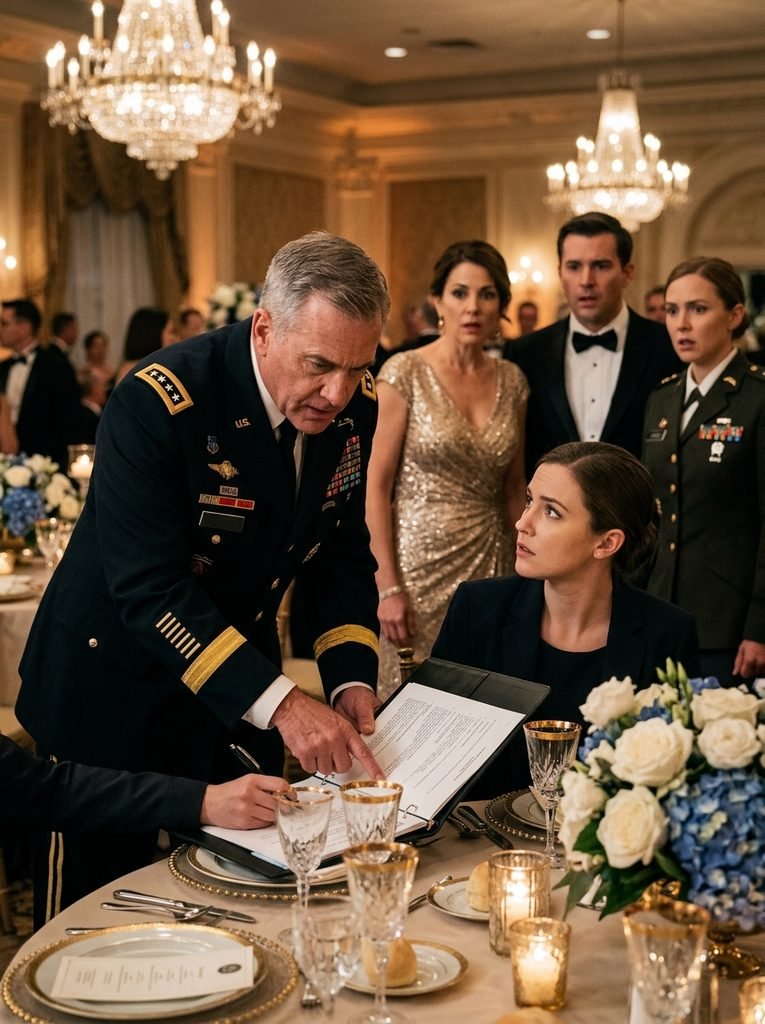
Across the room, someone inhaled sharply.
I glanced at Emily.
She looked at me as if I had suddenly started speaking another language.
“Yes, General.”
My mother laughed nervously.
“I’m sorry,” she said. “There must be some confusion. Megan works in an administrative office.”
General Brooks turned toward her.
For a second, I thought he might correct her.
Instead, he looked back at me.
“Would you mind explaining your role?”
I wished he hadn’t asked.
Not because I was ashamed of it.
Because this was Emily’s evening.
Whatever had happened between my parents and me, she had worked hard for those silver oak leaves on her uniform. I had no interest in turning her celebration into a demonstration of who mattered more.
“I’m Acting Director of Officer Personnel Policy Review,” I said quietly. “Office of the Under Secretary of Defense for Personnel and Readiness.”
Nobody spoke.
So I added, “It sounds grander than it is.”
General Brooks almost smiled.
“No,” he said. “It sounds approximately as grand as it is.”
A ripple of restrained laughter traveled through the officers nearest us.
My mother’s glass slowly lowered.
Emily stared at me.
“You work at the Pentagon?”
“Most days.”
“You said you worked in personnel.”
“I do.”
“You said your job was paperwork.”
“Sometimes it is.”
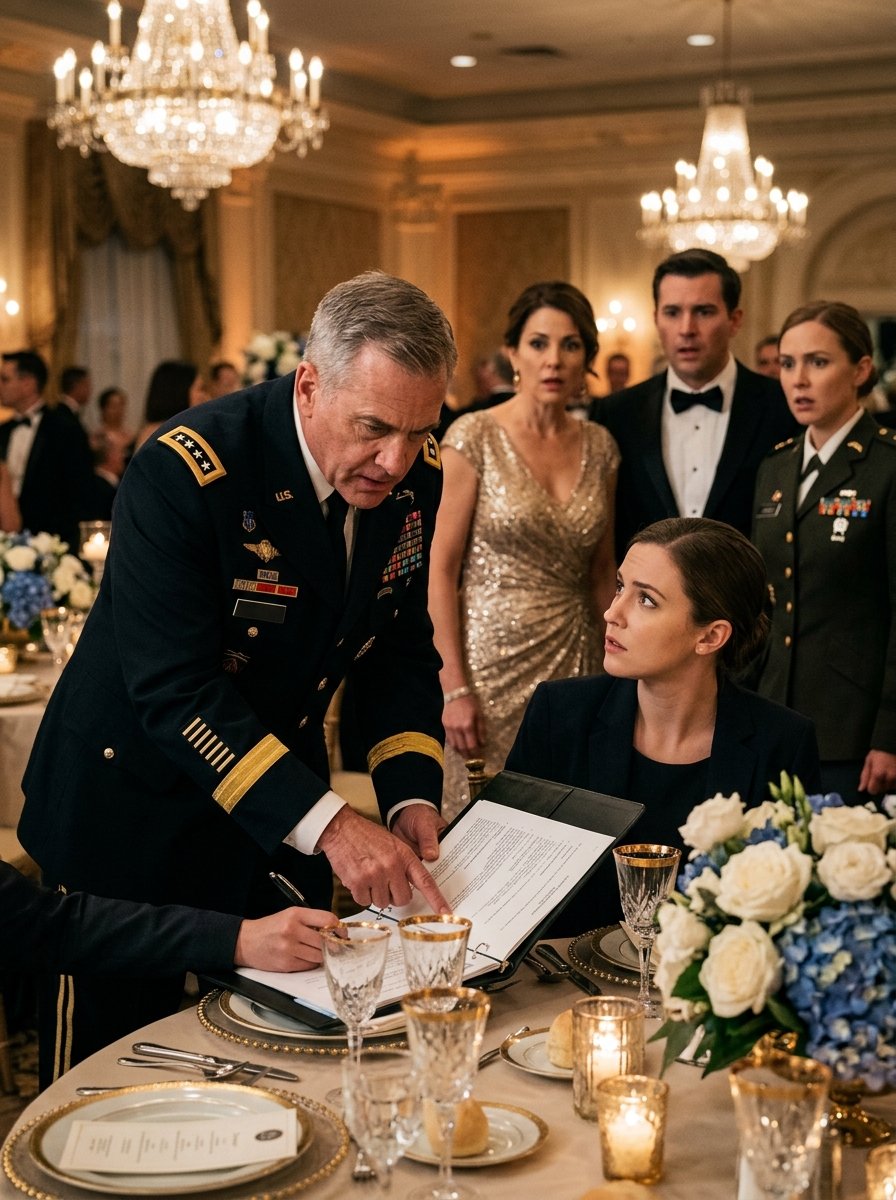
General Brooks closed the folder.
“The paperwork,” he said, addressing Emily now, “is how we make sure careers are advanced fairly, regulations are followed, records are accurate, and people are not promoted because somebody important made a telephone call.”
The last sentence shifted the atmosphere.
Emily’s expression changed.
Not guilt.
Concern.
I noticed because I had seen the same expression several weeks earlier when her file first reached my desk.
General Brooks noticed too.
He gestured toward a quieter corner of the ballroom.
“Major Whitlock, may I have a word?”
Emily nodded.
Then he looked at me.
“Ms. Whitlock, you as well.”
My father stepped forward.
“Is something wrong with Emily’s promotion?”
The general considered his answer.
“Nothing that needs to become entertainment at a family celebration.”
That ended the questions.
We moved toward a small sitting area outside the ballroom.
The heavy doors closed behind us, muting the orchestra.
For the first time all evening, Emily and I stood beside each other without our parents between us.
General Brooks placed the folder on a narrow table.
“I came tonight because Colonel Reeves mentioned the celebration when we spoke this afternoon,” he said. “I was already in Savannah for meetings and thought I would congratulate you personally.”
Emily nodded.
“That’s incredibly kind, sir.”
“But this afternoon I also learned something unusual about your file.”
Her shoulders tightened.
I knew what was coming.
Three weeks earlier, Emily’s promotion had encountered an administrative hold.
Nothing dramatic.
Nothing shameful.
Her personnel record contained conflicting dates concerning an overseas assignment and a professional military education requirement. Ordinarily, someone several levels below me would have resolved it.
Except one of the supporting memoranda had come from a senior official whose name carried enough influence that nobody wanted to question it.
So the file climbed.
Eventually, it reached my desk.
When I saw Emily’s name, I had nearly returned it immediately.
Conflict of interest.
Instead, I disclosed the relationship in writing and asked my deputy to supervise the substantive review.
I signed only after the independent review was complete.
The promotion was deserved.
The irregularity was not Emily’s fault.
But there was something in the file she still didn’t know.
General Brooks opened the folder.
“Do you know Senator Holloway?” he asked.
Emily hesitated.
“Socially? No, sir.”
“He attended a reception at Fort Stewart six months ago.”
“Yes.”
“You spoke with him?”
“For perhaps two minutes.”
“And afterward?”
She frowned.
“I don’t understand.”
“Did anyone tell you he contacted Army leadership regarding your promotion?”
Emily went very still.
“No.”
I watched her carefully.
General Brooks watched her too.
“What did he say when you met?”
“He asked about my unit. My education. Where I grew up.” She looked toward the ballroom doors. “Then he recognized Dad’s name.”
That was the piece I hadn’t known.
“My father’s?”
Emily nodded.
“Dad did legal work for a foundation the senator supported years ago.”
I closed my eyes briefly.
Of course.
General Brooks pulled one sheet from the folder.
“Senator Holloway’s office sent an inquiry asking why your promotion had not yet been finalized.”
Emily’s face lost color.
“I never asked him to do that.”
“I believe you.”
She looked at him quickly.
“You do?”
“Your record supports you.”
Emily turned toward me.
“What does this have to do with Megan?”
I answered before the general could.
“The inquiry caused your file to receive an expedited review.”
Emily stared.
“And you stopped it?”
“I removed the expedited designation.”
Her mouth parted.
For a moment she looked hurt.
“Why?”
“Because nobody should jump the line because a senator knows their father.”
Her eyes flashed.
“But if you hadn’t—”
“You still would have been promoted.”
“When?”
“After the normal review.”
“How much later?”
“Probably eleven days.”
She looked almost embarrassed by the question.
General Brooks leaned back slightly.
“Your sister also requested independent review because of your relationship.”
Emily looked at me again.
“You told them I was your sister?”
“I had to.”
“And you still signed?”
“After three separate reviewers agreed the discrepancy was clerical and your record met every requirement.”
The anger drained from her face.
My father took the phone back.
For a moment, nobody moved.
The distant orchestra played something light and elegant, completely wrong for the silence inside the sitting room.
Emily spoke first.
“What family documentation?”
Dad rubbed his thumb along the edge of his phone.
“Old records.”
“What records?”
“Your mother and I need to think.”
Mom looked at him sharply.
“Richard.”
That single word told me something important.
She knew what he meant.
Emily heard it too.
“You know.”
Mom’s expression became strained.
“There is nothing sinister here.”
“I didn’t say there was.”
“No, but everyone is standing around behaving as if we’ve uncovered some dreadful secret.”
I looked at her.
“Then tell us what it is.”
She turned toward me, and for once the usual criticism wasn’t there.
Only hesitation.
Dad lowered his voice.
“This is not the place.”
On that point, at least, he was right.
Through the ballroom doors, more than a hundred guests were waiting for Emily.
Whatever our family had failed to say to one another over the years did not belong beneath chandeliers in front of senators and generals.
Emily seemed to reach the same conclusion.
She straightened her jacket.
“We finish the party.”
Mom blinked.
“What?”
Emily looked at her.
“This is my promotion celebration. General Brooks said my promotion is valid. My friends came. People from my unit came. Aunt Susan flew from Ohio.”
A small, almost stubborn smile appeared.
“I’m not abandoning my own cake because this family apparently has an attic full of mysteries.”
Despite everything, I laughed.
Dad did too.
Even Mom’s mouth twitched.
The tension loosened by one degree.
Emily turned to me.
“You’re sitting at the family table.”
“Apparently I’ve been assigned near the service hallway.”
Her eyes narrowed.
“Not anymore.”
Mom flushed.
“Megan, I only meant—”
“Not tonight,” Emily said.
It was not harsh.
That made it more effective.
Mom went quiet.
We returned to the ballroom together.
People glanced toward us, curious, but General Brooks had clearly chosen discretion. By the time we entered, he was standing with two retired officers near the stage, discussing golf as if nothing unusual had happened.
Emily was immediately surrounded by colleagues.
Captain Lena Ortiz hugged her.
“There you are. I thought a general kidnapped you.”
“Administrative ambush,” Emily said.
Lena laughed.
Then she noticed me.
“You must be Megan.”
I blinked.
“You know who I am?”
“Of course.”
Emily looked uncomfortable.
Lena continued innocently.
“She talks about you.”
That surprised me more than anything General Brooks had said.
Emily changed the subject.
Dinner resumed.
My place card had originally been at the far end of the family table. Emily physically switched it with an empty chair beside her.
Mom pretended not to notice.
Dad noticed everything.
For the next hour, the evening became what it should have been.
People told stories about Emily.
Her first miserable field exercise in freezing rain.
The time she spent an entire weekend helping a young lieutenant prepare for a qualification exam.
Her talent for remembering the names of spouses, children, and retired sergeants she had met only once.
I had known Emily was ambitious.
I had forgotten how much she cared.
Listening to her soldiers talk about her, I saw a version of my sister that family competition had obscured.
At one point, Lena leaned toward me.
“She’s annoying, you know.”
“I’m aware.”
“She checks every detail twice.”
“Definitely aware.”
“She also stayed at the hospital with me when my husband had emergency surgery last year.”
I looked toward Emily.
She was listening to a retired colonel tell an elaborate story.
“She never told me that.”
Lena shrugged.
“She doesn’t tell people the good things she does.”
I almost laughed.
Apparently secrecy was genetic.
When dessert arrived, Dad gave a speech.
For years, his speeches about Emily had contained comparisons.
Emily was disciplined while other people wandered.
Emily understood service while others preferred comfort.
Emily pursued meaningful responsibility.
Tonight he did something different.
He spoke only about her.
No comparisons.
No subtle references to me.
“Your mother and I are proud of what you’ve accomplished,” he concluded. “But more than the rank, we are proud of the person you have become.”
Emily looked at me as people applauded.
Then she stood.
“I wasn’t planning to give a speech.”
Everyone laughed.
“But apparently that has never stopped a Whitlock.”
More laughter.
She thanked her commanders.
Her friends.
Our parents.
Then she paused.
“And my sister Megan.”
My stomach dropped.
Please don’t.
Emily ignored my expression.
“Megan has spent most of her career doing work none of us understood very well.”
Mom looked down.
Emily continued.
“Some of that is because she couldn’t discuss it. Some of it is because government personnel policy is not ideal dinner conversation.”
That earned another laugh.
“And some of it,” she said, more quietly, “is because we didn’t ask enough questions.”
The room became still.
“I learned something tonight about how much unseen work goes into making sure people like me are treated fairly.”
She looked directly at me.
“And I learned that quiet service is still service.”
The applause this time was different.
Warm.
Not explosive.
I wished she hadn’t done it.
And I loved her for doing it anyway.
After the guests left, the four of us drove to my parents’ house.
They owned a pale stucco home overlooking a tidal creek, fifteen minutes from the club.
Growing up, Emily and I had spent summers there with our grandparents before our parents purchased the property from them.
The house smelled exactly as I remembered.
Cedar.
Coffee.
Mom’s lavender candles.
Dad took off his jacket.
“The records are upstairs.”
Emily looked toward the ceiling.
“You actually have mysterious attic documents.”
“I told you.”
We followed him.
Mom remained downstairs at first.
Then, after several seconds, she came too.
The attic had been converted into storage.
Christmas decorations.
Old school projects.
Photo albums.
A tennis racket with a broken string.
Dad moved several boxes before finding a gray archival container marked WHITLOCK—PERSONAL.
He carried it downstairs.
At the kitchen table, he removed folders filled with birth certificates, school records, insurance documents, and decades-old correspondence.
Nothing seemed remarkable.
Then he found a cream envelope.
Mom sat down.
“I haven’t seen that in years.”
Emily pulled out a chair.
“What is it?”
Dad handed the envelope to her.
Inside was a letter dated twenty-eight years earlier.
Emily read silently.
Halfway through, she looked up.
“What does this mean?”
I leaned closer.
The letter came from a military hospital in Germany.
It concerned our mother.
And a newborn.
My sister.
Mom folded her hands.
“When Emily was born, your father was stationed overseas as a civilian legal adviser attached to a defense program.”
“I know that,” Emily said.
“What you don’t know,” Mom continued, “is that there was an error on your original birth documentation.”
“What kind of error?”
Dad answered.
“My name was temporarily omitted as your father.”
Emily stared at him.
“Why?”
“Because we weren’t married yet.”
Silence.
Emily blinked.
“You always said you were married in 1997.”
“We were.”
“I was born in 1997.”
“Yes.”
I began calculating.
Mom closed her eyes.
“You were born in March.”
Their anniversary was in June.
Emily leaned back.
“Oh.”
Compared with what we had feared, it seemed almost absurdly ordinary.
“You thought this was some giant family secret?”
“In 1997,” Mom said, “your grandfather considered it one.”
I remembered Mom’s father.
Judge Harrison Caldwell.
Formal.
Traditional.
A man who wore a tie to breakfast on holidays.
Mom continued.
“He was already unhappy that I had followed your father overseas. When I became pregnant, he refused to speak to me for months.”
Dad looked at her.
“We married privately after you were born. Then we had the larger ceremony in June when we returned home.”
Emily looked between them.
“So my birthday records caused a personnel discrepancy?”
“Possibly,” I said.
I examined the letter.
Something still didn’t fit.
A marriage date would have no bearing on Emily’s eligibility for promotion.
“Thomas Avery specifically mentioned accession records.”
Emily looked at me.
“What does that mean?”
“When you entered the Army, you submitted identity and citizenship documentation.”
“So?”
“So nothing in this letter matters.”
Dad frowned.
“Then why did Thomas mention it?”
I kept reading.
At the bottom of the hospital letter was a handwritten notation.
Corrected certificate issued following acknowledgment of paternity.
Still ordinary.
Then I noticed the attached photocopy.
Two birth certificates.
One original.
One amended.
Emily picked them up.
The original listed her surname as Caldwell.
Mom’s maiden name.
The amended certificate listed Whitlock.
Emily looked amused more than upset.
“So for three months I was Emily Caldwell?”
“Legally,” Mom said.
“Why didn’t you tell me?”
Mom’s eyes filled, although she remained composed.
“Because your grandfather made me feel as if it were something shameful.”
Emily’s expression softened.
Mom touched the corner of the paper.
“By the time you were old enough to ask about our wedding photographs, I had repeated the simplified version so many times that telling the full story felt impossible.”
“That you got married three months after I was born?”
“Yes.”
Emily stared at her.
“Mom, half my friends have parents who never married at all.”
“I know.”
“Then why hide it?”
Mom gave a sad laugh.
“Families can remain afraid of judgments long after the people doing the judging are gone.”
I understood that more than I wanted to.
Dad shifted through the folder.
“There’s something else.”
He found another document.
Emily groaned.
“How many identities do I have?”
But Dad didn’t smile.
“This one concerns Megan.”
My head lifted.
“What?”
He handed me a letter.
It was from the same hospital system.
Different year.
Different subject.
A family medical history correction.
I read it once.
Then again.
“This says my blood type was entered incorrectly.”
“Yes.”
“So?”
Dad glanced at Mom.
She looked away.
Emily leaned forward.
“What aren’t you saying now?”
Dad sat opposite me.
“When you were seventeen, you applied to a summer science program that required medical clearance.”
I remembered.
Barely.
“I didn’t get in.”
“You were accepted.”
I stared at him.
“What?”
Mom spoke quietly.
“We declined the placement.”
“You told me I was rejected.”
“Yes.”
I could hardly process how small and enormous the lie felt.
“Why?”
“Because the program was in Germany,” she said.
“And?”
Dad answered.
“We were afraid the medical records might reopen questions regarding an old hospital file.”
I laughed once.
“You lied to me because of a blood-type typo?”
Neither answered.
That was when I knew.
“No.”
Emily looked between us.
“What?”
I put the letter down.
“This isn’t about a typo.”
Mom’s eyes closed.
“Richard.”
Dad remained silent.
I felt remarkably calm.
Perhaps because the entire night had already exceeded my emotional capacity.
“What happened?”
Mom looked at me.
“When you were born, there were complications.”
“What kind?”
“Nothing dangerous to you now.”
“Mom.”
She took a breath.
“You needed additional testing. During that process, the hospital discovered that your recorded blood type was inconsistent with the information they had for your father.”
Emily stopped moving.
I looked at Dad.
He met my eyes.
And suddenly the room was no longer about promotion records.
“Are you my father?”
“Yes.”
His answer came immediately.
No hesitation.
“Yes, Megan. In every way that matters and biologically as well.”
I frowned.
“Then what was inconsistent?”
Mom reached for the letter.
“The hospital had Richard’s blood type wrong.”
I stared.
Emily stared.
Then Emily said, “That’s it?”
Dad almost smiled.
“That was the eventual conclusion.”
“Then why hide anything?”
“Because before the correction was established,” Mom said, “my father found out.”
There it was again.
Grandfather.
“He assumed I had been unfaithful. He confronted Richard. It nearly ended our marriage.”
Dad looked down.
“The corrected testing resolved it.”
“So why does this matter now?”
“It shouldn’t,” Mom said.
Exactly.
I looked at the papers again.
“Which means Thomas Avery wasn’t talking about this.”
Dad’s head lifted.
I spread the documents across the table.
“Emily’s amended birth certificate is ordinary. My blood-type correction is irrelevant. None of this affects an Army promotion.”
Emily nodded slowly.
“So Avery either misunderstood something…”
“Or wanted Dad to think there was something important in these records.”
Dad reached for his phone.
“I’m calling him.”
“No.”
All three of them looked at me.
“Why not?” Dad asked.
“Because this isn’t our job to investigate privately. General Brooks already has a review underway.”
Emily looked dissatisfied.
“But somebody tried to accelerate my promotion.”
“Yes.”
“And sent Dad searching through old family records.”
“Yes.”
“Why?”
“That’s the question.”
I collected the papers.
Mom watched me.
“You sound very calm.”
“I work in personnel policy.”
Emily snorted.
I looked at her.
“What?”
“That explanation is becoming increasingly inadequate.”
Despite myself, I smiled.
Dad rubbed his forehead.
“I owe both of you an apology.”
Emily leaned back.
“For what specifically? We may need categories.”
He accepted the joke.
“For believing I could improve your lives by quietly arranging things.”
I looked at him.
“Emily’s promotion?”
“I mentioned the delay to Holloway after Thomas told me about it.”
“You should not have known there was a delay.”
“I understand that now.”
“Did Thomas tell you anything else?”
Dad thought.
“He said Emily had an excellent record and it would be unfortunate if an old administrative problem slowed her advancement.”
“That sounds deliberate,” I said.
Emily frowned.
“Why would he want Dad to call a senator?”
Nobody had an answer.
Mom stood and made coffee.
It was nearly midnight, but none of us objected.
Something strange happened over the next hour.
We talked.
Not as the impressive daughter, the disappointing daughter, the proud mother, and the connected father.
Just four adults trying to understand years of misunderstandings.
Mom apologized for the ballroom.
Not elegantly.
She started by explaining herself.
Then stopped.
“No,” she said quietly. “I’m doing it again.”
“Doing what?” I asked.
“Trying to justify something before admitting it was unkind.”
She looked at me.
“I was unkind to you tonight.”
I said nothing.
“You didn’t deserve it.”
The apology didn’t erase years.
But it was a beginning.
Dad admitted he had understood almost nothing about my work.
Emily admitted she had enjoyed being the family success story enough that she had rarely questioned the role assigned to me.
And I admitted something too.
“I made it easy.”
Emily frowned.
“No, you didn’t make Mom say those things.”
“That’s not what I mean.”
I turned my coffee cup between my hands.
“I stopped telling you about my life. Somewhere along the way, I decided none of you were interested, so I made every answer as boring as possible.”
Dad looked ashamed.
“Were we uninterested?”
“Sometimes.”
He accepted it.
“But sometimes I was punishing you for old conversations you didn’t even remember.”
Mom looked at me.
“I’m sorry we gave you reasons to do that.”
The house became quiet.
Outside, moonlight spread across the marsh.
Emily eventually went upstairs to change out of her uniform.
When she returned in sweatpants and an old college shirt, she looked younger.
Like the sister who used to crawl into my room after thunderstorms.
She sat beside me.
“So what happens tomorrow?”
“I report the conversation with Dad to our ethics counsel and the review team.”
Dad winced.
“Am I in trouble?”
“You called a senator.”
“To brag about my daughter.”
“And mention a personnel matter.”
He sighed.
“Fair.”
“You’ll probably be asked what Thomas told you.”
“I’ll answer.”
Emily looked at me.
“And then?”
“Then we let the process work.”
She nodded.
It was nearly two in the morning when my phone vibrated.
An email.
Official address.
I expected it to be from General Brooks.
It wasn’t.
The sender was Marjorie Bell, my former director—the woman whose retirement had put me in the acting position.
The subject line read:
Thomas Avery — Call me before your morning briefing.
I opened it.
The message was brief.
Megan, I heard your office is reviewing Avery’s handling of the Whitlock file. There is something you need to know before anyone concludes this began with Emily.
My heart began beating faster.
Emily noticed.
“What?”
I read the next sentence.
Then I turned the phone toward her.
Three years ago, Avery requested access to your personnel history too.
Emily stared at me.
“My history?”
I shook my head.
“No.”
I pointed to the line.
“He requested mine.”
And suddenly Emily’s promotion no longer looked like the beginning of the mystery.
It looked like the moment we finally noticed it.
-END OF PART 3–PRESS NEX PART IN BOTTOM OF PAGE TO READ NEXT PART
“What discrepancy?”
I exchanged a look with General Brooks.
This part belonged to him.
He tapped the folder.
“Your professional military education completion date was entered incorrectly when two personnel systems were consolidated. Someone attempted to correct it with a memorandum that was technically insufficient.”
Emily frowned.
“Colonel Reeves told me everything had been handled.”
“It was handled,” the general said. “But not until the record was reconstructed properly.”
He looked at me.
“Your sister’s office found the original completion documentation.”
Emily looked astonished.
“You did that?”
“My staff did.”
“But you signed the final authorization.”
“Concurrence,” I corrected automatically.
Emily gave me a strange look.
Then, unexpectedly, she laughed.
It was soft and disbelieving.
“Of course you’d correct that.”
For the first time that evening, I smiled.
“Occupational hazard.”
General Brooks gathered the pages.
“Major Whitlock, your promotion is valid. You earned it. Nothing in this file suggests otherwise.”
Emily visibly relaxed.
“Thank you, sir.”
“But you should know something else.”
The smile disappeared.
“When Senator Holloway’s inquiry arrived, somebody inside the system added language suggesting the correction be given ‘special priority due to external interest.’”
Emily’s brow furrowed.
“Who?”
“That,” General Brooks said, “is something we’re still reviewing.”
I knew that.
What I hadn’t known was that he planned to tell Emily tonight.
He continued before she could become alarmed.
“This is not an investigation of you. It is an internal process question. Your sister was one of the people who flagged it.”
Emily looked at me.
“When?”
“Last month.”
“And you didn’t tell me.”
“I couldn’t.”
“You could have said something.”
“No, Emily. I genuinely couldn’t.”
She looked away.
The years between us suddenly seemed to enter the small sitting room.
Birthdays.
Thanksgiving dinners.
Christmas mornings.
Phone calls where she talked about field exercises and new commands while I carefully summarized my work as “personnel policy.”
I had allowed my family to underestimate me.
Sometimes because classified or sensitive work required discretion.
Sometimes because explaining government bureaucracy at dinner was exhausting.
And sometimes because, after years of being interrupted or compared with Emily, silence became easier.
General Brooks seemed to sense that this conversation had moved beyond military personnel policy.
“I should return to the reception,” he said.
Emily straightened.
“Yes, sir.”
He shook her hand.
“Congratulations, Major. You earned the rank. Don’t let administrative complications diminish that.”
“Thank you.”
Then he turned to me.
“Excellent work on the review.”
“Thank you, General.”
At the doorway, he paused.
“One other thing.”
My stomach sank.
He looked almost amused.
“Your mother appears to be preparing to interrogate me.”
Emily glanced through the glass panel.
Mom was indeed hovering approximately six feet from the door.
General Brooks smiled.
“I have faced congressional committees. I think I’ll survive.”
Then he left.
For several seconds, Emily and I stayed where we were.
Finally she said, “Acting Director?”
I leaned against the table.
“Since January.”
“You never told me.”
“I did.”
“No, you didn’t.”
“I said I’d taken over my division after Marjorie retired.”
“You said, ‘It mostly means more meetings.’”
“It does mean more meetings.”
She stared at me, then covered her face with both hands.
“That is the most Megan answer imaginable.”
I laughed despite myself.
When she lowered her hands, her expression was different.
Not admiring.
Not embarrassed.
Sad.
“Why didn’t I know?”
That question landed harder than anything our mother had said.
I looked toward the ballroom.
“Because you stopped asking.”
Emily’s eyes fell.
I immediately regretted how sharp it sounded.
But she nodded.
“I probably did.”
“When you joined ROTC, everything became about the Army. Then you commissioned. Then your first assignment. Mom and Dad were so proud, and they should have been.”
“And you?”
“I was building my career too.”
“I know.”
“No. You know now.”
She absorbed that quietly.
“You thought I looked down on you.”
“I thought everybody did.”
“I never said your job was meaningless.”
“You laughed when Dad called me the family bureaucrat.”
Her face tightened.
“I remember.”
“It was Easter. Four years ago.”
“I remember.”
There was no defensive explanation.
That helped more than an apology would have at that moment.
She sat down.
“I was twenty-five and enjoying being the impressive daughter.”
“At least you’re honest.”
“I’m not proud of it.”
“You don’t have to turn yourself into a villain, Emily.”
She gave me a faint smile.
“Very generous.”
“I mean it.”
I sat beside her.
“You earned tonight.”
She stared at her hands.
“Did I?”
“Yes.”
“You just spent twenty minutes explaining how a senator interfered.”
“He asked a question. Somebody inside the system reacted badly. That doesn’t erase ten years of your work.”
She was quiet.
“Did Dad know about the senator’s inquiry?”
“I don’t know.”
That was the truth.
But as soon as I said it, something changed in her face.
“Megan.”
“What?”
“The day after that Fort Stewart reception, Dad called me.”
My pulse slowed.
“What did he say?”
“He asked how the event went.”
“That’s normal.”
“He asked specifically whether I’d met Senator Holloway.”
I said nothing.
Emily continued.
“I told him yes. He seemed pleased.”
“How pleased?”
She looked toward the ballroom.
“He said, ‘It never hurts for the right people to know your name.’”
That sounded exactly like our father.
Still, it proved nothing.
“He may just have been making conversation.”
“Maybe.”
She didn’t sound convinced.
The doors opened.
Mom entered first.
Dad followed.
General Brooks had apparently escaped.
Mom looked from Emily to me.
“What in heaven’s name was that?”
“Nothing is wrong with my promotion,” Emily said immediately.
Mom pressed a hand to her chest.
“Thank goodness.”
Dad looked at me.
“What did Brooks want?”
Not General Brooks.
Brooks.
I noticed.
So did Emily.
“You know him?” I asked.
Dad’s expression barely changed.
“By reputation.”
Emily stood.
“Do you know Senator Holloway?”
Dad laughed.
“Of course. Half the room knows Senator Holloway.”
“That wasn’t my question.”
Mom frowned.
“Emily, this is your celebration.”
“I know.”
“Then please stop turning it into some sort of deposition.”
The old family rhythm was returning.
Deflect.
Smile.
Move forward.
Except Emily didn’t.
“Dad, did you ask Senator Holloway to contact anyone about my promotion?”
My father stared at her.
For two full seconds, the answer was written plainly across his face.
Then it disappeared.
“I mentioned that you were being considered.”
My stomach tightened.
Emily’s voice became very calm.
“Considered or delayed?”
Dad looked at me.
And I understood immediately.
He knew about the delay.
That information was not public.
I had never told him.
Emily had not known herself.
“How did you know there was a delay?” I asked.
He said nothing.
Mom looked between us.
“What delay?”
I stood.
“Dad?”
He adjusted his cuff.
A tiny gesture.
Something he did whenever he was cornered in an uncomfortable conversation.
Finally he sighed.
“I heard there was a paperwork issue.”
“From whom?”
“Does it matter?”
“Yes.”
The ballroom music began again beyond the doors.
People were laughing.
Waiting for speeches.
Waiting for cake.
Waiting to celebrate Emily.
Dad looked at her.
“I was trying to help.”
Emily’s face softened, but not with relief.
“With what?”
“Your career.”
“I didn’t ask you to.”
“I’m your father.”
“That isn’t an answer.”
Mom stepped between them emotionally, if not physically.
“Your father has supported both of you your entire lives.”
The irony was so obvious that even she seemed to hear it.
Her gaze briefly met mine.
She looked away.
Dad exhaled.
“All right. There was someone at the Department who mentioned the issue.”
“Who?” I asked.
He hesitated.
Then he gave a name.
“Thomas Avery.”
Every thought in my head stopped.
Emily looked at me.
“Who’s Thomas Avery?”
I could barely answer.
“He’s Deputy Assistant Secretary for Personnel Integration.”
Emily frowned.
“So?”
“So he’s the official whose handwritten note requested special priority on your file.”
Dad’s face changed.
Not guilt.
Surprise.
Real surprise.
“That can’t be right.”
“It is.”
“I never asked Thomas to prioritize anything.”
“Then why were you discussing Emily’s personnel file with him?”
Dad looked toward the closed ballroom doors.
For the first time that night, he no longer looked like the confident attorney who knew everyone worth knowing.
He looked tired.
Older.
And uncertain.
“Because,” he said slowly, “Thomas Avery called me first.”
None of us spoke.
Emily stepped closer.
“Why?”
Dad swallowed.
“He said there was something in your promotion review the family needed to know.”
I felt a chill that had nothing to do with rank, influence, or embarrassment.
“What something?” I asked.
Dad looked at me.
“He wouldn’t say over the phone.”
“Then what did he say?”
My father reached inside his jacket.
He removed his phone.
After scrolling for several seconds, he held it out.
There was an email.
Three sentences.
The last one made me forget the ballroom entirely.
The discrepancy in Major Whitlock’s file may not be clerical. Before this is finalized, someone should compare the original accession record with the archived Whitlock family documentation.
Emily read it twice.
Then she looked at me.
“What family documentation?”
I didn’t know.
But judging by our father’s expression, he did.
-END OF PART 2, –PRESS NEX PART IN BOTTOM OF PAGE TO READ NEXT PART
PART 3: The signature they never asked about: two sisters, one promotion, and the family truth hidden in plain sight – 031
My father took the phone back.
For a moment, nobody moved.
The distant orchestra played something light and elegant, completely wrong for the silence inside the sitting room.
Emily spoke first.
“What family documentation?”
Dad rubbed his thumb along the edge of his phone.
“Old records.”
“What records?”
“Your mother and I need to think.”
Mom looked at him sharply.
“Richard.”
That single word told me something important.
She knew what he meant.
Emily heard it too.
“You know.”
Mom’s expression became strained.
“There is nothing sinister here.”
“I didn’t say there was.”
“No, but everyone is standing around behaving as if we’ve uncovered some dreadful secret.”
I looked at her.
“Then tell us what it is.”
She turned toward me, and for once the usual criticism wasn’t there.
Only hesitation.
Dad lowered his voice.
“This is not the place.”
On that point, at least, he was right.
Through the ballroom doors, more than a hundred guests were waiting for Emily.
Whatever our family had failed to say to one another over the years did not belong beneath chandeliers in front of senators and generals.
Emily seemed to reach the same conclusion.
She straightened her jacket.
“We finish the party.”
Mom blinked.
“What?”
Emily looked at her.
“This is my promotion celebration. General Brooks said my promotion is valid. My friends came. People from my unit came. Aunt Susan flew from Ohio.”
A small, almost stubborn smile appeared.
“I’m not abandoning my own cake because this family apparently has an attic full of mysteries.”
Despite everything, I laughed.
Dad did too.
Even Mom’s mouth twitched.
The tension loosened by one degree.
Emily turned to me.
“You’re sitting at the family table.”
“Apparently I’ve been assigned near the service hallway.”
Her eyes narrowed.
“Not anymore.”
Mom flushed.
“Megan, I only meant—”
“Not tonight,” Emily said.
It was not harsh.
That made it more effective.
Mom went quiet.
We returned to the ballroom together.
People glanced toward us, curious, but General Brooks had clearly chosen discretion. By the time we entered, he was standing with two retired officers near the stage, discussing golf as if nothing unusual had happened.
Emily was immediately surrounded by colleagues.
Captain Lena Ortiz hugged her.
“There you are. I thought a general kidnapped you.”
“Administrative ambush,” Emily said.
Lena laughed.
Then she noticed me.
“You must be Megan.”
I blinked.
“You know who I am?”
“Of course.”
Emily looked uncomfortable.
Lena continued innocently.
“She talks about you.”
That surprised me more than anything General Brooks had said.
Emily changed the subject.
Dinner resumed.
My place card had originally been at the far end of the family table. Emily physically switched it with an empty chair beside her.
Mom pretended not to notice.
Dad noticed everything.
For the next hour, the evening became what it should have been.
People told stories about Emily.
Her first miserable field exercise in freezing rain.
The time she spent an entire weekend helping a young lieutenant prepare for a qualification exam.
Her talent for remembering the names of spouses, children, and retired sergeants she had met only once.
I had known Emily was ambitious.
I had forgotten how much she cared.
Listening to her soldiers talk about her, I saw a version of my sister that family competition had obscured.
At one point, Lena leaned toward me.
“She’s annoying, you know.”
“I’m aware.”
“She checks every detail twice.”
“Definitely aware.”
“She also stayed at the hospital with me when my husband had emergency surgery last year.”
I looked toward Emily.
She was listening to a retired colonel tell an elaborate story.
“She never told me that.”
Lena shrugged.
“She doesn’t tell people the good things she does.”
I almost laughed.
Apparently secrecy was genetic.
When dessert arrived, Dad gave a speech.
For years, his speeches about Emily had contained comparisons.
Emily was disciplined while other people wandered.
Emily understood service while others preferred comfort.
Emily pursued meaningful responsibility.
Tonight he did something different.
He spoke only about her.
No comparisons.
No subtle references to me.
“Your mother and I are proud of what you’ve accomplished,” he concluded. “But more than the rank, we are proud of the person you have become.”
Emily looked at me as people applauded.
Then she stood.
“I wasn’t planning to give a speech.”
Everyone laughed.
“But apparently that has never stopped a Whitlock.”
More laughter.
She thanked her commanders.
Her friends.
Our parents.
Then she paused.
“And my sister Megan.”
My stomach dropped.
Please don’t.
Emily ignored my expression.
“Megan has spent most of her career doing work none of us understood very well.”
Mom looked down.
Emily continued.
“Some of that is because she couldn’t discuss it. Some of it is because government personnel policy is not ideal dinner conversation.”
That earned another laugh.
“And some of it,” she said, more quietly, “is because we didn’t ask enough questions.”
The room became still.
“I learned something tonight about how much unseen work goes into making sure people like me are treated fairly.”
She looked directly at me.
“And I learned that quiet service is still service.”
The applause this time was different.
Warm.
Not explosive.
I wished she hadn’t done it.
And I loved her for doing it anyway.
After the guests left, the four of us drove to my parents’ house.
They owned a pale stucco home overlooking a tidal creek, fifteen minutes from the club.
Growing up, Emily and I had spent summers there with our grandparents before our parents purchased the property from them.
The house smelled exactly as I remembered.
Cedar.
Coffee.
Mom’s lavender candles.
Dad took off his jacket.
“The records are upstairs.”
Emily looked toward the ceiling.
“You actually have mysterious attic documents.”
“I told you.”
We followed him.
Mom remained downstairs at first.
Then, after several seconds, she came too.
The attic had been converted into storage.
Christmas decorations.
Old school projects.
Photo albums.
A tennis racket with a broken string.
Dad moved several boxes before finding a gray archival container marked WHITLOCK—PERSONAL.
He carried it downstairs.
At the kitchen table, he removed folders filled with birth certificates, school records, insurance documents, and decades-old correspondence.
Nothing seemed remarkable.
Then he found a cream envelope.
Mom sat down.
“I haven’t seen that in years.”
Emily pulled out a chair.
“What is it?”
Dad handed the envelope to her.
Inside was a letter dated twenty-eight years earlier.
Emily read silently.
Halfway through, she looked up.
“What does this mean?”
I leaned closer.
The letter came from a military hospital in Germany.
It concerned our mother.
And a newborn.
My sister.
Mom folded her hands.
“When Emily was born, your father was stationed overseas as a civilian legal adviser attached to a defense program.”
“I know that,” Emily said.
“What you don’t know,” Mom continued, “is that there was an error on your original birth documentation.”
“What kind of error?”
Dad answered.
“My name was temporarily omitted as your father.”
Emily stared at him.
“Why?”
“Because we weren’t married yet.”
Silence.
Emily blinked.
“You always said you were married in 1997.”
“We were.”
“I was born in 1997.”
“Yes.”
I began calculating.
Mom closed her eyes.
“You were born in March.”
Their anniversary was in June.
Emily leaned back.
“Oh.”
Compared with what we had feared, it seemed almost absurdly ordinary.
“You thought this was some giant family secret?”
“In 1997,” Mom said, “your grandfather considered it one.”
I remembered Mom’s father.
Judge Harrison Caldwell.
Formal.
Traditional.
A man who wore a tie to breakfast on holidays.
Mom continued.
“He was already unhappy that I had followed your father overseas. When I became pregnant, he refused to speak to me for months.”
Dad looked at her.
“We married privately after you were born. Then we had the larger ceremony in June when we returned home.”
Emily looked between them.
“So my birthday records caused a personnel discrepancy?”
“Possibly,” I said.
I examined the letter.
Something still didn’t fit.
A marriage date would have no bearing on Emily’s eligibility for promotion.
“Thomas Avery specifically mentioned accession records.”
Emily looked at me.
“What does that mean?”
“When you entered the Army, you submitted identity and citizenship documentation.”
“So?”
“So nothing in this letter matters.”
Dad frowned.
“Then why did Thomas mention it?”
I kept reading.
At the bottom of the hospital letter was a handwritten notation.
Corrected certificate issued following acknowledgment of paternity.
Still ordinary.
Then I noticed the attached photocopy.
Two birth certificates.
One original.
One amended.
Emily picked them up.
The original listed her surname as Caldwell.
Mom’s maiden name.
The amended certificate listed Whitlock.
Emily looked amused more than upset.
“So for three months I was Emily Caldwell?”
“Legally,” Mom said.
“Why didn’t you tell me?”
Mom’s eyes filled, although she remained composed.
“Because your grandfather made me feel as if it were something shameful.”
Emily’s expression softened.
Mom touched the corner of the paper.
“By the time you were old enough to ask about our wedding photographs, I had repeated the simplified version so many times that telling the full story felt impossible.”
“That you got married three months after I was born?”
“Yes.”
Emily stared at her.
“Mom, half my friends have parents who never married at all.”
“I know.”
“Then why hide it?”
Mom gave a sad laugh.
“Families can remain afraid of judgments long after the people doing the judging are gone.”
I understood that more than I wanted to.
Dad shifted through the folder.
“There’s something else.”
He found another document.
Emily groaned.
“How many identities do I have?”
But Dad didn’t smile.
“This one concerns Megan.”
My head lifted.
“What?”
He handed me a letter.
It was from the same hospital system.
Different year.
Different subject.
A family medical history correction.
I read it once.
Then again.
“This says my blood type was entered incorrectly.”
“Yes.”
“So?”
Dad glanced at Mom.
She looked away.
Emily leaned forward.
“What aren’t you saying now?”
Dad sat opposite me.
“When you were seventeen, you applied to a summer science program that required medical clearance.”
I remembered.
Barely.
“I didn’t get in.”
“You were accepted.”
I stared at him.
“What?”
Mom spoke quietly.
“We declined the placement.”
“You told me I was rejected.”
“Yes.”
I could hardly process how small and enormous the lie felt.
“Why?”
“Because the program was in Germany,” she said.
“And?”
Dad answered.
“We were afraid the medical records might reopen questions regarding an old hospital file.”
I laughed once.
“You lied to me because of a blood-type typo?”
Neither answered.
That was when I knew.
“No.”
Emily looked between us.
“What?”
I put the letter down.
“This isn’t about a typo.”
Mom’s eyes closed.
“Richard.”
Dad remained silent.
I felt remarkably calm.
Perhaps because the entire night had already exceeded my emotional capacity.
“What happened?”
Mom looked at me.
“When you were born, there were complications.”
“What kind?”
“Nothing dangerous to you now.”
“Mom.”
She took a breath.
“You needed additional testing. During that process, the hospital discovered that your recorded blood type was inconsistent with the information they had for your father.”
Emily stopped moving.
I looked at Dad.
He met my eyes.
And suddenly the room was no longer about promotion records.
“Are you my father?”
“Yes.”
His answer came immediately.
No hesitation.
“Yes, Megan. In every way that matters and biologically as well.”
I frowned.
“Then what was inconsistent?”
Mom reached for the letter.
“The hospital had Richard’s blood type wrong.”
I stared.
Emily stared.
Then Emily said, “That’s it?”
Dad almost smiled.
“That was the eventual conclusion.”
“Then why hide anything?”
“Because before the correction was established,” Mom said, “my father found out.”
There it was again.
Grandfather.
“He assumed I had been unfaithful. He confronted Richard. It nearly ended our marriage.”
Dad looked down.
“The corrected testing resolved it.”
“So why does this matter now?”
“It shouldn’t,” Mom said.
Exactly.
I looked at the papers again.
“Which means Thomas Avery wasn’t talking about this.”
Dad’s head lifted.
I spread the documents across the table.
“Emily’s amended birth certificate is ordinary. My blood-type correction is irrelevant. None of this affects an Army promotion.”
Emily nodded slowly.
“So Avery either misunderstood something…”
“Or wanted Dad to think there was something important in these records.”
Dad reached for his phone.
“I’m calling him.”
“No.”
All three of them looked at me.
“Why not?” Dad asked.
“Because this isn’t our job to investigate privately. General Brooks already has a review underway.”
Emily looked dissatisfied.
“But somebody tried to accelerate my promotion.”
“Yes.”
“And sent Dad searching through old family records.”
“Yes.”
“Why?”
“That’s the question.”
I collected the papers.
Mom watched me.
“You sound very calm.”
“I work in personnel policy.”
Emily snorted.
I looked at her.
“What?”
“That explanation is becoming increasingly inadequate.”
Despite myself, I smiled.
Dad rubbed his forehead.
“I owe both of you an apology.”
Emily leaned back.
“For what specifically? We may need categories.”
He accepted the joke.
“For believing I could improve your lives by quietly arranging things.”
I looked at him.
“Emily’s promotion?”
“I mentioned the delay to Holloway after Thomas told me about it.”
“You should not have known there was a delay.”
“I understand that now.”
“Did Thomas tell you anything else?”
Dad thought.
“He said Emily had an excellent record and it would be unfortunate if an old administrative problem slowed her advancement.”
“That sounds deliberate,” I said.
Emily frowned.
“Why would he want Dad to call a senator?”
Nobody had an answer.
Mom stood and made coffee.
It was nearly midnight, but none of us objected.
Something strange happened over the next hour.
We talked.
Not as the impressive daughter, the disappointing daughter, the proud mother, and the connected father.
Just four adults trying to understand years of misunderstandings.
Mom apologized for the ballroom.
Not elegantly.
She started by explaining herself.
Then stopped.
“No,” she said quietly. “I’m doing it again.”
“Doing what?” I asked.
“Trying to justify something before admitting it was unkind.”
She looked at me.
“I was unkind to you tonight.”
I said nothing.
“You didn’t deserve it.”
The apology didn’t erase years.
But it was a beginning.
Dad admitted he had understood almost nothing about my work.
Emily admitted she had enjoyed being the family success story enough that she had rarely questioned the role assigned to me.
And I admitted something too.
“I made it easy.”
Emily frowned.
“No, you didn’t make Mom say those things.”
“That’s not what I mean.”
I turned my coffee cup between my hands.
“I stopped telling you about my life. Somewhere along the way, I decided none of you were interested, so I made every answer as boring as possible.”
Dad looked ashamed.
“Were we uninterested?”
“Sometimes.”
He accepted it.
“But sometimes I was punishing you for old conversations you didn’t even remember.”
Mom looked at me.
“I’m sorry we gave you reasons to do that.”
The house became quiet.
Outside, moonlight spread across the marsh.
Emily eventually went upstairs to change out of her uniform.
When she returned in sweatpants and an old college shirt, she looked younger.
Like the sister who used to crawl into my room after thunderstorms.
She sat beside me.
“So what happens tomorrow?”
“I report the conversation with Dad to our ethics counsel and the review team.”
Dad winced.
“Am I in trouble?”
“You called a senator.”
“To brag about my daughter.”
“And mention a personnel matter.”
He sighed.
“Fair.”
“You’ll probably be asked what Thomas told you.”
“I’ll answer.”
Emily looked at me.
“And then?”
“Then we let the process work.”
She nodded.
It was nearly two in the morning when my phone vibrated.
An email.
Official address.
I expected it to be from General Brooks.
It wasn’t.
The sender was Marjorie Bell, my former director—the woman whose retirement had put me in the acting position.
The subject line read:
Thomas Avery — Call me before your morning briefing.
I opened it.
The message was brief.
Megan, I heard your office is reviewing Avery’s handling of the Whitlock file. There is something you need to know before anyone concludes this began with Emily.
My heart began beating faster.
Emily noticed.
“What?”
I read the next sentence.
Then I turned the phone toward her.
Three years ago, Avery requested access to your personnel history too.
Emily stared at me.
“My history?”
I shook my head.
“No.”
I pointed to the line.
“He requested mine.”
And suddenly Emily’s promotion no longer looked like the beginning of the mystery.
It looked like the moment we finally noticed it.
-END OF PART 3–PRESS NEX PART IN BOTTOM OF PAGE TO READ NEXT PART